Service region · 4 core neighborhoods
Water Damage Restoration
Chicago West Side
Where the July 2023 rain fell hardest
West Loop, Wicker Park, Pilsen and Austin. Converted timber lofts and new towers near the river, frame worker cottages and greystones on the combined sewer, and the West Side blocks that took up to about 9 inches of rain on July 2, 2023 and flooded thousands of basements.
- Typically within 50 minutes
- 4 core neighborhoods
- Local restoration technicians
Get help in Chicago West Side
~50 min
Typical response across Chicago West Side
24/7
Emergency dispatch, 365 days
Cat 1–3
Clean, gray and black water handled
S500
IICRC drying standard the technicians work to
About Chicago West Side
How water moves
through Chicago West Side.
Every region in our coverage has its own mix of flood corridors, housing stock and plumbing age. Knowing which one you are dealing with is what gets the right equipment on the truck.
Core neighborhoods
West Loop, Wicker Park, Pilsen and Austin — plus the ZIP codes between them.
What technicians see in Chicago West Side
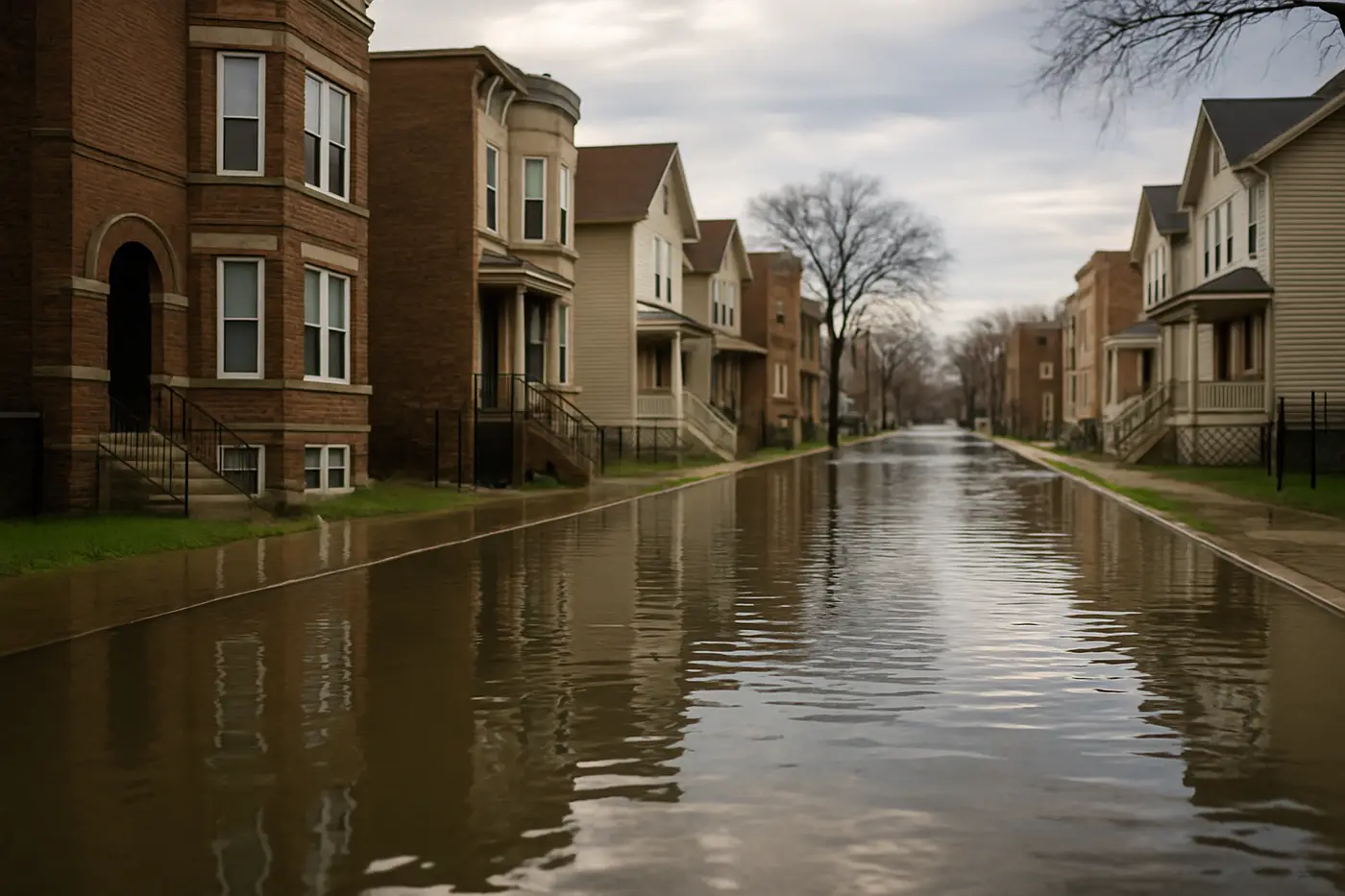
The West Side carries the region's worst combined-sewer memory. On July 2, 2023 parts of the West Side, Cicero and Berwyn took up to about 9 inches of rain in a matter of hours, the sewers surcharged, and thousands of basements in Austin and the neighborhoods around it filled with Category 3 water through floor drains, toilets and basement showers. Cook County received a federal disaster declaration. July 2010 did something similar with about 7 inches overnight.
Those events set the tone for how we work here: basement calls after a storm are treated as sewage jobs from the first visit, with contaminated drywall, carpet and stored contents removed before drying begins. The housing runs from frame worker cottages and greystones in Pilsen and Wicker Park, where the plumbing sits in uninsulated exterior walls and freezes in a polar vortex, to the timber-loft conversions and new towers of the West Loop, where a single failed supply line spreads across an open floor plate and down through the units below. Sump pumps and ejector pumps fail in the same storms that cause the flooding, usually because the power went out, so battery backup is a conversation we have on almost every job.
What we see most
Four patterns cover most
Chicago West Side call-outs.
Crews are stocked for these before they leave — extraction, containment, drying and sanitizing gear matched to the water category each one usually brings.
Combined sewer backup flooding basements across Austin and the West Side, as on July 2, 2023 and July 2010
Frame worker cottages and greystones with uninsulated exterior-wall plumbing that freezes in deep cold
Timber-loft and new-construction towers in the West Loop with supply-line failures spreading across open floor plates
Sump and ejector pump failures in finished basements and garden units during storm power outages
Where we cover
Chicago West Side neighborhoods
we serve.
Open a neighborhood for the local context — which river or sewer backup matters, the housing stock, and the water damage patterns particular to that postcode.
- 60607
West Loop
Supply-line and water heater failures spreading across open floor plates in timber-loft conversions
West Loop guide - 60622
Wicker Park
Combined sewer backup into finished basements and garden units after intense summer rain
Wicker Park guide - 60608
Pilsen
Combined sewer backup into basements of frame worker cottages and brick two-flats after heavy rain
Pilsen guide - 60644
Austin
Combined sewer backup flooding thousands of basements, as on July 2, 2023 and July 2010
Austin guide
Services across Chicago West Side
Choose the help your
property needs.
Every service is available across Chicago West Side on the same 24/7 basis, with the response, drying method and treatment matched to the water category and the building.
Water Damage Restoration
Extraction, moisture mapping, structural drying and sanitizing after burst pipes, leaks and overflows.
Learn moreFlood Damage Restoration
River, overland and storm flood cleanup: contaminated water removed, materials stripped, structure dried and treated.
Learn moreBasement Flooding Cleanup
Pump-out, extraction, disposal of soaked finishes and monitored drying for flooded basements.
Learn moreEmergency Water Damage
24/7 dispatch for active water. Stop the spread, extract, stabilize and document for the adjuster.
Learn moreFire and Smoke Damage Restoration
Soot and odor removal, contents cleaning and water damage from firefighting.
Learn moreFrozen and Burst Pipe Water Damage
Locate, extract and dry after a Chicago freeze splits a supply line, riser or water heater.
Learn moreWater Extraction and Removal
Truck-mounted and portable extraction plus submersible pumps for standing water, before drying equipment goes in.
Learn moreSewage Backup Cleanup
Category 3 combined-sewer backup cleanup: removal, disinfection and clearance before anything goes back.
Learn moreStorm Damage Restoration
Make-safe, tarping, water ingress drying and contents protection after summer storms and ice dams.
Learn moreMold Remediation
Containment, removal and moisture correction to IICRC S520 so it does not return.
Learn more
How a Chicago West Side job runs
Measured drying,
not fans and hope.
From dispatch to the drying certificate, the same four stages run on every Chicago West Side job — whether it is a supply line in a unit or a storm sewer through a garage.
Dispatch
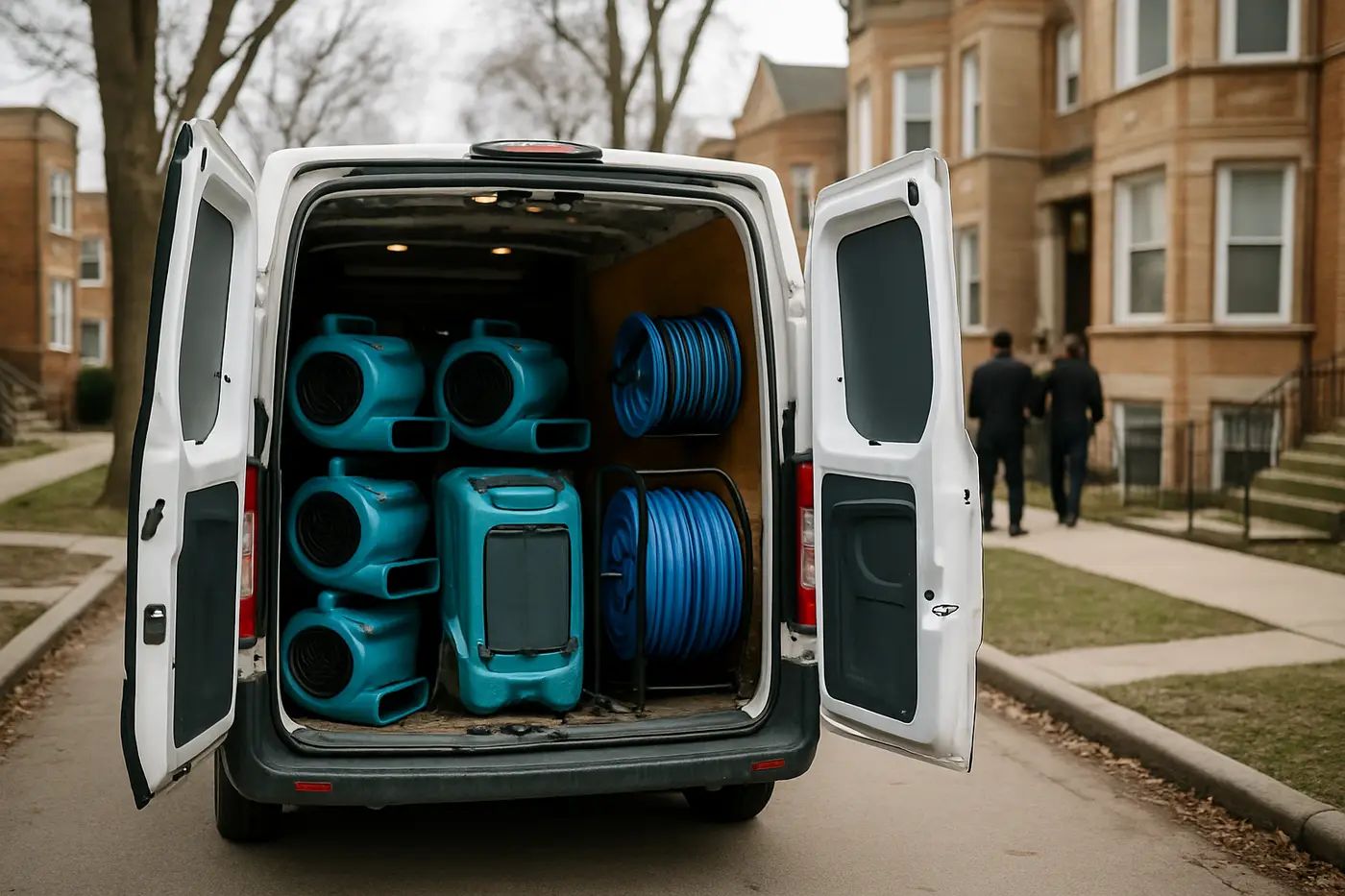
Active water jumps the queue. A crew is routed to your Chicago West Side address with extraction and drying equipment on board, not sent back for it.
Categorize and map
Clean, gray or black water decides what is dried and what is removed. Every affected room is moisture mapped, including cavities and subfloors.
Extract and dry
Standing water out, unsalvageable materials removed, air movers and LGR dehumidifiers placed to a drying plan and read daily.
Document and hand over
Photo record, moisture logs and a drying log for your adjuster, plus a scope for any rebuild once the structure is verified dry.
Is the damage active right now?
Shut off the water at the meter or shut-off valve if it is safe. Then get in touch for guidance on safety, stabilization and the next response step for your Chicago West Side property.
Request an assessmentChicago West Side questions
What Chicago West Side owners ask first.
Straight answers on response times, the regional flood picture, which neighborhoods we cover and how insurers decide water claims.
All questionsHow quickly can you reach Chicago West Side?
Typical travel time across Chicago West Side is around 50 minutes, 24 hours a day, and active water is prioritized over everything else. We confirm a real arrival window when you get in touch. While you wait, isolate the water if it is safe and start lifting contents clear of the floor.
What water damage is most common in Chicago West Side?
Two patterns account for most Chicago West Side call-outs: Combined sewer backup flooding basements across Austin and the West Side, as on July 2, 2023 and July 2010, and frame worker cottages and greystones with uninsulated exterior-wall plumbing that freezes in deep cold. Sewer backup and river water are Category 3, so anything porous that touched them is removed rather than dried in place. Plumbing failures are usually Category 1 and far more of the building can be saved if extraction starts early.
Which Chicago West Side neighborhoods do you cover?
Our core Chicago West Side list is West Loop, Wicker Park, Pilsen and Austin, and the surrounding ZIP codes are covered on the same 24/7 basis. If you are on the edge of the service footprint, tell us the neighborhood and we will be honest about the arrival window before anything is booked.
Will my insurer cover water damage in Chicago West Side?
Sudden and accidental discharge such as burst pipes, supply lines and water heaters is covered by most Illinois homeowners policies, including frozen pipes if reasonable heat was maintained. Sewer backup and sump pump overflow need a water backup endorsement, and river or overland flooding needs a separate flood policy; the FEMA Flood Map Service Center and Chicago 311 basement flooding records show whether a property sits in a mapped flood zone. Mitigation costs are usually covered when documented, so we log moisture readings and photograph every stage from the first visit.
Water damage in Chicago West Side?
Let's get your Chicago West Side property dry, properly.
Tell us the neighborhood, what happened and whether the water is still active. A restoration coordinator will confirm coverage, an arrival window and what your adjuster will need.