- #basement-flooding
- #storm
- #combined-sewer
- #sump-pump
- #prevention
- #chicago
To stop a Chicago basement flooding again, fix the three ways water gets in: a backwater valve or overhead sewer against combined sewer backups, a battery backup on the sump pump for power outages, and extended downspouts and proper grading to move rain away from the foundation. Test all of it before storm season, not during it.
Every summer we clean up the same basements, sometimes for the second or third time. The owners are not careless; they simply fixed the wrong problem, or fixed one of three. This checklist walks through what fails in a Chicago storm, what to install, and what to do while the rain is falling and once it stops.
Why Chicago basements flood in summer
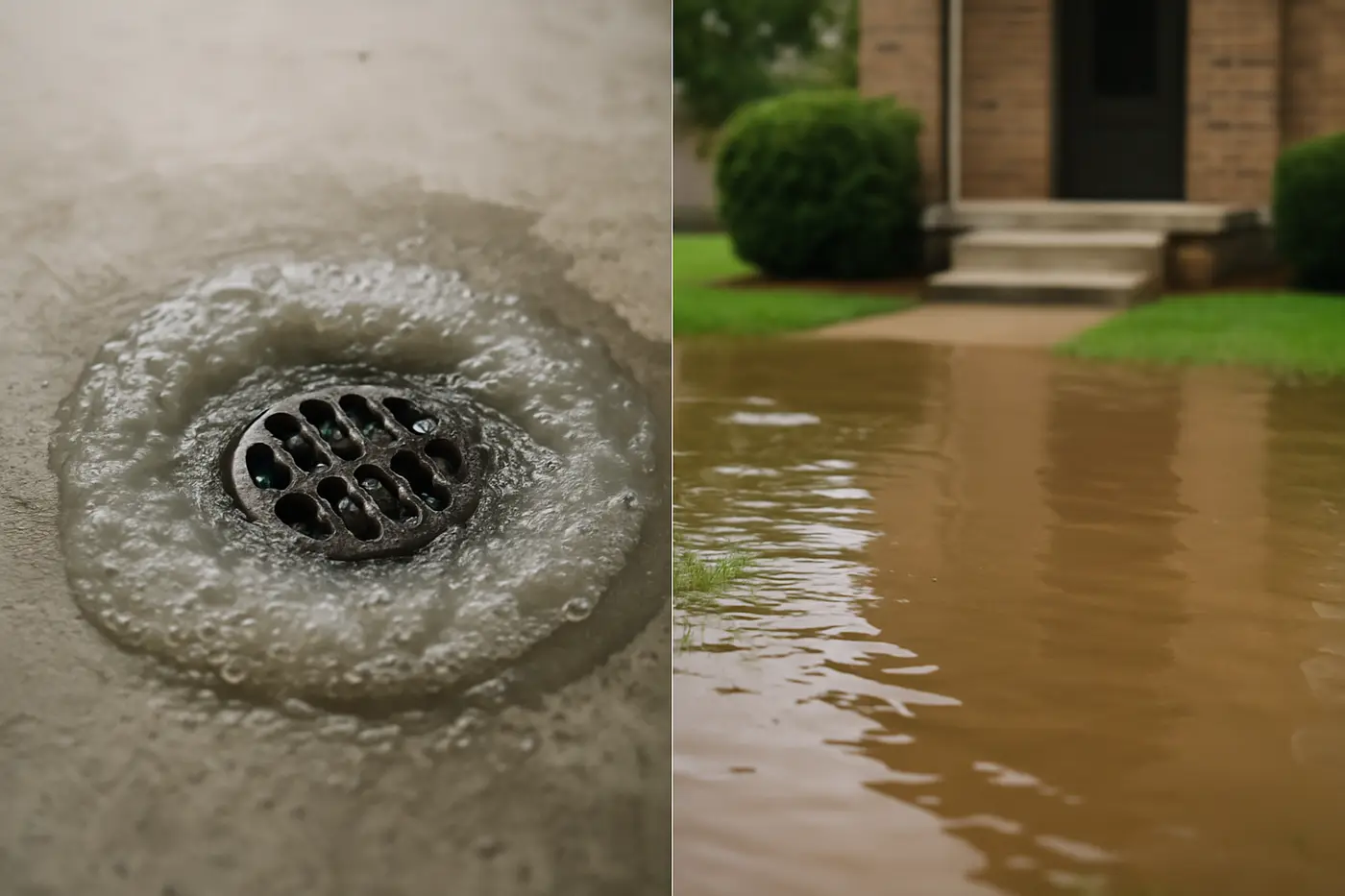
Chicago’s storm season runs from May through September. The storms are convective: short, intense downpours that put an inch or more of rain on the street in under an hour. Most of the City of Chicago and the older inner suburbs, including Oak Park, Cicero, Berwyn and parts of Evanston, run stormwater and sanitary sewage through the same combined pipes. When the downpour outruns the system, the pipes surcharge and sewage-laden water backs up through floor drains, toilets and basement fixtures. That water is Category 3, black water, under the IICRC S500 standard.
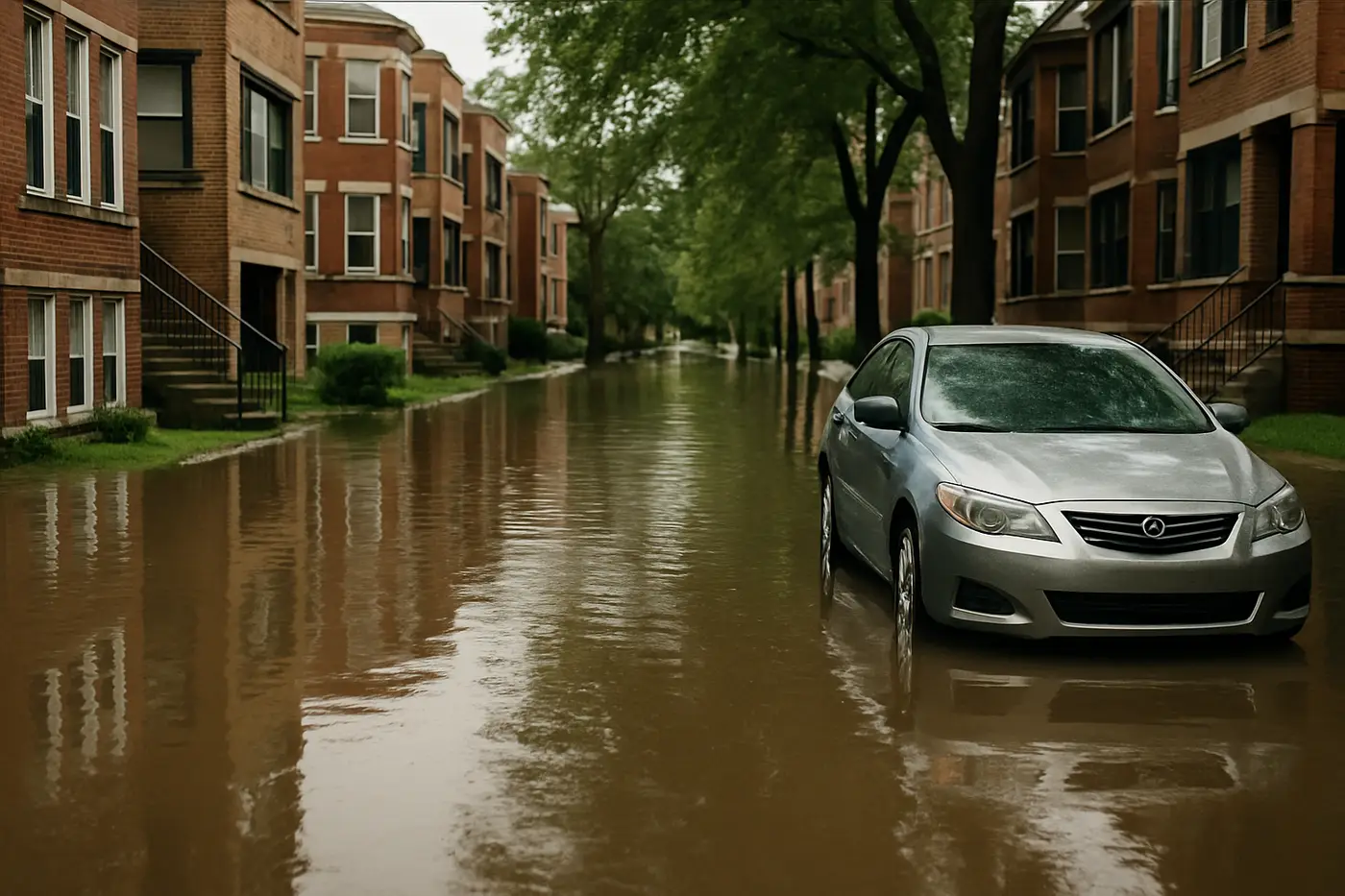
The Metropolitan Water Reclamation District’s Tunnel and Reservoir Plan (TARP, better known as Deep Tunnel) with the Thornton reservoir (2015) and McCook Stage 1 (2017) reduced backups but did not eliminate them. On July 2, 2023, up to about 9 inches of rain fell on parts of the West Side, Cicero and Berwyn; thousands of basements flooded and Cook County received a federal disaster declaration. On July 23 to 24, 2010, about 7 inches fell overnight on the West Side and western suburbs. Neither storm needed a river to flood a basement in Austin, Cicero or Oak Park. The sewer did it.
The three ways water gets in
Before you spend money, work out which path the water took last time. The table below is how we sort it on site.
| How it got in | What you saw | Water category | What stops it | Insurance |
|---|---|---|---|---|
| Combined sewer backup | Water rising from the floor drain, basement toilet or shower drain; gray and foul | Category 3 | Backwater valve or overhead sewer conversion | Water backup endorsement only |
| Sump pump failure or overflow | Water rising from the sump pit or seeping at the wall-floor joint; usually clear at first | Category 2, treated as 3 if it mixes with sewer water | Battery backup pump, second pump, alarm | Sump discharge or overflow endorsement only |
| Surface water | Water through window wells, a walkout door, foundation cracks or the top of the wall | Category 3 once it has crossed a yard or street | Downspout extensions, grading, window well covers | Separate flood policy (NFIP or private) |
Many basements have two of these paths, and a bad storm opens both. That is why a new sump pump alone so often disappoints.
Before the season: the checklist
Sump pump and battery backup
Sump pump failure during a power outage is one of the leading causes of basement flooding in Chicagoland, and the outage usually arrives with the storm.
- Pour a bucket of water into the pit and watch the float rise, the pump start, and the pit empty. If the float sticks on the pit wall, fix it.
- Check the discharge line runs outside and away from the foundation, and that the check valve holds so water does not fall back into the pit.
- Install a battery backup pump on its own float, with a deep-cycle battery and a charger. Test it by unplugging the primary pump.
- Add a high-water alarm that you can hear upstairs, or one that sends a phone alert.
- If a basement bathroom drains to an ejector pit, test that pump too. The lid should be sealed and vented.
Backwater valve
A backwater valve sits on the building sewer line and closes when the main in the street surcharges, so sewage cannot come back into the house. Two things to know: it needs annual cleaning because debris can hold the flap open, and while it is closed nothing in the house can drain. Do not run laundry, the dishwasher or long showers while the storm is at its worst.
Overhead sewer conversion
An overhead sewer reroutes the house plumbing so the drains leave the building above the level the street main can back up to. Basement fixtures and the floor drain go to an ejector pit that pumps up and out. It costs more than a backwater valve and involves opening the basement floor, but it is the more complete fix for a basement that has flooded more than once.
Rebates
The City of Chicago and many suburbs run rebate programs that cover part of the cost of backwater valves, overhead sewers and related flood-control work. Program names, amounts and rules change, so check with your municipality before signing a plumbing contract; some require an inspection or a licensed plumber to qualify. The Chicago Department of Water Management also runs the Rain Blocker program, which installs restrictors in street catch basins to slow how fast rain enters the combined sewer.
Downspouts, grading and window wells
- Extend downspouts so roof water discharges several feet from the foundation, onto ground that slopes away. A bungalow roof sheds a lot of water in a downpour, and four downspouts dumping at the corners is a common cause of “mystery” seepage.
- Where downspouts are connected to the sewer, consider disconnecting them; less roof water in the pipe means less surcharge on your block.
- Regrade low spots against the foundation so the soil falls away from the house.
- Clean gutters in spring and after the first heavy storm.
- Fit covers on window wells and keep the gravel at the bottom clear so they drain.
- Walk your block and check the street catch basins. If one is clogged with leaves, report it to Chicago 311.
Inside the basement
- Store contents on shelves, not on the floor, and never in cardboard boxes at floor level.
- Keep the floor drain clear and reachable.
- Know where the breaker panel is and which breakers serve the basement.
- Check your policy for a water backup and sump discharge or overflow endorsement. Typical limits run $5,000 to $25,000, sometimes more, and a finished basement can use all of it.
During the storm
- Do not go into a basement with standing water while the power is on. If the panel is dry and you can reach it without stepping in water, shut off the basement breakers. If not, stay out.
- Reduce water use. Every gallon you send down the drain joins a sewer that is already full.
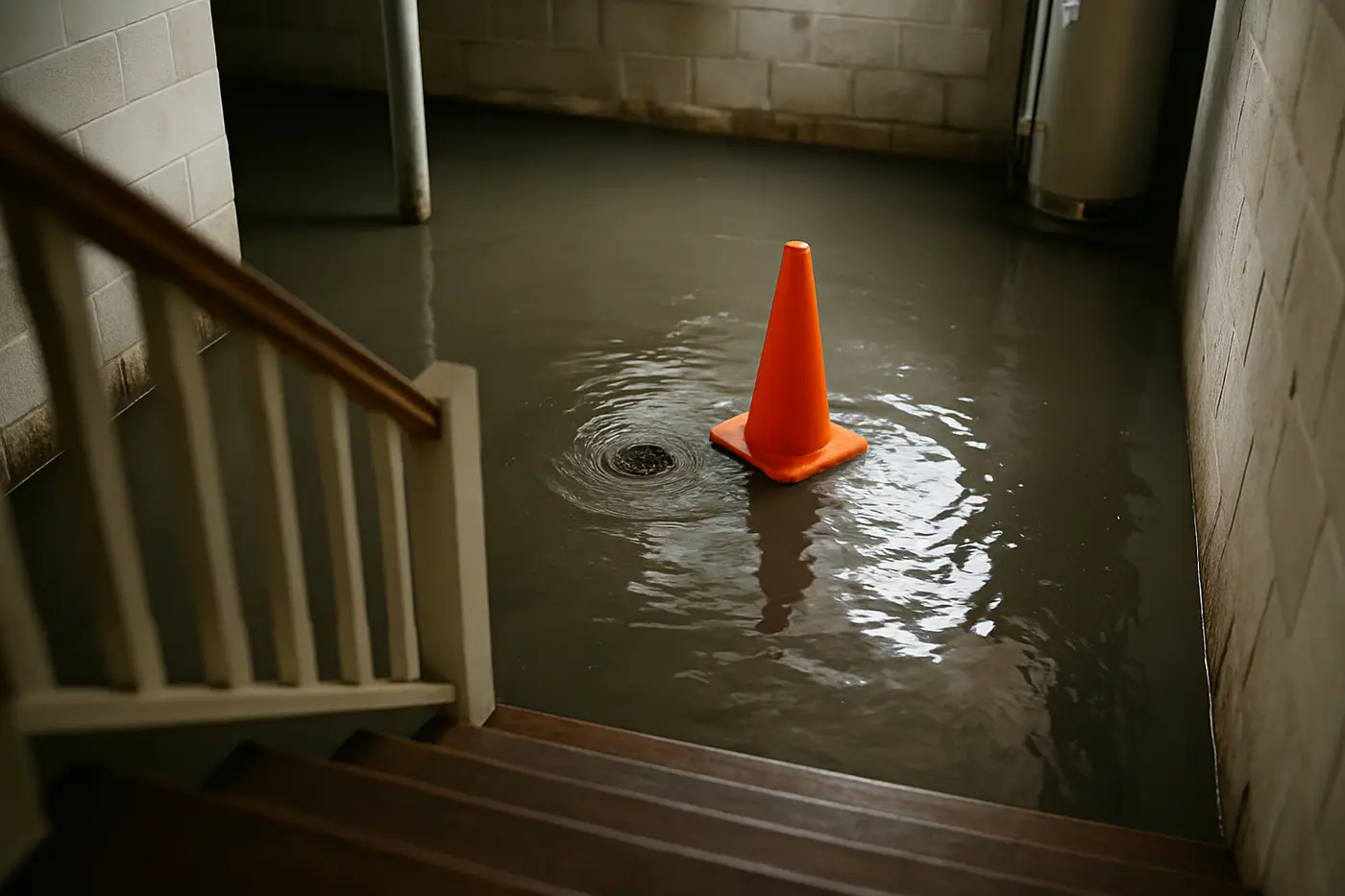
- Watch the floor drain. Gurgling or a slow rise means the main is surcharging. Move what you can up the stairs and stop there.
- Photograph and video what is happening with the time visible. Adjusters like to see water at its peak.
- If the power fails, the battery backup should take over. Never run a gasoline generator indoors or in an attached garage.
- Do not open the floor drain or try to bail sewage-laden water by hand. It is a sewage exposure.
After the storm
The water usually recedes as fast as it rose, and what is left looks manageable. It is not, for two reasons: the water was Category 3, and the wet materials are on a 24 to 48 hour clock before mold takes hold in a cool, damp basement.
- Keep the power off until an electrician or the restoration crew confirms the outlets and panel are dry.
- Wear gloves, rubber boots and an N95 or better. Keep children and pets out of the basement until it is sanitized.
- Report the flooding to Chicago 311 or your suburb’s public works department, and call your insurance agent the same day.
- Photograph everything before it moves: the water line on the walls, the contents, the floor drain, the sump pit. Then list damaged items.
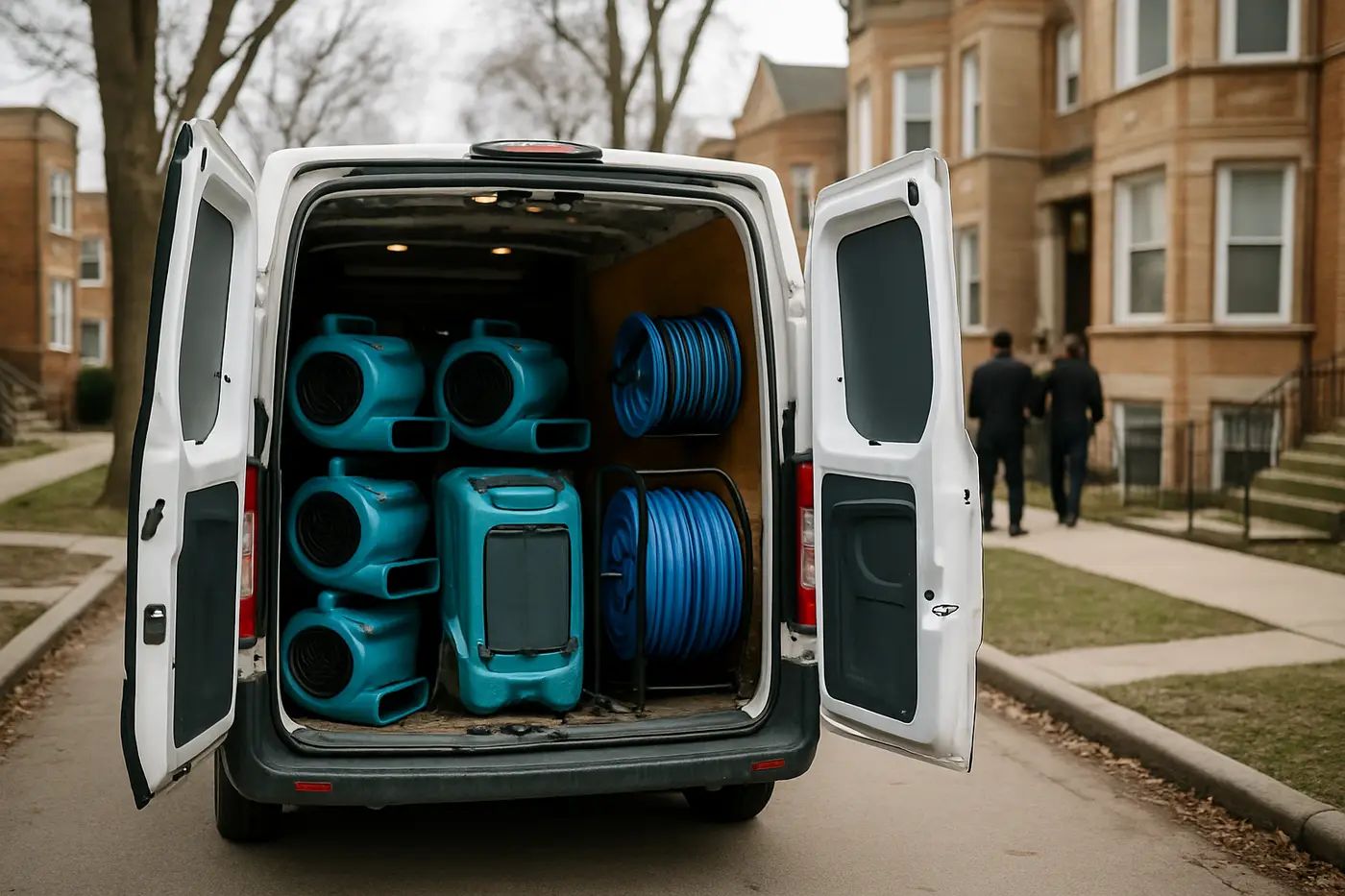
- Get the water out within 24 hours. Carpet and pad that were under sewer water are disposed of, not dried. Wet drywall is cut above the water line. Everything that stays is cleaned with an antimicrobial matched to the water category, then dried with air movers and LGR dehumidifiers.
- Expect five to ten days of drying for a basement, with moisture readings logged daily so the adjuster can see the structure reach its target.
Cleanup and drying for a flooded basement runs $1,500 to $10,000; sewage backup cleanup and sanitization runs $3,000 to $10,000. Our basement flooding cleanup and sewage cleanup pages set out what is included, and how long it takes to dry a basement explains the timeline.
If the storm damaged the roof or forced water in through windows, our storm damage restoration crews handle the make-safe and drying together. After a federal disaster declaration like the one for Cook County in 2023, FEMA Individual Assistance and SBA loans may be available on top of your policy. How the claim is decided between sewer backup and flood is covered in sewer backup vs flood, and the first hours of cleanup in sewage backup in your basement.
Key takeaways
- Chicago basements flood three ways: combined sewer backup, sump pump failure and surface water. Find out which one you had.
- A backwater valve or overhead sewer stops the sewer; a battery backup stops the pump failure; downspouts and grading stop the surface water.
- Test the sump pump and its backup before May, and clean the backwater valve every year.
- Rebate programs in the City of Chicago and many suburbs help pay for flood-control plumbing; check the rules first.
- During a storm, cut water use, stay out of standing water and photograph as it happens.
- Floor-drain water is Category 3. Gloves, boots, a respirator, and no children or pets.
- Get it extracted within 24 hours; basements take five to ten days to dry.
- Sewer backup and sump overflow are only covered with an endorsement; river and street water need a flood policy.
If your basement is wet right now, get everyone out of the water, cut the power if it is safe, photograph what you can and call us. We cover Chicago and the surrounding suburbs and can usually be on site the same day.