- #frozen-pipes
- #burst-pipe
- #winter
- #prevention
- #insurance
- #chicago
If a frozen pipe has burst in your Chicago home, close the main water shut-off first, then cut power to any wet rooms, open the faucets to drain the line, move contents off the floor, photograph everything, and call a plumber and a restoration crew. Never thaw a frozen line until the main is closed.
The rest of this article explains why the order matters, where pipes freeze in Chicago housing, how to thaw a line that has not yet split, and what your insurer will ask afterward.
Why Chicago winters split pipes
Water expands as it freezes. Inside a supply line the ice plug itself rarely does the damage; the pressure trapped between the plug and a closed faucet does. The pipe fails at its weakest point, often feet from where it froze, and nothing leaks until the ice lets go. That is why the week after a deep freeze, not the freeze itself, is the busiest week of the year for burst-pipe calls.
Three recent cold events each produced a wave of these calls: the polar vortex of January 30 to 31, 2019, when O’Hare recorded about minus 23 degrees Fahrenheit; the Christmas cold snap of December 22 to 24, 2022; and the January 2014 polar vortex. Each was followed by a thaw week of collapsed ceilings and flooded basements. Watch National Weather Service warnings and cold advisories ahead of the next deep freeze. Frozen and burst pipes are the number one winter claim in the region, and water heaters and boilers fail in the same cold snaps.
Where pipes freeze first
The same locations come up on almost every winter call. If you know where your risk is, you can act before the temperature drops.
| Location | Why it freezes | What to do before a cold snap |
|---|---|---|
| Supply lines in exterior walls | Kitchen and bathroom plumbing on an outside wall sits behind little or no insulation | Open cabinet doors, let the faucet drip, insulate the cavity |
| Uninsulated crawl spaces | Cold air moves freely under suburban ranches and split-levels | Close vents, sleeve the pipes, seal the rim joist |
| Garages | Laundry hookups, utility sinks and hose bibs in an unheated space | Shut off and drain hose bibs, insulate lines |
| Attics | Lines to a top-floor bathroom in a greystone or three-flat run above the insulation | Insulate the run, keep hatches closed |
| Vacant units | An empty garden apartment or condo with the heat off | Keep heat on, or shut off and drain the unit |
| High-rise risers | Common risers in exterior chases lose heat fast | Building engineering should inspect |
Two Chicago patterns are worth naming: the bungalow kitchen sink on the rear exterior wall, often fed through an unheated back porch, and the exposed supply lines along the basement ceiling of a two-flat, near the front foundation wall where the coldest air pools.
Step 1: Shut off the water
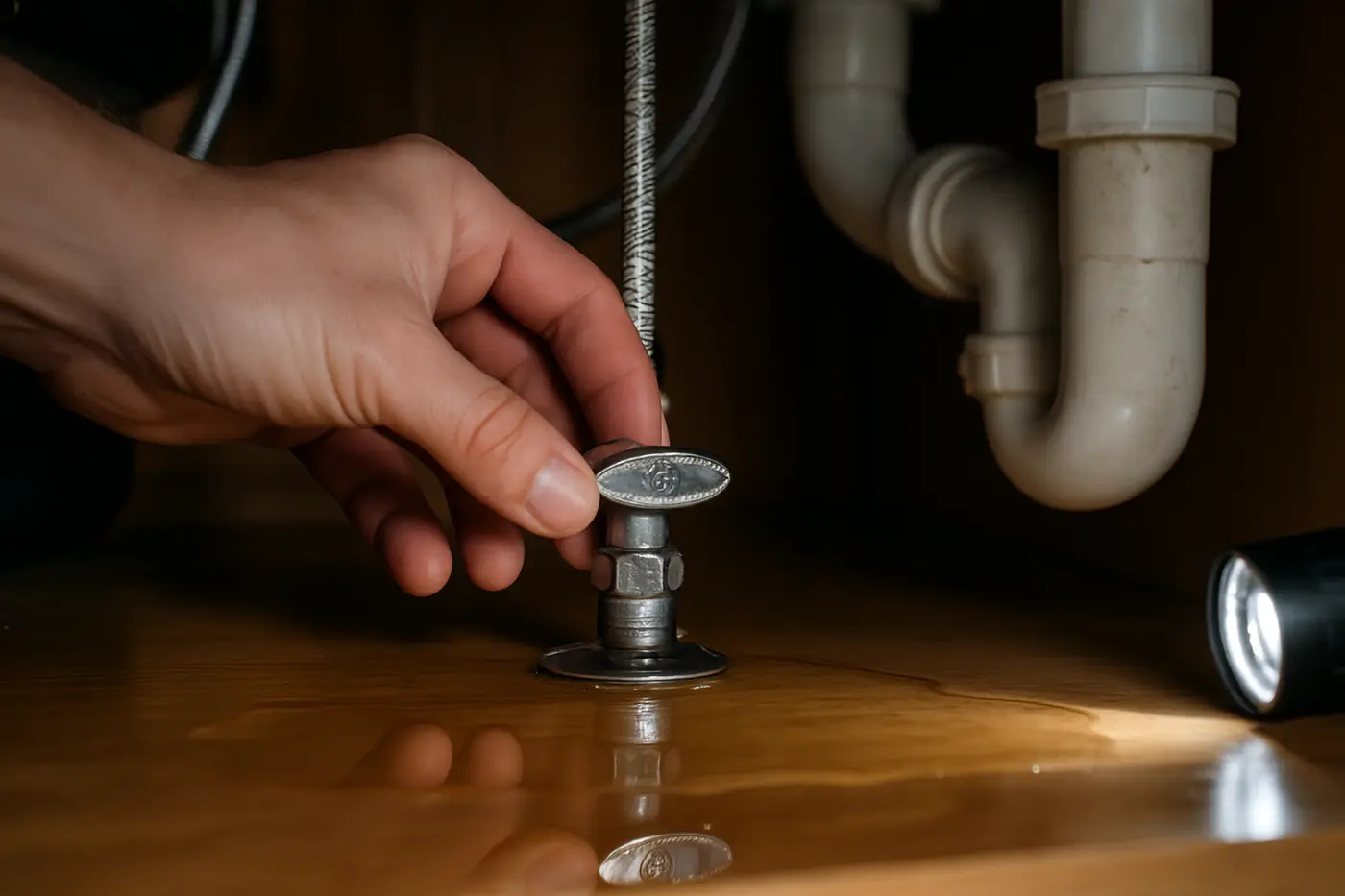
Find the main shut-off before you need it. In most Chicago houses it is in the basement on the street-facing wall, where the service line comes through the foundation, usually next to the water meter. It is either a round gate valve (turn clockwise until it stops) or a lever-style ball valve (a quarter turn so the lever sits across the pipe).
- In a two-flat or three-flat there is usually one main for the whole building. Close it, then tell the other units.
- In a condo tower, each unit normally has its own shut-off behind an access panel. If you cannot find it, call building management, who can isolate the riser.
- If the valve is seized, do not force it. Call a plumber, who can close the curb stop at the street.
If the burst is in a hot-water line, also close the cold inlet on the water heater and turn off its gas valve or breaker.
Step 2: Cut the power to wet areas
If the electrical panel is dry and you can reach it without stepping in water, switch off the breakers for the affected rooms, or the main breaker if you are not sure. Never enter a flooded basement with standing water while the power is on. If the panel itself is wet, or water is coming through a light fixture, leave it and call an electrician.
Step 3: Drain the lines and relieve the pressure
With the main closed, open the faucets, lowest first, so trapped water drains out and the pressure in the frozen section drops. Flush the toilets once.
A boiler with hot-water radiators is a separate closed loop: do not drain it, and call a heating contractor if it has stopped.
Step 4: How to thaw a frozen pipe safely
If a faucet trickles or produces nothing while the others work, and there is no water on the floor, you probably have a frozen but intact line. A careless thaw is how many intact pipes become burst pipes.
- Close the main first. If the pipe has already split somewhere out of sight, the thaw will reveal it, and you want the supply off when it does.
- Open the faucet served by the frozen line so melting ice has an exit.
- Warm the room. Turn up the heat, open cabinet doors, and put a space heater in the room, not against the pipe.
- Apply gentle heat to the pipe with a hair dryer, a heat lamp, an electric heating pad wrapped around the line, or towels soaked in hot water. Start at the faucet end and work back toward the frozen section.
- Never use a propane torch, a heat gun on high or any open flame. Framing, insulation and the paper facing of drywall ignite easily, and boiling water inside a closed section of pipe can split it.
- Once flow returns, leave the faucet at a trickle until the cold breaks and check the warmed pipe for damp spots.
If the frozen section is inside a wall or ceiling, call a plumber rather than opening it yourself.
Step 5: Protect contents and document everything
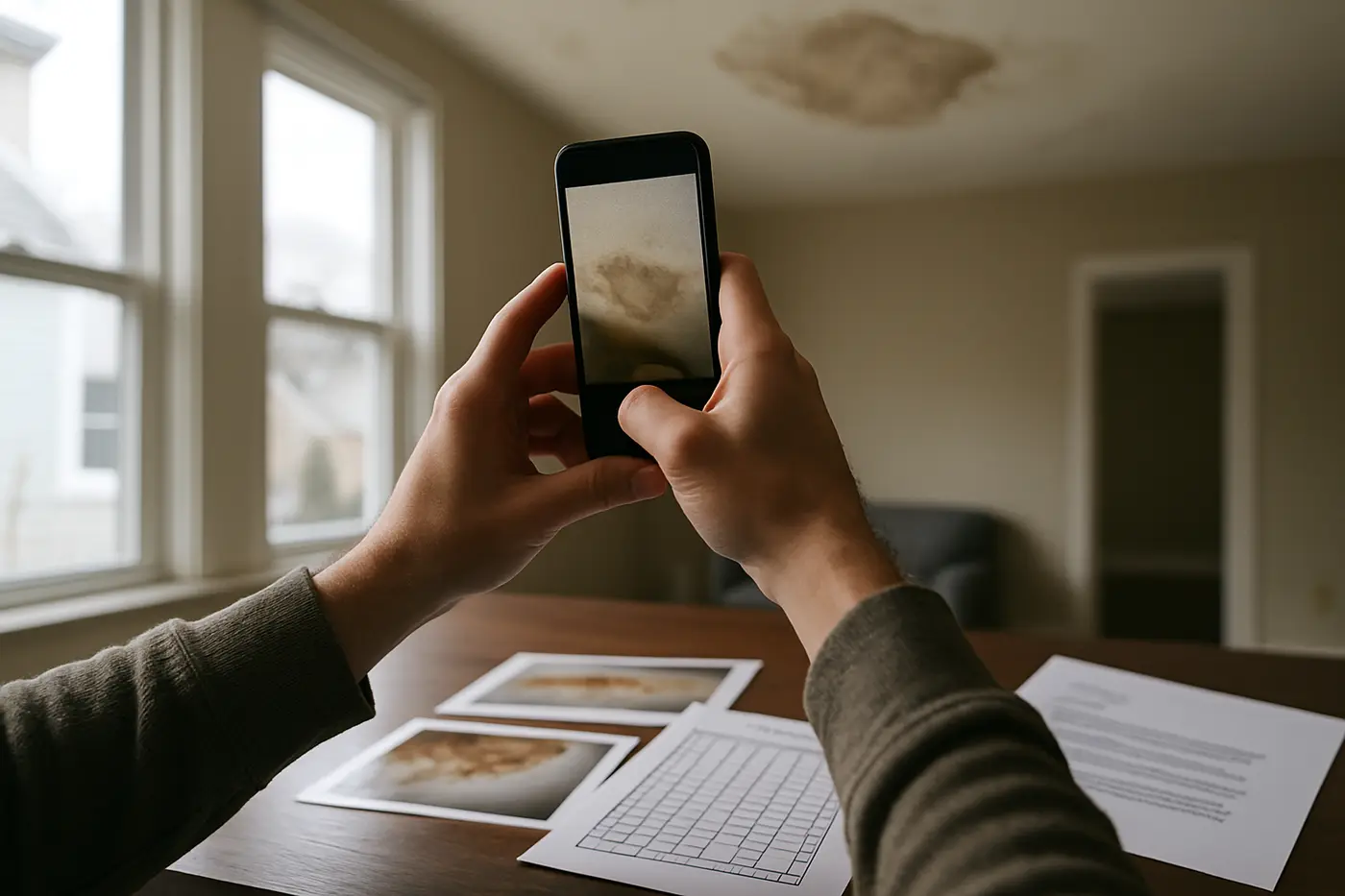
While the water drains, get rugs, boxes and anything on the floor off the wet area. Before you throw anything away, take wide photos of each room, close-ups of the water line on walls, and the split section of pipe once the plumber cuts it out. Keep that piece; an adjuster may want to see it.
Our first-hour guide covers the full sequence, and documenting a water damage insurance claim in Illinois covers the paperwork.
Step 6: Extract and start drying
Get standing water up the same day: squeegee toward the floor drain and use a wet-and-dry vacuum if you have one. What household gear cannot do is dry the wall cavities, carpet pad and framing, and those are where the money is.
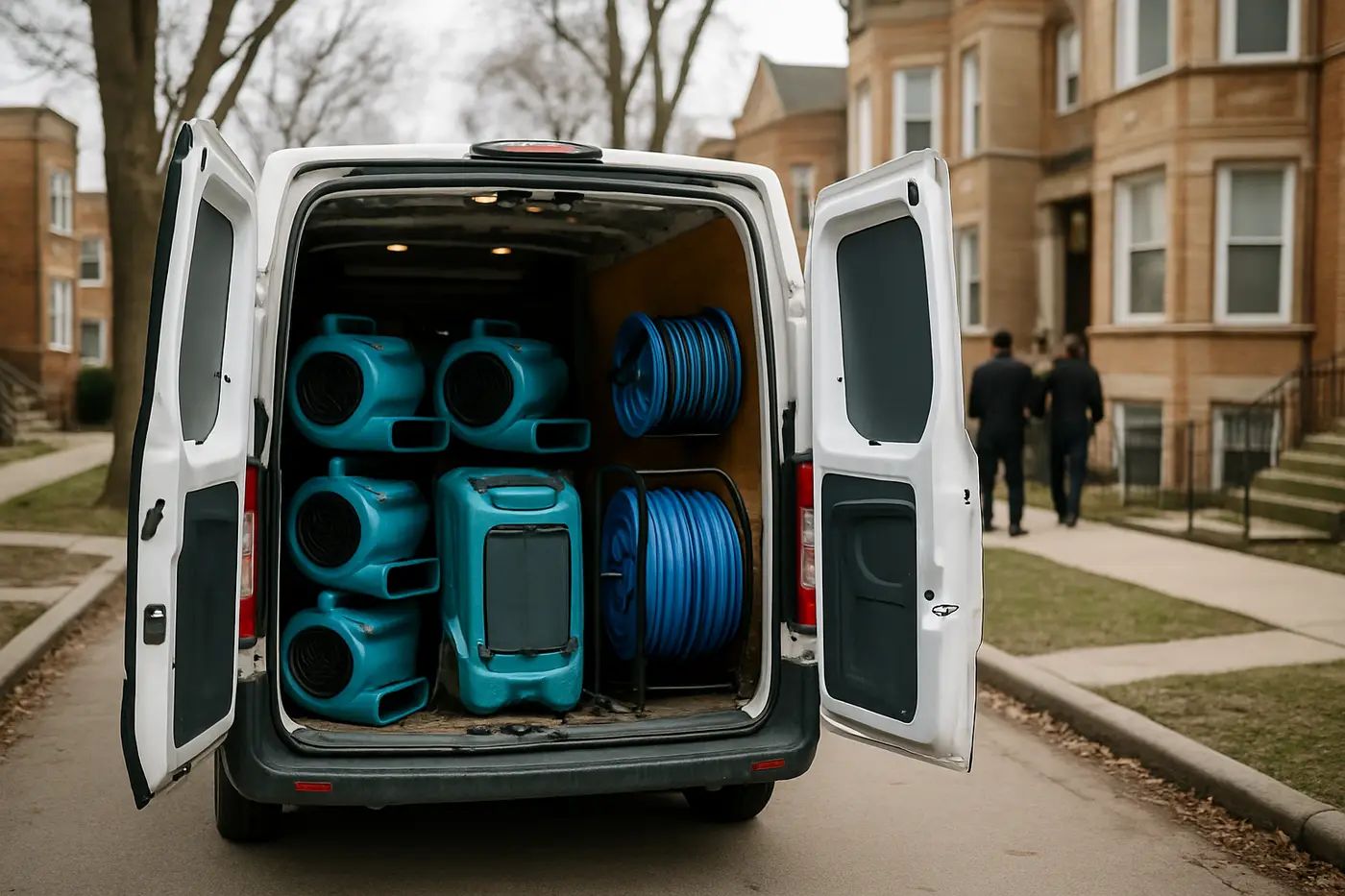
Wet drywall, carpet pad and framing support mold within 24 to 48 hours, and cool, damp Chicago basements slow evaporation. A restoration crew maps the moisture with meters, extracts down to the pad, then sets air movers and LGR dehumidifiers to dry the structure to the IICRC S500 standard. Typical structural drying takes three to five days; basements and slab floors take five to ten.
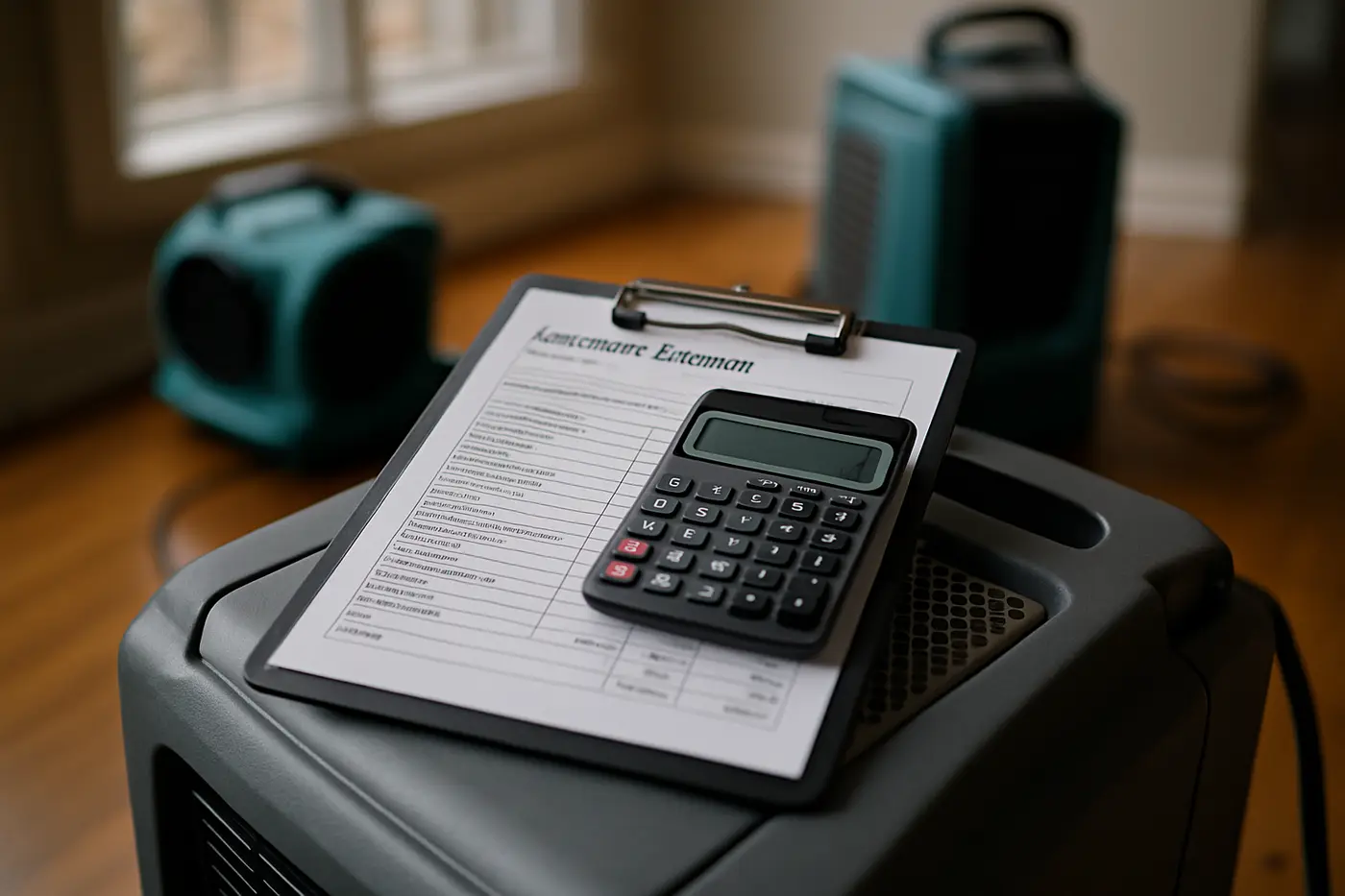
For a burst pipe, locating the leak, extracting, drying and patching minor drywall typically costs $1,500 to $8,000 in Chicago. An emergency call-out with moisture mapping and a written report runs $250 to $500 and is credited against the work. See our frozen and burst pipe water damage page for what is included, and the 2026 cost guide for how the numbers are built.
Insurance: the reasonable heat requirement
A standard Illinois homeowners policy (HO-3) treats a burst frozen pipe as sudden and accidental discharge, which is covered. The condition that trips people up is heat. Insurers expect that you maintained reasonable heat in the building, or shut off the water and drained the system if you left it unheated. A vacant two-flat unit with the heat off, a winter-away condo turned down to save money, or a furnace that failed unnoticed for days: these are the claims that get argued.
To keep yours simple:
- Keep the thermostat at a safe setting whether or not the building is occupied.
- Photograph the thermostat and the furnace or boiler status the day you discover the leak.
- Keep receipts for the plumber, the emergency call-out and any equipment you rented.
- Ask the restoration crew for dated photos, a moisture log and a drying log. Adjusters expect them, along with an itemized scope, usually in Xactimate format.
Mitigation and emergency drying are covered when documented. Slow seepage from a pinhole leak that ran for months is not.
Two-flats, three-flats and condo towers
In multi-unit buildings a burst supply line on the top floor travels down through every unit below it. The top-floor owner, the units below and the association’s master policy can all be involved. Notify the association or management the same day, and photograph your own unit before anyone removes wet drywall. Winter calls to walk-ups in Lincoln Park, Lakeview and Wicker Park very often involve more than one unit.
Ice dams: the other winter leak
Not every winter ceiling stain is a pipe. On the flat and low-slope roofs common across Chicago, ice dams push meltwater back under the roofing and into top-floor ceilings. The sign is a stain that grows during a thaw and dries between cold spells. Photograph it, keep the heat on, and have the roof edge cleared by someone with the right equipment.
Prevention checklist before the next cold snap
- Locate and label the main shut-off, and test that it turns.
- Insulate exposed supply lines in the basement, crawl space, garage and attic with foam sleeves.
- Seal the gaps where cold air reaches pipes: rim joists, dryer vents, hose bib penetrations.
- Disconnect garden hoses, then shut off and drain exterior hose bibs.
- On nights forecast in the single digits or below, open cabinet doors under exterior-wall sinks and let the farthest faucet drip.
- Keep the heat on in vacant units and second homes, or shut off and drain them.
- Have the furnace or boiler serviced before December.
- Check the water heater for rust at the base and a relief valve that drips; both fail in cold snaps.
Key takeaways
- Main water off first, then power, then drain the lines. Do not thaw anything until the main is closed.
- Thaw with a hair dryer, heat lamp or hot towels, never with a flame.
- Check exterior walls, crawl spaces, garages, attics and vacant units during thaw week.
- Photograph the thermostat and the split pipe, and keep the piece.
- Wet drywall and carpet pad start growing mold in 24 to 48 hours, and basements dry slowly.
- HO-3 policies cover burst pipes when reasonable heat was maintained. Unheated vacant units are where claims fail.
- Locate, extract, dry and patch typically runs $1,500 to $8,000; the call-out is $250 to $500.
If you are standing in water right now, close the main, cut the power and call us. Our emergency water damage crews cover Chicago and the surrounding suburbs through the whole winter, thaw week included.