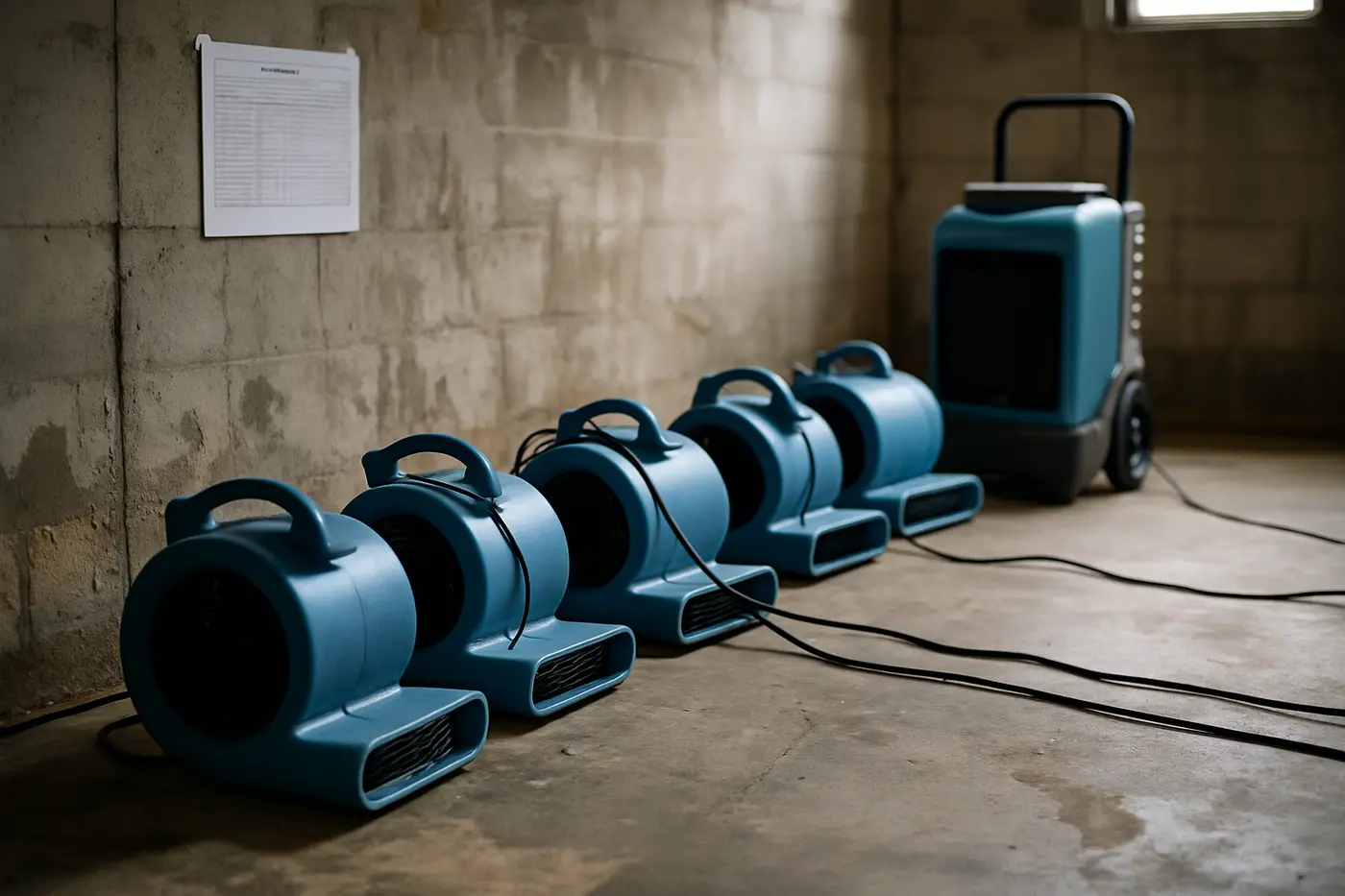
- #basement-flooding
- #structural-drying
- #psychrometrics
- #moisture-meters
- #drying-log
- #chicago
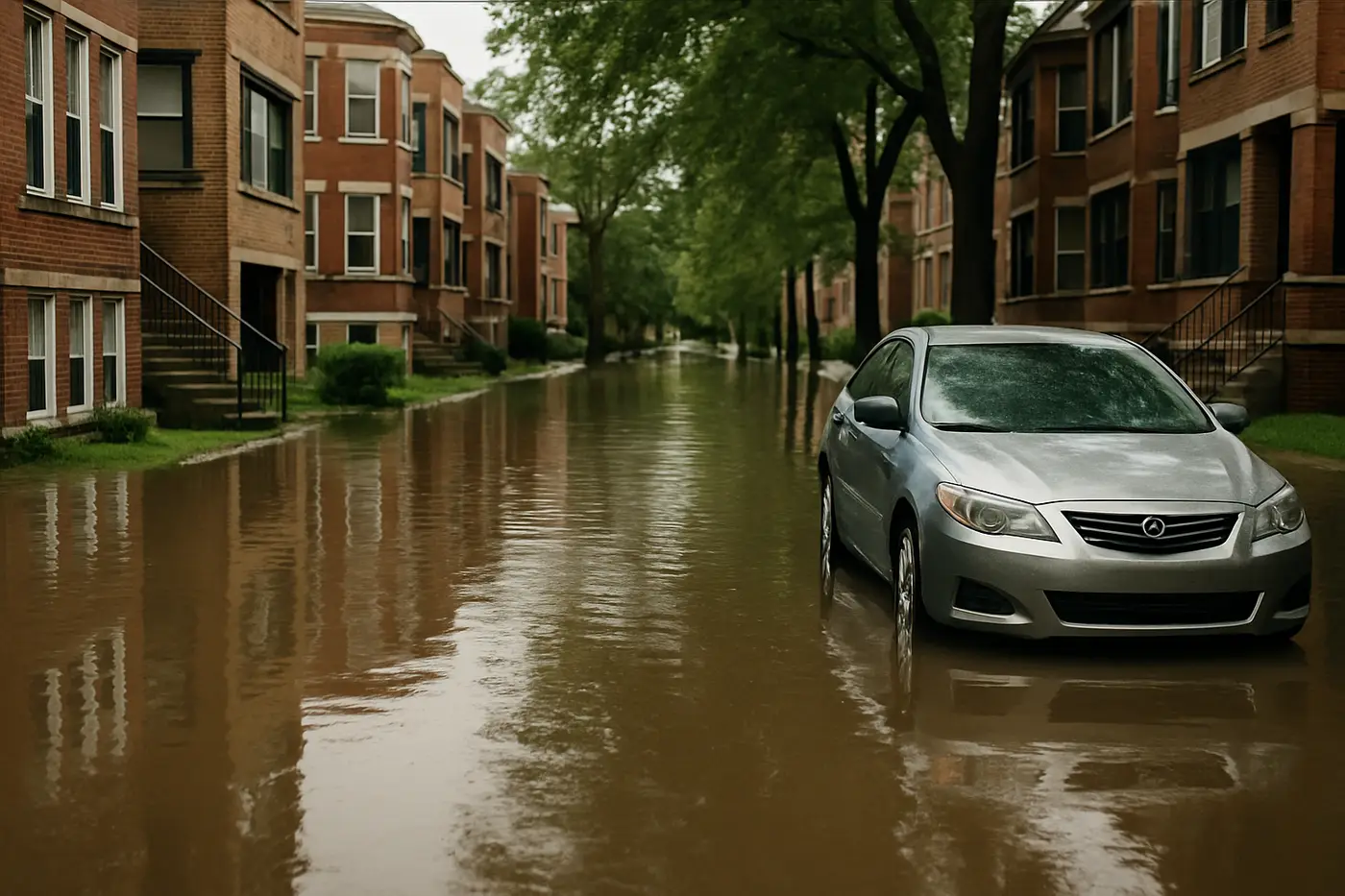
A flooded basement in Chicago usually takes 5 to 10 days to dry to the IICRC S500 dry standard, compared with 3 to 5 days for an above-grade room. Cool concrete, below-grade walls, damp air and finished materials slow evaporation. The clock starts when extraction is done and equipment is running, not when the water came in.
That range is wide because basements are not all the same, and neither is the water. Below is how we arrive at a timeline on a specific job, what the meters are telling us on each visit, and what the drying log we hand to your adjuster looks like.
The short answer, by basement type
These are the ranges we quote once we have seen the basement and taken the first readings:
- Unfinished basement, clean water, caught the same day: 3 to 5 days. Concrete and open framing, nothing to hide behind.
- Finished basement with drywall and carpet, clean water: 5 to 7 days. Pad comes out, lower drywall may come out, the slab is the slow part.
- Finished basement, combined sewer backup, wet for a day or more: 7 to 10 days. Part of that is demolition and sanitizing, not drying.
- Plaster walls, hardwood over sleepers, or a slab that sat wet for a week: 10 days or more, with specialty drying.
Why basements take longer than the rest of the house
An upstairs bedroom with a burst supply line dries in three to five days. The same volume of water in the basement below it takes nearly twice as long, for four reasons.
Concrete holds water and gives it back slowly. A 4-inch slab and 8-inch poured or block foundation walls absorb water like a very dense sponge. After a storm like July 2, 2023, the soil around the foundation is saturated too, and hydrostatic pressure keeps pushing vapor through the concrete for days after the visible water is gone.
Basements are cool. Most Chicago basements sit between 55 and 65 degrees year-round. Warm air holds far more water vapor than cool air, and evaporation is driven by that difference. A cool basement simply evaporates water more slowly than a 75-degree living room, which is why we often add heat to a drying chamber.
There is almost no air exchange. Small glass-block or hopper windows, one stairway and a furnace return do not move air. Wet air stays where it is unless equipment moves it.
Finished basements are layered. Carpet over pad over slab. Drywall on furring strips against the foundation, often with insulation behind it. Paneling in older bungalows in Portage Park and Beverly. Drop ceilings. Water gets behind every one of those layers and cannot evaporate through paint, vinyl base or carpet backing at any useful rate. The shared basement of a two-flat, with a laundry, a mechanical room and often a garden unit, simply has more of it.
Psychrometrics in plain English
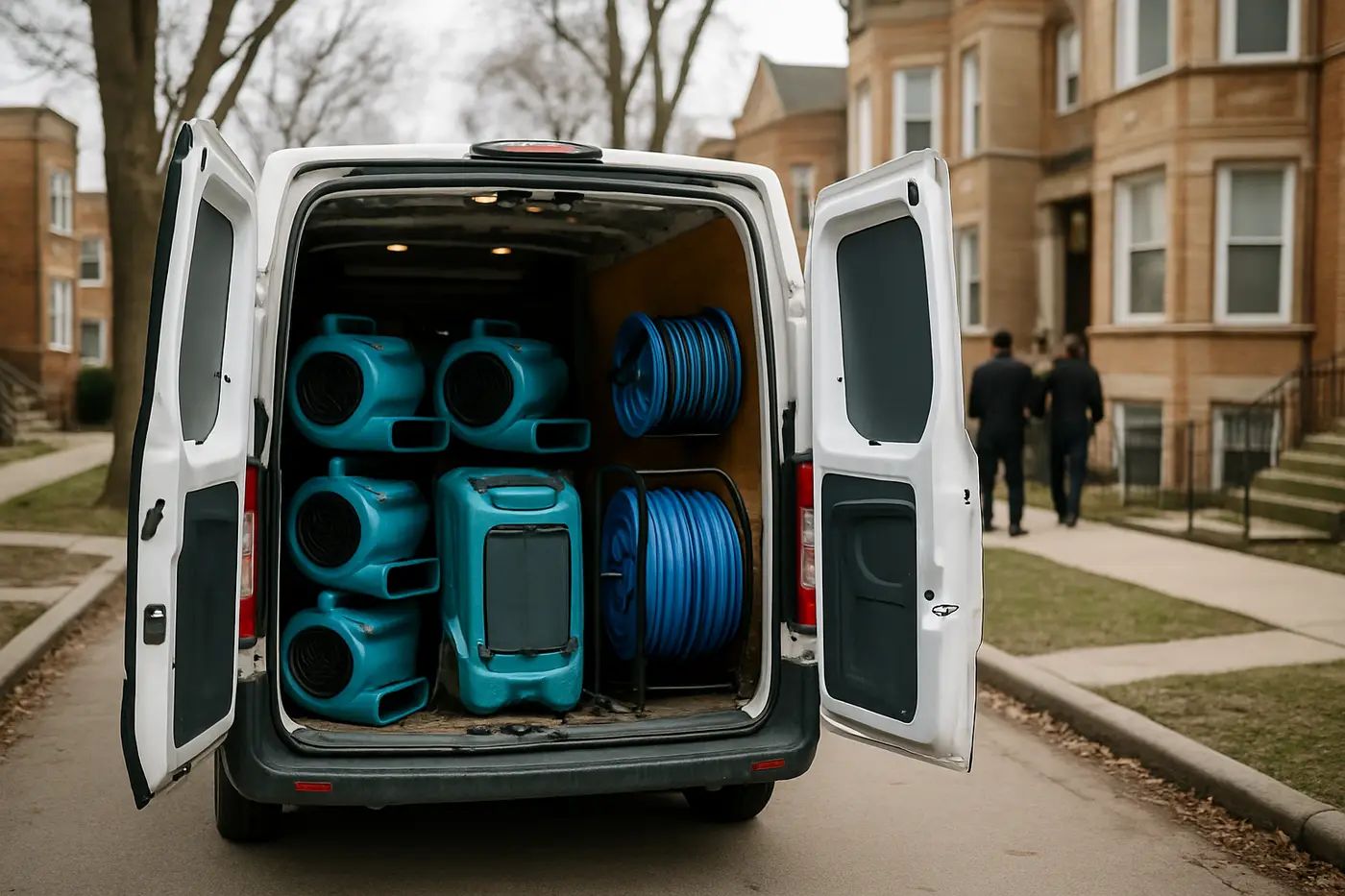
Structural drying is two jobs. First, move water out of the material and into the air (evaporation). Second, take it out of the air (dehumidification). Air movers do the first job, low-grain refrigerant (LGR) dehumidifiers the second.
To manage that, we track four numbers in the drying chamber:
- Temperature. Warmer is faster, up to a point. We usually run a basement at 75 to 85 degrees.
- Relative humidity (RH). How full the air is at its current temperature. We want it under 45 percent once the equipment has stabilized.
- Grains per pound (GPP). The actual weight of water in the air, independent of temperature. This is the number that matters, because it tells us whether the air is drier than the wet material.
- Dew point. The temperature at which that air condenses on a surface. If the slab is colder than the dew point, water is condensing on it instead of leaving it.
The Chicago twist is outside air. In summer, dew points run 65 to 75 degrees, which works out to roughly 90 to 130 GPP. A well-run drying chamber sits at 40 to 55 GPP. Open a basement window in July and you are importing twice as much moisture as you are trying to remove. In January the outside air is dry but it is also 20 degrees, and cold air evaporates water slowly. Either way, the basement stays closed and the dehumidifiers set the conditions.
What the meters say
The first thing the technician does on arrival is not set up fans. It is measure, so that the equipment goes where the water is.
- Pinless (non-invasive) meter. Scanned across walls and floors to find the wet edge without leaving holes, and to draw the moisture map.
- Pin meter. Two pins pushed into wood or drywall to read percent moisture content. Insulated pins let us read the framing behind the drywall without opening the wall.
- Thermo-hygrometer. Reads temperature, RH and GPP of the basement air, the outside air and the air coming off each dehumidifier.
- Thermal camera. Shows wet areas as cold spots. It is a pointer, not a proof; we confirm every cold spot with a meter.
The goal reading is the dry standard: what the same material reads in a part of the house that never got wet. Here is what that looks like for the materials in a typical Chicago basement.
| Material | How we read it | Dry goal | Typical days in a basement |
|---|---|---|---|
| Carpet and pad | Pinless over carpet, pad lifted at the corner | Pad usually replaced; carpet dry on meter and to touch | 2 to 4 days once pad is out |
| Drywall, lower 2 feet | Pin meter, insulated pins | Matches an unaffected wall upstairs | 3 to 6 days if left in; removed if Category 3 or wet over 48 hours |
| Sill plates and studs | Pin meter | 12 to 15 percent moisture content | 5 to 8 days |
| Concrete slab and walls | Pinless on the concrete scale | Matches a dry area of the same slab | 7 to 10 days, always the last to finish |
| Wood furniture and contents | Pin meter | Same as framing | 3 to 7 days, or removed for off-site drying |
Notice the slab. Almost every basement timeline in Chicago is set by the concrete, not the drywall, which is why “the carpet feels dry” is not the same as “the basement is dry.”
A drying log for a typical Chicago basement
A drying log is a dated record of the readings above, taken at every visit, along with the equipment count and any changes. Illinois adjusters expect one, alongside dated photos and an itemized scope.
The table below is an illustration of what a log looks like for a finished basement in a brick two-flat after a July storm, clean water, caught the same day.
| Day | Basement temp / RH / GPP | Outside GPP | Sill plate MC | Equipment and notes |
|---|---|---|---|---|
| 0 | 66 F / 85% / 82 | 110 | 26% | Extraction done, pad out, 8 air movers, 2 LGR dehumidifiers |
| 1 | 74 F / 58% / 74 | 112 | 24% | Peak evaporation, heat added |
| 2 | 76 F / 50% / 68 | 108 | 21% | Map redrawn, 2 air movers moved to the slab |
| 3 | 77 F / 44% / 62 | 115 | 18% | Drywall in range, framing still wet |
| 4 | 78 F / 40% / 58 | 104 | 16% | 3 air movers pulled, slab still wet |
| 5 | 78 F / 36% / 53 | 109 | 14% | Framing at dry standard (13%) |
| 6 | 78 F / 34% / 50 | 111 | 13% | All at dry standard, equipment removed |
Notice that the framing took five days to reach dry standard even though the room air was in range by Day 3.
Water category and class change the clock
The IICRC S500 standard sorts water by contamination (Category 1 clean, 2 gray, 3 black) and by how much material is wet (Class 1 to 4). Both change the basement timeline.
In Chicago, most basement flooding arrives through the floor drain from the combined sewer, which makes it Category 3 regardless of how clear it looks. On a Category 3 loss, the carpet, pad and lower drywall come out. That opens the walls and speeds the structural drying, but demolition and sanitizing add a day or two at the front. Our sewage cleanup crews handle that stage before drying equipment goes in. Class 4 losses, where water has soaked into plaster, hardwood over sleepers or a slab left wet for a week, sit at the long end of the range.
What slows a basement dry-out
Most timelines that blow out do so for one of these reasons:
- Equipment switched off overnight to save power or noise.
- Too few units for the square footage.
- Windows opened in summer, feeding humid air into the chamber.
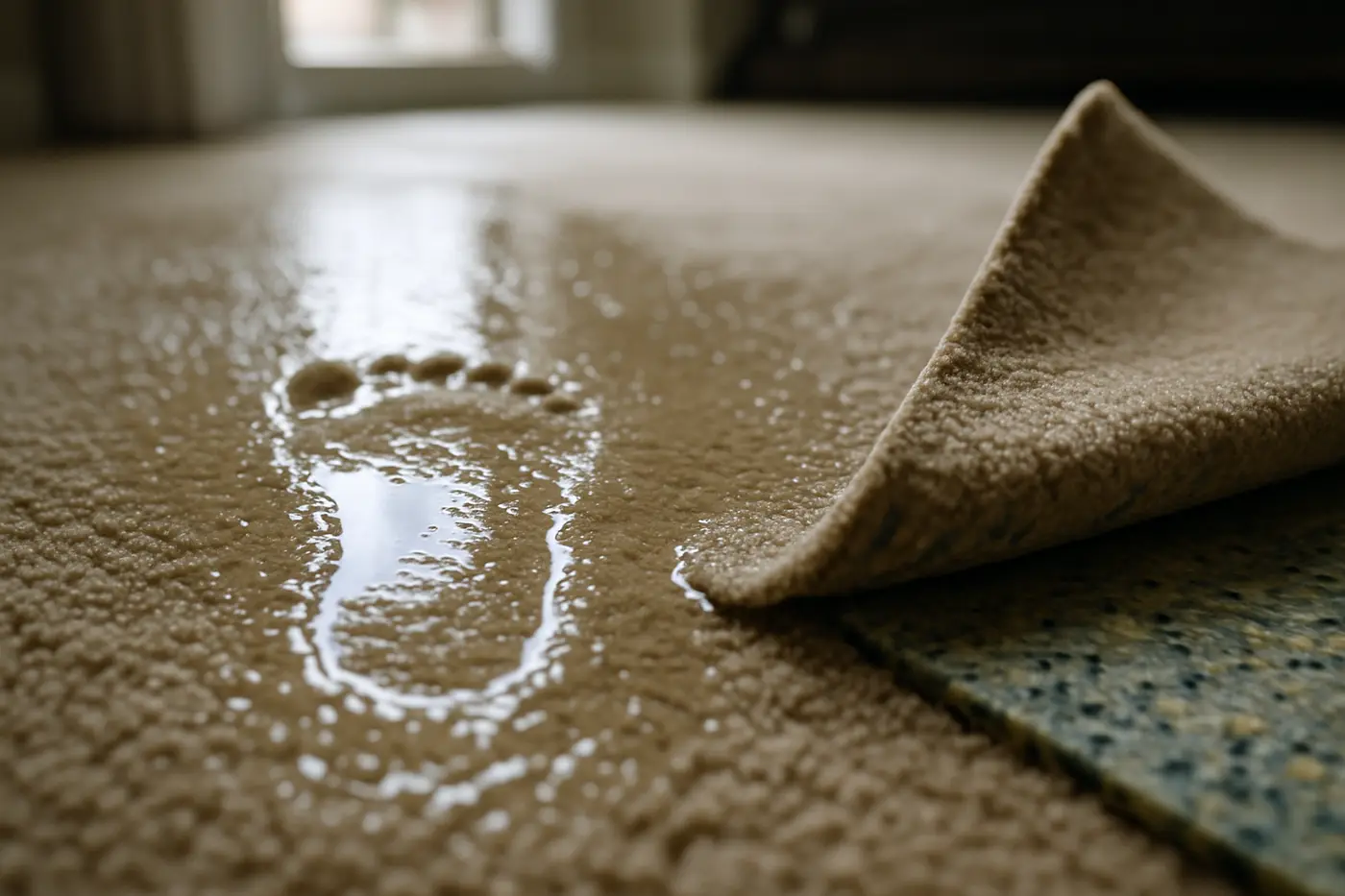
- Carpet pad left in place under a carpet that “feels dry” on top.
- Wet insulation left behind drywall that was dried from the room side only.
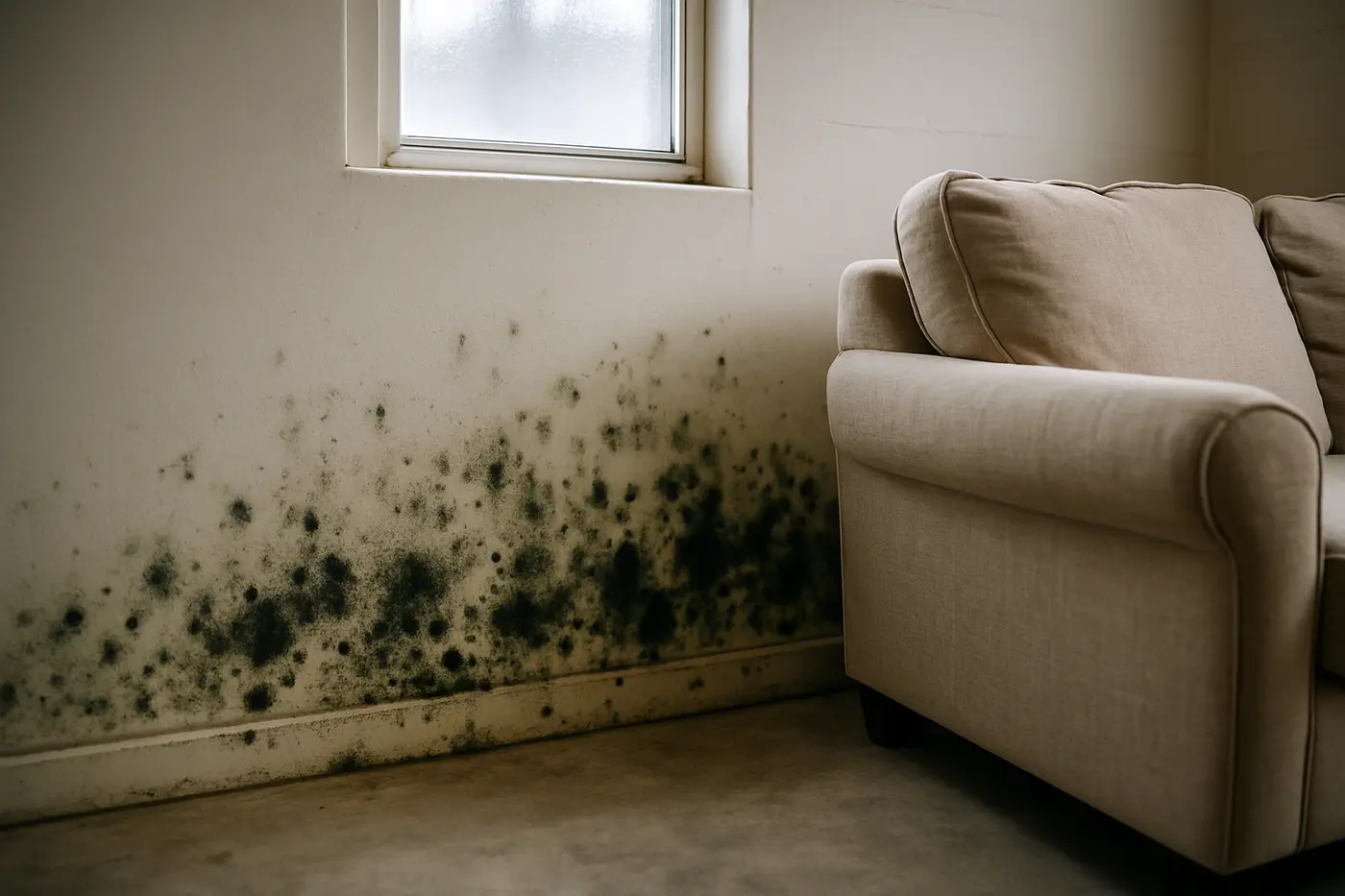
- Water still entering: a sump pump that has not been fixed, a floor drain that backs up with the next rain, or a saturated foundation.
- No heat in a winter dry-out after a burst pipe, leaving the basement at 50 degrees.
What the drying days cost
Structural drying equipment is billed at $50 to $125 per unit per day. Full basement flooding cleanup in Chicago, including extraction, disposal, sanitizing and drying, runs $1,500 to $10,000 depending on size, water category and how much material comes out.
Mitigation and drying are normally covered by an Illinois homeowners policy when the cause is covered and the work is documented, which is the practical reason for the drying log. Our 2026 cost guide breaks down the numbers in more detail, and our guide to documenting a claim in Illinois covers what to photograph before we arrive.
Key takeaways
- Expect 5 to 10 days for a Chicago basement, against 3 to 5 for an above-grade room.
- The slab and foundation walls set the timeline, not the carpet or drywall.
- Drying is evaporation plus dehumidification; the basement air must stay drier than the wet material around the clock.
- In summer, outside air is wetter than the drying chamber. Keep the windows shut.
- “Dry” means the material reads within a few points of an unaffected reference, not that it feels dry.
- A dated drying log with temperature, RH, GPP and material readings is what your adjuster expects.
- Combined sewer backups are Category 3: materials come out first, then the structure dries.
If your basement is wet now, get the contents off the floor and call. Our water damage restoration crews cover Chicago and the surrounding suburbs and set up drying equipment the same day where possible.