- #mold
- #basement
- #humidity
- #iicrc-s520
- #epa-guidance
- #chicago
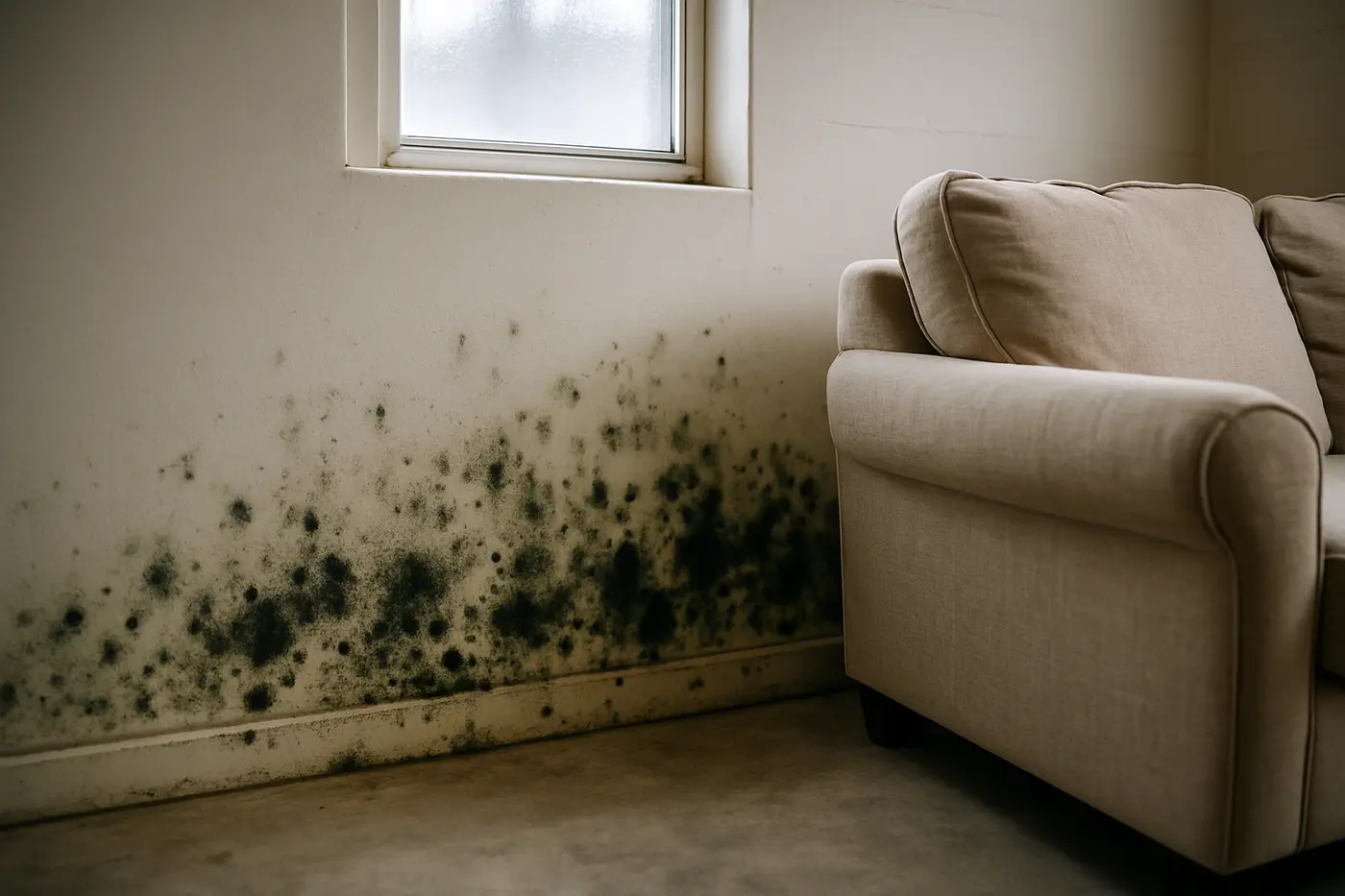
Mold can begin growing on wet drywall, carpet pad and framing within 24 to 48 hours, and a Chicago basement gives it everything it needs: cool temperatures, humid air, poor airflow and porous materials. Dry it inside that window and you have a drying job. Miss it and you have a remediation job under the IICRC S520 standard.
Here is why that window is so short in a Chicago basement, what the EPA says you can handle yourself, and where the line is for calling a professional.
What mold needs, and what a wet basement gives it
Mold spores are in every home, harmless on a dry surface. To grow, they need four things:
- Moisture. Not standing water, just a damp surface or air above about 60 percent relative humidity for long enough.
- Food. The paper facing on drywall, wood framing, carpet backing, cardboard, dust and fabric.
- Temperature. Roughly 40 to 100 degrees. Almost anywhere people live.
- Time. 24 to 48 hours to germinate, a few days to become visible.
A finished basement after a flood provides all four at once. Chicago adds a fifth factor: the air outside. From late May through September, dew points sit at 65 to 75 degrees. When that air drifts into a basement that is 55 to 65 degrees, relative humidity climbs and moisture condenses on the slab, the foundation walls and cold-water pipes. Many basements run at 60 to 70 percent humidity all summer without any flooding. Add a wet floor and the air is at 85 to 95 percent within hours.
The 48-hour clock
Here is what happens in a wet Chicago basement, hour by hour, when nothing is done.
| Time since wet | What is happening | What it means for the job |
|---|---|---|
| 0 to 24 hours | Materials absorbing water. Spores germinating. No visible growth. | A drying job: extract, remove pad, set equipment. |
| 24 to 48 hours | Hyphae growing on drywall paper and pad. Musty odor may start. | Still a drying job, with antimicrobial treatment and a look behind baseboards. |
| 48 to 72 hours | Visible spotting on lower drywall, carpet underside and cardboard. | Wet drywall and pad removed rather than dried. |
| 3 to 7 days | Colonies spreading behind drywall, into insulation and sill plates. | A remediation job under S520: contain, remove, clean, verify. |
| 1 week and beyond | Growth in wall cavities, subfloor and joists. Spores moving upstairs. | Larger scope, more demolition, higher cost. |
The line between the second and third rows is the difference between a basement flooding cleanup job at $1,500 to $10,000 and a mold remediation job at $1,500 to $6,000 on top of it.
Why the basement is worse than the room upstairs
An upstairs bedroom with the same amount of water dries in three to five days and rarely grows anything. The basement below it is a different environment.
It is cool and still. A basement at 58 degrees with one small window and no cross-ventilation evaporates water slowly, so materials stay wet for the full 48 hours and beyond. This is why we run a basement drying chamber warm.
The lower two feet of wall are the wettest and the least visible. Drywall in a finished basement is usually on furring strips against the foundation, often with insulation behind it. Water wicks up the drywall paper and sits in the insulation, and the first visible sign is a stain on the baseboard days later. Paneling in older bungalows in Portage Park, Beverly and Berwyn hides the same problem.
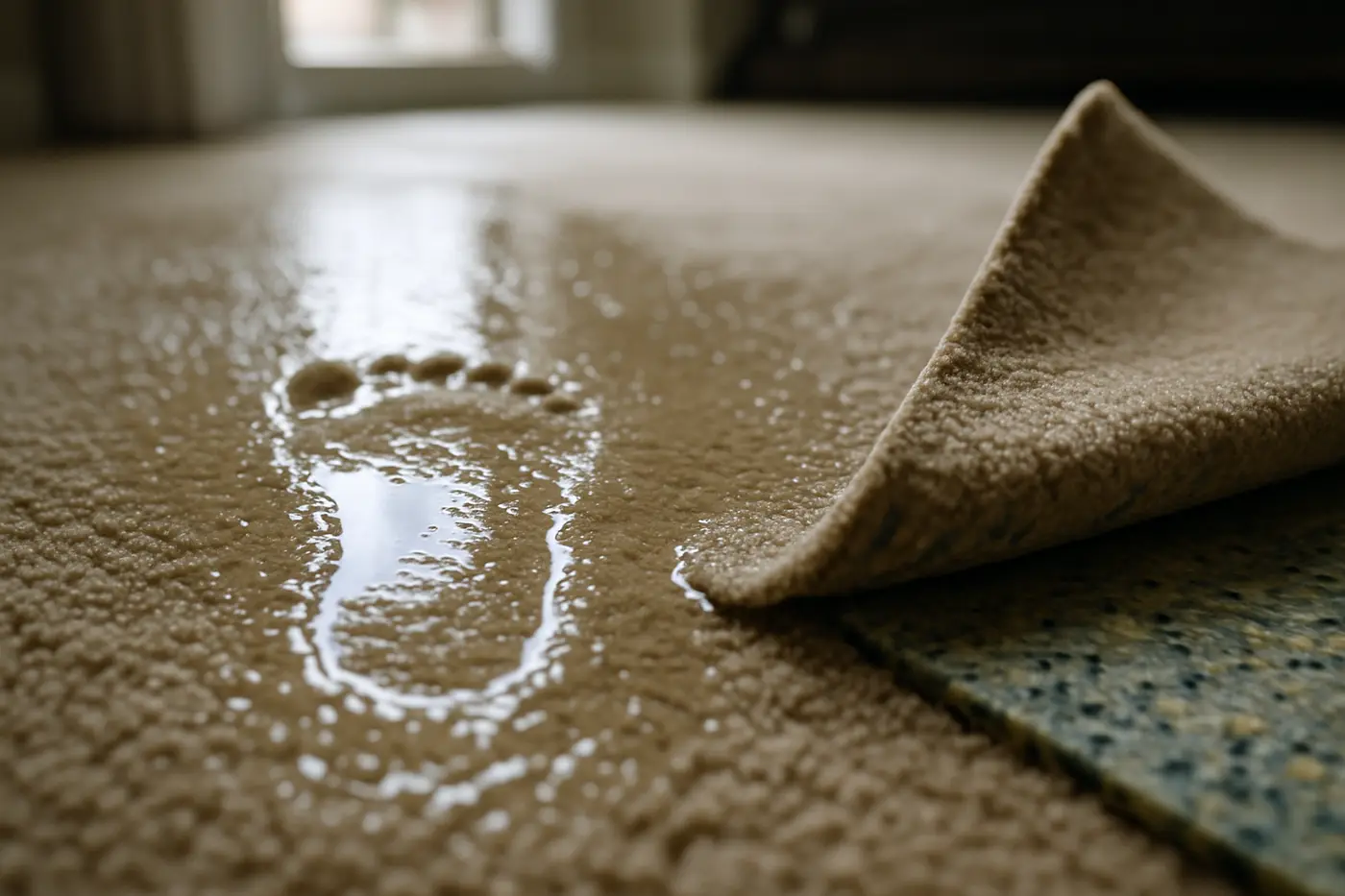
Carpet pad on a slab. A sponge on a cold concrete surface that keeps releasing moisture. It is the most common place we find growth after a basement flood.
Stored contents. Cardboard boxes, clothing, books and upholstered furniture on the basement floor grow mold faster than any building material.
Stack effect. Basement air moves upstairs through the stairwell, the ductwork and every gap in the floor. In a bungalow or two-flat, what grows down there does not stay down there.
Combined sewer backups: mold is not the only problem
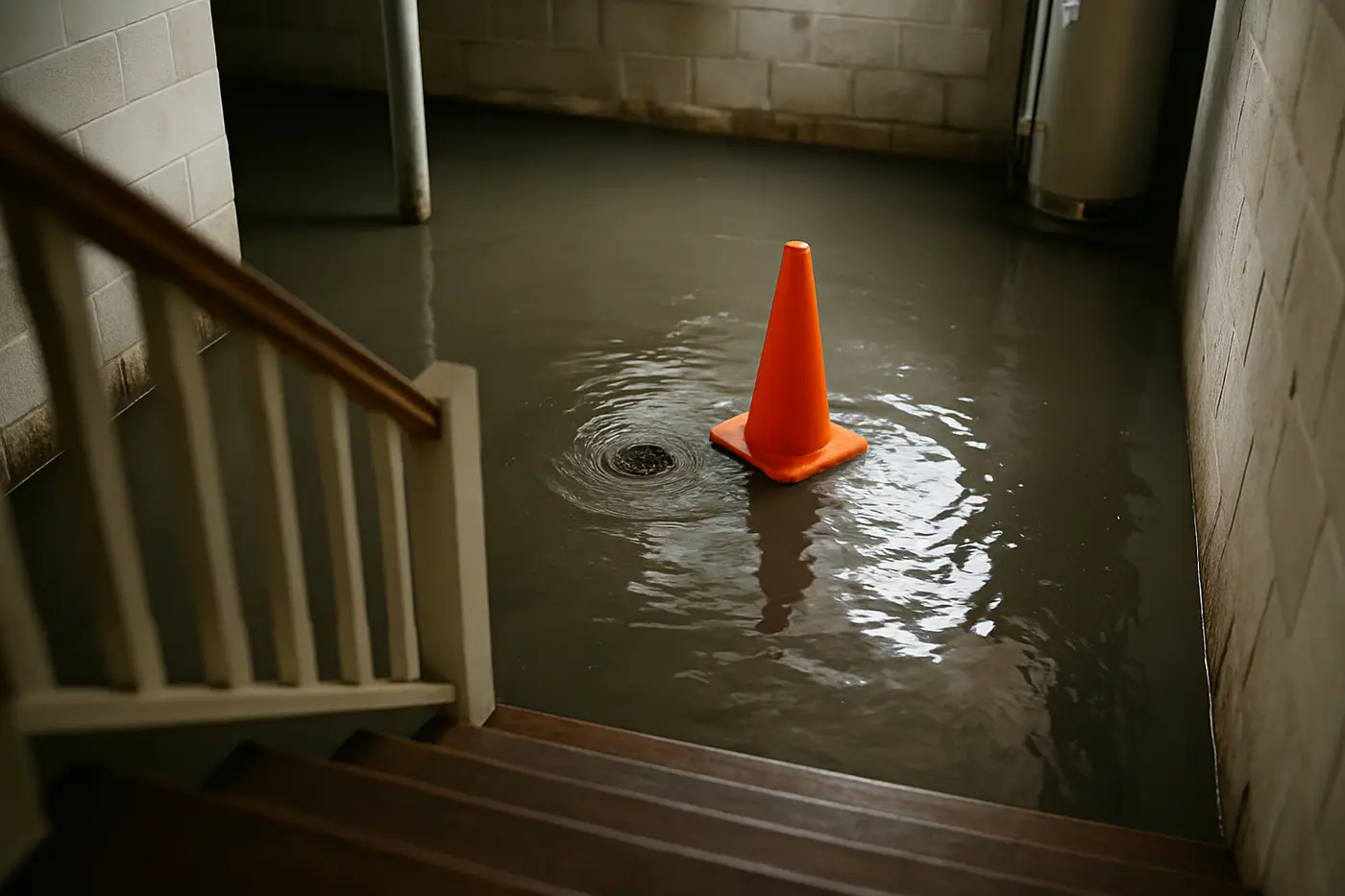
Most basement flooding in Chicago and the older inner suburbs arrives through the floor drain when a heavy rain surcharges the combined sewer. That water is Category 3 under the S500 standard, and the mold question is secondary to the sewage question. Drywall, pad, carpet and porous contents that touched it are removed regardless of how quickly you call, non-porous surfaces are sanitized, and only then does drying start. If the basement sat for days, as many did after the July 2, 2023 storm, the removal scope simply grows. Our guide to sewage backup in your basement covers what to touch and what to leave alone.
What the EPA says about small areas
The EPA’s guidance for homes draws a practical line at about 10 square feet, a patch roughly 3 feet by 3 feet. Below that, on a surface you can see and reach, a homeowner can generally handle the cleanup. The EPA’s conditions are worth following exactly:
- Fix the water problem first. Cleaning mold without stopping the moisture just means it comes back.
- Wear protection. An N95 respirator, gloves and goggles without vents.
- Scrub hard surfaces with detergent and water, then dry them completely.
- Discard absorbent materials that have visible growth, such as ceiling tiles, carpet pad and drywall. The growth is inside the material and cannot be scrubbed off.
- Do not paint or caulk over mold. The growth continues behind it.
- Do not run the furnace or air conditioning if you suspect the ductwork is contaminated.
The EPA does not recommend bleach as a routine cleaner and does not treat sampling as necessary in most cases: if you can see it, remove it. Two caveats for basements: a 3 by 3 foot patch on the face of the drywall usually means a larger area on the back, and if the source was a sewer backup the size threshold does not apply.
What S520 means when a professional takes over
The IICRC S520 Standard for Professional Mold Remediation is the reference restoration contractors work to. The core idea is simple: mold is removed, not killed. Spraying a colony and leaving the material in place does not fix the problem, because dead mold is still an allergen.
In practice, a remediation to S520 looks like this:
- Assess and moisture-map the area and find the source. Nothing starts until the water is stopped.
- Contain the work area with plastic sheeting and zippered doorways, and run a HEPA-filtered negative air machine so disturbed spores do not travel upstairs.
- Protect occupants. Keep children, pets and anyone with respiratory conditions out of the area during demolition.
- Remove the source. Cut out affected drywall, insulation, pad and paneling and bag it inside the containment.
- Clean what stays. HEPA vacuum and damp-wipe framing, slab and block walls; sand or wire-brush framing where growth has penetrated.
- Dry the structure to dry standard with air movers and LGR dehumidifiers.
- Verify. Visual inspection, moisture readings and, on larger jobs, independent sampling before the containment comes down.
- Rebuild with materials that suit a basement: moisture-resistant drywall, closed-cell insulation, no carpet pad on the slab.
When to call a professional
Call rather than clean it yourself if any of these apply:
- The visible area is larger than about 10 square feet.
- Growth is inside a wall cavity, behind paneling, under flooring or in the ceiling.
- The water came from a floor drain, toilet, sump pit or outside flooding.
- The basement was wet for more than 48 hours before drying started, whether or not you can see mold yet.
- There is a musty odor with no visible source.
- The furnace or ductwork may have taken in water or spores.
- Someone in the home has asthma, allergies or a compromised immune system.
- You are a tenant or live in a condo and need a written assessment for the landlord or association.
For a basement that is wet right now and not yet moldy, the call is to a water damage restoration crew, not a mold contractor.
Health notes, kept general
Mold exposure commonly causes nasal congestion, throat and eye irritation, coughing and wheezing. People with asthma, allergies or weakened immune systems are more sensitive, and so are young children and older adults.
You cannot tell how a mold will affect you from its color, and there is no reliable way to identify a species by eye. Whatever the species, the fix is the same: remove the moisture and remove the growth. If you or a family member has symptoms you connect to the basement, talk to a doctor and say when the water damage happened.
Beating the clock
The way to avoid all of the above is to make the basement dry before the 48 hours are up. That is the whole strategy, and it looks like this:
- Extract standing water within hours, not days. Our water extraction crews treat this as the emergency step.
- Pull the carpet pad and get the carpet up off the slab.
- Remove baseboards and, if the drywall is wet more than a few inches up, cut out the lower section so air reaches the framing.
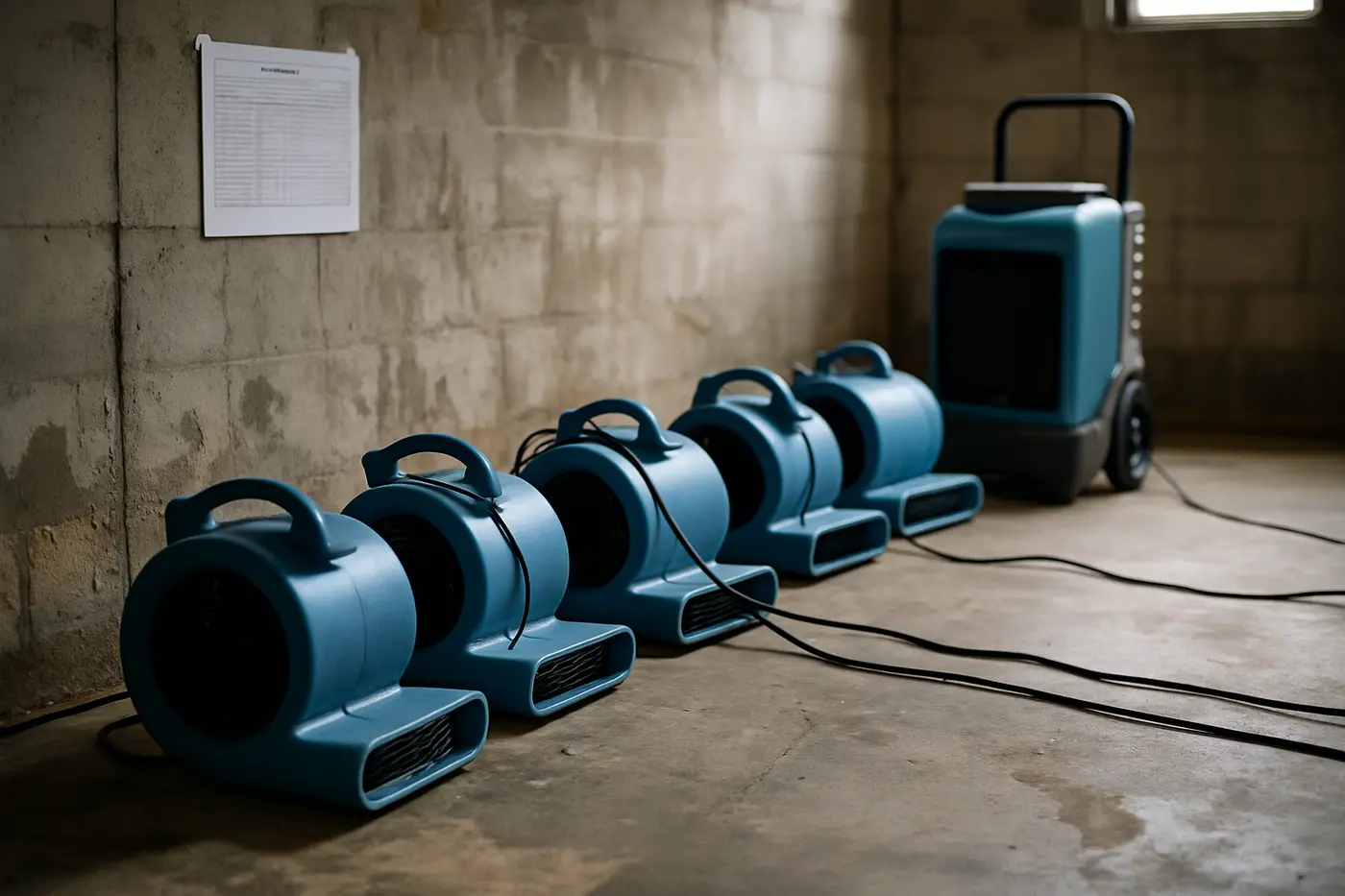
- Run air movers and an LGR dehumidifier around the clock until materials reach dry standard, usually 5 to 10 days in a basement. Our article on how long a basement takes to dry explains the readings.
- Treat exposed framing and slab with an antimicrobial as you go.
- Get contents off the floor and out of the basement.
Year-round, run a dehumidifier from May through September, store contents in plastic bins on shelving rather than cardboard on the slab, and fix the flooding source: a battery backup for the sump pump, and a backwater valve or overhead sewer conversion if the floor drain has backed up before. Our summer storm checklist covers those fixes.
Key takeaways
- Mold can start on wet drywall, pad and framing within 24 to 48 hours, and a cool, humid Chicago basement keeps materials wet that long by default.
- Basements are worse than upstairs rooms: cool still air, hidden wet drywall against the foundation, pad on the slab and stored contents.
- Combined sewer backup is Category 3: porous materials come out regardless of mold.
- The EPA line for do-it-yourself cleanup is about 10 square feet on a visible surface, with the water fixed first and an N95, gloves and goggles.
- Remediation to the IICRC S520 standard removes mold inside containment with HEPA-filtered negative air, and verifies before rebuilding.
- Color does not tell you the species, and the fix is the same either way.
- The cheapest mold remediation is a basement dried to standard inside 48 hours.
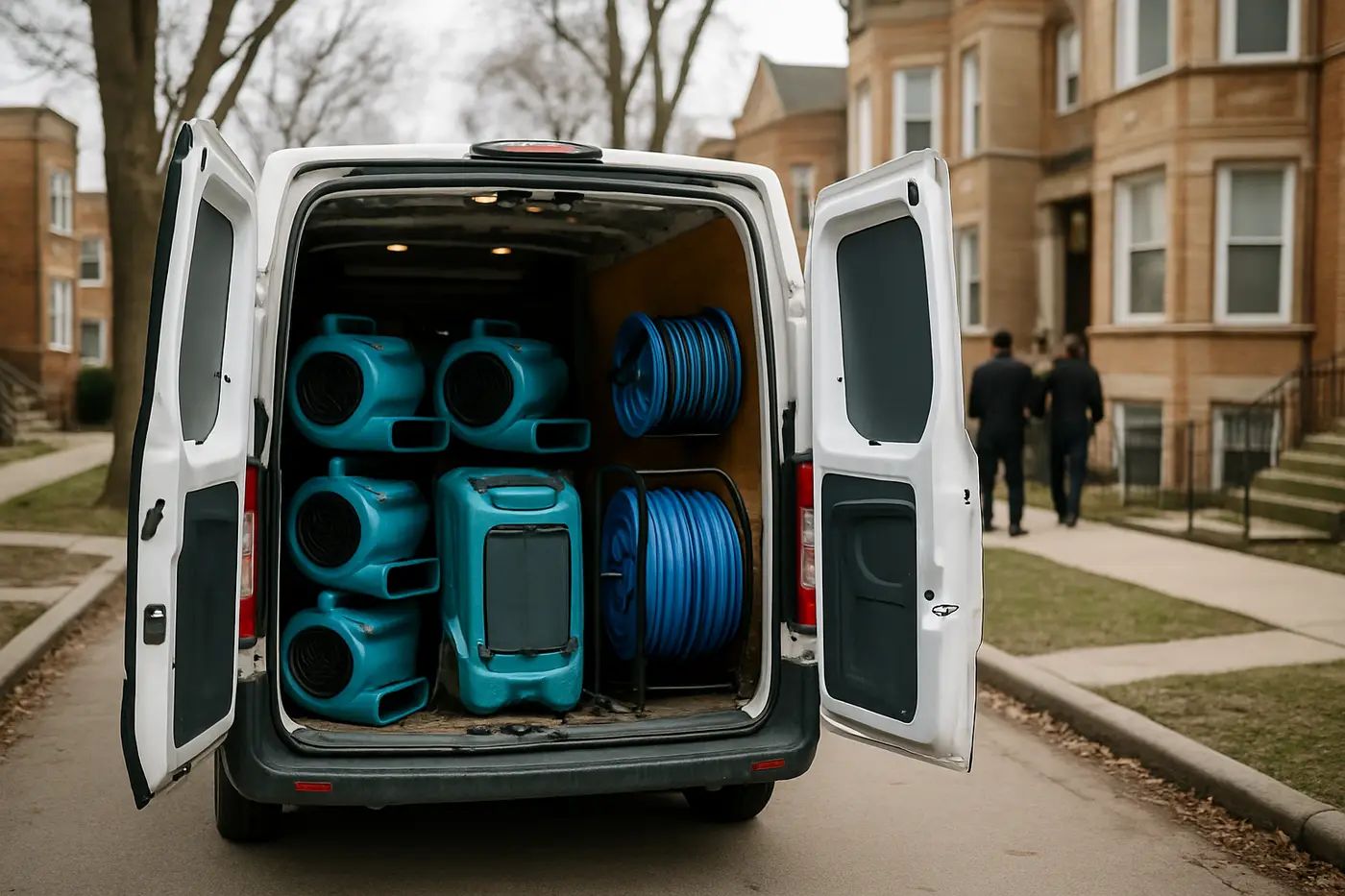
If your basement is wet now, the clock is already running. Get the contents up and call. We cover Chicago and the surrounding suburbs and can usually have drying equipment running the same day.