- #sewage-backup
- #combined-sewer
- #category-3
- #basement
- #chicago
- #emergency
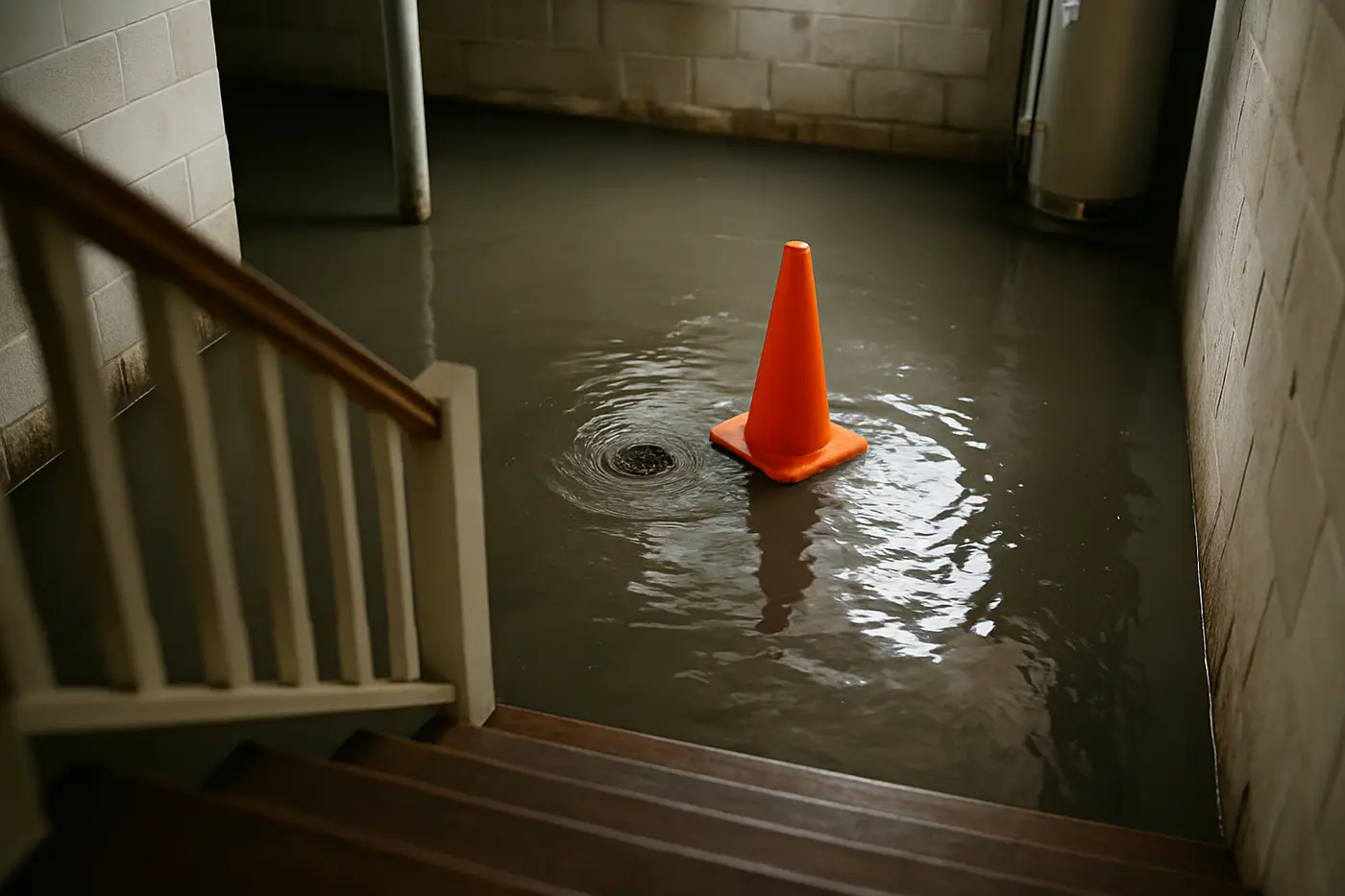
If sewage has backed up into your Chicago basement, keep everyone out, shut off the power to the basement if the panel is dry, do not touch the water without gloves and boots, report it to 311, photograph everything, and call a restoration company. Combined sewer backup is Category 3 black water and needs sanitizing, not just drying.
That is the short version. Here is why, and what happens next.
Why Chicago basements get sewage instead of rainwater
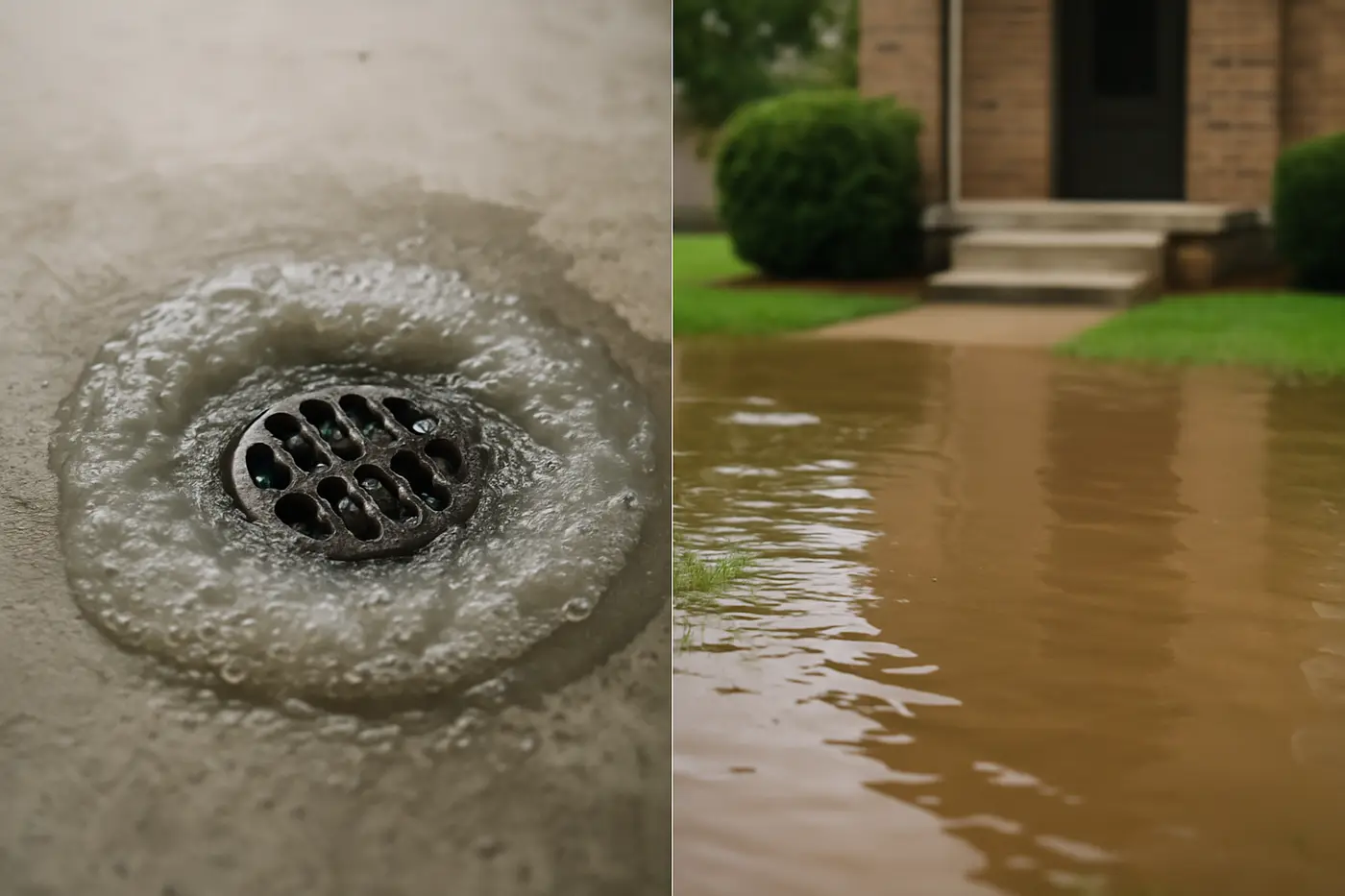
Most of the City of Chicago and the older inner suburbs, including Oak Park, Cicero, Berwyn and parts of Evanston, run stormwater and sanitary sewage through the same pipes. In a short, intense summer downpour the combined sewer fills faster than it can drain, the pipes surcharge, and the water looks for the lowest opening it can find. In a house with a full basement, that opening is the floor drain, the basement toilet, the laundry tub or the shower.
What comes up is diluted sewage: everything that was in the main, mixed with street runoff. The Metropolitan Water Reclamation District’s Deep Tunnel, with the Thornton reservoir online since 2015 and the first stage of McCook since 2017, has reduced how often this happens, but it has not eliminated it. On July 2, 2023, parts of the West Side, Cicero and Berwyn saw close to 9 inches of rain and thousands of basements backed up in a single day.
If your basement flooded during a storm and the water came from a drain or fixture rather than through a window well or a foundation crack, treat it as a sewer backup until proven otherwise.
What Category 3 water means for the cleanup
The IICRC S500 water damage standard splits water into three categories. Category 1 is clean supply water from a burst pipe. Category 2 is gray water from a washing machine or dishwasher. Category 3 is grossly contaminated water: sewage, river flooding, and anything that has been sitting long enough to grow bacteria.
The category decides the job. With clean water we extract, dry and monitor. With Category 3 water, every porous material that touched it is removed, every hard surface is cleaned and then disinfected, and only then does the drying equipment go in.
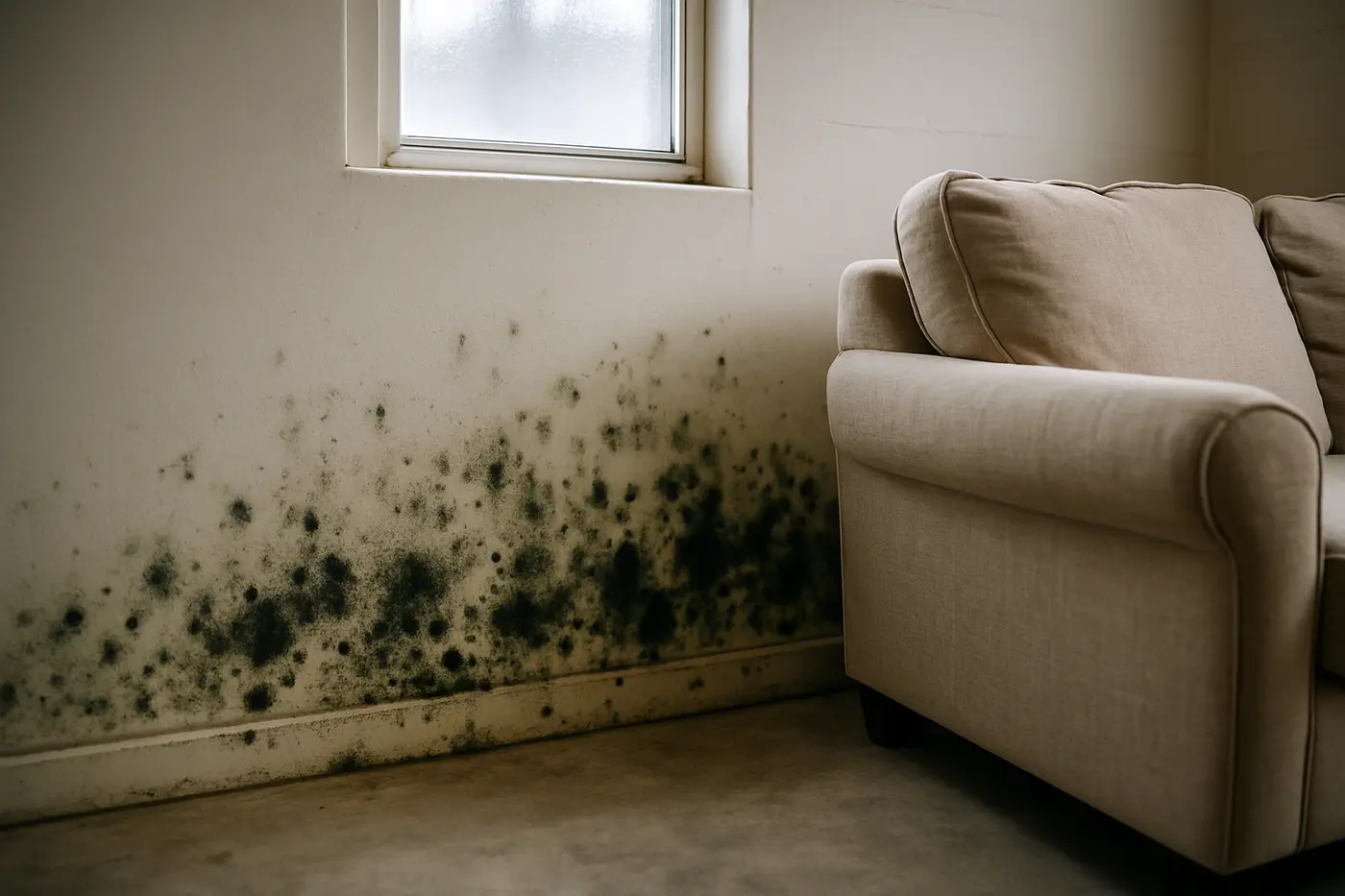
Time makes it worse. Sewage that sits in a cool, damp Chicago basement for two or three days wicks further up the drywall, soaks deeper into the framing and starts growing mold on top of the bacteria already present. The EPA’s mold guidance explains how moisture control and prompt drying limit that growth.
The first thirty minutes
- Keep everyone out. Children and pets first.
- Deal with the electricity. If the panel is upstairs or on a dry wall, switch off the breakers for the basement. If the panel is in the basement and there is standing water on the floor, do not wade to it. Call the utility or an electrician instead. Never enter a flooded basement with standing water while the power is on.
- Stop adding water. Every flush, shower and laundry load upstairs goes into the same overloaded pipe and can come straight back up. Stop using water in the house until the level in the basement drops.
- Photograph from the stairs. Take wide shots showing the water line, the drain it came from and the contents in the water. Video a slow pan with the date visible.
- Report it to 311. The City of Chicago logs basement flooding and sewer backups through 311. That report creates a record for your claim and tells the Department of Water Management where the system surcharged.
- Call your insurer and a restoration company. Ask the insurer whether your policy carries a water backup endorsement. Then get a sewage cleanup crew on the way.
What not to touch
- The water itself, without rubber boots, waterproof gloves and eye protection. Cuts on your hands or feet are an infection route.
- The floor drain or cleanout. Do not plunge it, do not pull the cover, do not pour anything down it. While the main is surcharged, opening the drain can let more water in, and you can be sprayed.
- Anything electrical standing in water: the sump pump, the washer and dryer, the furnace, the water heater, extension cords, power strips.
- The furnace and water heater controls. Gas-fired appliances with wet burners, valves or control boards need a technician before they are relit.
- Wet contents you plan to carry upstairs. Dragging soaked cardboard through the house spreads contamination. Bag it in the basement and take it out the exterior door where there is one.
- Fans and open windows as a first move. Blowing air across raw sewage aerosolizes it. Air movement comes after cleaning and disinfection, not before.
If you must go in: protective gear
If you have to enter before the crew arrives, wear rubber boots, waterproof gloves over long sleeves, an N95 or better respirator, and safety glasses. Keep the visit short. Afterward, leave the boots and gloves at the top of the stairs, wash your hands and forearms with soap and warm water, and shower before you touch food. Anyone with open wounds, a weakened immune system or a respiratory condition should stay out entirely.
What must be thrown out, and what can be saved
The rule under S500 is simple: porous materials that absorbed Category 3 water are removed and disposed of. Non-porous materials can be cleaned and disinfected. Semi-porous materials are judged case by case.
| Item | What we do |
|---|---|
| Carpet and carpet pad | Remove and dispose of. It cannot be sanitized to a safe standard. |
| Drywall and paneling that got wet | Cut out to at least 12 inches above the highest water line; most crews make a 2-foot flood cut. |
| Fiberglass or cellulose insulation in the wall cavity | Remove and dispose of. |
| Particleboard, MDF shelving, laminate cabinets | Remove and dispose of. |
| Mattresses, upholstered furniture, rugs, stuffed toys | Dispose of. |
| Cardboard boxes, paper, books, photographs | Dispose of, after photographing for the claim. |
| Food, medication, cosmetics that contacted the water | Dispose of, including sealed containers with wet labels. |
| Solid wood furniture | Case by case. Clean, disinfect and monitor; discard if the finish lifts or the joints swell. |
| Metal shelving, plastic bins, glass, ceramic, sealed concrete | Clean, disinfect, dry, keep. |
| Furnace, water heater, washer, dryer | Inspected by a technician. Submerged motors, burners and control boards are usually replaced. |
Photograph every item before it goes in the dumpster and keep a list with rough replacement values for the adjuster.
Disinfection: the order matters
People reach for bleach first. Bleach poured onto dirty concrete does very little, because the organic matter on the surface uses up the disinfectant before it reaches the bacteria. The sequence we follow on a basement flooding cleanup with sewage is:
- Extract the standing water with a pump and a truck-mounted or portable extractor.
- Demolish and bag the porous materials from the table above.
- Gross clean every remaining surface: pressure wash or scrub with detergent, then extract the rinse water.
- Disinfect with an EPA-registered disinfectant applied to a clean surface and left wet for the dwell time on the label. Rushing this step is the most common mistake we see in do-it-yourself cleanups.
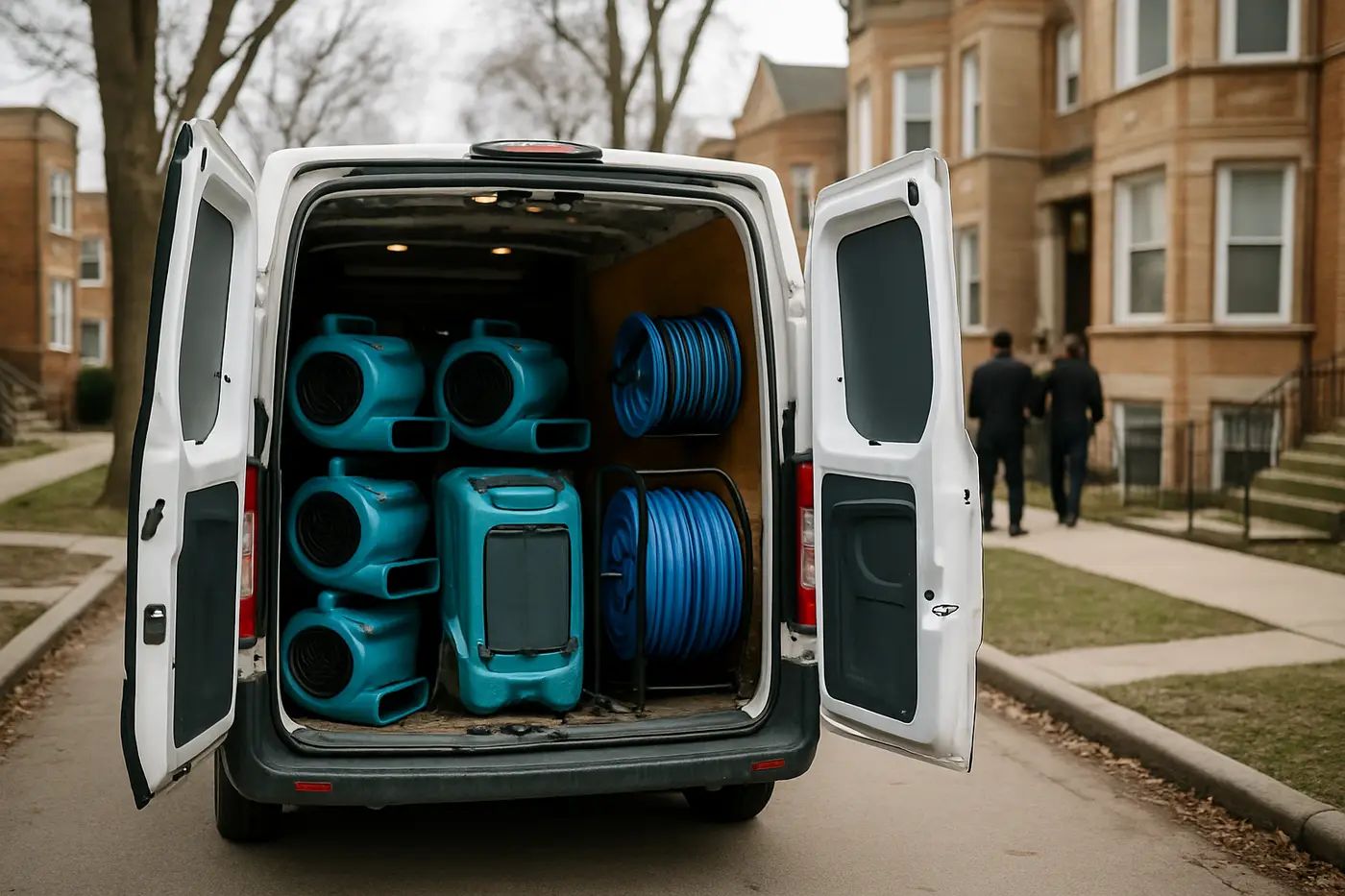
- Dry with air movers and low-grain refrigerant dehumidifiers, with a HEPA air scrubber running to capture what the air movers stir up. Basements in Chicago are cool and damp, so expect 5 to 10 days of drying rather than 3 to 5.
- Verify with moisture readings on the framing and slab before anything is rebuilt.
Sewage backup cleanup and sanitization in Chicago typically runs $3,000 to $10,000 depending on the size of the basement, how much was finished and how long the water sat. Rebuilding drywall, flooring and cabinets is on top of that.
311, MWRD and your own drain line
Reporting to 311 does two things. It documents the event, and it prompts the Department of Water Management to check the local sewer main. MWRD runs the regional tunnels and reservoirs, so a surcharged system across a whole neighborhood is not something a homeowner can fix.
If your basement backed up on a dry day, or your neighbors stayed dry while you flooded, the problem may be in the drain line between your house and the street. That needs a plumber with a camera and a rodding machine, not a restoration crew.
Insurance: the water backup endorsement
A standard Illinois homeowners policy (HO-3) excludes water that backs up through sewers and drains, and it excludes sump pump overflow. Coverage only exists if you added a “water backup and sump discharge or overflow” endorsement. Typical limits are $5,000 to $25,000, sometimes more; check the limit before the next storm, not after.
If you have the endorsement, the claim proceeds like any other water loss: dated photos, a list of discarded contents, a moisture log and an itemized scope. We bill the carrier directly where the carrier approves it. If you do not have the endorsement, the cleanup is out of pocket, and a federal disaster declaration like the one for Cook County after July 2023 is the only route to outside help. We explain how adjusters separate a sewer backup from a flood in sewer backup vs flood: how your Illinois claim is decided.
Stopping the next one
A backwater valve on the main drain line, or an overhead sewer conversion that lifts your basement plumbing above street level with an ejector pump, is the standard fix in Chicago. The City of Chicago and many suburbs have run rebate programs for flood-control work. A battery backup on the sump and ejector pumps covers the power outages that come with the same storms. Our summer storm basement checklist walks through the full list.
Key takeaways
- Water that comes up a floor drain or basement toilet during a storm is Category 3 sewage, even when it looks like rain.
- Keep people and pets out, cut the power if the panel is dry, and stop using water upstairs.
- Do not open or plunge the floor drain, touch energized appliances, or run fans before the basement is cleaned.
- Carpet, pad, wet drywall, insulation, particleboard and upholstered items are removed; hard surfaces are cleaned, then disinfected, then dried.
- Report to 311, photograph everything, and ask your insurer whether you carry a water backup endorsement.
- Basements take 5 to 10 days to dry once cleaning is done; sewage cleanup typically runs $3,000 to $10,000.
- Fit a backwater valve or overhead sewer and a battery backup pump before the next storm season.
If sewage is on your basement floor right now, follow the first six steps, then call us or send the form. The technicians we work with handle sewage cleanup across Chicago and the surrounding suburbs, from Austin and Cicero to Oak Park. If the water sat for more than two days, read our guide to mold after water damage in Chicago basements as well.