- #insurance
- #sewer-backup
- #flood
- #illinois
- #claims
- #basement-flooding
In Illinois, a standard HO-3 homeowners policy covers sudden and accidental water discharge inside the house, excludes sewer backup and sump overflow unless you bought a water backup endorsement, and excludes surface flooding entirely unless you carry a separate NFIP or private flood policy. The adjuster’s first question is always the same: where did the water come from?
That answer decides whether a wet Chicago basement is a paid claim, a capped payout or a denial. Here are the three buckets Illinois insurers use, how an adjuster decides which one you are in, and what to do when you disagree.
Three buckets, three very different outcomes
Every water claim gets sorted by source before anyone looks at the damage.
| Where the water came from | Bucket | What pays | Typical limit |
|---|---|---|---|
| Burst supply pipe, water heater, appliance hose, frozen pipe with heat maintained | Sudden and accidental discharge | Standard HO-3 policy | Policy dwelling and contents limits |
| Floor drain, basement toilet, shower drain, sump pit overflow | Water backup and sump overflow | Endorsement, if you bought it | $5,000 to $25,000, sometimes more |
| River, creek, overland flow, water through doors, windows and foundation | Flood | NFIP through FEMA, or private flood policy | Limits of the flood policy |
| Slow drip, long-term seepage, wear and tear | Excluded | Nothing | None |
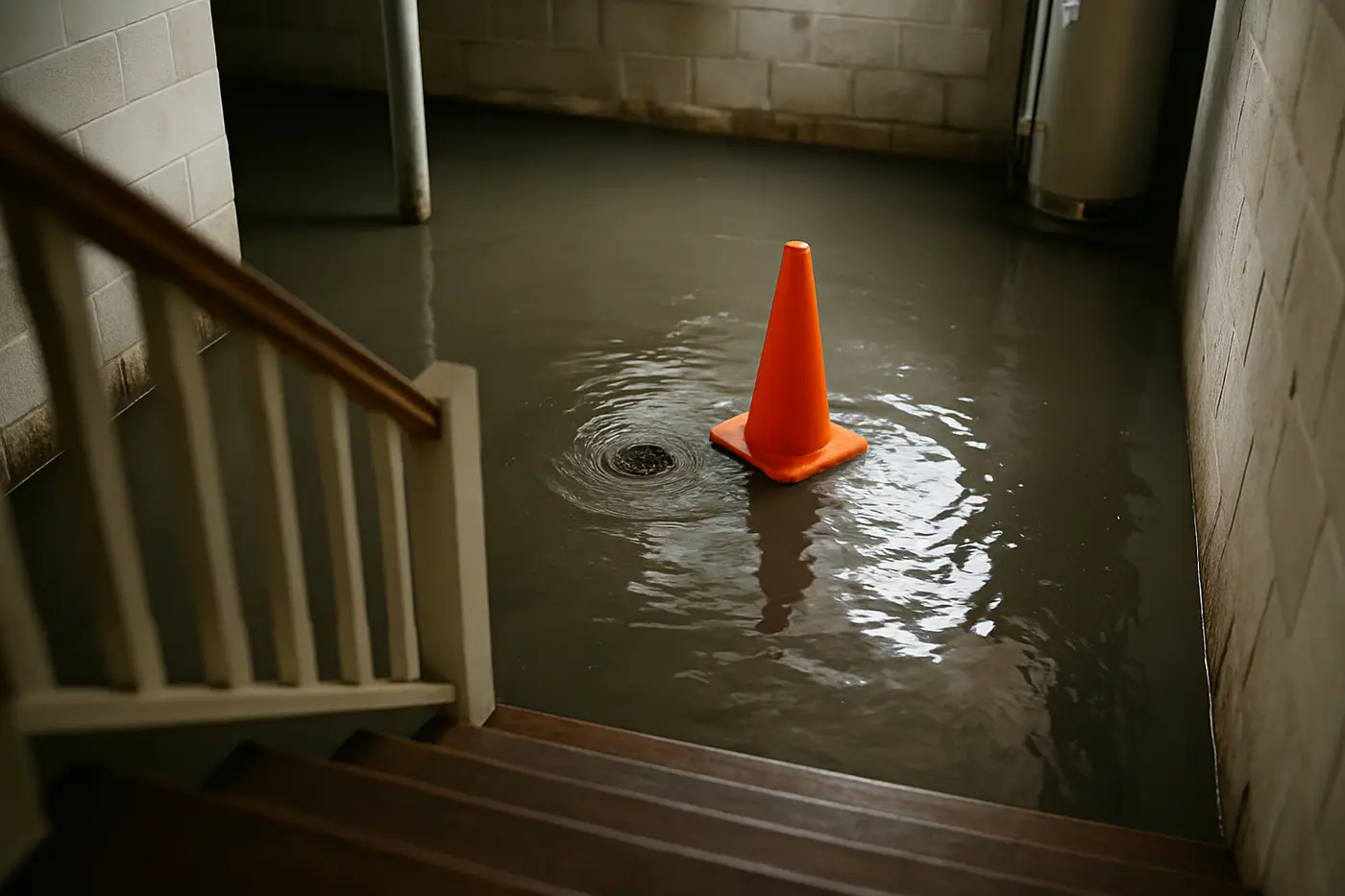
The same six inches of water on the basement floor can land in any of the first three rows. The damage looks identical. The check does not.
Bucket 1: sudden and accidental discharge
This is the coverage most people assume they have, and for inside-the-house failures they usually do. A standard Illinois HO-3 policy covers water that escaped suddenly from plumbing, heating or appliances:
- A supply line that burst behind a wall.
- A water heater that split.
- A washing machine or dishwasher supply hose that let go.
- A pipe that froze and burst, provided reasonable heat was maintained in the building.
The “reasonable heat” condition matters in Chicago. During the January 2019 polar vortex, with temperatures near minus 23 degrees Fahrenheit at O’Hare, pipes in exterior walls, attics, garages and vacant units froze across the city. A pipe that burst in a heated house is a covered loss. A pipe that burst in a two-flat unit where the tenant had moved out and the heat was off is an argument.
The policy pays to dry the house, replace wet drywall and flooring, and clean or replace contents. It generally does not pay to fix the pipe or water heater itself; that is a plumbing bill.
Bucket 2: water backup and sump overflow
This is where most Chicago basement claims go wrong. The standard HO-3 excludes water that backs up through sewers or drains and water that overflows from a sump pump. You have to add the coverage, usually called a “water backup and sump discharge or overflow” endorsement.
If you have it, it pays up to its own limit, separate from the main policy. Typical limits are $5,000 to $25,000, and some carriers offer more. If you do not have it, the claim is denied, no matter how sudden the backup was.
Two Chicago situations fall into this bucket:
Combined sewer surcharge. Most of Chicago and the older inner suburbs, including Oak Park, Cicero, Berwyn and parts of Evanston, carry stormwater and sanitary sewage in the same pipes. In a short, intense summer downpour the system surcharges and the water finds the lowest opening: your floor drain, basement toilet or shower. The MWRD’s Deep Tunnel and the Thornton and McCook reservoirs reduced these events but did not end them. That water is Category 3 sewage, and cleaning it up is a sewage cleanup job at $3,000 to $10,000 before any rebuild.
Sump pump failure. The power goes out in a storm, the pump stops, and groundwater rises through the pit onto the floor. It is a leading cause of basement flooding across the suburbs, and it is excluded without the endorsement.
The limit is the problem. A finished basement with carpet, drywall, a bathroom and a family’s stored belongings can run past $25,000 once removal, sanitizing, drying and rebuild are counted.
Bucket 3: flood
Flood, for insurance purposes, is surface water from outside: a river or creek overtopping its banks, overland flow across yards and streets, or water pushing through doors, window wells and foundation walls. Every standard Illinois homeowners policy excludes it. The only coverage is a separate flood policy, through the National Flood Insurance Program (NFIP) administered by FEMA or from a private flood insurer.
Chicago’s flood exposure is real but uneven: the Des Plaines River in Des Plaines, Park Ridge and Riverside; the North Branch of the Chicago River in Albany Park before the diversion tunnel opened in 2018; Salt Creek in Elmhurst and Villa Park; the DuPage River in Naperville and West Chicago; the Little Calumet on the far South Side. In April 2013 the Des Plaines set a record crest and the region got a federal disaster declaration. In May 2020 the Chicago River overtopped downtown and filled high-rise basements in the Loop.
If your house has taken water from any of those rivers, or if overland flow has reached your foundation, a flood policy is the only paper that pays.
Why the combined sewer makes the answer confusing
In a single Chicago storm, the same rain can produce all three buckets on the same block.
On July 2, 2023, up to about 9 inches fell on parts of the West Side, Cicero and Berwyn. Thousands of basements flooded and Cook County received a federal disaster declaration. On one street:
- The house whose basement filled through the floor drain had a sewer backup claim. Paid if they carried the endorsement, denied if not.
- The house at the low end of the street, where the water came over the sidewalk and through the window wells, had a flood claim. Paid only with NFIP or private flood.
- The house where a supply line happened to burst that week had a sudden discharge claim, covered under the standard policy.
- The house where water did both had a mixed claim the adjuster had to apportion.
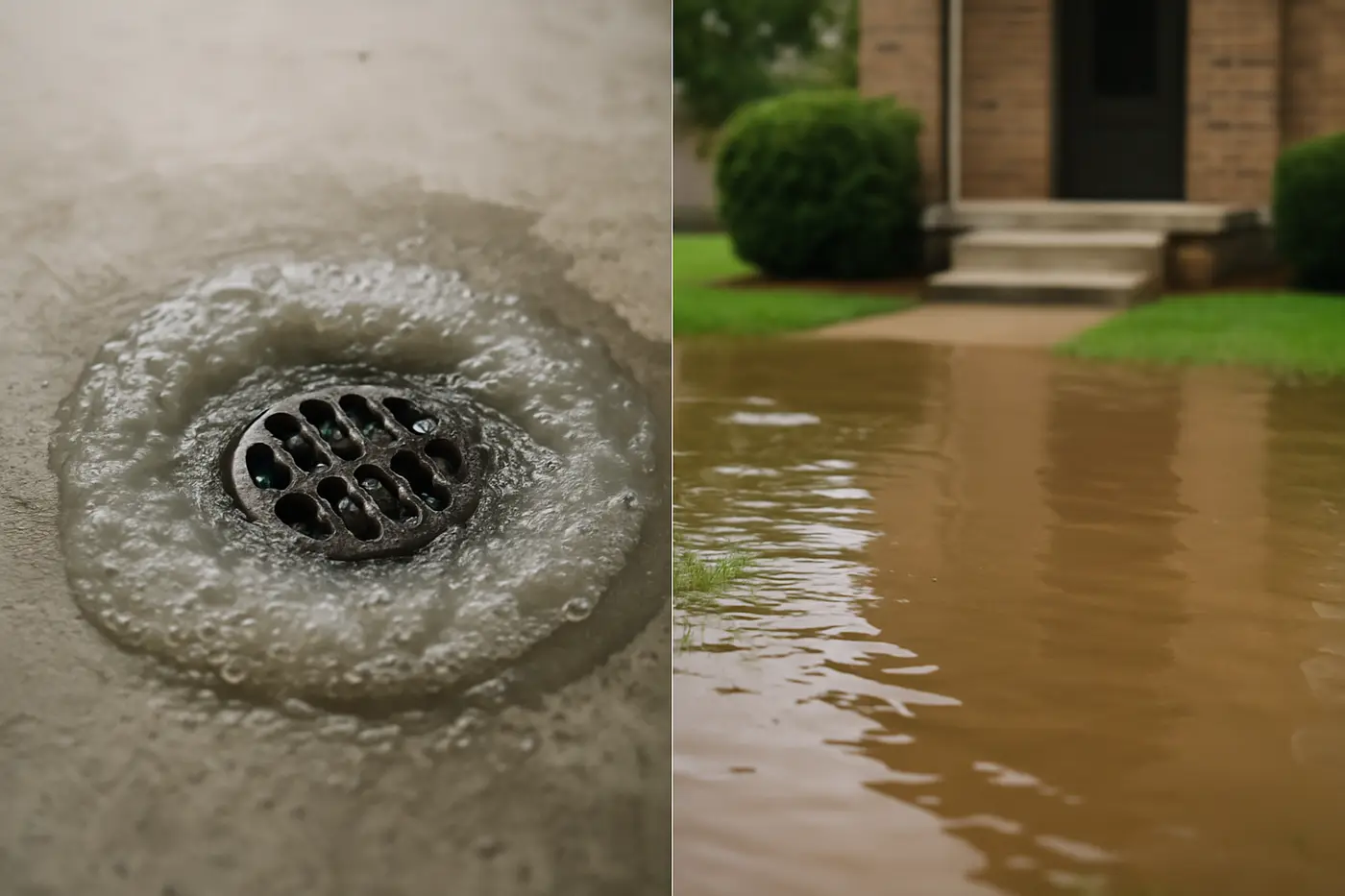
Homeowners say “the storm flooded my basement” and assume it is a flood claim. Adjusters look at the entry point. If the water came up the drain, it is backup, and “flood” is a word that gets you the wrong answer. Describe the loss accurately on the first call.
What is excluded no matter which bucket
Some water losses are outside all three:
- Gradual leaks. A supply line that dripped inside a wall for months, a shower pan that seeped, a roof that leaked through several rains. Insurers treat these as maintenance, not accidents.
- Long-term seepage. Groundwater that has come through a foundation wall or floor crack over time. A chronically damp bungalow basement is a maintenance condition, not a claim.
- Frozen pipes with no heat maintained. Covered by the sudden discharge language only if the building was reasonably heated.
- Mold from neglect. Mold that grew because a loss sat wet for weeks is a much harder claim than mold that appeared despite prompt drying. See our guide to mold in Chicago basements.
How the adjuster decides
An adjuster does not take your word for the source. They look for physical evidence, and so should you, in the first hour.
- The entry point. Stains radiating from a floor drain or toilet point to backup. A waterline highest at a window well or foundation wall points to flood. A wet ceiling and wall cavity above a dry floor point to a pipe.
- The water itself. Sewage odor, gray residue and debris in the drain trap say Category 3 backup. Silt and mud say surface water.
- The weather record. Rainfall totals for the date and whether a river gauge crested.
- The failed part. For a pipe or appliance claim, the split hose or ruptured tank. Keep it.
- The documentation. Dated photos of the source and the waterline, a moisture map from day one, a daily drying log, and an itemized scope. Xactimate is the estimating format Illinois carriers expect.
A restoration technician’s report is often the deciding document, because it records the water category and entry point before anything was cleaned. That is one reason the emergency call-out, $250 to $500 and credited against the work, is worth paying on a disputed source.
Mitigation is covered when it is documented
Whichever bucket you are in, Illinois policies expect you to take reasonable steps to prevent further damage, and they pay for mitigation and emergency services when documented. That means water extraction, drying equipment, antimicrobial treatment and removal of unsalvageable material are recoverable, provided there is a paper trail.
Keep every receipt, moisture reading and photo. Do not throw out contents before they are photographed. Do not wait for the adjuster before drying starts; waiting turns a covered loss into a neglect argument. Our step-by-step documentation guide covers what to record and when.
When you disagree with the decision
Denials happen, and not all of them hold up.
- Ask for the denial in writing, citing the specific policy language.
- Compare it to your evidence. A denial that calls a sewer backup a “flood” when the photos show water at the floor drain is worth contesting.
- Dispute it with the carrier first, in writing, with the photos, logs and scope attached.
- If that fails, the Illinois Department of Insurance handles complaints against insurers operating in the state.
- After a federal disaster declaration, as in April 2013 and July 2023, FEMA Individual Assistance and SBA disaster loans may be available for losses insurance did not cover.
Fixing the problem instead of arguing about the bucket
The cheapest claim is the one you never file. In combined sewer areas the standard fixes are a backwater valve or an overhead sewer conversion, and the City of Chicago and many suburbs run rebate programs for both. For sump-pump basements, a battery backup pump covers the outage that always seems to coincide with the storm. Our summer storm checklist walks through both.
Key takeaways
- Illinois HO-3 policies cover sudden and accidental discharge: burst pipes, water heaters, appliance hoses, and frozen pipes where heat was maintained.
- Sewer backup and sump overflow are excluded unless you carry a water backup endorsement, typically $5,000 to $25,000.
- Surface flooding from rivers or overland flow is covered only by NFIP or private flood insurance.
- In a Chicago storm, water up the floor drain is backup, not flood. Describe the entry point accurately.
- Mitigation is covered when documented: photos, moisture logs, drying log, itemized scope.
- Denied? Get it in writing, dispute with evidence, then the Illinois Department of Insurance. FEMA may help after a federal declaration.
If your basement is wet right now, the bucket can wait an hour. Stop the source, stay out of standing water with the power on, photograph the entry point, and call. Our basement flooding cleanup crews cover Chicago and the surrounding suburbs and document every job the way an adjuster expects.