- #cost
- #pricing
- #water-damage
- #chicago
- #basement-flooding
- #insurance
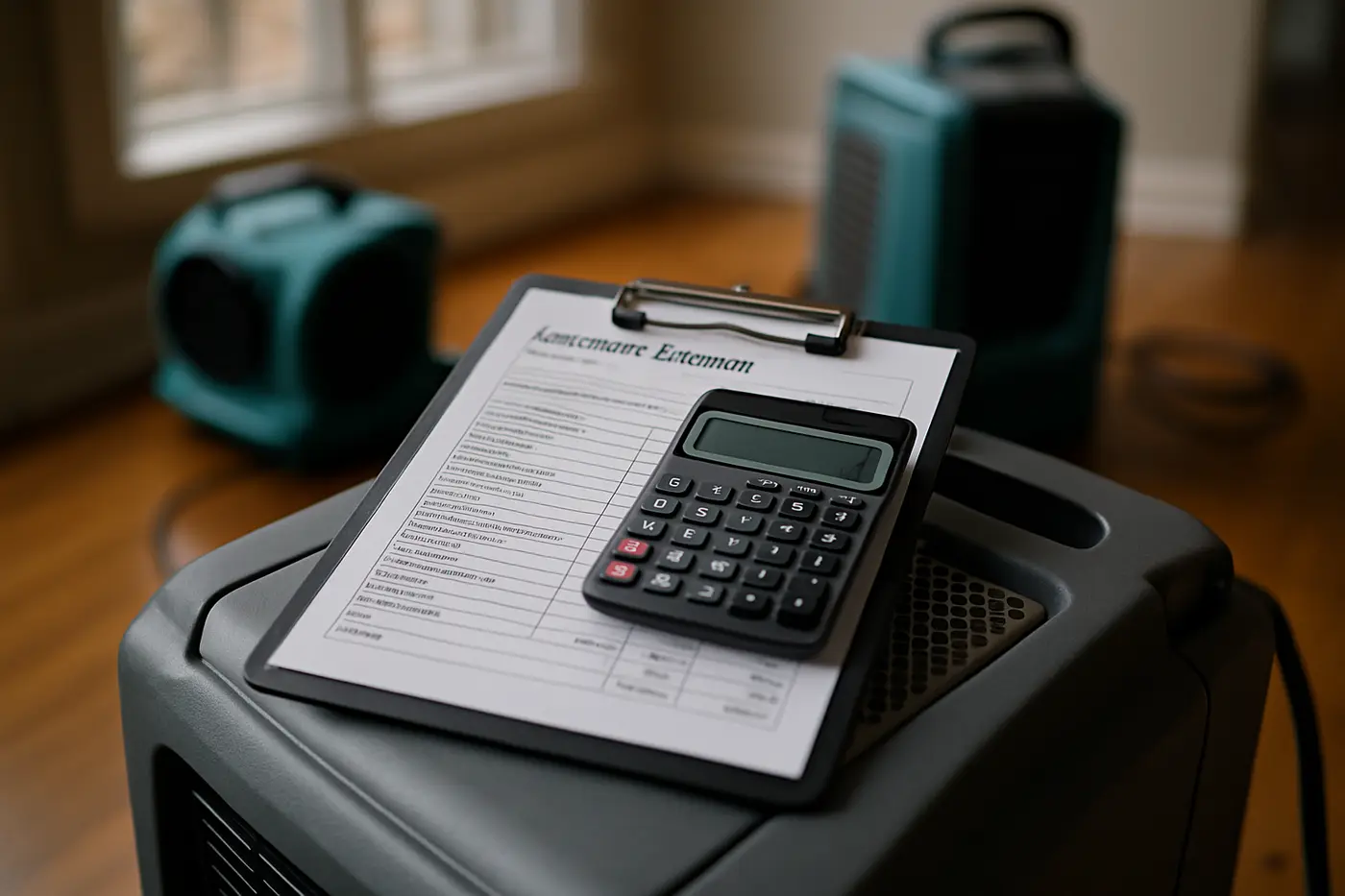
Water damage restoration in Chicago costs $2,000 to $6,500 for a clean-water loss across two or three rooms in 2026, and $6,500 to $18,000 or more when gray or black water, a finished basement or several floors of a two-flat are involved. An emergency call-out with moisture mapping runs $250 to $500 and is credited against the restoration work.
Below is the full price table we work from, what each line covers, and four typical Chicago jobs so you can see which rows apply to you.
The 2026 Chicago price table
These are the ranges we quote across Chicago and the surrounding suburbs, whether you are in a Lakeview three-flat, a Beverly bungalow or a Naperville split-level. Every job gets a written, itemized estimate before work starts.
| Job | 2026 range (USD) |
|---|---|
| Emergency call-out and inspection (moisture mapping, written report) | $250-$500, credited against restoration work |
| Water extraction (per job, standard home or basement) | $500-$2,500 |
| Basement flooding cleanup (extraction, disposal, sanitizing, drying) | $1,500-$10,000 |
| Carpet drying and restoration (per room, including pad assessment) | $200-$600 per room |
| Hardwood, laminate or tile floor drying (per area) | $400-$1,800 per area |
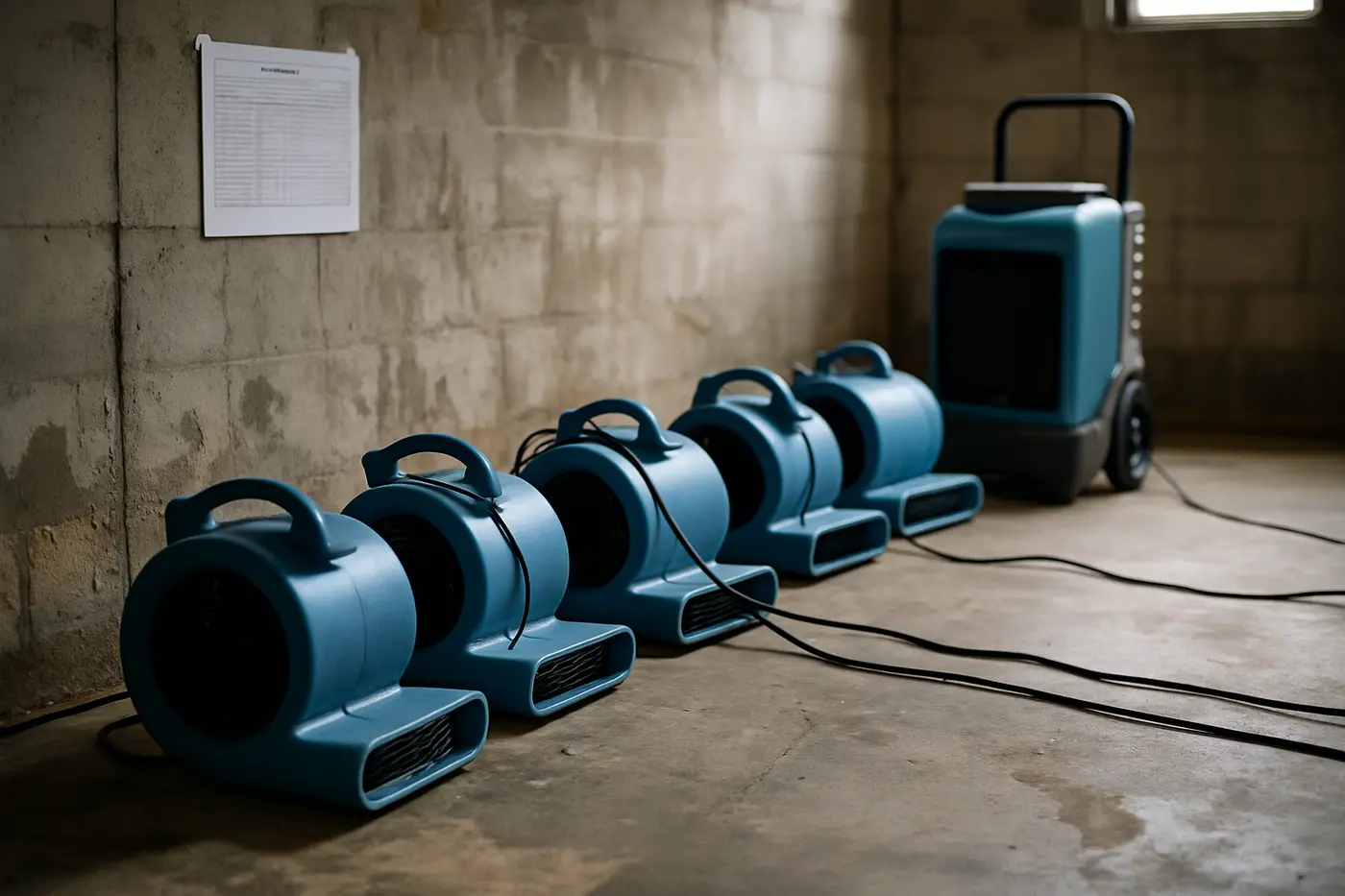
| Structural drying equipment (air movers and LGR dehumidifiers) | $50-$125 per unit per day |
| Full water damage restoration (clean water, 2 to 3 rooms) | $2,000-$6,500 |
| Full water damage restoration (gray or black water, multiple rooms) | $6,500-$18,000+ |
| Sewage backup cleanup and sanitization | $3,000-$10,000 |
| Frozen or burst pipe water damage (locate, extract, dry, minor drywall) | $1,500-$8,000 |
| Mold remediation (contained area) | $1,500-$6,000 |
| Storm damage make-safe and drying | $800-$4,500 |
| Contents pack-out and restoration | $1,000-$5,000 |
| Fire and smoke damage restoration | $5,000-$50,000+ (scope-dependent) |
Typical structural drying takes 3 to 5 days. Basements and slab floors take 5 to 10 days. A scheduled on-site inspection and written estimate is free; the call-out fee applies to emergency attendance with moisture mapping and a report, and it comes off the bill if you proceed.
What the call-out actually buys you
People ask why they should pay $250 to $500 for someone to “look at it”. The look is the job. On an emergency call-out a technician:
- Confirms the water category under the IICRC S500 standard (clean, gray or black), which decides whether materials are dried or removed.
- Maps moisture with pin and non-invasive meters and a thermal camera, so the scope covers the water behind the drywall and under the floor, not just the puddle.
- Records the starting readings that the drying log is measured against. Adjusters want to see the day-one numbers.
- Writes an itemized estimate in the format Illinois carriers expect, so the claim starts on the right footing.
If you go ahead, that fee is credited. If it turns out to be a mop-and-dehumidifier job, you have a moisture map and a written record that the house was checked, which is worth having if a smell shows up in three weeks.
The five things that move the price
Within every row of the table, the same five factors push a job toward the low or high end.
1. Water category
Clean water from a supply line can be dried in place. Gray water from a washing machine drain needs sanitizing. Black water, which in Chicago usually means the combined sewer surcharging through a floor drain, means carpet, pad, drywall and particleboard that touched it are removed and disposed of, then the structure is sanitized and dried.
2. How wet, and how much
The IICRC classes water losses by evaporation load, from Class 1 (a small area, little absorbed) to Class 4 (deeply bound water in hardwood, plaster or concrete). A Class 4 job needs more equipment for longer. A bungalow with original oak floors that took water for a day is a very different drying problem from a condo with tile and a wet bath mat.
3. Time before drying started
Water keeps moving. In the first hours it is on the surface. By day two it is in the bottom plate of the wall, the carpet pad and the subfloor. By day three in a Chicago summer, with dew points often 65 to 75 degrees Fahrenheit, mold is starting on the drywall paper. Every day of delay adds material to remove, days of drying, and possibly a mold remediation line at $1,500 to $6,000 that was avoidable.
4. Where in the building
Basements are the most common loss location in Chicago and the slowest to dry: cool and damp year-round, concrete that holds water, and lower drywall and paneling on the wet side. Expect the 5 to 10 day window there. An upper-floor loss in a two-flat or condo tower adds a different cost: the water traveled down into other units, and each needs its own scope.
5. Materials and finishes
Carpet with pad, laminate, hardwood, tile on a plywood subfloor, plaster on lath in a pre-war greystone, drywall in a finished basement: each dries differently and some cannot be saved. Our guide to whether wet carpet can be saved explains the dry-versus-replace call for the most common one.
Four typical Chicago jobs and the rows that apply
Burst pipe in a Portage Park bungalow during thaw week
A supply line in an exterior wall froze in a January cold snap and split when the weather turned, running into the kitchen wall and down into the finished basement. This is the frozen or burst pipe row at $1,500 to $8,000: locate the break, extract, open the wall where needed, dry the cavity and basement ceiling, patch minor drywall. If the basement carpet and lower drywall sat wet for a day, add carpet drying per room and the longer basement drying window. See our frozen and burst pipe service.
Combined sewer backup into a finished basement in Cicero
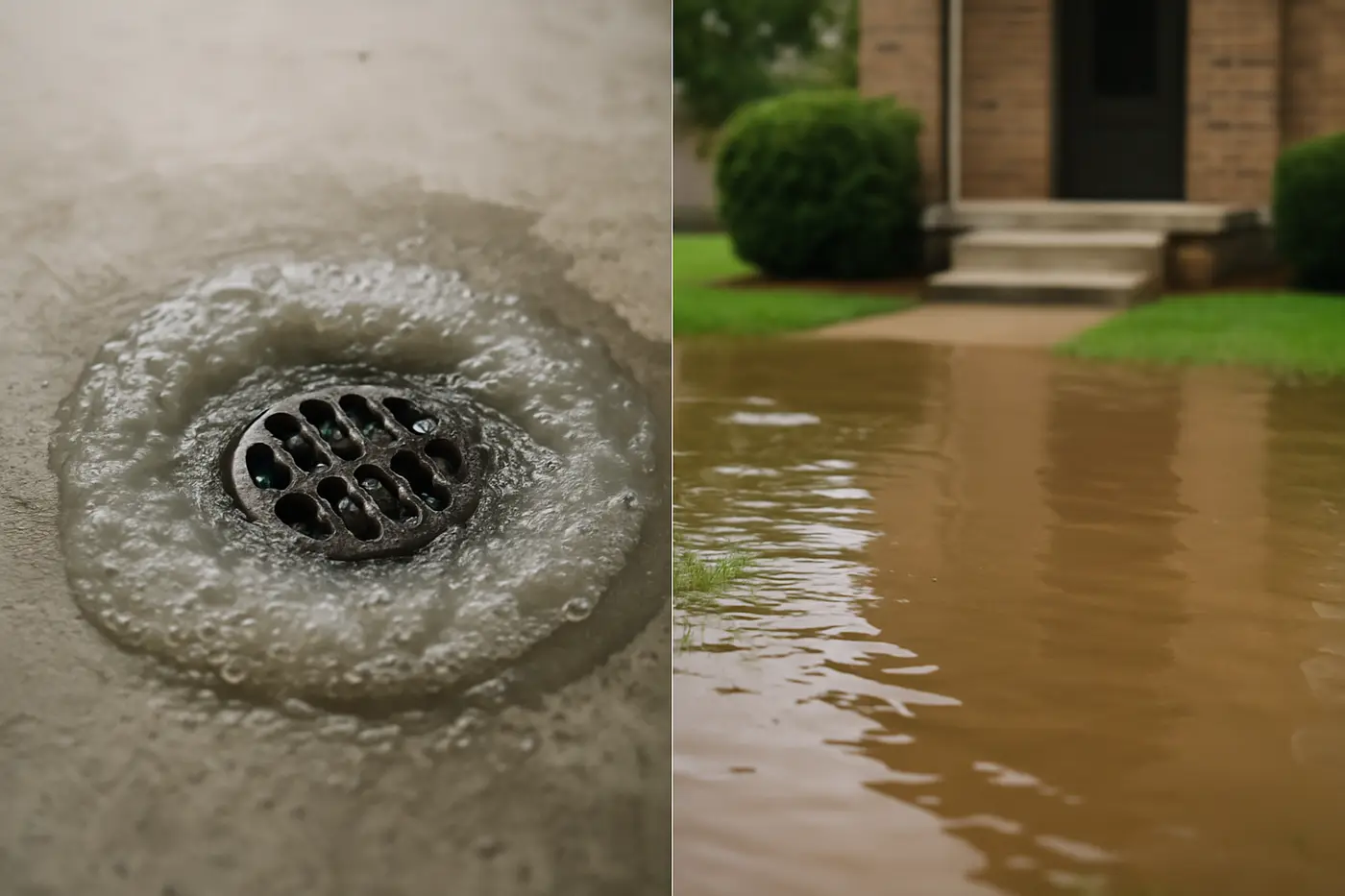
A summer downpour surcharged the combined sewer and pushed sewage-laden water up the floor drain and the basement toilet to a depth of a few inches across a finished basement with a bathroom. This starts with sewage backup cleanup and sanitization at $3,000 to $10,000 and, because carpet, pad, lower drywall and vanity cabinets all come out, it typically lands in the gray or black water multi-room range of $6,500 to $18,000 or more once removal, sanitizing, drying and minor rebuild are counted. See our sewage cleanup page for what is and is not salvageable.
Washing machine hose in the top unit of a Lakeview three-flat
A supply hose let go on the third floor and water went through the kitchen floor, the second-floor ceiling and down the wall into the garden apartment. Clean water, three units, caught the same day. Each unit sits in the clean-water two-to-three room range of $2,000 to $6,500, with the top unit lighter and the garden unit heavier. If the second-floor tenant’s furniture and belongings need to be moved out and dried, contents pack-out adds $1,000 to $5,000.
Sump pump failure in a Park Ridge unfinished basement
The power went out during a storm, the sump pump stopped, and an unfinished basement took two inches of clean groundwater across bare concrete. This is water extraction at $500 to $2,500 plus drying equipment at $50 to $125 per unit per day for the 5 to 10 days a slab takes. Stored contents in cardboard on the floor are usually the biggest loss. A battery backup pump costs less than the deductible on this claim.
Insurance: who actually pays
Which of these jobs your policy covers depends on the source of the water, not how bad the damage is.
- A standard Illinois HO-3 policy covers sudden and accidental discharge: burst pipes, water heater failure, appliance supply lines, and frozen pipes where reasonable heat was maintained. The bungalow and three-flat jobs above are usually covered claims.
- Sewer backup and sump pump overflow are excluded unless you carry a water backup and sump discharge or overflow endorsement. Typical limits are $5,000 to $25,000, sometimes more, which is why a finished basement backup can exceed the limit.
- Surface flooding from rivers or overland flow is excluded entirely unless you have a separate NFIP policy through FEMA or private flood coverage.
- Gradual leaks and long-term seepage are excluded.
- Mitigation and emergency services are covered when documented. Adjusters expect dated photos, moisture logs, a drying log and an itemized scope, usually in Xactimate format.
We bill the carrier directly where the carrier approves. The full breakdown is in sewer backup vs flood: how your Illinois claim is decided.
How to keep the bill at the low end
Most of what pushes a job up the range happens before we arrive.
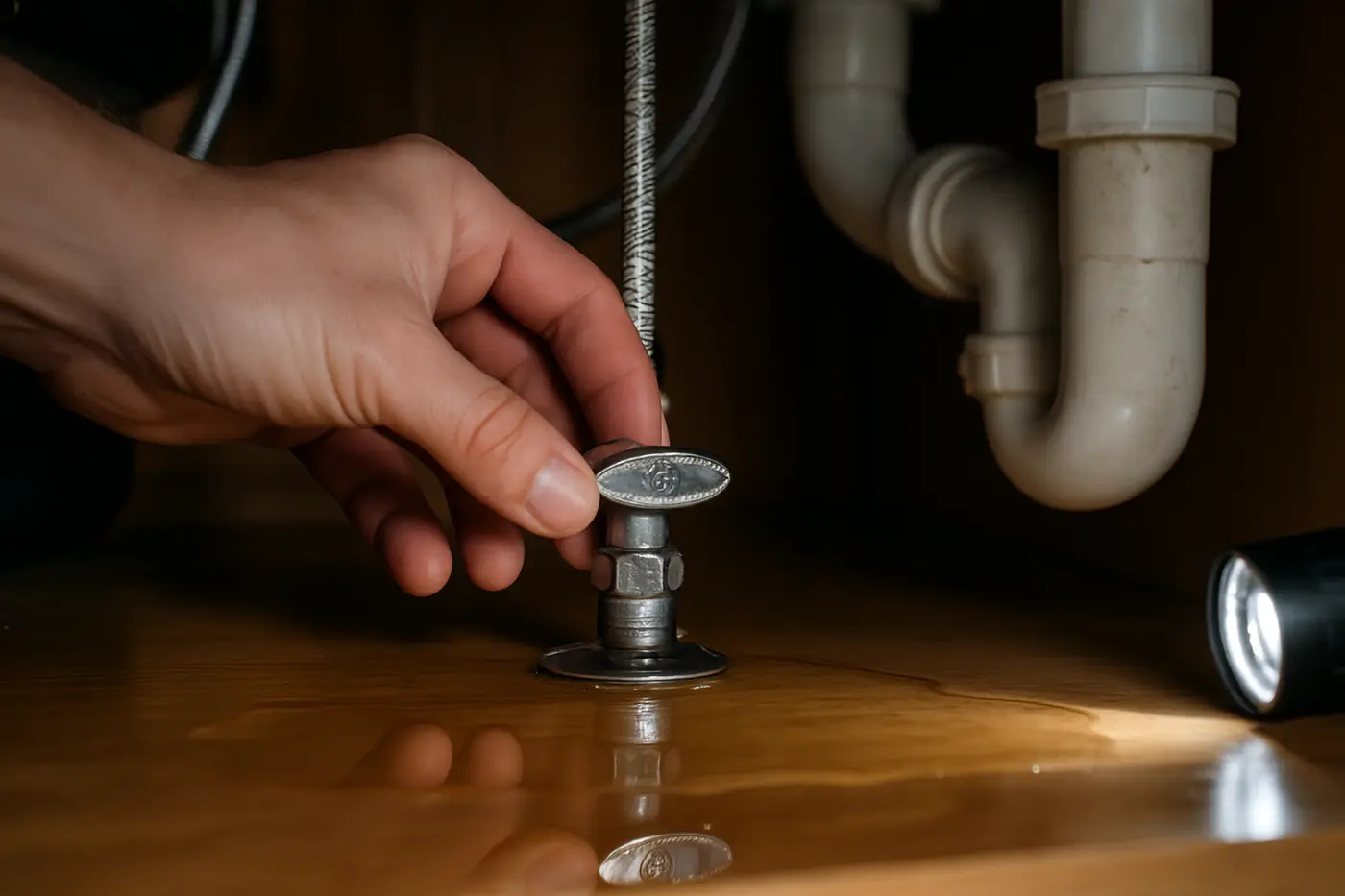
- Shut off the source and call the same day. Hours matter more than anything else on the invoice.
- Get contents off the floor, especially cardboard, rugs and clothes.
- Photograph everything before you move or discard it. Undocumented losses are unpaid losses.
- Do not tear out wet drywall or carpet yourself unless it is sewage. Clean-water materials are often saved, and removal costs more than drying.
- Ask for the written estimate and the moisture map, and ask which rows of the table apply.
- For basements: a backwater valve, overhead sewer conversion or battery backup sump pump turns a $6,500 to $18,000 problem into a non-event, and the City of Chicago and many suburbs offer rebates for flood-control work.
When a wet/dry vac is genuinely enough
A clean-water spill on tile or sealed concrete, caught within an hour and vacuumed up, with no carpet, drywall or wood involved, is a household cleanup. Run a dehumidifier for a couple of days and move on.
The line is crossed when water has been down more than a few hours, reached carpet pad, laminate, hardwood or the bottom of drywall, is in a basement, or came from a drain rather than a pipe. At that point the water extraction and drying costs above are cheaper than the mold and replacement costs that follow a guess. Our first-hour guide covers what to do while you wait.
Key takeaways
- Clean water, two or three rooms: $2,000 to $6,500. Gray or black water, multiple rooms: $6,500 to $18,000 or more.
- Emergency call-out with moisture mapping and a written report: $250 to $500, credited against the job.
- Basement flooding cleanup: $1,500 to $10,000. Sewage cleanup and sanitization: $3,000 to $10,000.
- Drying equipment: $50 to $125 per unit per day, for 3 to 5 days above grade or 5 to 10 days in a basement.
- Water category, class, delay, location and materials decide where in the range you land.
- HO-3 covers sudden discharge. Sewer backup needs an endorsement with $5,000 to $25,000 typical limits. Flood needs NFIP or private flood.
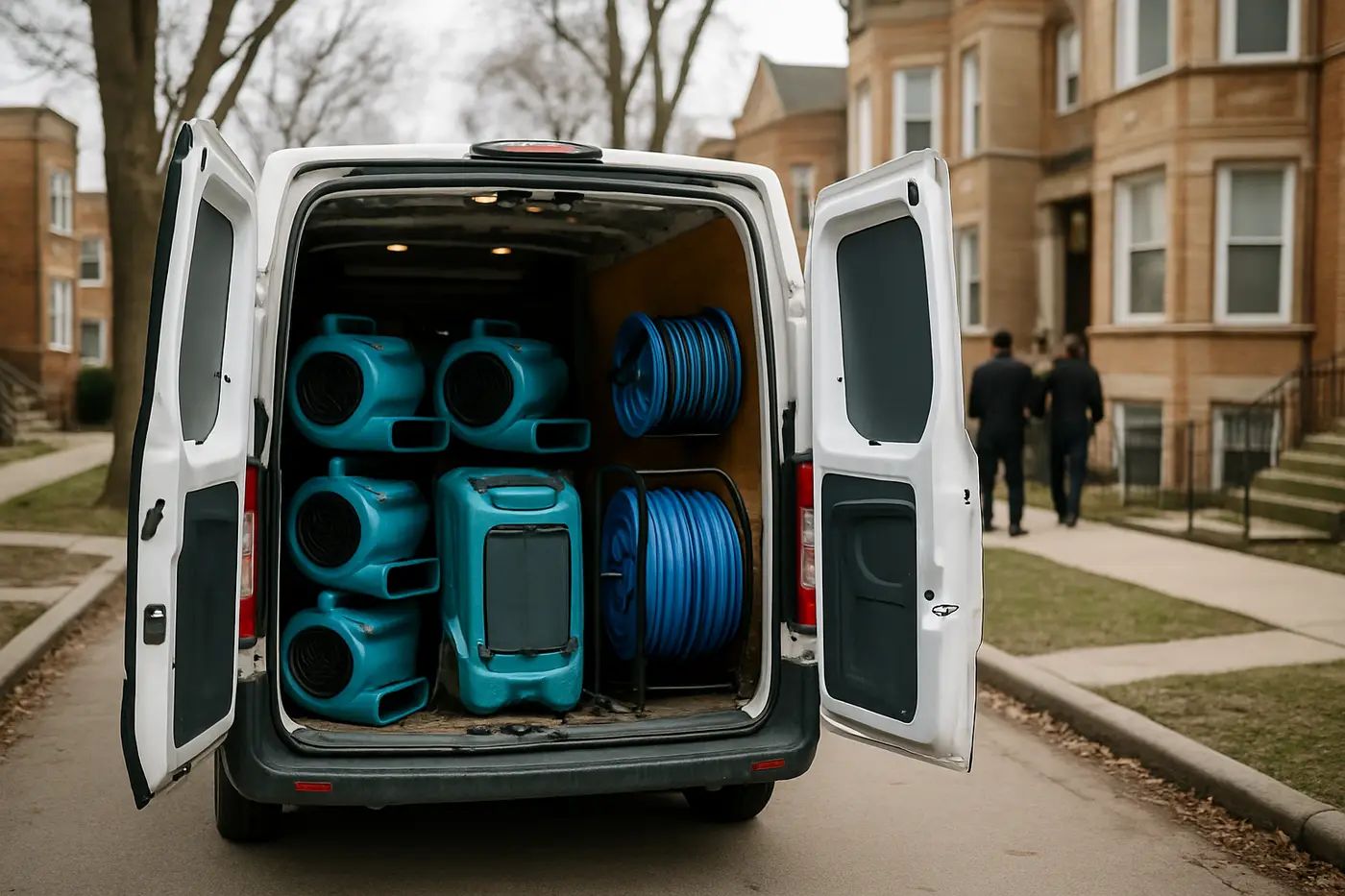
For a written estimate on your own job, send the form or call us. Our water damage restoration crews cover Chicago and the surrounding suburbs, and the on-site inspection is free.