- #emergency
- #water-damage
- #first-response
- #chicago
- #basements
- #insurance
In the first hour after water damage, shut off the source, cut power to the wet area if the panel is dry, keep out of standing water in the basement, move contents off the floor, photograph everything, then extract and ventilate. Call a restoration crew within that hour if water reached drywall, carpet pad or a basement.
Minute 0 to 5: stop the water
Most water damage in Chicago starts inside the building: a washing machine hose, a water heater, a dishwasher inlet, a toilet supply line, or in winter a pipe that froze in an exterior wall. All of these keep running until someone closes a valve.
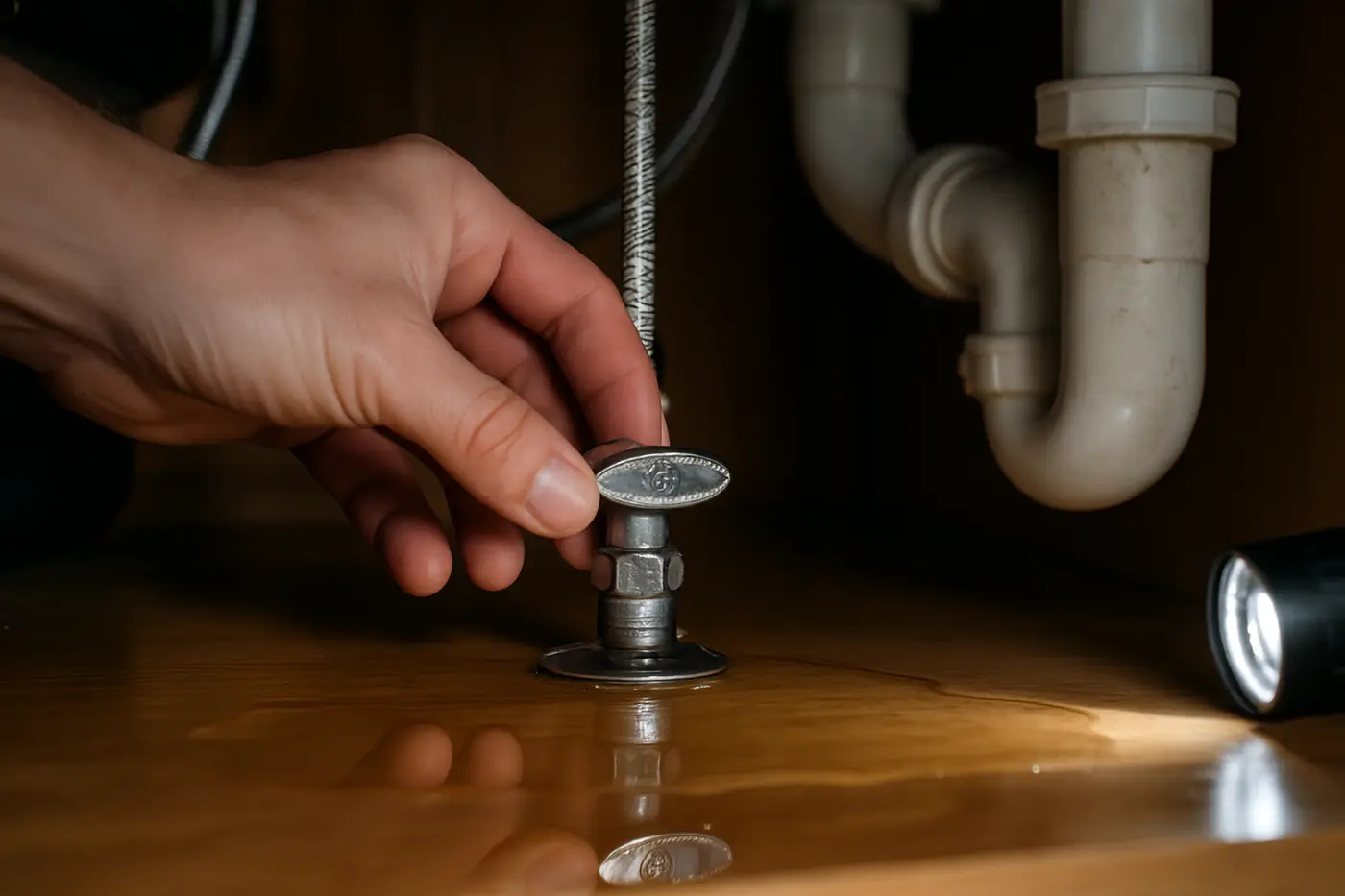
- Find the fixture shut-off. Toilets, vanities, dishwashers and laundry hookups usually have a small valve on the wall behind or beneath them. Turn it clockwise until it stops.
- If you cannot find it, close the main. In most Chicago houses the main shut-off is in the basement where the water service comes through the front foundation wall, close to the meter.
- Water heater or boiler leaking? Close the cold inlet on top of the tank and switch off the gas valve or breaker; a tank that keeps refilling keeps leaking.
- Frozen pipe that has burst? Close the main, open the faucets to relieve pressure, and leave the heat on.
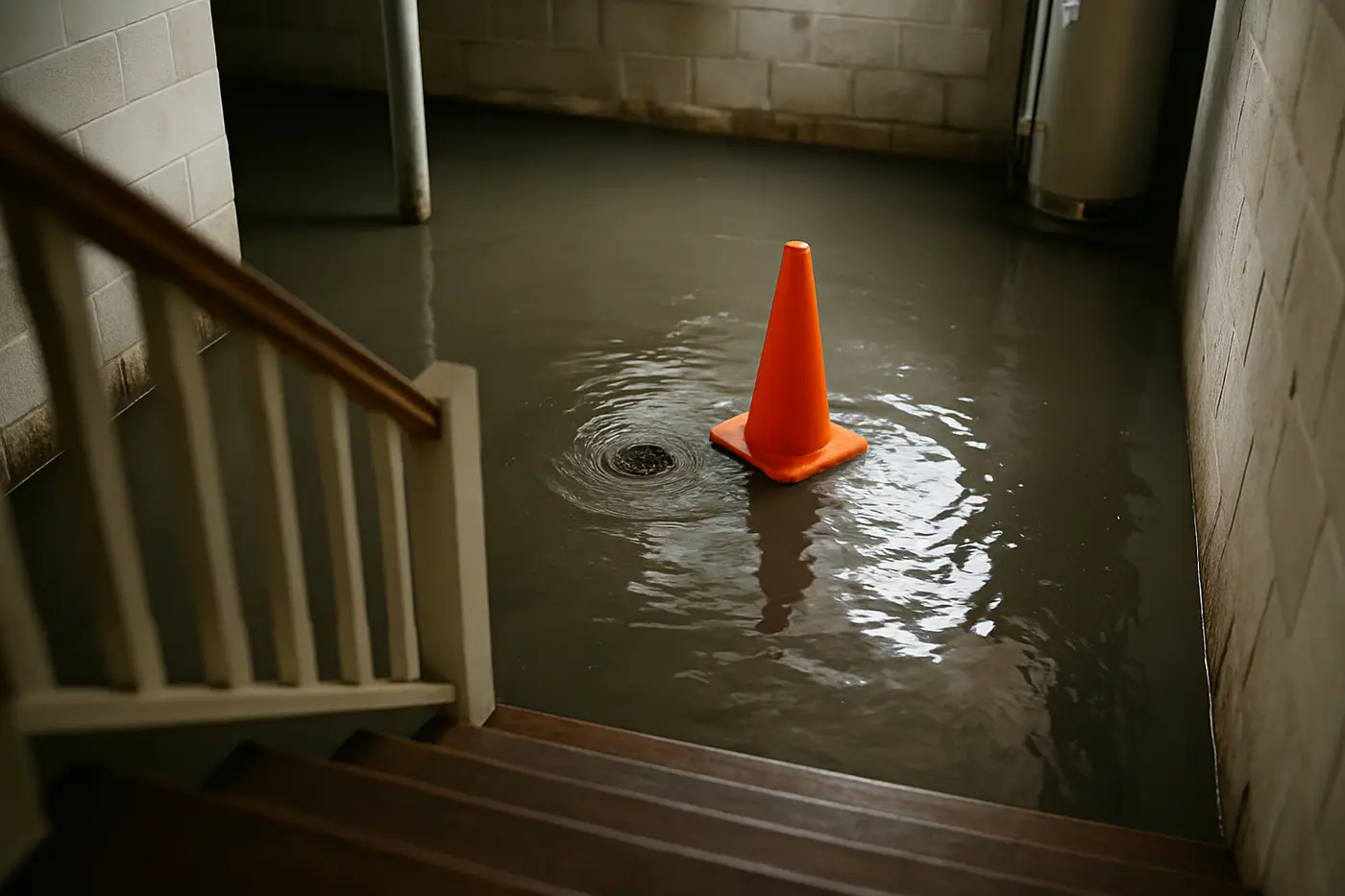
- Water coming up the floor drain? That is the combined sewer surcharging, and no valve in your house will stop it. Stop running water inside (no flushing, no laundry, no showers); every gallon adds to a line that is already full. If you have a floor drain plug or standpipe, use it now.
If the water is coming from the unit above you in a two-flat, three-flat or condo tower, the first call is to that neighbor or the building manager, then a plumber. We can extract water all day, but not while it is still flowing.
Minute 5 to 10: electricity
In Chicago the electrical panel is almost always in the basement, which is also where the water ends up. That is the single biggest safety issue on water damage calls.
- If the panel and the floor around it are dry, turn off the breakers for the wet rooms, or the main if you are unsure which is which.
- If there is standing water in the basement, do not go down while the power is on, not to check the sump pump, not to grab a box, not to reach the panel. Call your utility or an electrician to disconnect from outside.
- Do not touch appliances sitting in water; a furnace, freezer or washing machine standing in two inches of water is energized until proven otherwise.
Minute 10 to 15: work out what kind of water it is
This decides everything that follows. The IICRC S500 standard sorts water into three categories:
- Category 1 (clean water) came from a supply line, water heater or appliance inlet. It can be dried in place if you move fast.
- Category 2 (gray water) came from a washing machine drain, dishwasher discharge or a toilet bowl with no solids. It carries contamination and needs sanitizing.
- Category 3 (black water) came from the sewer, a toilet with waste, or floodwater from outside. In Chicago and older inner suburbs such as Oak Park, Cicero and Berwyn, the combined sewer carries stormwater and sanitary sewage in one pipe, so anything that came up a floor drain, basement toilet or shower drain during a storm is Category 3.
If it is Category 3, the rules change. Gloves, rubber boots and an N95 or better before you touch anything. Keep children and pets upstairs. Do not run a fan across sewage. Porous materials that touched it (carpet, pad, drywall, particleboard) are removed rather than dried. Our sewage backup guide covers what to touch and what not to.
Minute 15 to 25: protect what you can move
Contents damage is often more expensive than building damage, and in a Chicago basement most of the contents are on the floor.
- Get cardboard boxes off the floor first; cardboard wicks water in minutes.
- Lift area rugs and take them to a dry room or the garage.
- Move furniture off the wet floor, or slide foil, plastic lids or scrap wood under the legs of anything too heavy.
- Get paper, photos and electronics up high.
- Clear the laundry area; clothes on a wet floor become a mold incubator within days.
In a two-flat or three-flat, knock on the door below if the leak started in your unit, and tell the landlord or condo association within the hour. Water travels down through ceilings and joists into the shared basement, and the units below need their own first hour.
Do not throw anything out yet. Even items that are obviously ruined get photographed in place before they go in a pile in the gangway.
Minute 25 to 35: document for the insurance claim
This is the step people skip because it feels less urgent than mopping. Illinois adjusters decide claims on evidence, and the strongest evidence is what the house looked like before anyone touched it.
- Take wide photos of every affected room from the doorway, then close-ups of the water source, the waterline on walls and boxes, and damaged contents.
- Record a slow video walk-through with the date and time visible.
- Photograph the failed part: the split supply hose, the ruptured water heater, the frozen pipe section. Keep the part. The adjuster may want to see it.
- Note when you found the water and, if you know it, when it started. For a sewer backup, note when the rain started and when the drain began to gurgle.
Which policy pays depends on the source: a burst pipe is usually a covered sudden discharge on a standard HO-3 policy, while water up the floor drain is only covered if you carry a water backup endorsement. We explain the difference in sewer backup vs flood: how your Illinois claim is decided and the paperwork in our claim documentation guide. For now, ten minutes with a phone camera is enough.
Minute 35 to 60: extract and move air
The aim is not to dry the house in an hour; that takes days. It is to remove standing water and slow its migration into materials that are expensive to replace.
Standing water on concrete or tile. Squeegee toward the floor drain, but only if the drain is taking water. If the drain is where the water came from, use a wet/dry vacuum instead. It is far better than towels.
Carpet. Blot, do not scrub. Weight towels on the wettest patches and swap them as they saturate. Never use a household vacuum on wet carpet; it is a shock hazard.
Air movement. Open windows only if the outside air is drier than inside. In a Chicago summer, with dew points often between 65 and 75 degrees Fahrenheit, an afternoon breeze adds moisture rather than removing it. Set the furnace fan to “on” rather than “auto”, and run any dehumidifier you own with its hose to a drain.
What a restoration crew does that a mop cannot
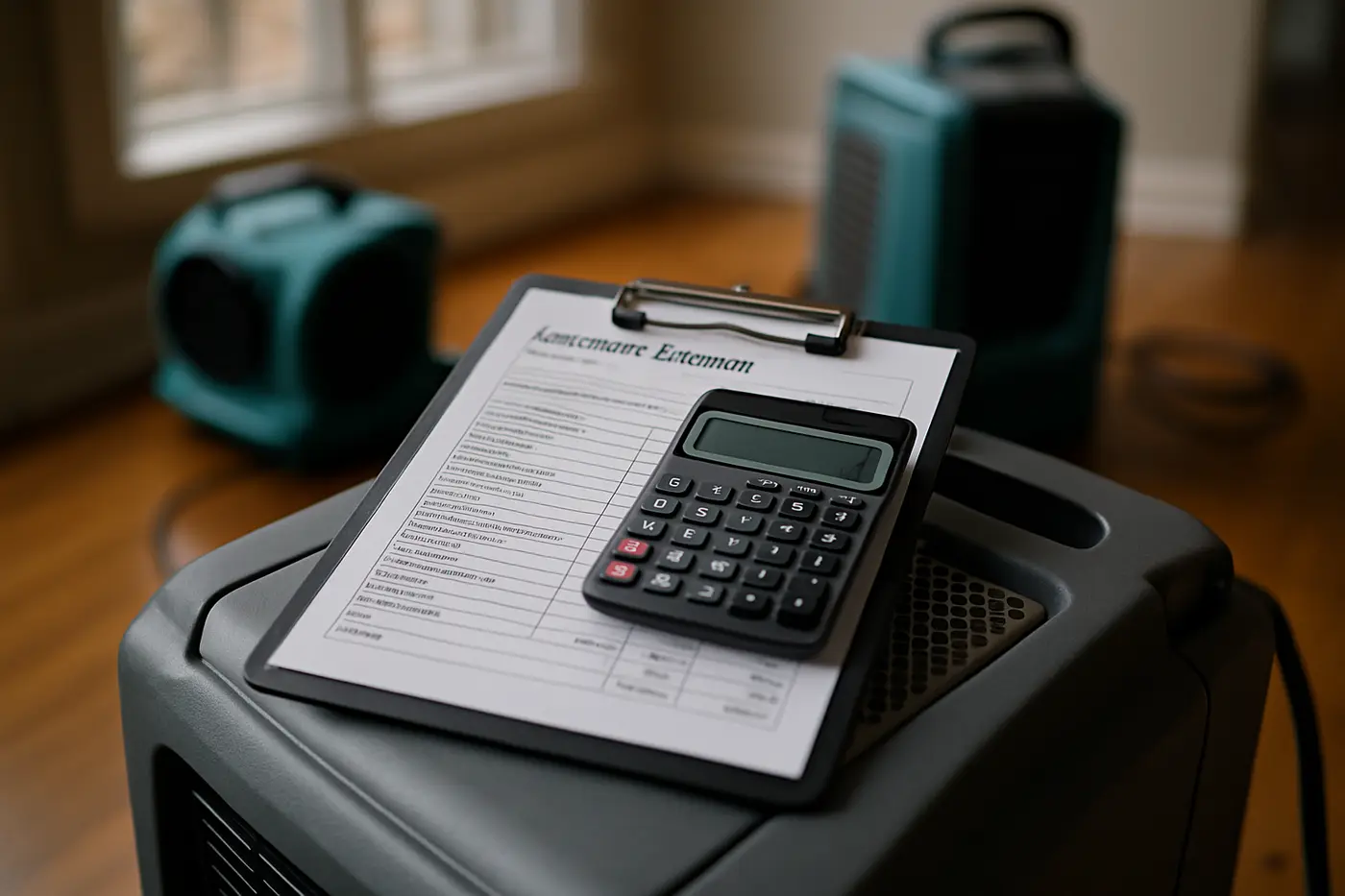
When the technician arrives, the first thing they do is measure, not set up fans. Moisture meters and a thermal camera show where water has gone that you cannot see: behind lower drywall, under laminate, into the bottom plate of a stud wall.
| Task | Household approach | Restoration approach |
|---|---|---|
| Removing water from carpet | Towels, mop | Portable or truck-mount extractor pulling most free water from carpet and pad |
| Finding hidden moisture | Guesswork | Pin and pinless meters, thermal imaging, a moisture map for the adjuster |
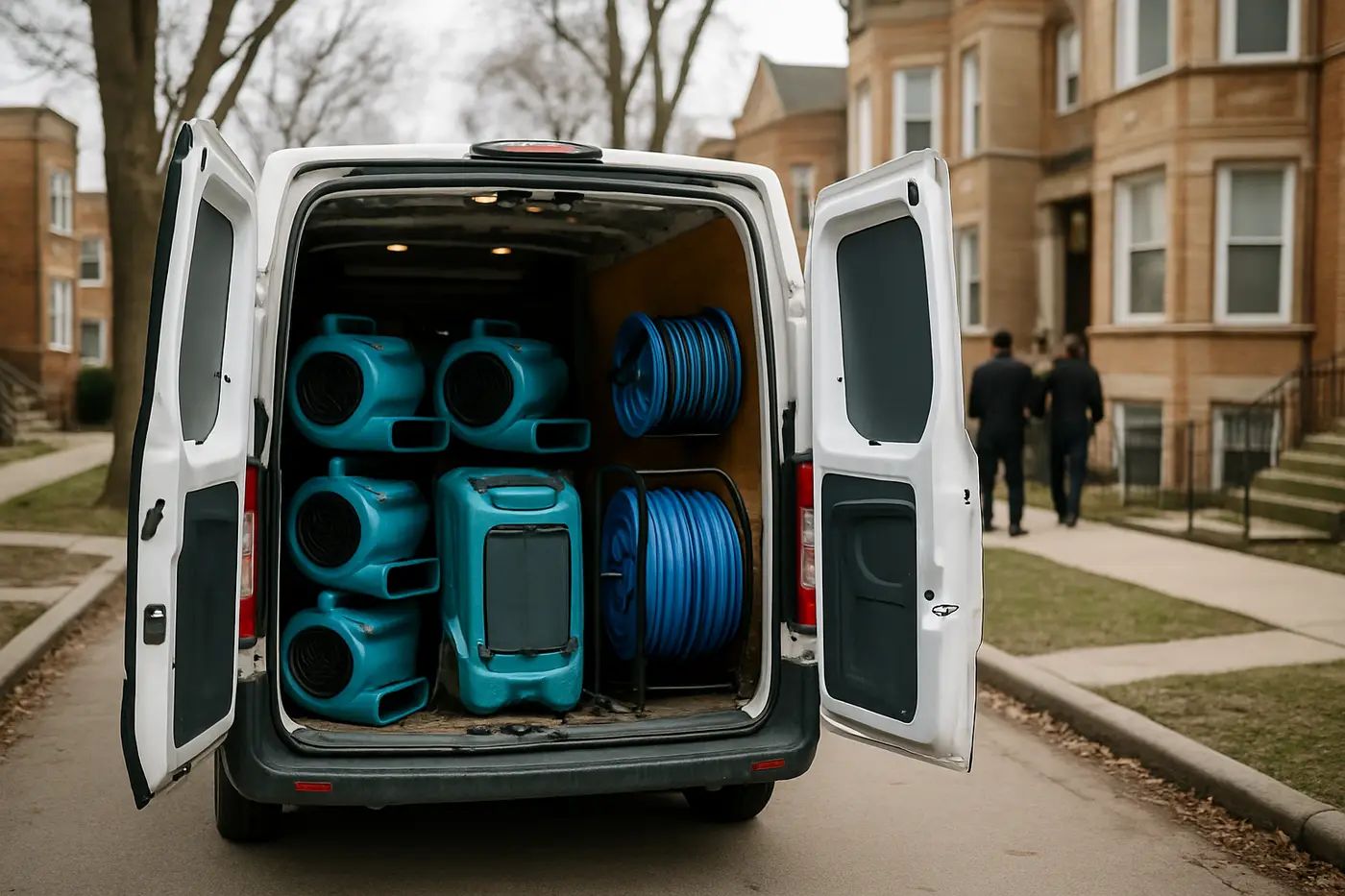
| Air movement | Box fan | Air movers positioned at the wet edge of walls and floors |
| Pulling moisture from the air | Portable dehumidifier | LGR dehumidifiers rated in pints per day, sized to the evaporation load |
| Record for the insurer | Photos | Daily moisture and psychrometric log, photo report, itemized scope |
The measurements turn a guess into a plan, and the plan into a drying log the adjuster can read.
When to call, and when a mop is enough
A spilled bucket on tile is not water damage. The line is crossed when any of these apply:
- Water has been present for more than two or three hours.
- Carpet is wet through to the pad.
- Water has run under laminate or hardwood, or into the joints of a plank floor.
- Drywall or baseboard is wet at the bottom edge.
- The water came from a drain, toilet or outside; that needs sanitizing, not just drying.
- It is a basement, finished or not; they are cool, damp and slow to dry.
In those cases, an emergency water damage call-out, $250 to $500 for attendance, moisture mapping and a written report, credited against any restoration work, is a small cost against a new floor and a mold job.
Chicago conditions that shorten the clock
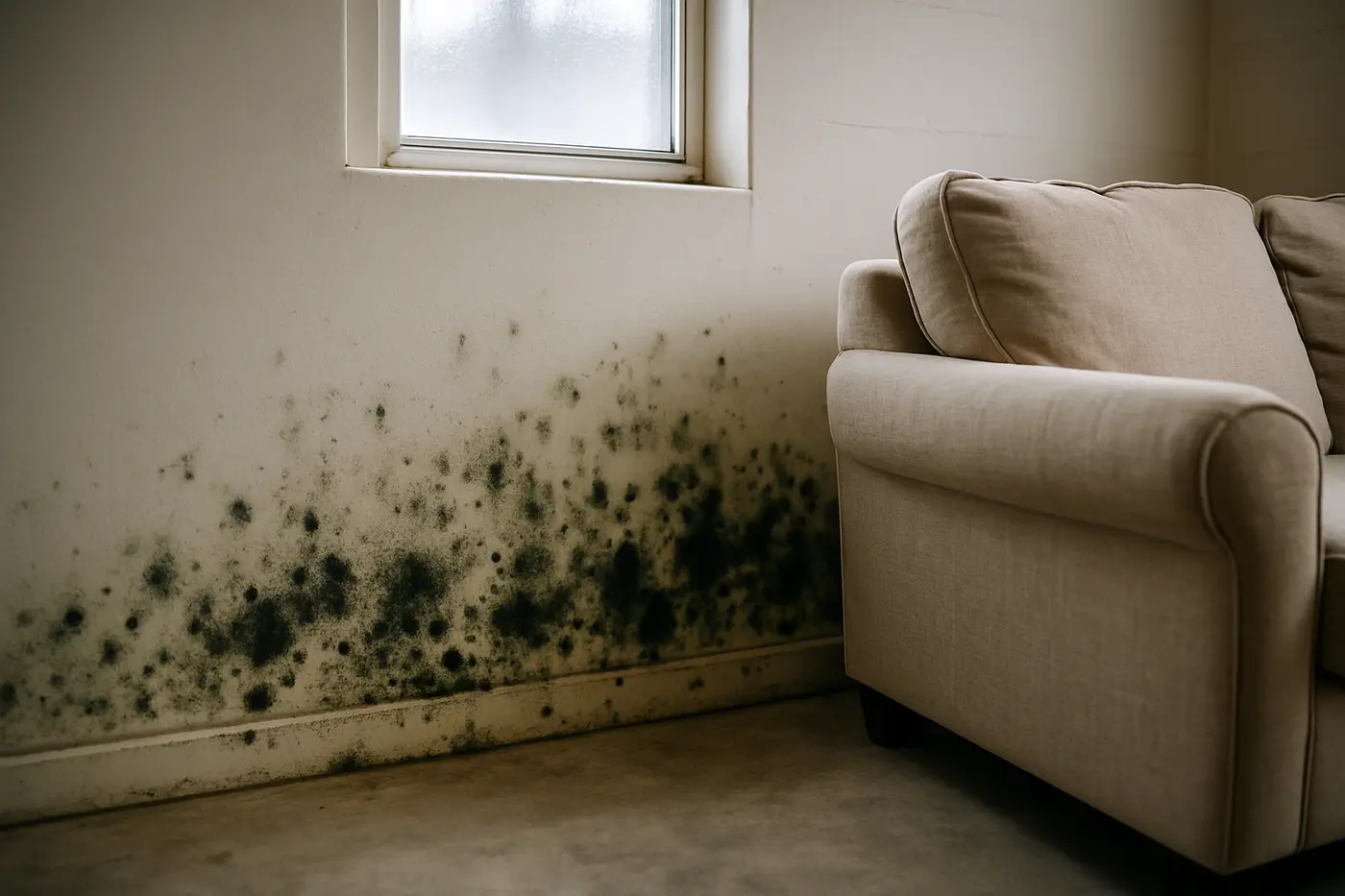
Nearly every house in Chicago has a basement, and a finished basement with drywall, carpet and a bathroom is the most common place we find water and the hardest to dry. Basements stay cool and damp, wet drywall and carpet pad support mold within 24 to 48 hours, and July humidity means the air upstairs is no help. The EPA’s mold guidance also advises drying wet materials within 24 to 48 hours.
A brick bungalow in Portage Park or Beverly has the water heater, laundry and often the furnace at the low point of a full basement, so a failed heater floods the whole floor. A frame two-flat in Pilsen or Logan Square has supply lines in exterior walls that freeze first in a January cold snap, and thaw week after a deep freeze is the busiest week of our year. In a West Loop loft or a Streeterville high-rise, one failed supply line on the twelfth floor becomes eleven other people’s first hour.
And then there is the sewer. On July 2, 2023, up to about 9 inches of rain fell on parts of the West Side, Cicero and Berwyn, and thousands of basements filled through their own floor drains. Nobody’s first hour that day involved a shut-off valve. It involved staying upstairs, not running water, and calling for basement flooding cleanup once the storm passed.
Key takeaways
- Order matters: source, power, water category, contents, photos, then extraction and air.
- Never enter a basement with standing water while the power is on.
- Anything that came up a floor drain during a storm is Category 3 sewage. Protect yourself before you touch it.
- Photograph everything before you move or discard it.
- Open windows only when the outside air is drier than inside.
- If water reached carpet pad, drywall, a plank floor or a basement, call within the hour.
- Mitigation costs are normally covered when documented, so keep every receipt.
If you are reading this with wet feet, stop reading, follow the first five steps, then call. Our water damage restoration crews cover Chicago and the surrounding suburbs and can usually be on site the same day.