Price guide · USD, 2026
What water damage
restoration costs
in Chicago.
Real ranges for Chicago and the surrounding suburbs, from a $250 emergency call-out to a multi-room black water restoration. Every job is quoted on site after moisture mapping, in writing, before work starts, and the estimate is free.
- 24/7 Response
- Local Technicians
- Insurance Reports
- Direct Contact
- Homes & Business
Request a Free On-Site Quote
Free
On-site quote after moisture mapping
Written
Scope and price before any work starts
Credited
Call-out fee offset against restoration work
Direct
Insurer billing where the claim is approved
2026 price ranges
Typical Chicago ranges,
job by job.
The bottom of each range is a small, clean-water job caught the same day. The top is contaminated water that sat for days, spread through several rooms and soaked into materials that had to come out.
Emergency & extraction
Getting the water out
The first visit. Bulk water removed, moisture mapped, and a written report started for the claim.
| Job | Range (USD) |
|---|---|
| Emergency call-out and assessment (moisture mapping, report) | $250–$500 |
| Water extraction (per job, standard home or basement) | $500–$2,500 |
| Basement flooding cleanup (extraction, disposal, sanitizing, drying) | $1,500–$10,000 |
| Storm damage make-safe and drying | $800–$4,500 |
Drying
Drying the structure
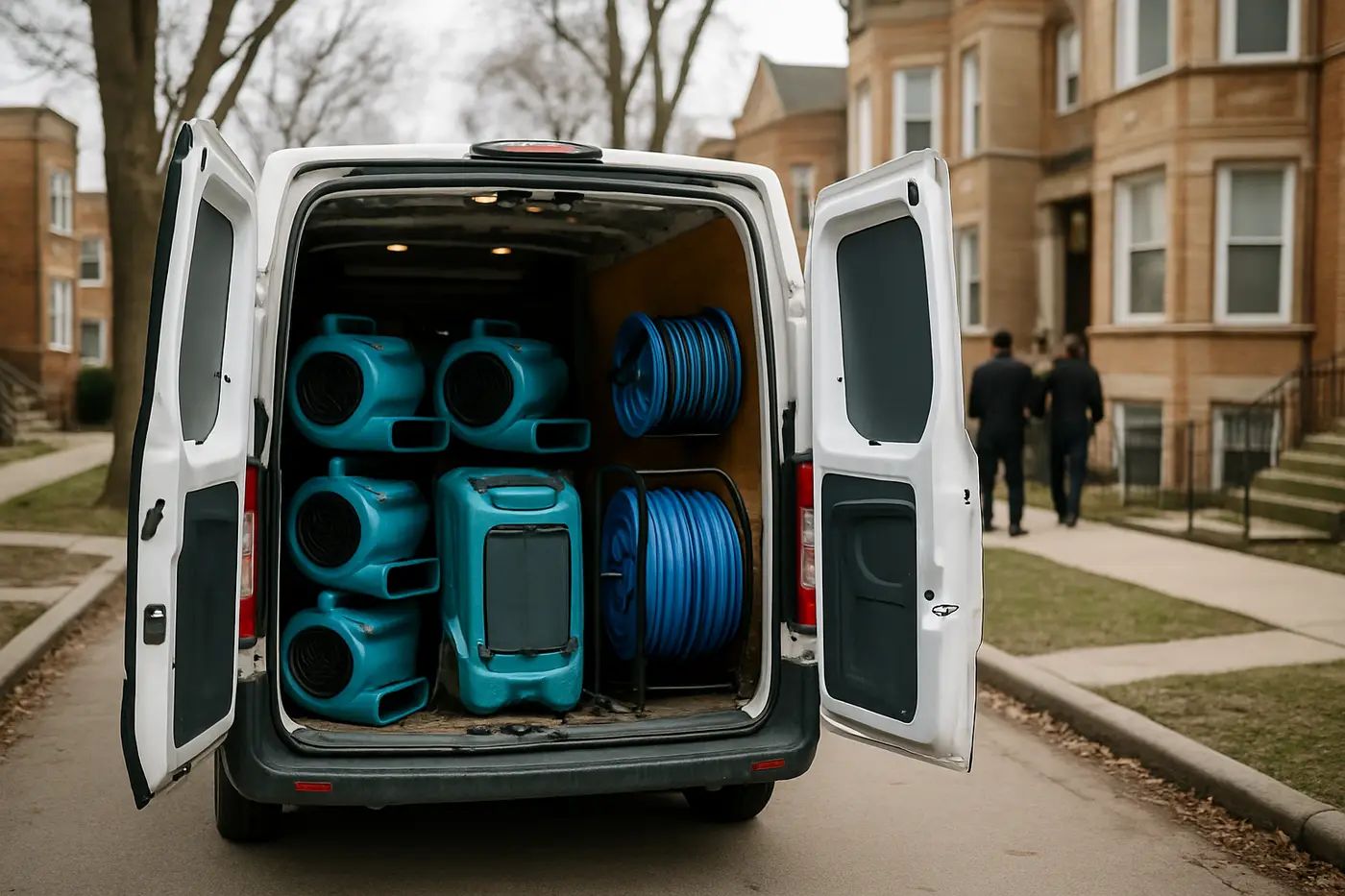
Air movers and LGR dehumidifiers sized to the evaporation load, with readings logged daily until dry standard.
| Job | Range (USD) |
|---|---|
| Carpet drying and restoration (per room, incl. pad assessment) | $200–$600 per room |
| Hardwood, laminate or tile floor drying (per area) | $400–$1,800 per area |
| Structural drying equipment (air movers + LGR dehumidifiers) | $50–$125 per unit per day |
| Frozen or burst pipe water damage (locate, extract, dry, minor drywall) | $1,500–$8,000 |
Full restoration & specialist
Restoration and specialist cleanup
Extraction, drying, removal of what cannot be saved, sanitization and reinstatement scoping under one plan.
| Job | Range (USD) |
|---|---|
| Full water damage restoration (clean water, 2–3 rooms) | $2,000–$6,500 |
| Full water damage restoration (gray or black water, multiple rooms) | $6,500–$18,000+ |
| Sewage backup cleanup and sanitization | $3,000–$10,000 |
| Mold remediation (contained area) | $1,500–$6,000 |
| Fire and smoke damage restoration | $5,000–$50,000+ (scope-dependent) |
| Contents pack-out and restoration | $1,000–$5,000 |
Ranges are for Chicago and the surrounding suburbs in 2026 and include labor, equipment and disposal. The emergency call-out and assessment fee is credited against restoration work if you proceed. Prices are consistent across every page on this site.
What moves the price
Six things that decide
where your job lands.
The drivers are simple: how much water, how contaminated, how long it sat, what it soaked into, and how much has to be removed and rebuilt.
Water category
Category 1 clean water can usually be dried in place. Category 2 gray water adds antimicrobial treatment. Category 3 black water (sewer backup, river flood) means removing every porous material it touched.
How long it sat
Clean water degrades to gray within a day or two, and in Chicago summer humidity mold colonizes wet drywall in 24 to 48 hours. Same-day extraction keeps a job in the lower bracket.
Volume and spread
One wet bathroom is a different job from a burst supply line that ran all night through three rooms and a hallway. More rooms means more extraction, more equipment and more monitoring days.
Materials and construction
Finished basements with carpet over a wet slab dry slowest and often need heat and containment. Swollen particleboard and laminate is replaced. Bare joists and plank subfloors over an open basement tend to dry well.
Equipment days
A typical three-room job runs six to ten units for three to five days. Hardwood floors, wet subfloors, concrete basements and solid masonry walls can push that to seven to ten days.
Removal and rebuild
Cutting out lower drywall, replacing carpet pad, insulation and baseboard, and reinstating finishes all sit at the top of each range. Materials dried and kept sit at the bottom.
Insurance
Most of this is usually claimable, if it is documented.
Most Illinois homeowners policies cover sudden and accidental discharge: burst pipes, supply lines, water heaters, appliance failures, and frozen pipes if reasonable heat was maintained. Sewer backup and sump pump overflow are excluded unless you added a water backup endorsement, and river or overland flooding needs a separate flood policy. Mitigation costs are generally covered when the work is documented.
Where the carrier approves, we bill them directly once the claim is accepted. If you are not claiming, you get the same documentation and an itemized invoice.
How to document a claimWhat the adjuster expects
Included with every job, at no extra charge.
- Dated photos of the source, the failed part and every affected room
- Moisture map and daily readings until materials reach dry standard
- Scope explaining why each material was removed or retained
- Drying certificate and itemized invoice on completion
Gradual leaks and poor maintenance are usually excluded. Keep the failed hose or part, and photograph everything before it is moved — proving the damage was sudden is where most claims are won or lost.
Pricing questions
Straight answers on cost.
What the call-out covers, what extraction and drying cost separately, and why the water category changes the number more than the size of the room.
All questionsHow much does water damage restoration cost in Chicago?
It depends on the water category and how far it has spread. A clean-water job across two or three rooms, such as a burst supply line caught the same day, typically runs $2,000 to $6,500 including extraction, drying equipment and daily monitoring. Gray or black water across multiple rooms, where drywall, carpet and pad have to be removed and the structure sanitized before drying, runs $6,500 to $18,000 or more. The emergency call-out and inspection, including moisture mapping and a written report, is $250 to $500 and is credited against the restoration work. We quote on site after mapping the moisture, not from a description over the phone, and the estimate is free.
What does emergency water extraction cost?
Water extraction on a standard home or basement is $500 to $2,500 per job, depending on the volume of water, the number of rooms and whether we are pulling it from carpet, a slab or a finished basement. That covers truck-mounted or portable extraction, disposal and the initial moisture map. Structural drying is separate: air movers and LGR dehumidifiers run $50 to $125 per unit per day, and a typical two-room dry-out takes three to five days. Basement flooding cleanup as a package, with extraction, disposal, sanitizing and drying, runs $1,500 to $10,000 depending on the water category and the finish level. We tell you the numbers before we start.
How much does carpet and floor drying cost after water damage?
Carpet drying and restoration is $200 to $600 per room, which includes lifting the carpet, assessing the pad, extraction, antimicrobial treatment and drying with air movers. Pad usually cannot be saved once it is saturated and is replaced, which we price separately. Hardwood, laminate and tile floor drying is $400 to $1,800 per area, because it involves drying mats or injecting air under the boards and closer monitoring. Whether carpet is worth drying depends on the category: clean water from a burst pipe is usually fine if we reach it within a day or two, gray water is case by case, and black water from a sewer backup means the carpet is removed and disposed of.
What do mold remediation and sewage cleanup cost?
Mold remediation in a contained area is $1,500 to $6,000, depending on how much material has to be removed, whether we need negative-air containment and how far the growth has spread inside the wall or under the floor. Sewage backup cleanup and sanitization runs $3,000 to $10,000 because everything the black water touched is contaminated and has to be removed, the structure treated with antimicrobial, and the area confirmed clean before rebuilding. Frozen and burst pipe water damage, covering locating the break, extraction, drying and minor drywall, is $1,500 to $8,000. Storm damage make-safe and drying runs $800 to $4,500, and contents pack-out and restoration $1,000 to $5,000. Every job is quoted on site before work starts.
Ready when you are
Want a real number for your property?
Ranges are honest, but your house is specific. Send your neighborhood and what happened; a coordinator will confirm the water category and quote on site, in writing.