Skip to content

Emergency restoration · Chicago & the Suburbs

Basement Flooding Cleanup Chicago

Pump-out, sewer backup sanitizing, tear-out of wet drywall and carpet, and structural drying sized for below-grade conditions, for finished basements, garden units and bungalow basements across Chicago and the suburbs.

  • 24/7 Response
  • Local Technicians
  • Insurance Reports
  • Direct Contact
  • Homes & Business

Request Basement Flooding Cleanup Help

US format - we will call or text you back right away.
Add brief description (optional)
How urgent?

Free on-site inspection and written estimate. Insurance-ready report. No obligation. Privacy.

What's included

Everything the job needs,scoped from the first visit.

Every basement flooding cleanup job in Chicago and the surrounding suburbs includes the work below as standard. It is written into the scope before we start, so there are no surprise extras when the invoice arrives.

  • Emergency pump-out of standing water and extraction from carpet and pad
  • Floor drain and sewer backup assessment with Category 2 or 3 sanitizing
  • Removal of wet drywall, paneling, carpet, pad and stored contents that cannot be saved
  • Moisture mapping of slab, foundation walls and framing with pin and non-invasive meters
  • Structural drying sized for below-grade conditions, monitored daily
  • Antimicrobial treatment and odor control before rebuild
  • Photo record, drying log and itemized scope for your insurance claim
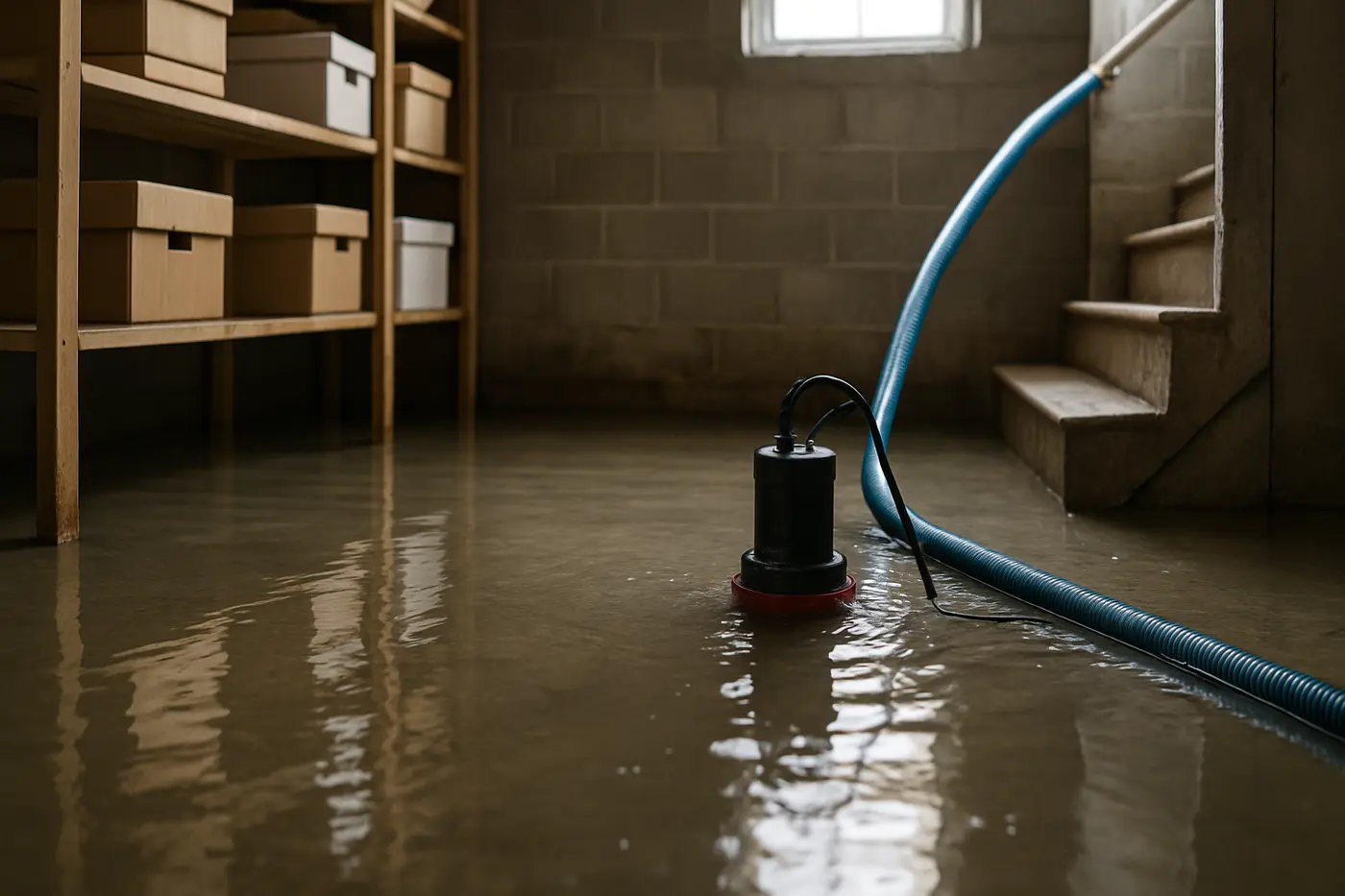
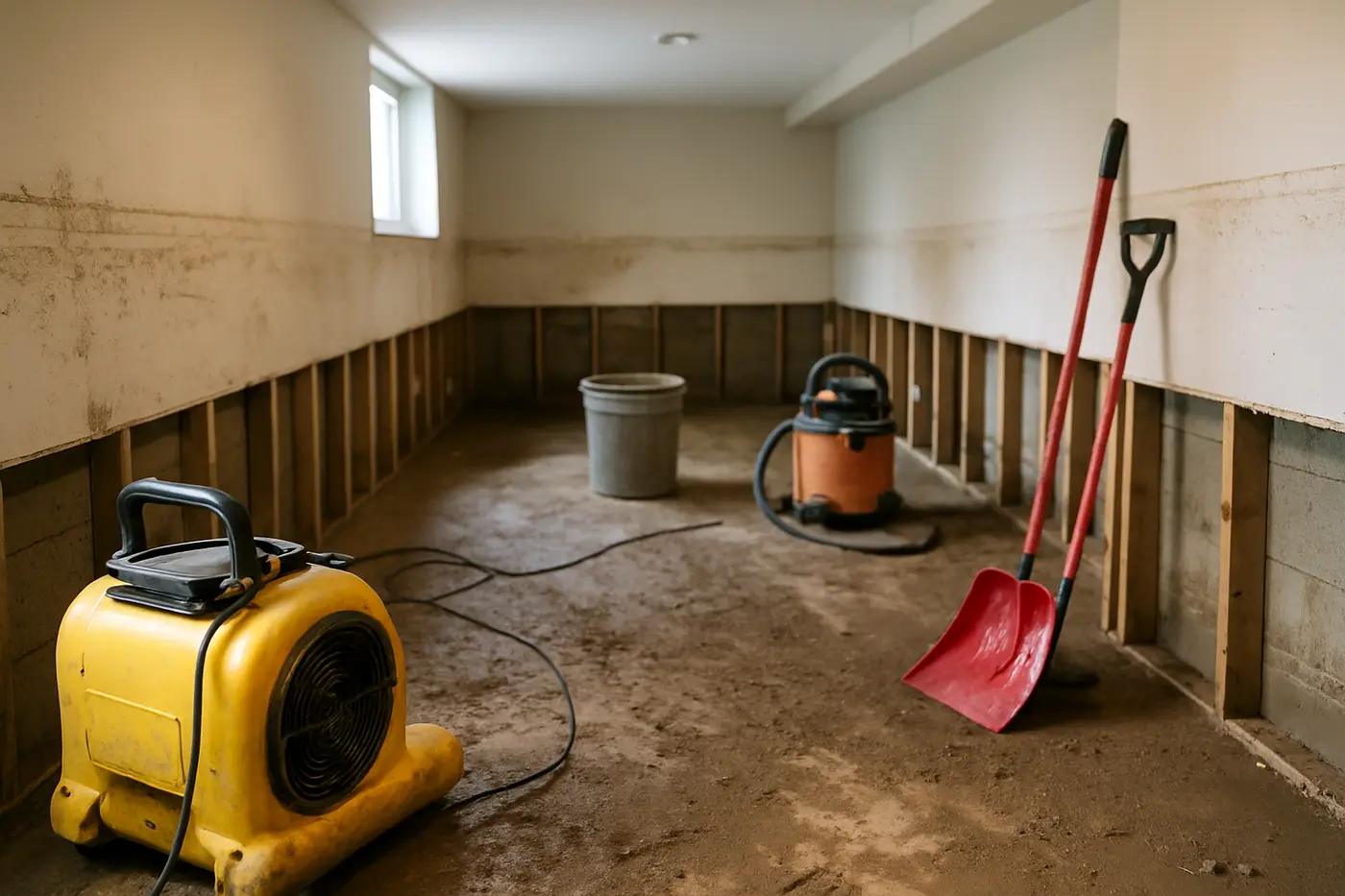
Flooded finished basement in Chicago with water being pumped out and carpet removed

Not sure it is urgent?

Send a few photos with the form. A coordinator will tell you whether it can wait until morning or needs a crew tonight.

When to call

Signs you needbasement flooding cleanup.

Water moves sideways along bottom plates and under floor coverings, so the wet area is nearly always bigger than the stain you can see. Any of the following is worth a call the same day.

  • Standing water on the basement floor after a storm, a sump failure or a burst pipe
  • Floor drain gurgling, backing up or leaving a ring of debris
  • Carpet that is wet along the exterior walls or damp under the pad
  • Drywall or paneling stained, soft or swollen in the bottom 12 inches
  • Musty smell that gets stronger when the furnace or air conditioner runs
  • Efflorescence, peeling paint or damp patches on the foundation walls
  • Boxes, furniture or the washer and dryer sitting in water

Our process

How basement flooding cleanupruns, step by step.

From the first call to the final moisture reading, you will know what is happening, why, and what your insurer will need at each stage.

  1. Step 1: Safety check and triage

    Nobody enters standing water while the power is on. We confirm the panel is dry and the basement circuits are off, identify where the water came from, and classify it as clean, gray or black before the first pump goes in.

  2. Step 2: Pump out and extract

    Submersible pumps clear deep water, then truck-mounted or portable extraction pulls the last inch and what the carpet and pad are holding. Every gallon extracted is a gallon the dehumidifiers do not have to evaporate.

  3. Step 3: Tear out, sanitize and dry

    Wet pad, contaminated drywall and paneling come out. The slab, walls and framing are cleaned and treated, then air movers and LGR dehumidifiers run five to ten days while we meter the slab and framing daily.

  4. Step 4: Document and plan the rebuild

    You receive dated photos, the moisture and drying logs and an itemized scope for your adjuster, plus a plain answer on whether a backwater valve, battery backup pump or regrading would have prevented it.

Price guide · USD, 2026

What basement flooding cleanupcosts in Chicago.

Ranges from typical Chicago and the surrounding suburbs jobs. The final quote is given on site after moisture mapping, in writing, before any work starts. Insurance direct billing where the insurer approves.

ItemTypical range
Emergency call-out and inspection Moisture mapping and a written report; credited against restoration work$250-$500
Water extraction (standard home or basement) Depends on depth, volume, water category and access$500-$2,500
Basement flooding cleanup Extraction, disposal, sanitizing and drying; finished basements at the upper end$1,500-$10,000
Carpet drying and restoration Includes pad assessment; pad is usually replaced, carpet often saved after clean water$200-$600 per room
Structural drying equipment Air movers and LGR dehumidifiers; basements and slabs typically 5-10 days$50-$125 per unit per day
Mold remediation (contained area) Only if the basement sat wet long enough for growth to start$1,500-$6,000

Ranges cover labor, equipment and disposal for 2026. The number you approve on the written quote is the number you pay; if the scope changes once walls are opened, we stop and re-quote in writing.

Full price guide

In depth

Basement Flooding Cleanup in Chicago: how the job actually runs.

Chicago is a basement city. Nearly every bungalow, two-flat, greystone and post-war ranch has one, most of them are finished, and most of the water damage we see is below grade. A flooded basement in Chicago is rarely a mystery: it is a combined sewer that surcharged in a July storm, a sump pump that stopped when the power went out, or a supply line that froze in an exterior wall in January. Basement flooding cleanup is the work of getting the water out, deciding what can be saved, and drying a cool, damp, below-grade space before mold gets a foothold.

Why Chicago basements flood

Combined sewer backup. The city and the older inner suburbs carry stormwater and sewage in the same pipes. A short, intense downpour fills them faster than the Deep Tunnel and its reservoirs can take the flow, and the excess comes up through the lowest opening in the system, which is your basement floor drain, shower drain or toilet. That water is Category 3 and changes the cleanup completely.

Sump pump failure. Summer storms knock the power out, the pump stops, and the pit overflows. Pumps also fail from age, stuck float switches and clogged discharge lines.

Ejector pump failure. Basement bathrooms below the sewer line drain into an ejector pit. When the pump or the check valve fails, the bathroom backs up.

Foundation seepage and window wells. Saturated soil after days of rain pushes water through cracks, the cove joint and mortar. Window wells with failed drains overflow the sill.

Plumbing and appliances. Frozen supply lines, water heaters, washing machine hoses and boiler failures all end up on the basement floor, because that is where the water goes.

Our neighborhood guide to which parts of Chicago flood and why maps these causes across the city.

What basement flooding cleanup involves

  1. Safety check. Nobody enters standing water while the power is on. If the panel is dry and reachable, the basement breakers go off first. If the water came from a floor drain, everyone going down wears gloves, boots and an N95 or better.
  2. Pump-out and extraction. Submersible pumps for deep water, then truck-mounted or portable extraction for the last inch and for what carpet and pad are holding. For extraction alone, see water extraction.
  3. Contents triage. Boxes, furniture and stored belongings are sorted: what dries, what can be cleaned, what goes.
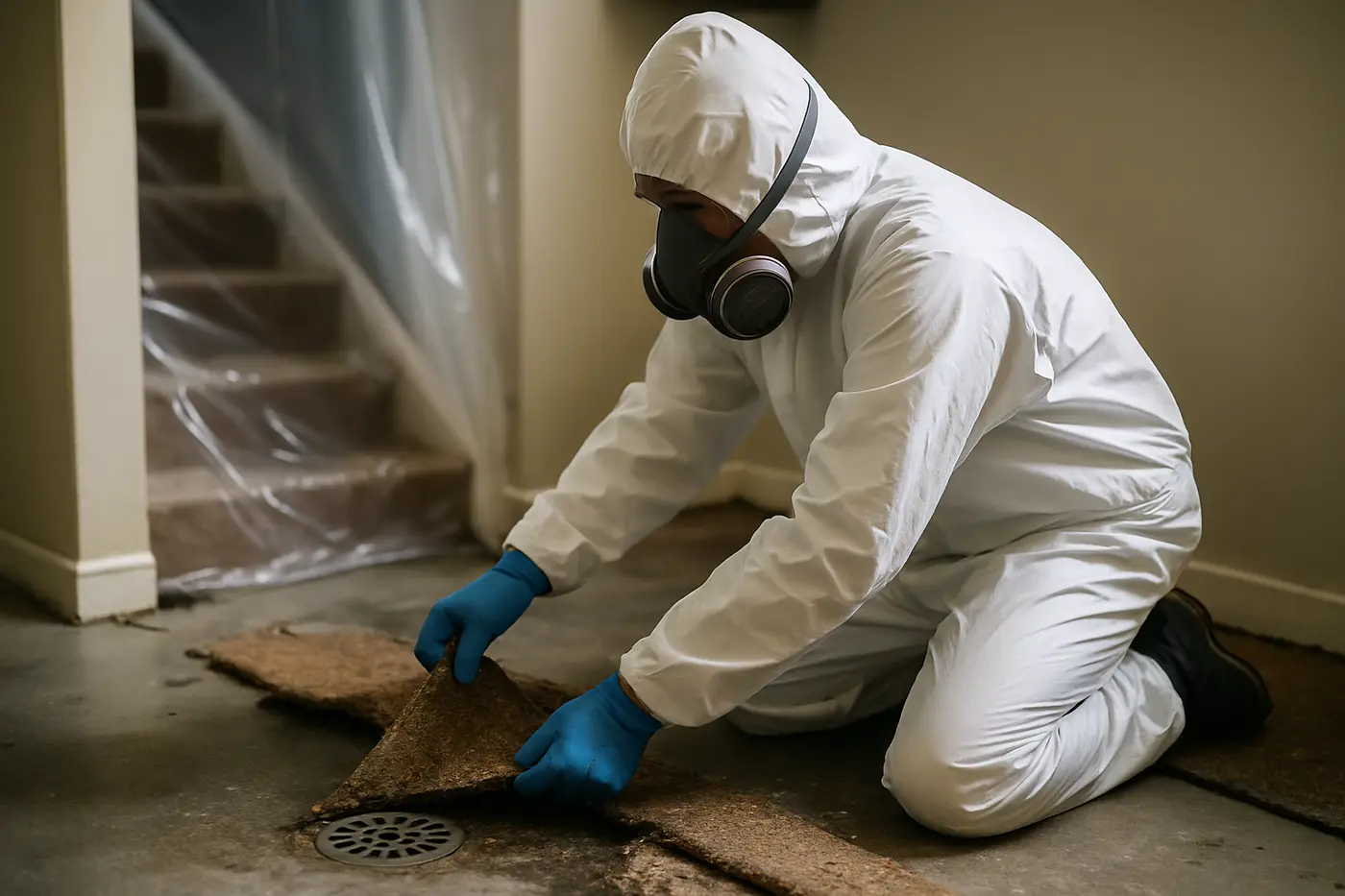
  4. Tear-out. Wet carpet pad almost always goes. Drywall and paneling are cut back above the water line if the water was contaminated or has been sitting more than 48 hours. Fiberglass insulation behind a wet wall is removed.
  5. Sanitizing. Category 2 or 3 losses get an antimicrobial treatment on the slab, foundation walls and framing after cleaning. A sewer backup gets the full sewage cleanup protocol.
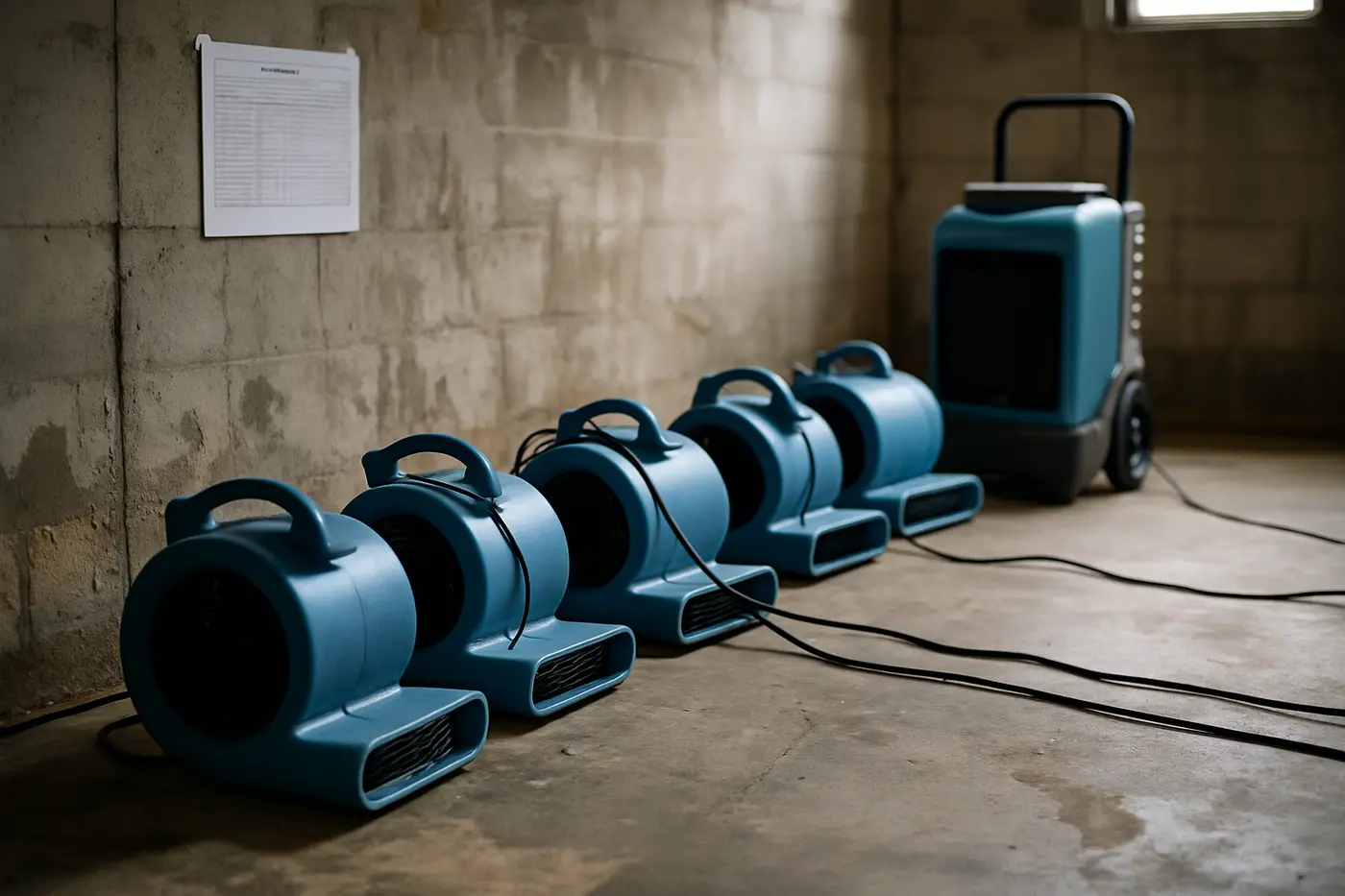
  6. Structural drying. Air movers and LGR dehumidifiers are placed for the evaporation load and metered daily until the slab, walls and framing hit their dry standard.
  7. Documentation. Dated photos, moisture logs, a drying log and an itemized scope for your adjuster.

Why basements take five to ten days to dry

Upstairs, a clean-water loss dries in three to five days. Basements take five to ten. A concrete slab and poured or block foundation walls hold a lot of water and release it slowly. Basement air is cool, often around 60 degrees Fahrenheit, and cool air holds less moisture, so evaporation is slower. Chicago summers add dew points of 65 to 75 degrees outside, which means opening the windows makes things worse, not better. Finished basements add drywall cavities, carpet pad and built-in cabinets that trap moisture where a meter has to find it.

What the meters tell us

We log room temperature and relative humidity, the grain depression across each dehumidifier and the moisture content of the slab, framing and drywall every day. Drywall is compared with an unaffected reference wall upstairs. The equipment comes out when the numbers say dry, not when the carpet feels dry to the hand, because a dry surface over a wet bottom plate is how a drying job becomes a mold remediation job. Our guide to how long a basement takes to dry walks through the readings from a typical job.

The first hour: what to do before we arrive

  1. Stay out of the water until the power is off. If you cannot reach the panel dry, wait for us.
  2. Stop the source if it is inside the house: the fixture shutoff, the water heater valves, or the main where the service enters the basement.
  3. If the water is coming up the floor drain, stop running water upstairs and do not flush.
  4. Photograph the water line, the drain, the sump pit and every wall before anything moves.
  5. Move what you can from upstairs storage, not from the flooded area.
  6. Do not run a household vacuum on standing water, and do not turn on the furnace fan.

Insurance for basement flooding in Illinois

The cause decides the coverage. A standard HO-3 policy covers sudden and accidental discharge from pipes, water heaters and appliances, including frozen pipes if reasonable heat was maintained. It excludes sewer backup and sump pump overflow unless you carry a water backup and sump discharge or overflow endorsement, typically limited to $5,000 to $25,000, and it excludes surface and river flooding unless you have a separate NFIP or private flood policy. Foundation seepage and gradual leaks are excluded almost everywhere.

Adjusters expect dated photos, a moisture map, the drying log and an itemized scope, commonly in Xactimate format. We provide all of it and bill the carrier directly where they approve. Our guide to sewer backup versus flood claims explains how the cause is decided.

Bungalows, two-flats and garden units

Brick bungalows in Beverly, Chatham, Portage Park and Berwyn have full basements under the whole footprint, a floor drain near the laundry and often a bathroom on an ejector pump. Many have been finished with drywall over furring strips against the foundation, which traps water behind the wall.

Two-flats and three-flats in Logan Square, Pilsen and Bridgeport share a basement that holds the laundry, the furnaces, tenant storage and often a garden unit. One backup affects every household in the building, and the landlord, the tenants and any condo association all need the documentation.

Post-war ranches and split-levels in Skokie, Des Plaines and Naperville have finished lower levels with carpet, paneling and drop ceilings that hold water out of sight.

Winter adds its own losses. During the polar vortex of January 2019 and the December 2022 cold snap, supply lines in exterior walls and unheated garages froze, and thaw week filled basements across the region. Our frozen and burst pipe page covers that scenario.

Repair or replace in a flooded basement

MaterialUsually dried and keptUsually removed
CarpetCategory 1, extracted within 48 hoursCategory 2 or 3, or wet more than 48 hours
Carpet padRarelyAlmost always
DrywallCategory 1, dried before 48 hoursCategory 2 or 3, or wet at the bottom plate for days
Laminate flooringOnly if barely dampAny swelling at the joints
Fiberglass insulationNoAlways when wet
Concrete slab and foundationAlways dried in placeNever

The full decision guide for carpet is in can wet carpet be saved.

What basement flooding cleanup costs in Chicago

Basement flooding cleanup in Chicago typically runs $1,500 to $10,000 including extraction, disposal, sanitizing and drying. Water extraction alone is $500 to $2,500. Carpet drying is $200 to $600 per room where the carpet can be saved, and drying equipment is $50 to $125 per unit per day, usually for five to ten days below grade. A sewer backup that needs full sewage cleanup and sanitization runs $3,000 to $10,000. If the basement sat wet for a week before anyone called, add mold remediation at $1,500 to $6,000 for a contained area. The call-out and inspection is $250 to $500 and is credited against the work.

Stopping the next flood

A backwater valve or an overhead sewer conversion stops combined sewer backup, and the City of Chicago and many suburbs offer rebates. A battery backup sump pump covers the outage. Keep stored contents on shelves rather than the floor.

If your basement is under water right now, stay out of it until the power is off, then call us or send the form. We will talk you through the next ten minutes while a crew is on the way.

Last updated September 02, 2026
Common questions

Basement Flooding Cleanup, explained.

Straight answers about response times, water categories, drying timelines and what your adjuster will expect for basement flooding cleanup in Chicago.

All questions
How much does flooded basement cleanup cost in Chicago?

Basement flooding cleanup typically runs $1,500 to $10,000 in Chicago, covering extraction, disposal of what cannot be saved, sanitizing and structural drying. A small clean-water loss caught early sits at the bottom of that range. A finished basement with a sewer backup that sat for a weekend sits at the top, and a full sewage cleanup and sanitization runs $3,000 to $10,000 on its own. The call-out and inspection is $250 to $500 and is credited against the work if you proceed.

Why did my basement flood when it never has before?

Usually one of four things changed. The storm was bigger than the combined sewer could handle, as on July 2, 2023. The power went out and the sump pump stopped. A pump, float switch or check valve wore out. Or the soil was saturated after days of rain and water found a new path through the foundation or a window well. Neighbors on your block flooding at the same time points to the sewer; your house alone points to the pump or the plumbing.

Can I clean up a flooded basement myself?

A shallow clean-water loss on a bare concrete floor is a reasonable do-it-yourself job with a wet vacuum, fans and a dehumidifier, as long as the power is off before you step in. A finished basement, anything that came up through the floor drain, or water that has been sitting more than a day is not. Sewage needs protective gear and proper disposal, wet drywall and pad need to come out, and without moisture meters you cannot tell when the slab and framing are actually dry.

How long does a basement take to dry after flooding?

Five to ten days is typical, compared with three to five for an upstairs loss. Concrete slabs and foundation walls hold water and release it slowly, basement air is cool and damp, and in a Chicago summer the outdoor dew point is often higher than the basement, so opening windows does not help. Finished basements add wall cavities and carpet pad that trap moisture. We meter every day and pull the equipment as soon as the readings meet the dry standard.

Do I have to throw out everything that got wet?

No. After clean water, most hard contents and much of the carpet can be dried and kept if extraction starts within 48 hours. Carpet pad, wet fiberglass insulation and swollen laminate almost always go regardless. After a sewer backup, anything porous that touched the water is disposed of: carpet, pad, drywall below the water line, upholstered furniture, cardboard and fabric. Solid wood, metal, glass and plastic can be cleaned and sanitized. We photograph every discarded item for your claim.

Will my insurance pay for a flooded basement in Illinois?

It depends on the cause. Burst pipes, water heater failures and appliance leaks are covered under a standard HO-3 policy as sudden and accidental discharge. Sewer backup and sump pump overflow are excluded unless you carry a water backup and sump discharge or overflow endorsement, typically $5,000 to $25,000 in limits. Surface flooding needs a separate flood policy, and foundation seepage is excluded almost everywhere. We document the source and provide the moisture logs and scope your adjuster will ask for.

Does a finished basement change the cleanup?

Significantly. On a bare slab we extract, sanitize and dry. In a finished basement the water is inside drywall cavities, under carpet pad, behind paneling and inside built-ins. Drywall is usually cut 12 to 24 inches above the water line, carpet pad comes out, and any wet insulation behind the wall is removed. Drying takes longer because there are more materials to meter, and the rebuild is a separate step. Finished basements with a bathroom are the most common loss we see in Chicago.

How do I keep mold out after a basement flood?

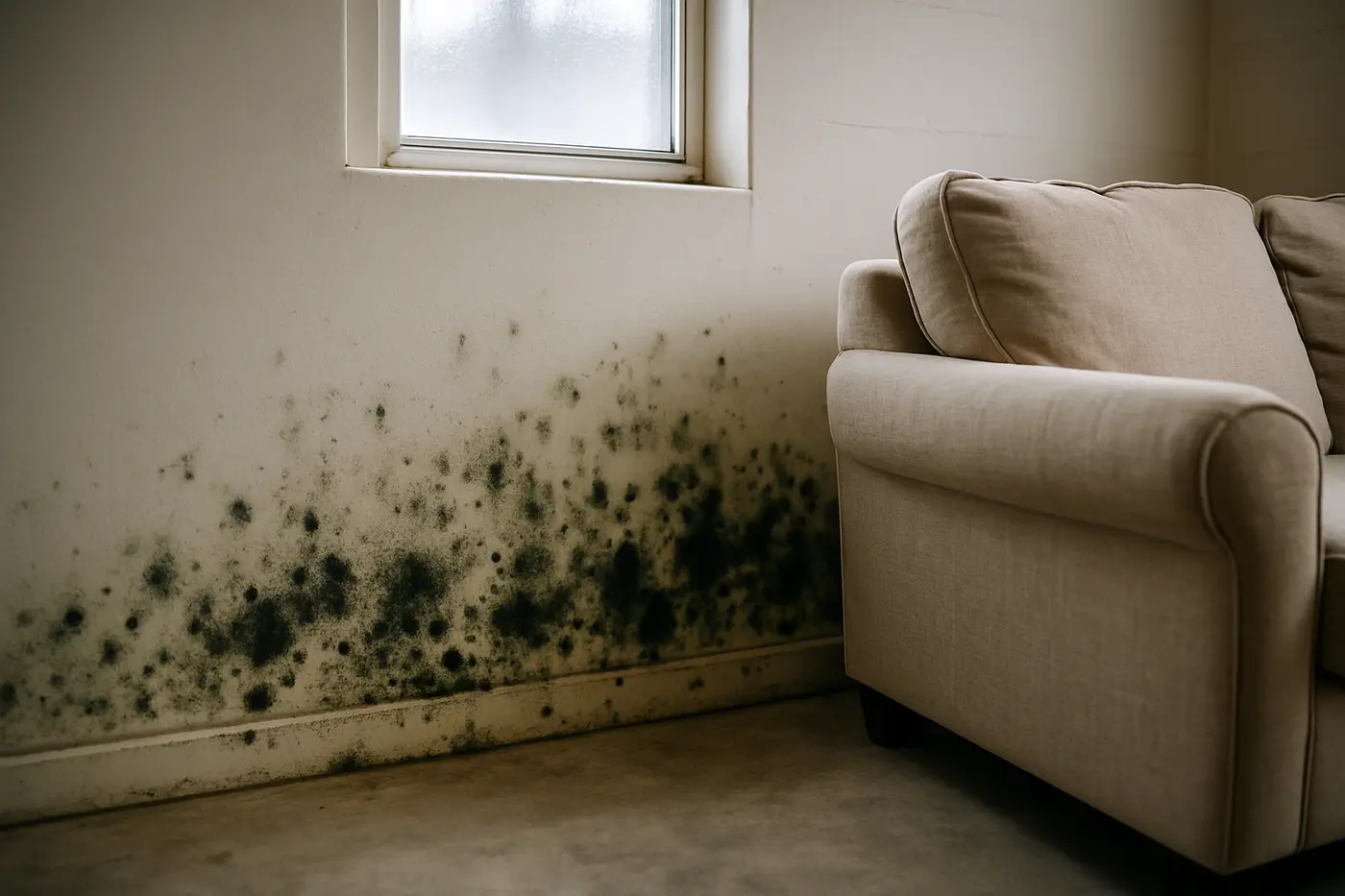
Speed and dryness. Wet drywall, carpet pad and framing support mold within 24 to 48 hours, and a cool basement slows drying without slowing mold. Get the water out the same day, remove the pad and any contaminated drywall, run air movers and an LGR dehumidifier rather than opening windows, and keep the equipment running until a meter confirms the slab and framing are dry. If the basement sat wet for days before cleanup started, plan for a mold inspection once drying is complete.

Related services

Water rarely stays in one lane. These are the services most often scoped on the same job.

All services
  • Flood line on the walls of a Chicago home after river flooding, cleanup in progress
    01

    Flood Damage Restoration

    Flood damage restoration in Chicago after sewer backups, storms and river flooding: Category 3 extraction, tear-out, sanitizing, drying and claim documentation.

    Learn more
  • Technician in full PPE removing contaminated flooring after a sewer backup in a Chicago basement
    02

    Sewage Backup Cleanup

    Sewage backup cleanup across Chicago and the suburbs. Category 3 removal, disinfection and clearance to the IICRC S500 standard after combined sewer backups.

    Learn more
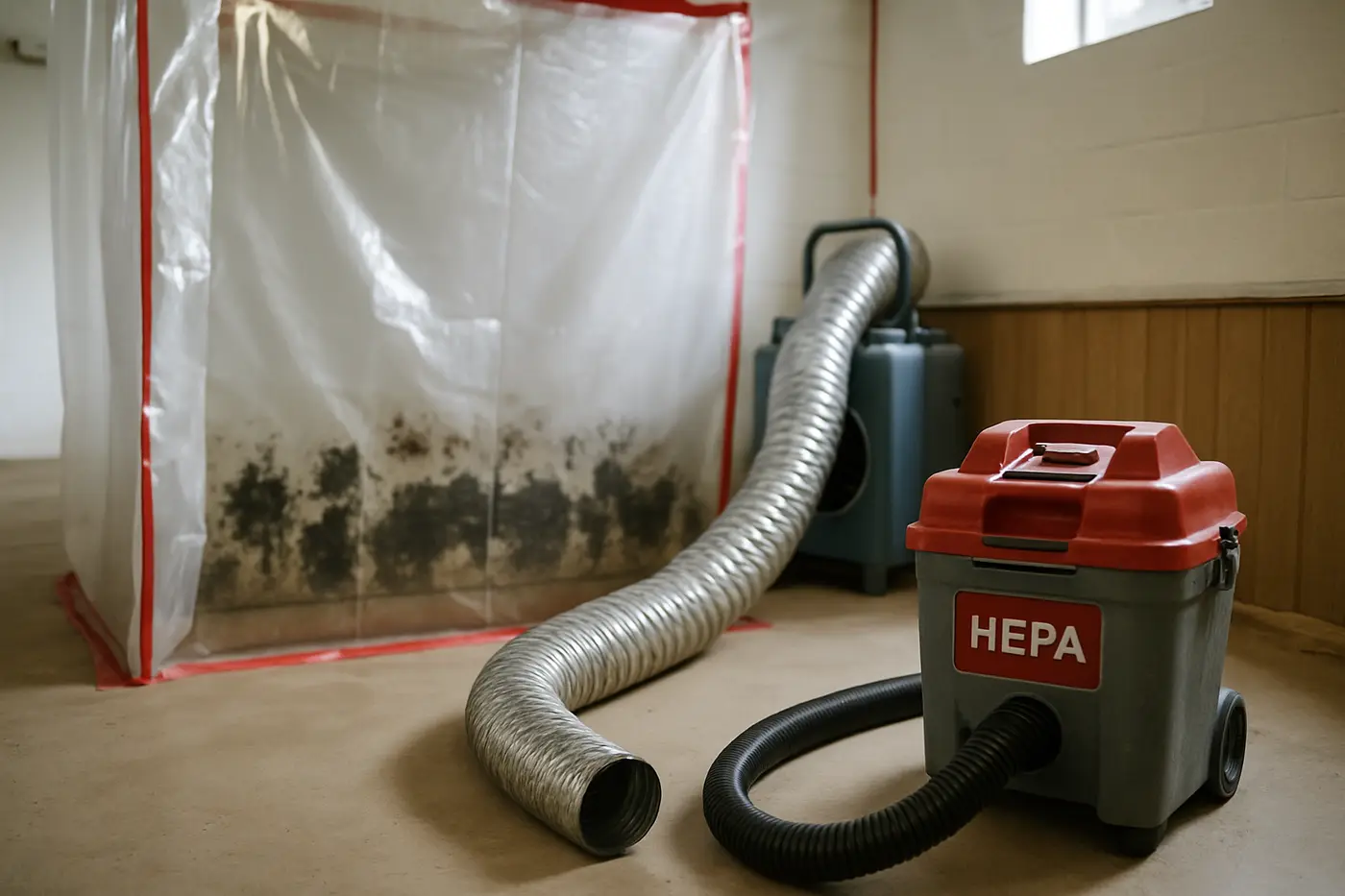
  • Basement room sealed with containment plastic and a negative air machine, mold on the lower wall
    03

    Mold Remediation

    Mold remediation in Chicago homes and basements to the IICRC S520 standard: containment, negative air, HEPA filtration, removal and moisture correction.

    Learn more

Helpful reading

Guides that go withthis service.

Practical, Chicago-specific reading for the first hour, the drying process, mold risk and insurance claims.

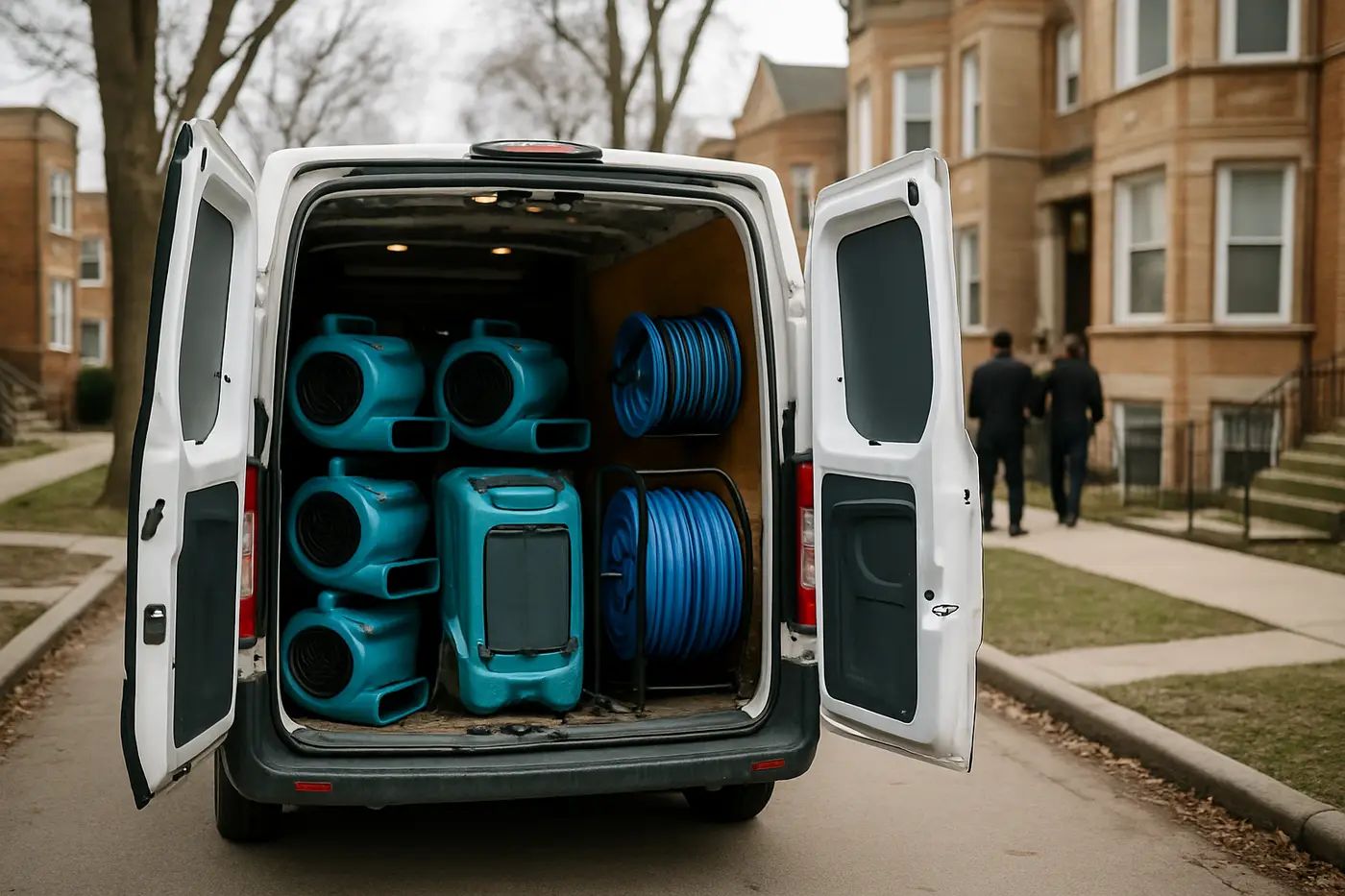
Restoration crew standing beside a van loaded with air movers and dehumidifiers

Basement Flooding Cleanup · Chicago & the Suburbs

Let's take the next step toward drying your property.

Tell us what happened, where the water is and whether it is still active. A restoration coordinator will explain what to do next and what your adjuster will need.