Skip to content

Emergency restoration · Chicago & the Suburbs

Emergency Water Damage Chicago

A supply line that let go, a sump pump that quit in the storm, a floor drain coming up at 2 a.m.: we dispatch around the clock across Chicago and the surrounding suburbs, stop the spread, extract the water and start drying the same day.

  • 24/7 Response
  • Local Technicians
  • Insurance Reports
  • Direct Contact
  • Homes & Business

Request Emergency Water Damage Help

US format - we will call or text you back right away.
Add brief description (optional)
How urgent?

Free on-site inspection and written estimate. Insurance-ready report. No obligation. Privacy.

What's included

Everything the job needs,scoped from the first visit.

Every emergency water damage job in Chicago and the surrounding suburbs includes the work below as standard. It is written into the scope before we start, so there are no surprise extras when the invoice arrives.

  • 24/7 dispatch with clear instructions for the ten minutes before we arrive
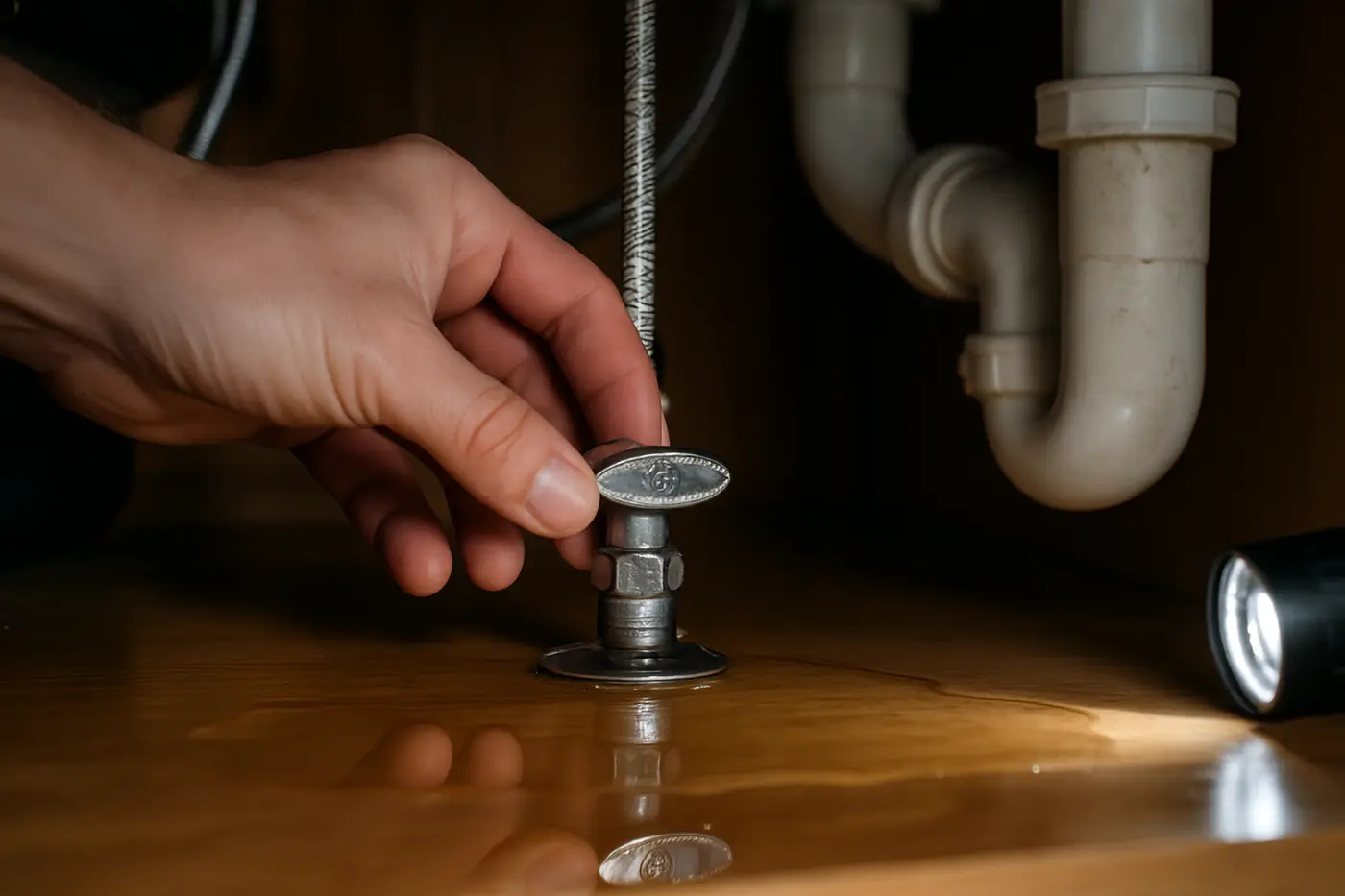
  • Source identification and help shutting off water, power and failed appliances
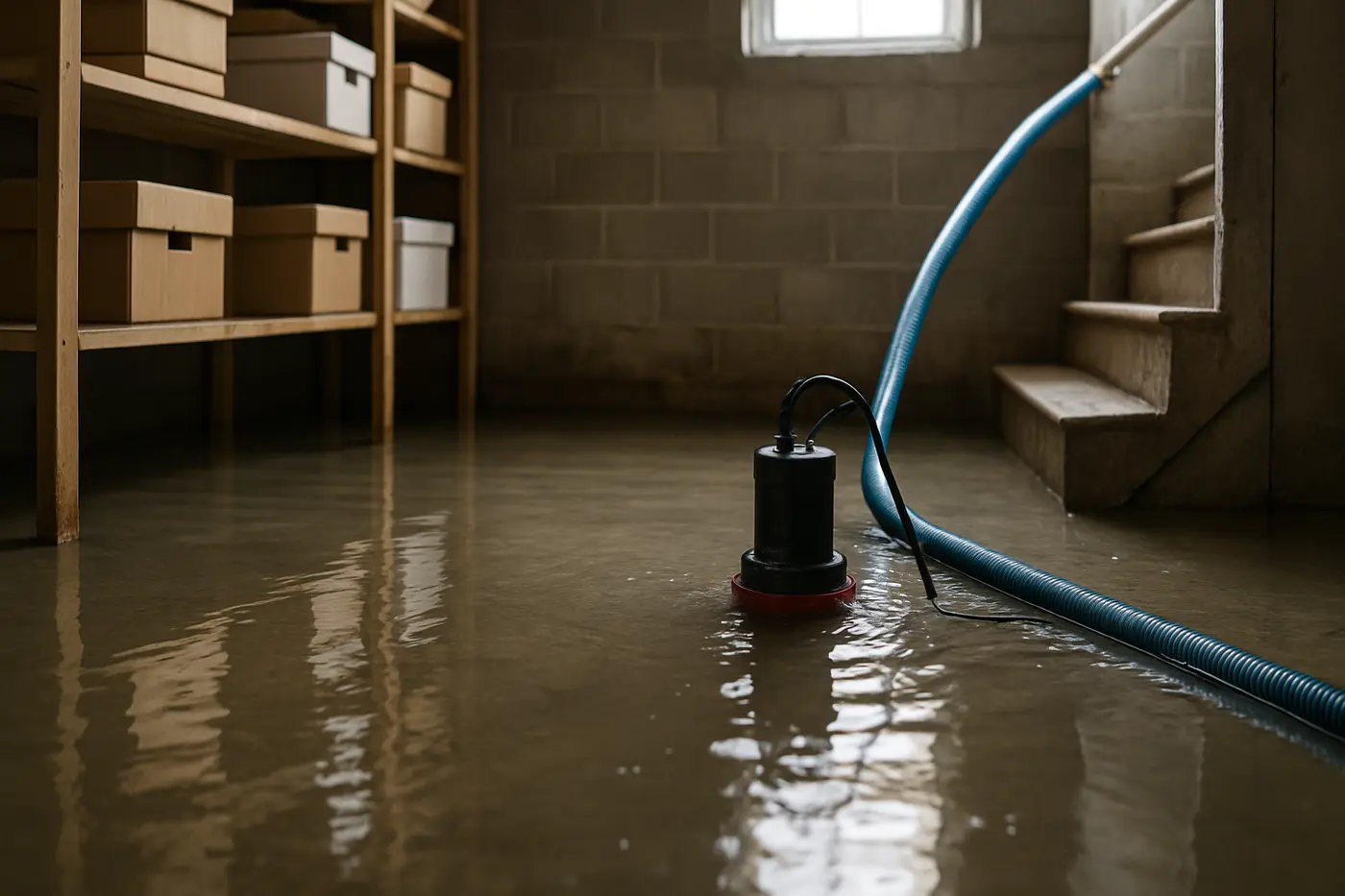
  • Emergency extraction of standing water from floors, carpet and basements
  • Water category assessment (clean, gray or black) and matching sanitization
  • Moisture mapping of walls, floors and framing with pin and non-invasive meters
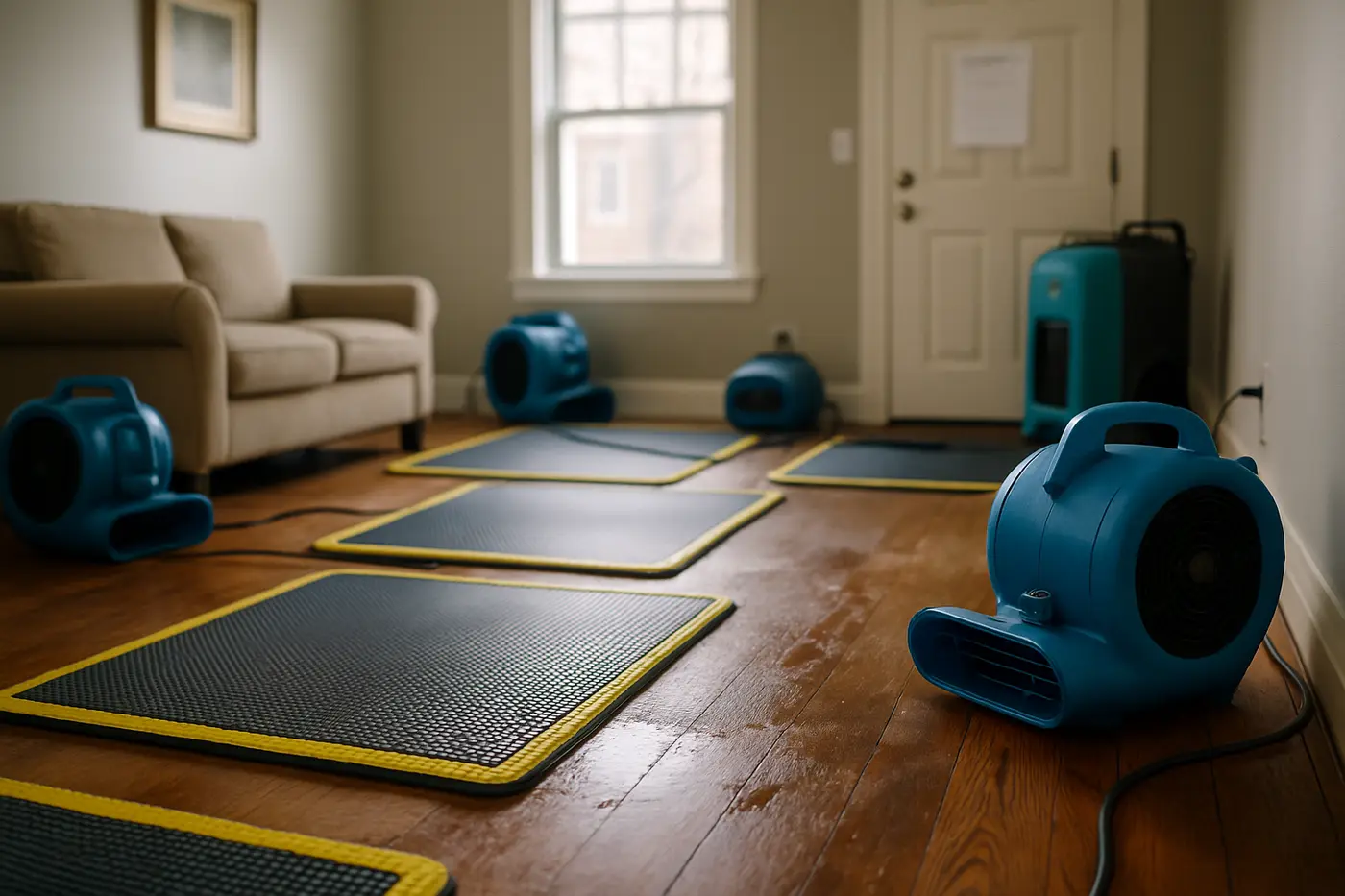
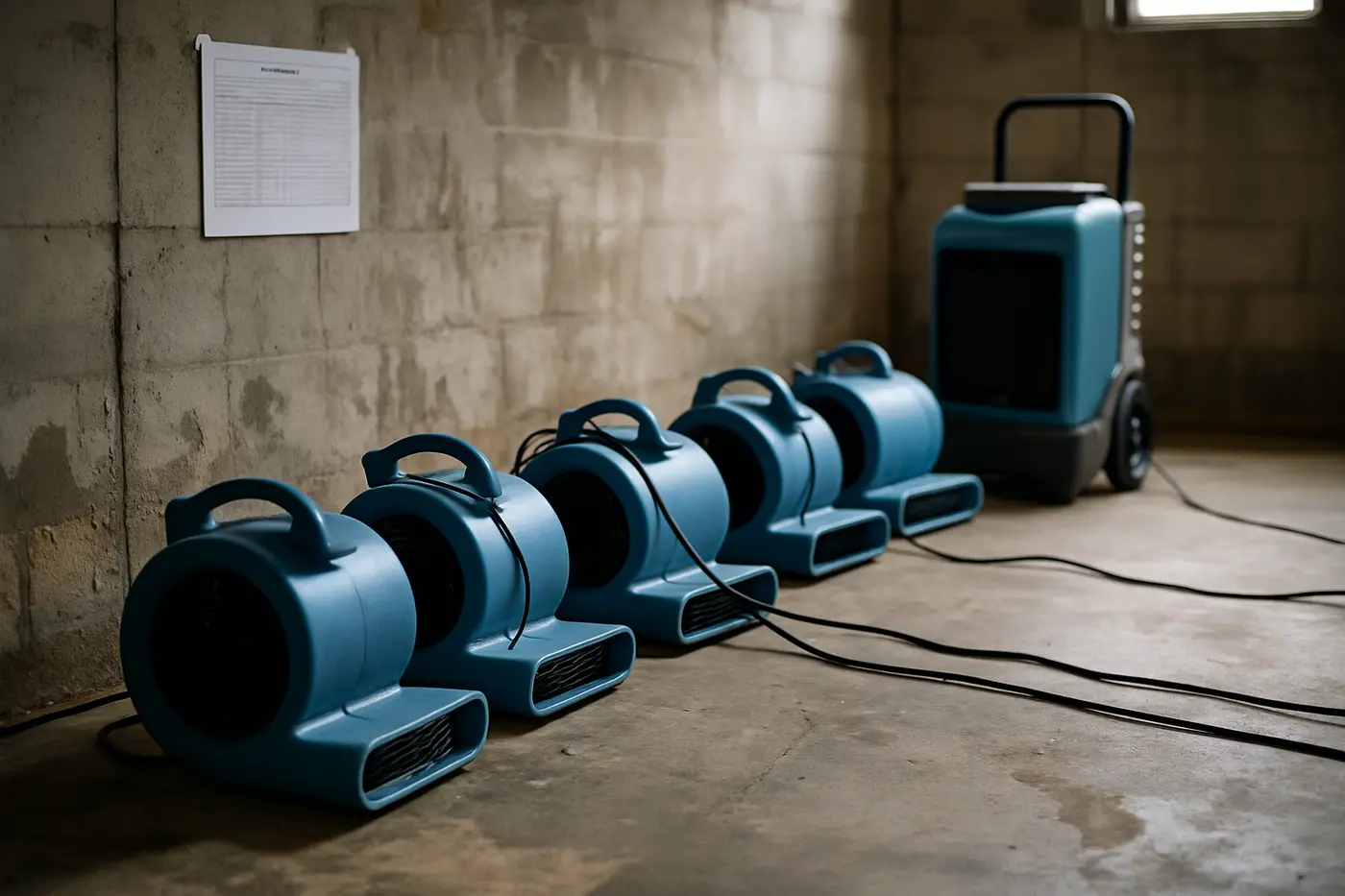
  • Same-day drying setup with air movers and LGR dehumidifiers, monitored daily
  • Dated photos, moisture logs and a written report for your insurance claim
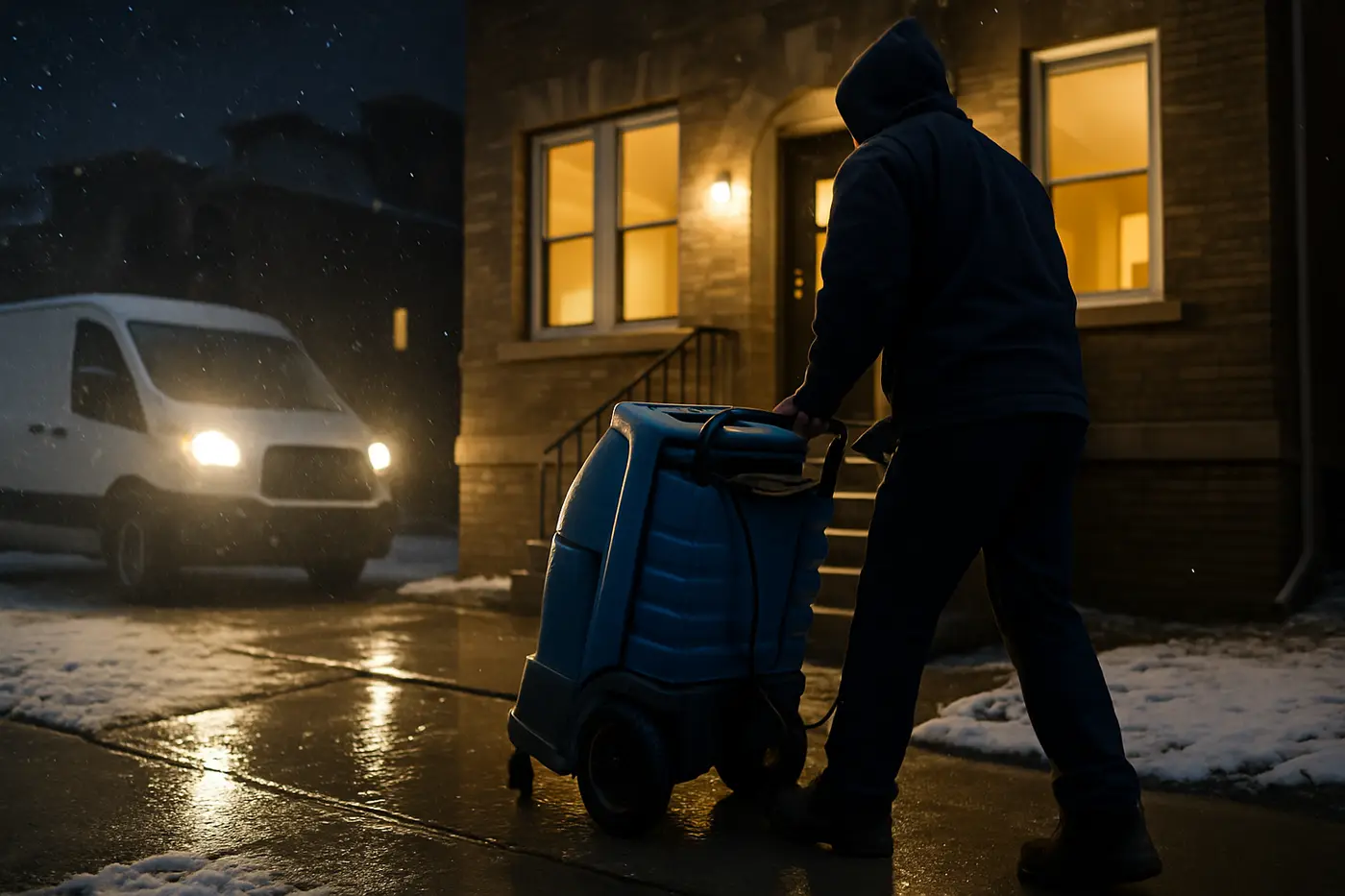
Night-time emergency response with an extraction unit being wheeled into a Chicago home

Not sure it is urgent?

Send a few photos with the form. A coordinator will tell you whether it can wait until morning or needs a crew tonight.

When to call

Signs you needemergency water damage.

Water moves sideways along bottom plates and under floor coverings, so the wet area is nearly always bigger than the stain you can see. Any of the following is worth a call the same day.

  • Water is still running from a pipe, appliance or water heater and you cannot stop it
  • Standing water in the basement after a storm, power outage or sump pump failure
  • Water coming up through a floor drain, toilet or basement shower during heavy rain
  • A ceiling that is sagging, dripping or holding water below a bathroom or the unit above
  • Carpet that is wet wall to wall, or hardwood that is already starting to cup
  • A leak in an upstairs unit of your two-flat, three-flat or condo building
  • Water near outlets, the electrical panel, the furnace or the water heater

Our process

How emergency water damageruns, step by step.

From the first call to the final moisture reading, you will know what is happening, why, and what your insurer will need at each stage.

  1. Step 1: Call, stop the source, stay safe

    We ask where the water is coming from, whether it is still running and whether the power is off. You get instructions for shutting off the supply and staying out of a flooded basement while a crew is dispatched.

  2. Step 2: Extract and assess on arrival

    Standing water comes out first. We then classify the water (Category 1, 2 or 3), map every wet surface with moisture meters and a thermal camera, and photograph the loss before anything else moves.

  3. Step 3: Set up drying the same day

    Air movers and low-grain refrigerant dehumidifiers are placed and sized to the evaporation load. Unsalvageable pad, drywall or insulation is removed so the framing behind it can dry.

  4. Step 4: Monitor, document and hand over

    We log temperature, humidity and material moisture daily until every reading meets dry standard, then hand over the moisture logs, photo record and scope your adjuster expects.

Price guide · USD, 2026

What emergency water damagecosts in Chicago.

Ranges from typical Chicago and the surrounding suburbs jobs. The final quote is given on site after moisture mapping, in writing, before any work starts. Insurance direct billing where the insurer approves.

ItemTypical range
Emergency call-out and inspection Moisture mapping and a written report, any hour; credited against restoration work$250-$500
Water extraction Standard home or basement; depends on volume, category and access$500-$2,500
Structural drying equipment Air movers and LGR dehumidifiers, typically 3-5 days$50-$125 per unit per day
Full restoration, clean water (2-3 rooms) Extraction, drying, minor drywall and trim replacement$2,000-$6,500
Full restoration, gray or black water (multiple rooms) Includes removal of contaminated materials and sanitization$6,500-$18,000+

Ranges cover labor, equipment and disposal for 2026. The number you approve on the written quote is the number you pay; if the scope changes once walls are opened, we stop and re-quote in writing.

Full price guide

In depth

Emergency Water Damage in Chicago: how the job actually runs.

Water does not wait for business hours, and in Chicago it has a habit of arriving at the worst possible one. The supply line under the kitchen sink lets go while you are at work. The sump pump stops when the power goes out in the middle of a thunderstorm. The floor drain in the basement starts bubbling at 2 a.m. on a July night. Emergency water damage response is the discipline of getting the water out and the drying started before the 48-hour clock runs out.

What counts as a water damage emergency

If any of these are true, call now rather than in the morning:

  • Water is still running and you cannot find or reach the shutoff.
  • There is standing water in the basement, especially if the power is still on.
  • Water is coming up through a floor drain, toilet or basement shower.
  • A ceiling is sagging or holding water, which can come down without warning.
  • The water is on the floor of a unit with other units below it.
  • Water has reached outlets, the electrical panel, the furnace or the water heater.

A wet room from a burst supply line is an emergency even after the pipe is shut off, because the water is already in the pad, the drywall and the bottom plate.

What happens when you call

The person who answers asks five things: where the water is coming from, whether it is still running, whether the power to that area is off, how deep it is, and what it is on (carpet, hardwood, tile, concrete). The answers set the category and the urgency, and you get instructions for the next ten minutes before a crew is dispatched.

Active water and sewage go to the front of the queue. During a regional storm like July 2, 2023, when up to about 9 inches fell on parts of the West Side, Cicero and Berwyn and thousands of basements flooded, call volume across Chicagoland runs far above normal. We tell you honestly where you are in the line and what to do in the meantime.

The first 24 hours, hour by hour

Hour 0 to 1: you

Stop the source. For a fixture, the shutoff valve under it. For a burst pipe or an unknown source, the main valve, usually in the basement where the service enters the house. For a water heater, the cold feed on top of the tank and the gas or breaker. Cut power to the wet area only if the panel is dry and you are on dry ground. Lift what you can: rugs off carpet, furniture onto blocks, boxes off the floor. Photograph everything before it is moved. The full checklist is in what to do in the first hour after water damage.

Hours 1 to 4: arrival, extraction, mapping

On arrival we confirm the source is stopped, then extract standing water with truck-mount or portable units. Every gallon extracted is a gallon the dehumidifiers do not have to evaporate later. We classify the water under IICRC S500: Category 1 clean supply water, Category 2 gray water from appliances or clean water that has sat, Category 3 black water from sewers, rivers or anything that came through soil. Then we map every wet surface with pin and non-invasive moisture meters and a thermal camera. Water travels sideways along bottom plates and under floor coverings, so the wet area is almost always bigger than the stain.

Hours 4 to 24: drying begins

Air movers and low-grain refrigerant (LGR) dehumidifiers go in the same visit, sized to the evaporation load. Carpet pad that is saturated comes out; Category 1 carpet usually stays and is floated. Baseboard comes off so wall cavities can vent. Drywall wet with gray or black water, or wet more than 48 hours, is cut out above the water line. By the end of day one the loss has stopped growing; see water extraction for the equipment.

Day 2 onward

We come back daily to log temperature, relative humidity, dehumidifier output and material moisture. Typical structural drying is three to five days. Basements and slab floors take five to ten because concrete holds water and the space is cool. The equipment leaves the day the materials reach dry standard, not before and not after. See how long it takes to dry a basement after flooding for the realistic timelines.

Why the first 24 hours decide the price

Two things degrade with time. The first is the water category: clean water that sits for a day or two becomes gray water as it picks up whatever is in the carpet and the dust, and gray water that keeps sitting becomes black. Each step up means more material removed and more sanitizing. The second is mold. Wet drywall paper, carpet pad and framing support growth within 24 to 48 hours in Chicago conditions, faster in the humid months when dew points sit between 65 and 75 degrees Fahrenheit.

A two- or three-room clean-water loss that is extracted and drying by the end of day one usually lands at $2,000 to $6,500. The same loss discovered after a long weekend, now gray water with mold starting on the lower drywall, is a multi-room restoration at $6,500 to $18,000 or more. Speed is the cheapest thing we sell.

Chicago emergencies have seasons

Summer (May to September). Short, intense convective storms overwhelm the combined sewer that serves most of the city and the older inner suburbs, and sewage-laden water backs up through floor drains and basement fixtures. Sump pump failure during a power outage is the other leading cause of basement flooding. Basement flooding cleanup is our busiest work in these months.

Winter. Frozen and burst pipes are the number one winter claim, and the thaw after a deep freeze like the polar vortex of January 30-31, 2019 (about -23 degrees Fahrenheit at O’Hare) is the busiest week of the year for burst-pipe calls. Water heaters and boilers also fail in cold snaps. See frozen and burst pipe water damage.

Spring. River flooding: the region-wide flooding of April 17-18, 2013 along the Des Plaines River, and the Chicago River overtopping downtown in May 2020, which put water into high-rise basements in the Loop and the West Loop.

Any month. Multi-unit water travel. In a Lincoln Park three-flat or an Evanston courtyard building, a burst supply line or an overflowing appliance upstairs runs down through every unit below. The emergency is not one apartment; it is a stack of them.

Insurance and documentation on an emergency

Standard Illinois homeowners policies (HO-3) cover sudden and accidental discharge: burst pipes, water heater failure, appliance supply lines, frozen pipes where reasonable heat was maintained. They exclude surface flooding unless you carry a separate flood policy, and they exclude sewer backup and sump pump overflow unless you added a water backup endorsement, typically with limits of $5,000 to $25,000. Gradual leaks are excluded.

Emergency mitigation is covered when it is documented, so our first visit produces dated photos, a moisture map and a written report, followed by daily drying logs and an itemized scope in the Xactimate format adjusters expect. Where the carrier approves, we bill them directly.

Which emergency is which?

Source of waterCategoryWhat changes in the response
Burst supply pipe, water heater, appliance line1 (clean)Extract fast, dry in place, most materials saved
Dishwasher or washing machine discharge2 (gray)Antimicrobial treatment, pad removed
Clean water left 48 hours or more2 (gray)Treated as gray; wet drywall usually cut
Combined sewer backup through floor drain3 (black)Porous materials removed, full sanitization, PPE
Sump pump failure in a storm2 or 3Depends on what came in with the groundwater
River or overland flooding3 (black)Removal, sanitization, separate flood policy applies

What an emergency response costs

Emergency call-out and inspection is $250 to $500 at any hour, and it is credited against the restoration if you proceed. Water extraction is $500 to $2,500. Drying equipment runs $50 to $125 per unit per day, and a typical three-room job uses six to ten units for three to five days. A clean-water restoration across two or three rooms is $2,000 to $6,500; gray or black water through multiple rooms is $6,500 to $18,000 or more. The full breakdown is in our 2026 cost guide.

If you are standing in water anywhere in Chicago or the suburbs, call us or send the form now. We will tell you what to do in the next ten minutes and have a crew on the way.

Last updated September 08, 2026
Common questions

Emergency Water Damage, explained.

Straight answers about response times, water categories, drying timelines and what your adjuster will expect for emergency water damage in Chicago.

All questions
Are you really available 24 hours a day?

Yes. Water damage in Chicago does not keep business hours: the sump pump quits when the power goes out at 2 a.m., the supply line lets go while you are at work, and the sewer surcharges in the middle of a Saturday storm. We take calls around the clock, dispatch a crew for active water and sewage first, and give you clear instructions for the ten minutes before we arrive. Response times across the city and suburbs vary with traffic, weather and call volume during a regional storm.

What should I do while I wait for the crew?

Stop the water if you safely can: the fixture shutoff, the main valve where the service enters the basement, or the power to a failed water heater. Turn off the breaker to the wet area only if the panel is dry and you are not standing in water. Move rugs, boxes and furniture off wet floors. Take dated photos before anything is moved. Do not run a household vacuum on standing water, and do not enter a basement with standing water while the power is on.

Is it still an emergency if the water has already stopped?

Yes, for the first 48 hours. Stopping the source ends the flow, but the water that is already in the carpet pad, drywall and framing keeps moving and keeps feeding mold. Chicago basements are cool and damp, which slows evaporation, and summer dew points of 65 to 75 degrees Fahrenheit mean the room air cannot absorb much on its own. Getting extraction and dehumidification running on day one is what keeps a two-room loss in the $2,000 to $6,500 range.

Is water from a floor drain or toilet an emergency?

Treat it as one, and keep people and pets away. Water that comes up through a floor drain, toilet or basement fixture during a heavy rain is combined sewer backup, which the IICRC S500 standard classes as Category 3. It carries sewage regardless of how clear it looks. Porous materials it touches, such as carpet, pad, drywall and cardboard, are removed rather than dried, the area is sanitized, and workers wear gloves, boots and an N95 or better. Report the backup to Chicago 311 as well.

How long before mold starts?

Wet drywall, carpet pad and wood framing support mold growth within 24 to 48 hours in Chicago conditions. That window is shorter in July and August when the air is already humid, and it is why an emergency response is measured in hours. Once mold is visible the job changes from drying to remediation under the S520 standard, which adds containment, removal of affected materials and air filtration, and typically costs $1,500 to $6,000 for a contained area on top of the drying.

Do you handle emergencies in condo buildings and two-flats?

Yes. In a two-flat, three-flat or high-rise, water from an upper unit travels down through the units below, and the response covers every affected floor, not just where the leak started. We coordinate with the building engineer or property manager, identify the source unit, and document each unit separately because the owners' policies and the association's master policy often split the claim. Getting into the units below early is what keeps a one-unit leak from becoming a three-unit claim.

Will my insurance cover an emergency call-out?

Standard Illinois homeowners policies cover sudden and accidental water discharge from pipes, appliances and water heaters, and they cover reasonable emergency mitigation when it is documented. Sewer backup and sump pump overflow need a separate endorsement, and surface flooding needs a flood policy. Our call-out includes moisture mapping and a written report with dated photos, which is what adjusters expect, and the $250 to $500 fee is credited against the restoration if you proceed. Where the carrier approves, we bill them directly.

Related services

Water rarely stays in one lane. These are the services most often scoped on the same job.

All services
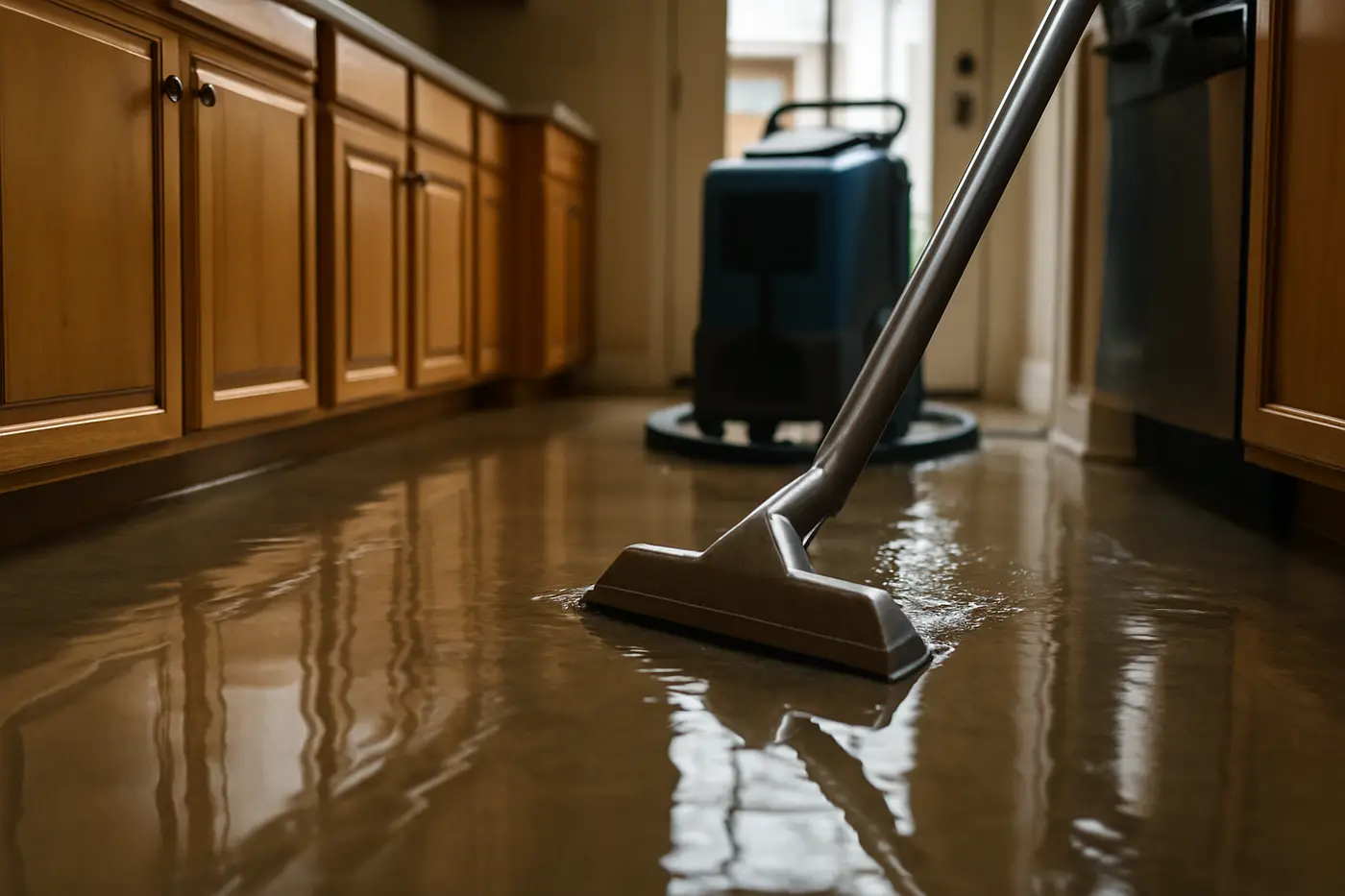
  • Standing water across a kitchen floor being extracted with a wide wand
    01

    Water Extraction and Removal

    Truck-mount and portable water removal across Chicago and the suburbs. Submersible pumps for flooded basements, weighted carpet extraction and IICRC S500 drying setup.

    Learn more
  • Air movers and a dehumidifier drying a water-damaged Chicago living room
    02

    Water Damage Restoration

    Water damage restoration across Chicago and the suburbs to the IICRC S500 standard: emergency extraction, moisture mapping, structural drying and claim-ready reports.

    Learn more
  • Flooded finished basement in Chicago with water being pumped out and carpet removed
    03

    Basement Flooding Cleanup

    Flooded basement cleanup in Chicago: pump-out, sewer backup sanitizing, drywall and carpet tear-out, and structural drying for bungalows, two-flats and garden units.

    Learn more

Helpful reading

Guides that go withthis service.

Practical, Chicago-specific reading for the first hour, the drying process, mold risk and insurance claims.

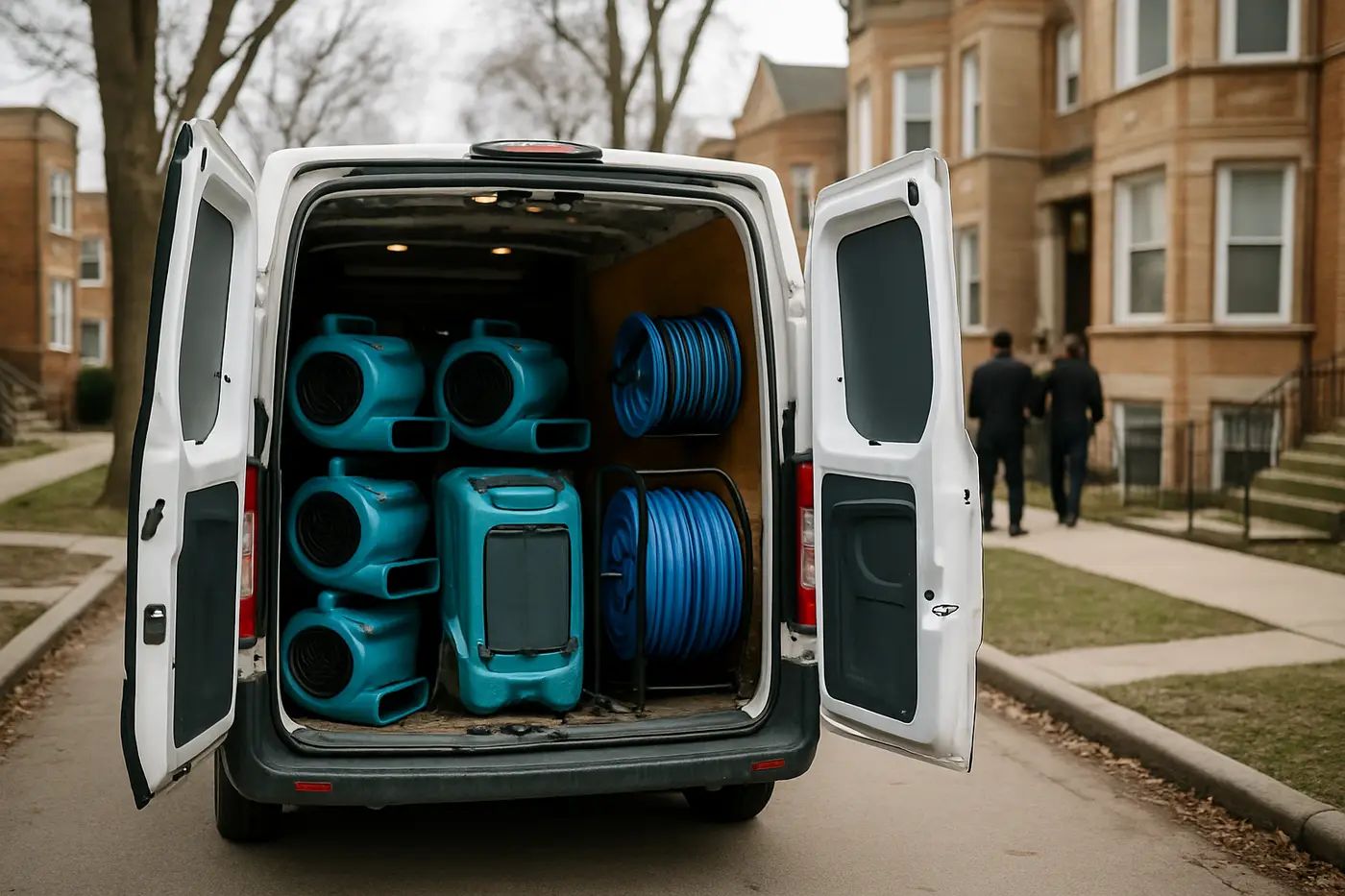
Restoration crew standing beside a van loaded with air movers and dehumidifiers

Emergency Water Damage · Chicago & the Suburbs

Let's take the next step toward drying your property.

Tell us what happened, where the water is and whether it is still active. A restoration coordinator will explain what to do next and what your adjuster will need.