In depth
Fire and Smoke Damage Restoration in Chicago: how the job actually runs.
A house fire in Chicago leaves three problems behind, not one. The fire burns what it reaches. The smoke travels much further, coating rooms that never saw a flame with soot and a sour odor that settles into drywall, upholstery and ductwork. Then the water used to put the fire out runs down through every floor below and pools in the basement. Fire damage restoration is the work of dealing with all three in the right order, and the order matters more than most people expect. The U.S. Fire Administration publishes guidance on home fire safety and recovery.
What fire and smoke damage restoration involves in Chicago
Water is dealt with first because it gets worse by the hour. Soot is next because it keeps staining while it sits. Odor is last because you cannot remove a smell while its source is still in the building.
- Board-up and make-safe. Broken windows, forced doors and roof openings are covered the same day so the house is secure and out of the weather.
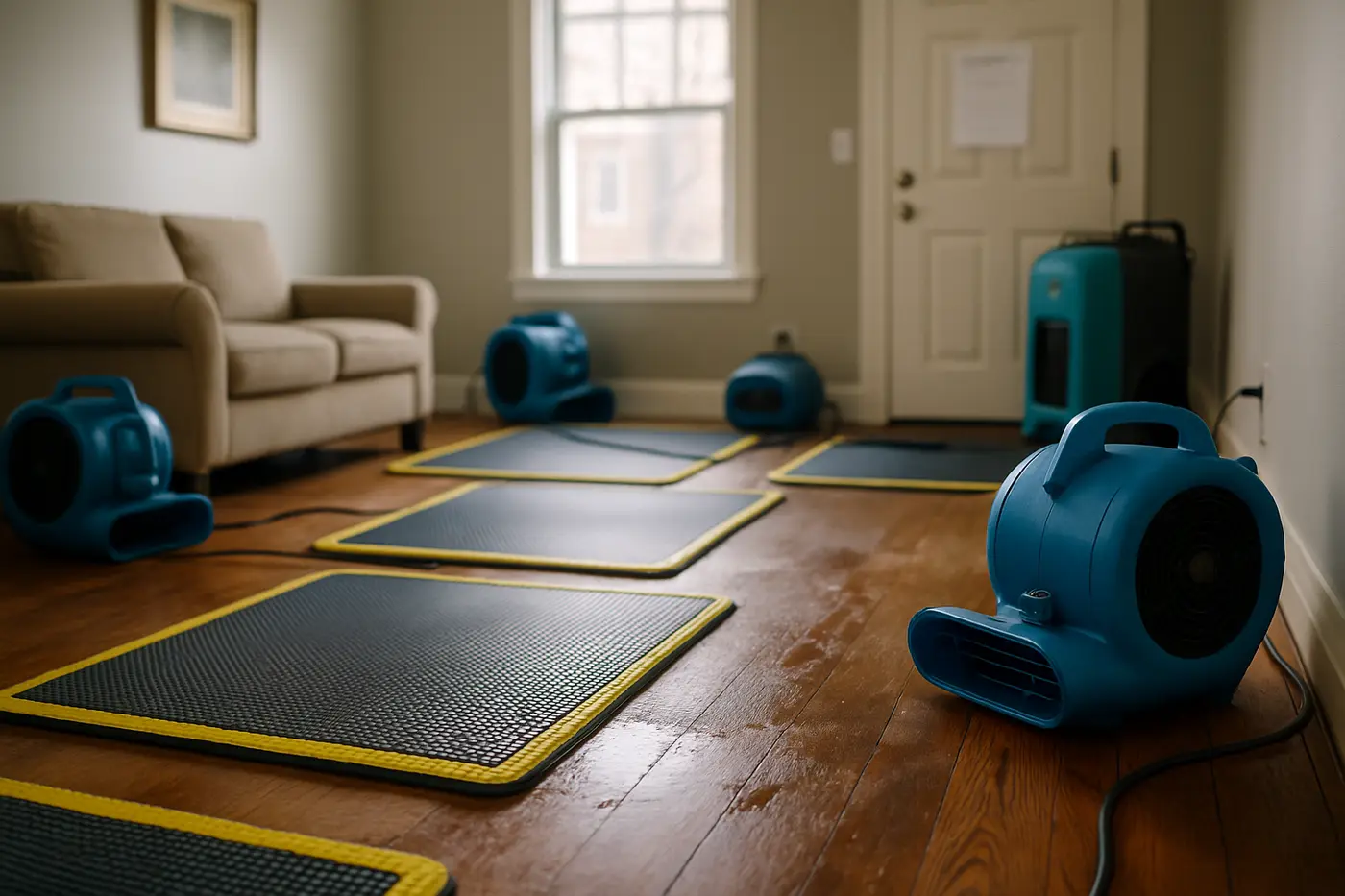
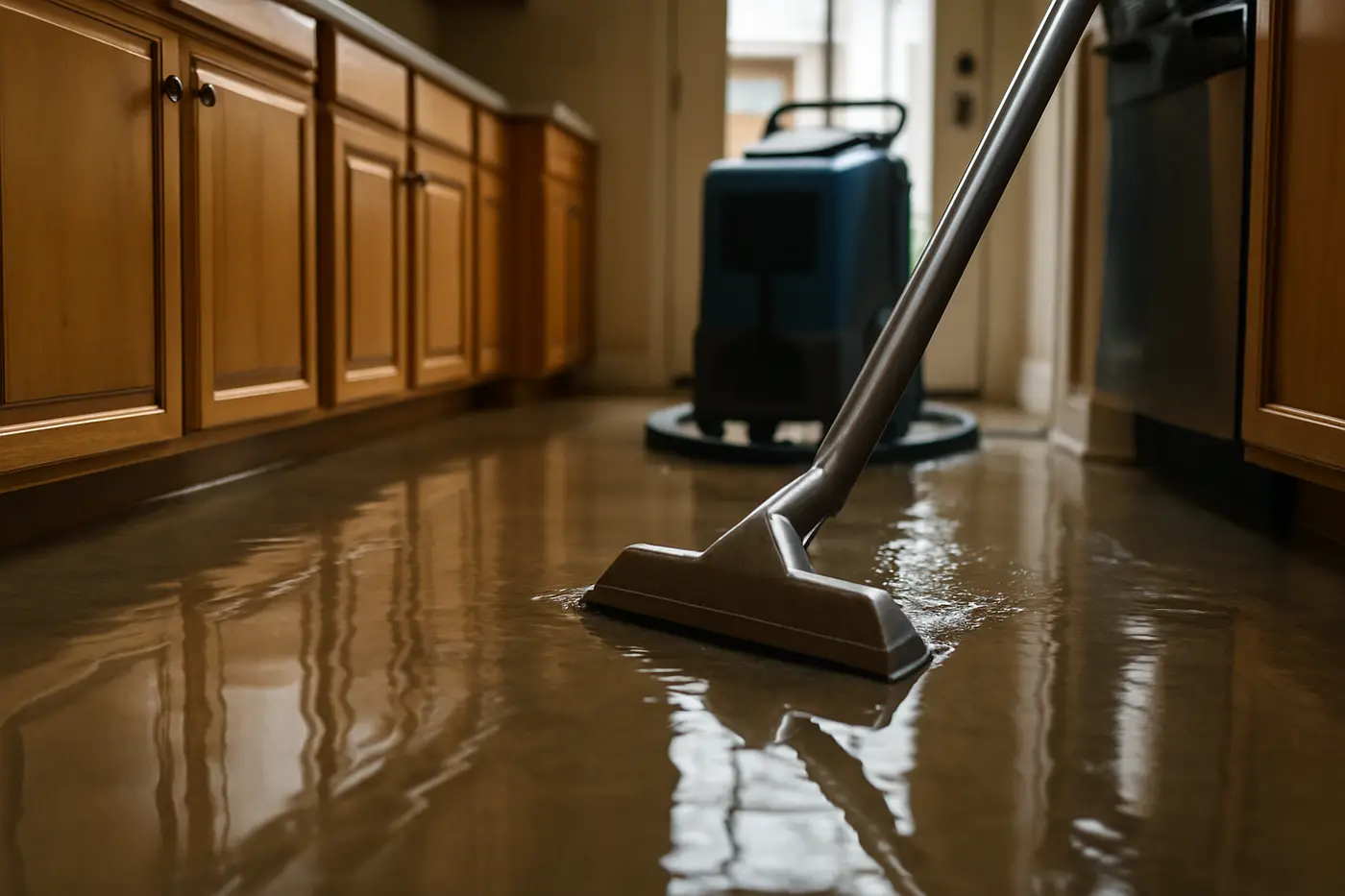
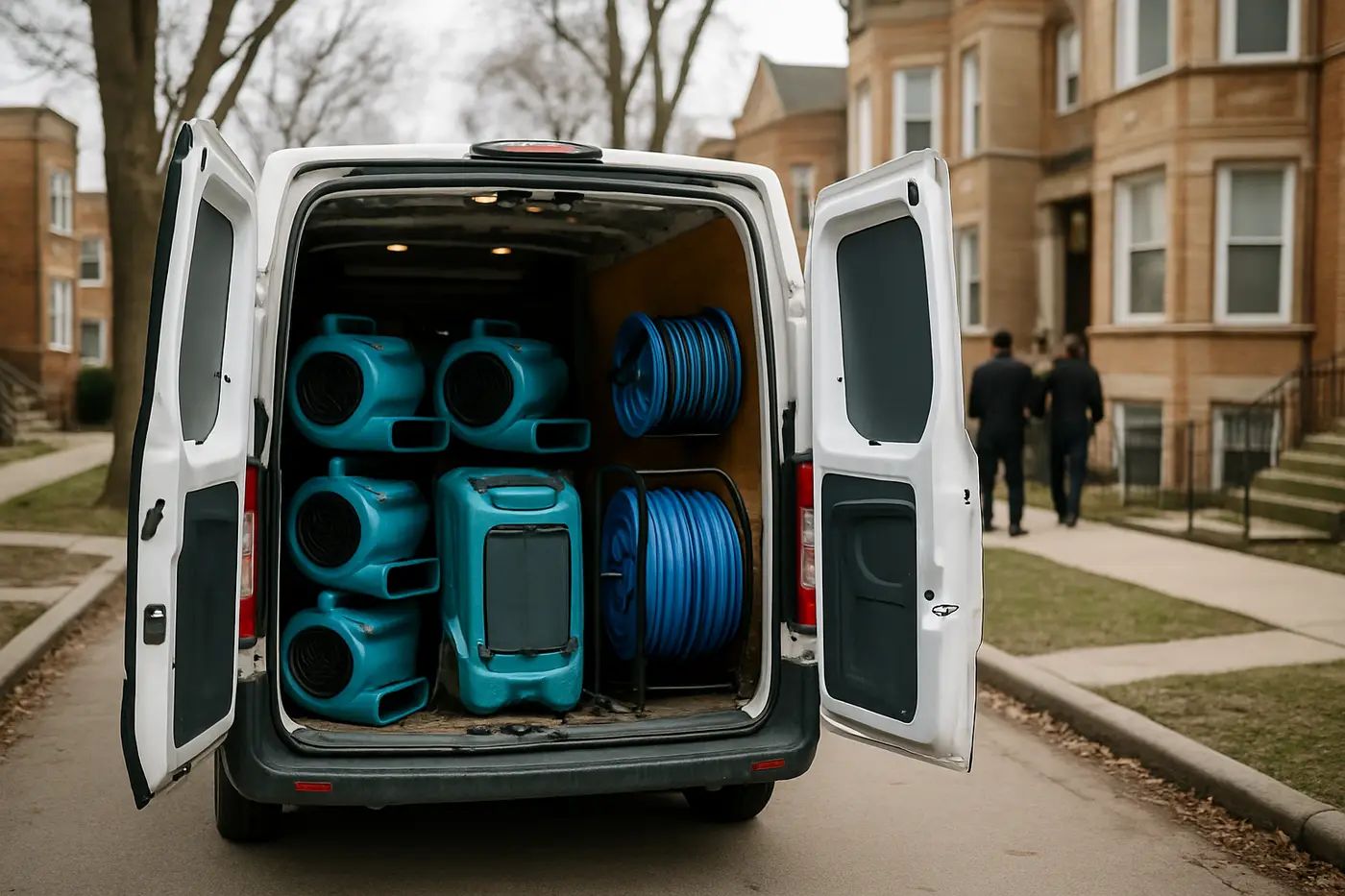
- Extraction and structural drying. Firefighting water is pulled from carpet, floors and the basement, then air movers and LGR dehumidifiers dry the structure. See water extraction for how that is sized.
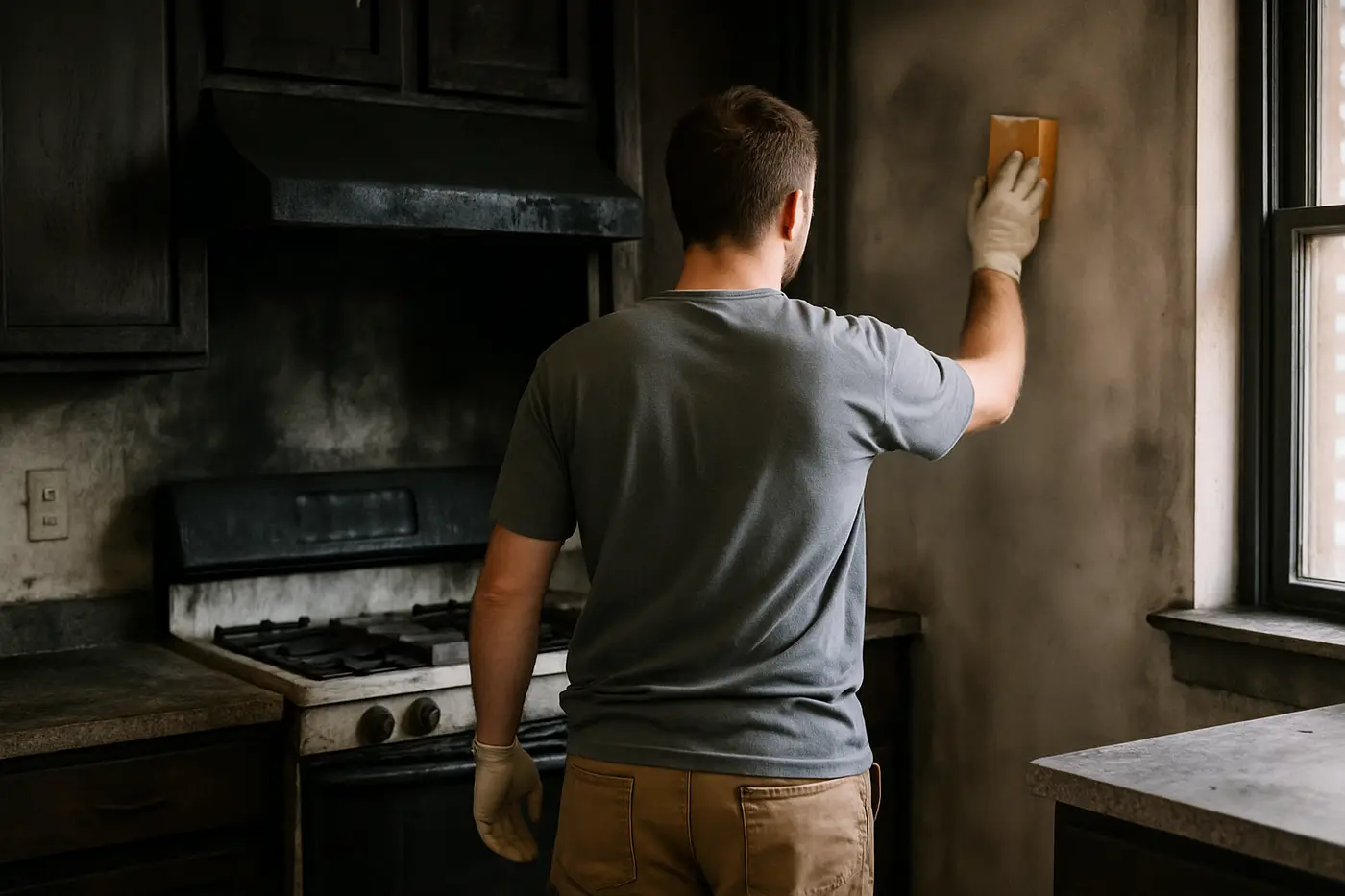
- Soot removal. Every affected surface is cleaned with a method matched to the residue.
- Smoke odor removal. Source removal, cleaning, sealing and air treatment, in that order.
- Contents. Belongings are inventoried, packed out, cleaned and stored.
- Demolition and repair coordination. Charred and contaminated materials come out, and the scope is written so the rebuild can be priced.
Soot is not one thing
Dry smoke from a fast, hot fire of wood and paper leaves a powdery residue that lifts with dry chemical sponges. Wet smoke from a slow, smoldering fire of plastics and synthetics leaves a sticky film that smears if wiped with water. Protein residue from a kitchen fire is almost invisible but carries a heavy odor and yellows paint over weeks. A furnace or boiler puff-back pushes oily soot through every register in the house. Each residue needs a different cleaning chemistry, and cleaning the wrong way sets the stain permanently.
Where the odor lives
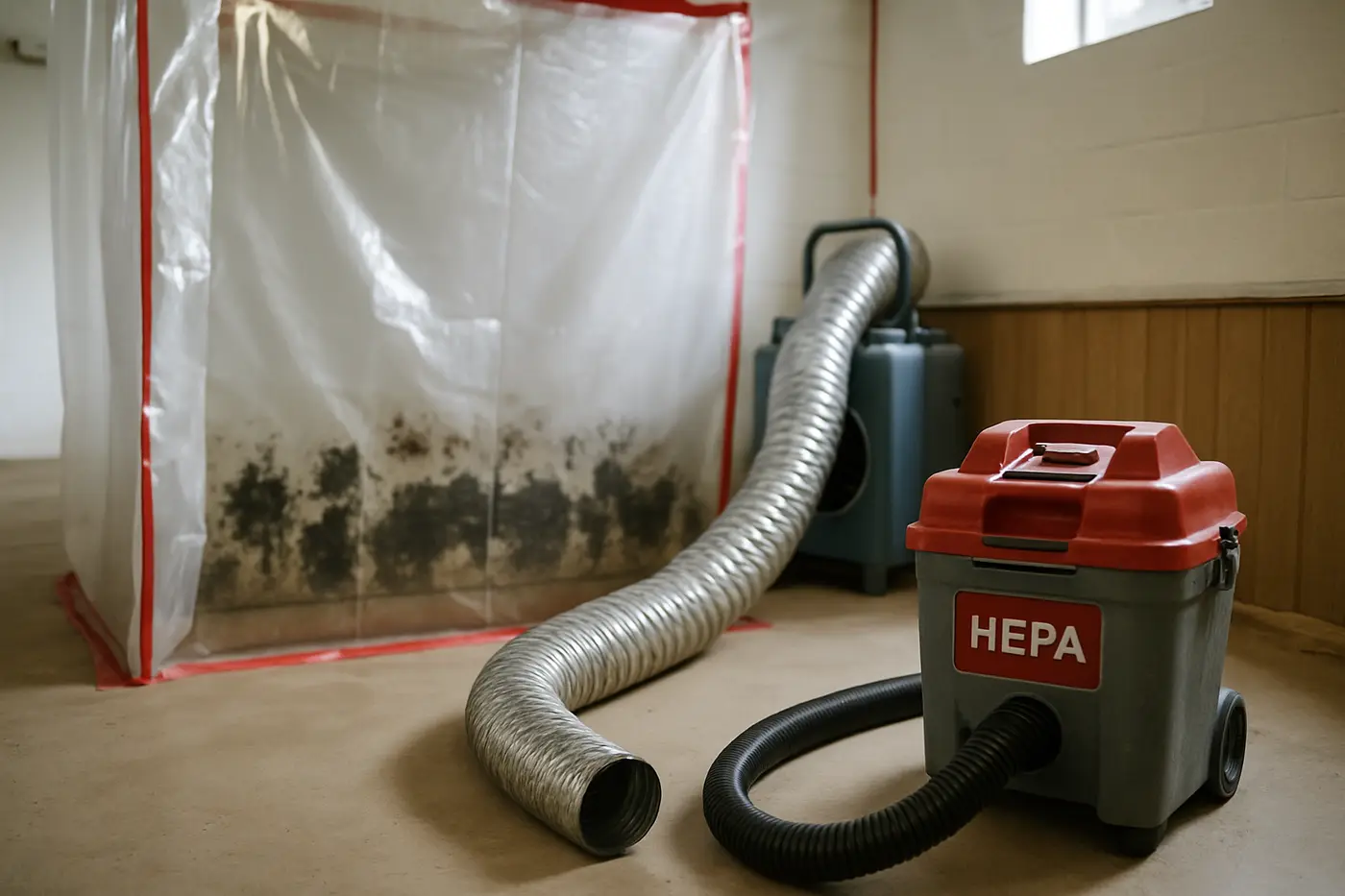
Smoke odor is held in porous materials: drywall paper, insulation, carpet pad, unfinished wood, the inside of cabinets and the ductwork. We remove what cannot be cleaned, clean what can, seal framing with an odor-blocking primer, and treat the air with HEPA air scrubbers and, in an unoccupied house, thermal fogging or hydroxyl generators.
The water damage nobody plans for
A working fire puts a large volume of water into a house in a short time, and in Chicago that house almost always has a full basement at the bottom of the path. Water runs down stairwells and wall cavities, through the floor of the burned room, across the ceiling of the room below and onto the basement slab.
Firefighting water is not clean. It has passed through soot, ash and burned debris, so under the IICRC S500 standard we treat it as Category 2 (gray) at minimum, and as Category 3 if it has been sitting for days. Porous materials it soaked are usually removed rather than dried, since EPA mold guidance treats materials wet beyond 48 hours as a mold risk.
The drying itself follows the same rules as any water damage restoration job. Air movers lift moisture off surfaces, LGR dehumidifiers pull it out of the air, and we log temperature, humidity and material moisture daily. Three to five days is typical for the floors above grade; a basement slab and lower drywall can take five to ten. Start it a week late and the mold that follows becomes its own mold remediation job under the S520 standard.
The first hours after the fire
- Stay out until the officer in charge releases the building. Floors and stairs over a burned area may not hold weight, and the air is full of soot.
- Get the incident report number from the Chicago Fire Department before the crews leave. Your adjuster will ask for the fire report first.
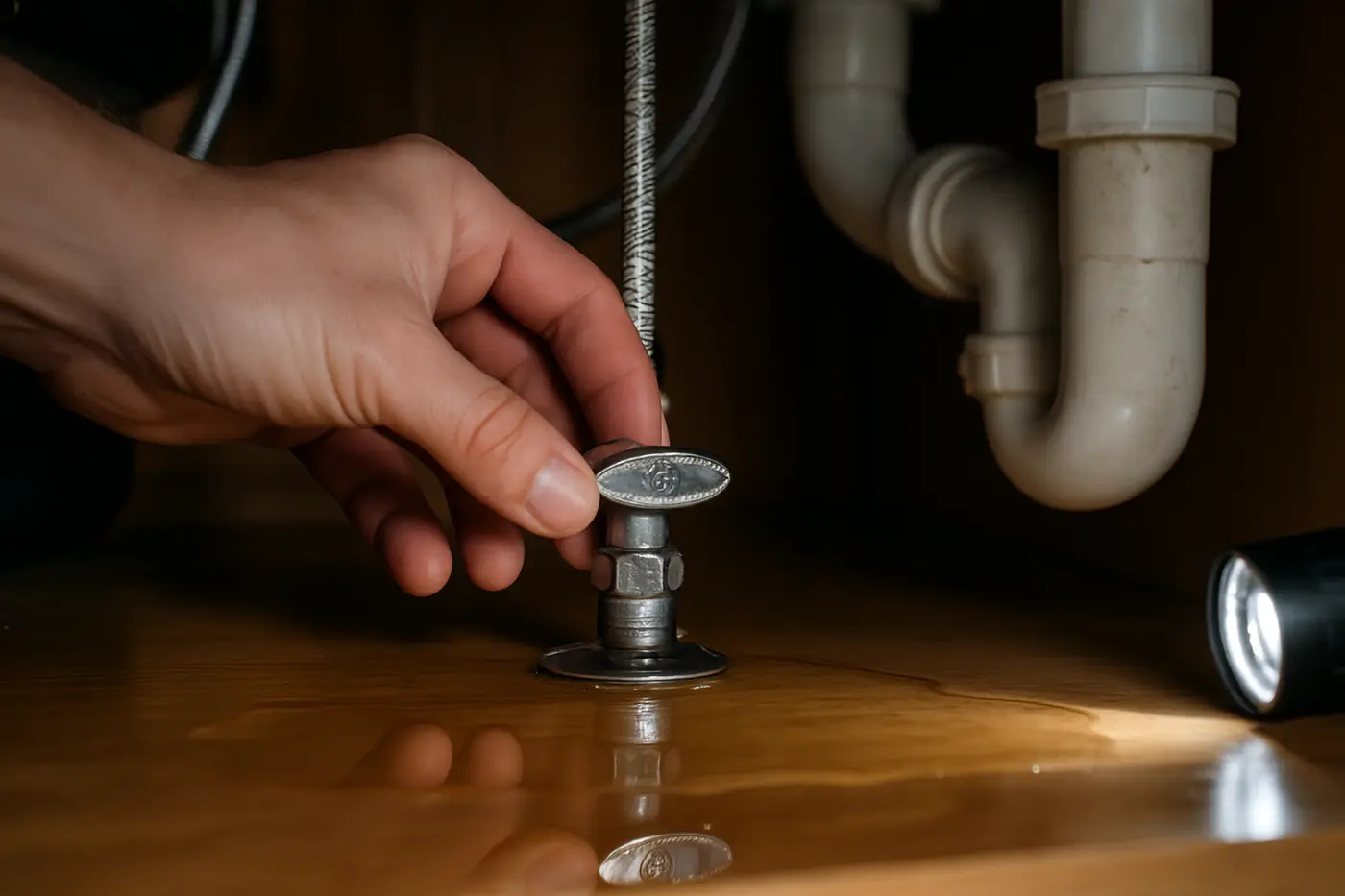
- Call your insurance carrier, then call us for board-up and water extraction. Both are mitigation steps your policy requires you to take.
- Do not run the furnace or air conditioning. The blower pulls soot through the ducts into every room.
- Do not wipe, wash or vacuum soot. Wet smoke residue smears.
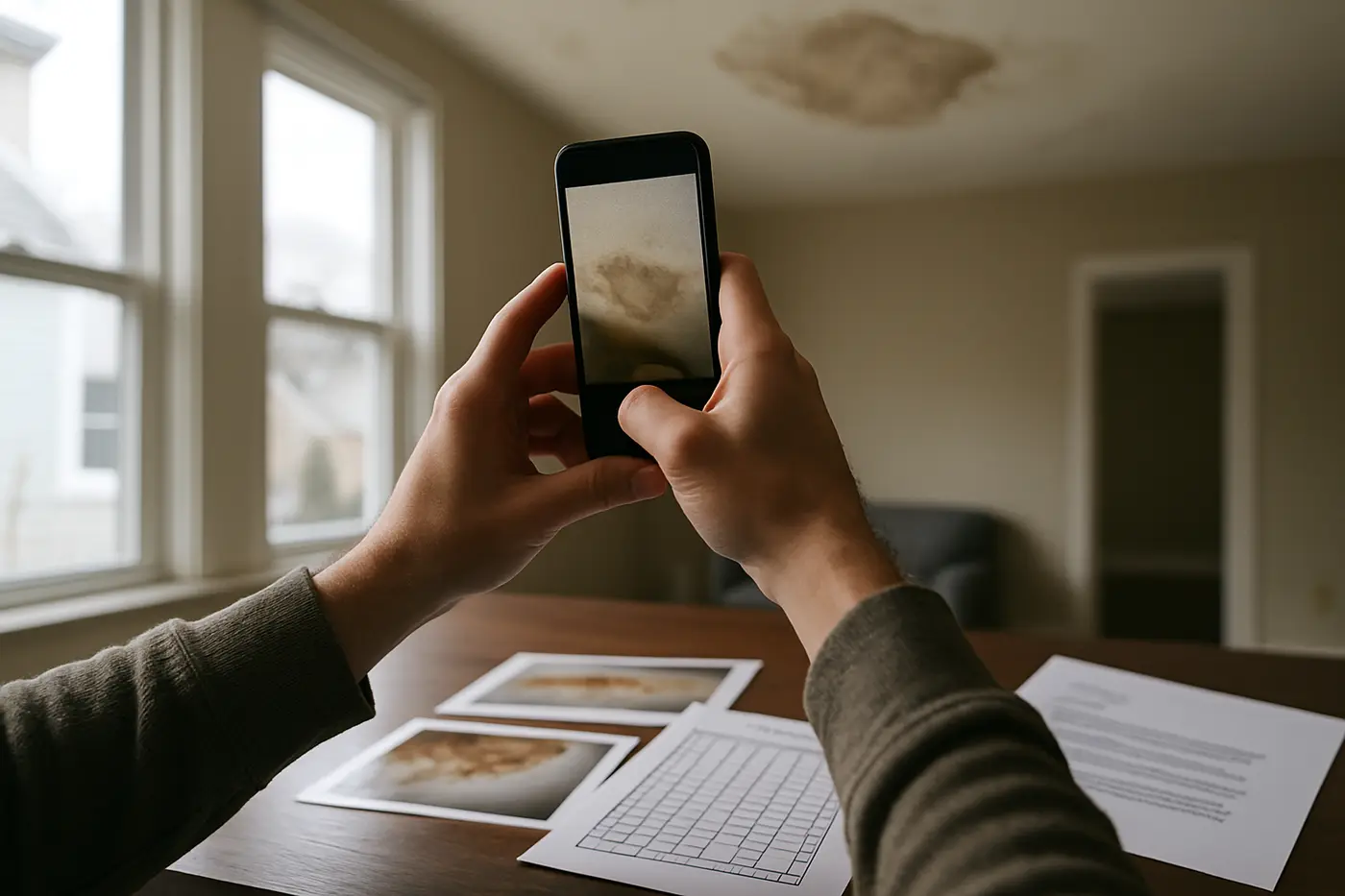
- Photograph every room before anything is moved, including the rooms that only have smoke damage.
- Take only essentials: documents, medication, pets.
Our guide to the first hour after water damage covers the water side in more detail.
The Chicago Fire Department, the City and your claim
Fire is covered under standard homeowners policies (HO-3) and most landlord and condo unit-owner policies, and smoke damage and firefighting water come with it. Additional living expenses are usually covered while the house is uninhabitable. Utilities are often shut off at the meter during the fire and cannot be restored until the wiring and gas lines have been inspected.
Adjusters want dated photos of every room before mitigation, moisture logs and a drying log for the water, a contents inventory with item numbers, and an itemized scope. Xactimate is the estimating format most carriers expect, and we write to it. Where the carrier approves, we bill them directly. If a claim stalls, the Illinois Department of Insurance handles complaints. For the paperwork side, read documenting a water damage claim in Illinois.
In a two-flat, three-flat or condo tower, more than one policy is involved. Each owner claims their own finishes and contents, and the association’s master policy covers the shared structure. We document each unit separately so no claim depends on another owner’s photos.
Fire and smoke in Chicago housing
Two-flats and three-flats. A fire in one apartment means smoke in the others and water in the shared basement, where the laundry and often a garden unit sit. The unit below the fire usually has the worst water damage; the unit above has the worst smoke.
Frame worker cottages in Pilsen, Bridgeport and Wicker Park have open wall cavities that carry smoke and fire between floors. Soot ends up deep in the walls.
Brick bungalows across the Bungalow Belt have a hip roof, an attic and a full basement. An attic fire in a bungalow leaves the basement two floors down holding the water.
Greystones, walk-ups and courtyard buildings in Lakeview, Logan Square and Rogers Park share hallways and stairwells, so smoke reaches units that were nowhere near the fire.
High-rises in the Loop, River North and Streeterville rely on sprinklers, which put the fire out early and flood the floors below. Those jobs are mostly water and coordination with the building engineer.
Winter brings the extra hazard: a fire in January often means a boarded-up building with the heat off, and a burst pipe a few days later. We winterize or heat the building as part of the make-safe.
Clean, restore or replace?
| Material | Usually cleaned and kept | Usually removed |
|---|---|---|
| Painted drywall (smoke only) | Yes, then sealed and repainted | Charred, blistered or wet more than 48 hours |
| Insulation (batts or blown) | No | Any smoke or water exposure |
| Hardwood floors | Yes, if not charred; dried under control | Charred, buckled or Category 3 water |
| Carpet and pad | Rarely; light smoke on carpet only | Soot-laden, wet or under the burned room |
| Kitchen cabinets | Yes, for light soot and protein film | Charred or delaminated |
| Ductwork | Cleaned and sealed | Damaged runs |
| Upholstery and mattresses | Occasionally, light smoke | Most fire jobs |
| Hard furniture, dishes, glass | Yes | Charred or melted |
What drives the cost
Fire and smoke damage restoration in Chicago runs $5,000 to $50,000 or more, and the range is that wide because the scope is. The drivers are how many rooms the smoke reached, whether structural materials burned, how much water was used to put the fire out and where it ended up, how much of the contents can be cleaned rather than replaced, and how quickly the drying started.
Line items: emergency call-out and inspection is $250 to $500 and is credited against the work, water extraction is $500 to $2,500, drying equipment is $50 to $125 per unit per day for three to five days, and contents pack-out and restoration is $1,000 to $5,000. Most of it is normally carried by the fire claim.
If the fire department has just left your home in Chicago or the suburbs, call us or send the form. We will tell you what to do tonight and handle the board-up and the water before the soot sets.
Last updated September 14, 2026