Skip to content

Emergency restoration · Chicago & the Suburbs

Frozen and Burst Pipe Water Damage Chicago

Frozen and burst pipes are Chicago's number one winter claim, and the thaw is when they show. We find the break, get the water out of the walls, floors and basement, dry to the IICRC S500 standard and document the claim, across Chicago and the surrounding suburbs.

  • 24/7 Response
  • Local Technicians
  • Insurance Reports
  • Direct Contact
  • Homes & Business

Request Frozen and Burst Pipe Water Damage Help

US format - we will call or text you back right away.
Add brief description (optional)
How urgent?

Free on-site inspection and written estimate. Insurance-ready report. No obligation. Privacy.

What's included

Everything the job needs,scoped from the first visit.

Every frozen and burst pipe water damage job in Chicago and the surrounding suburbs includes the work below as standard. It is written into the scope before we start, so there are no surprise extras when the invoice arrives.

  • Locating the break and the wet area with thermal imaging and moisture meters
  • Emergency extraction from floors, ceilings, wall cavities and the basement below
  • Removal of wet insulation, sagging ceiling drywall and saturated carpet pad
  • Structural drying with air movers, LGR dehumidifiers and supplemental heat in cold spaces
  • Antimicrobial treatment of affected framing, subfloor and sheathing
  • Controlled drying of hardwood floors to limit cupping
  • Dated photos, moisture logs and an itemized scope for your winter claim
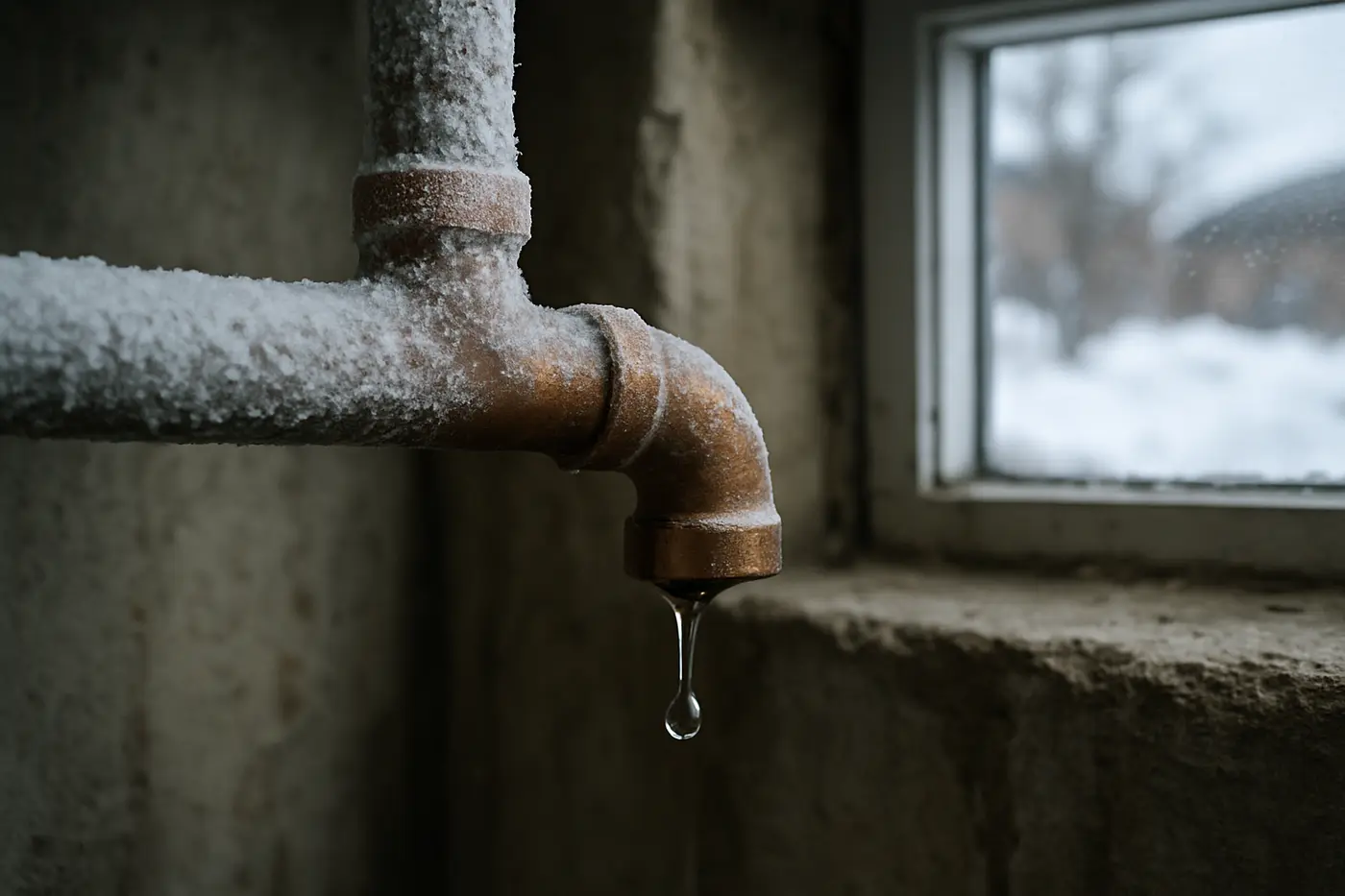
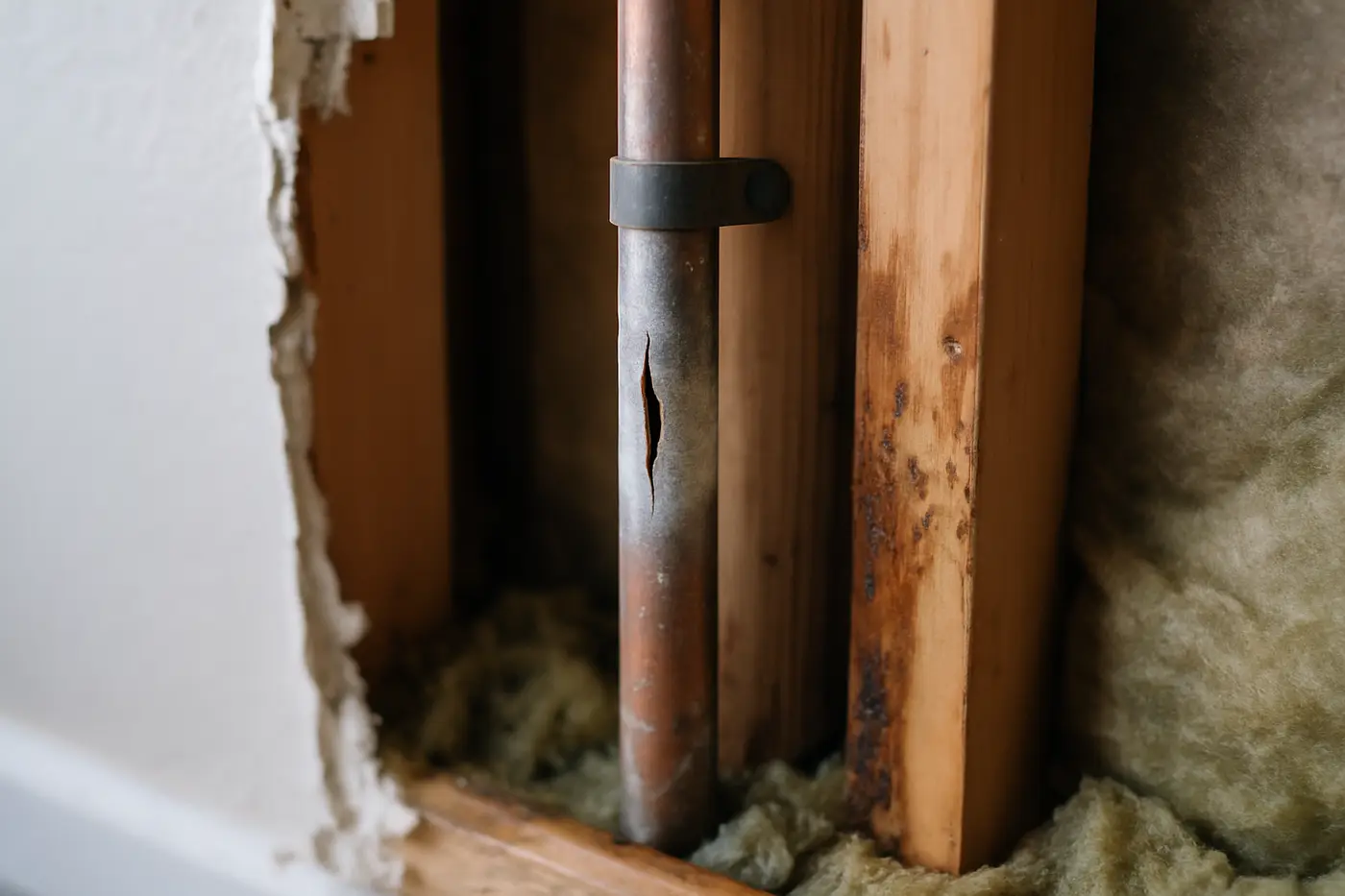
Split copper pipe in an exterior wall after a Chicago freeze, water staining the drywall below

Not sure it is urgent?

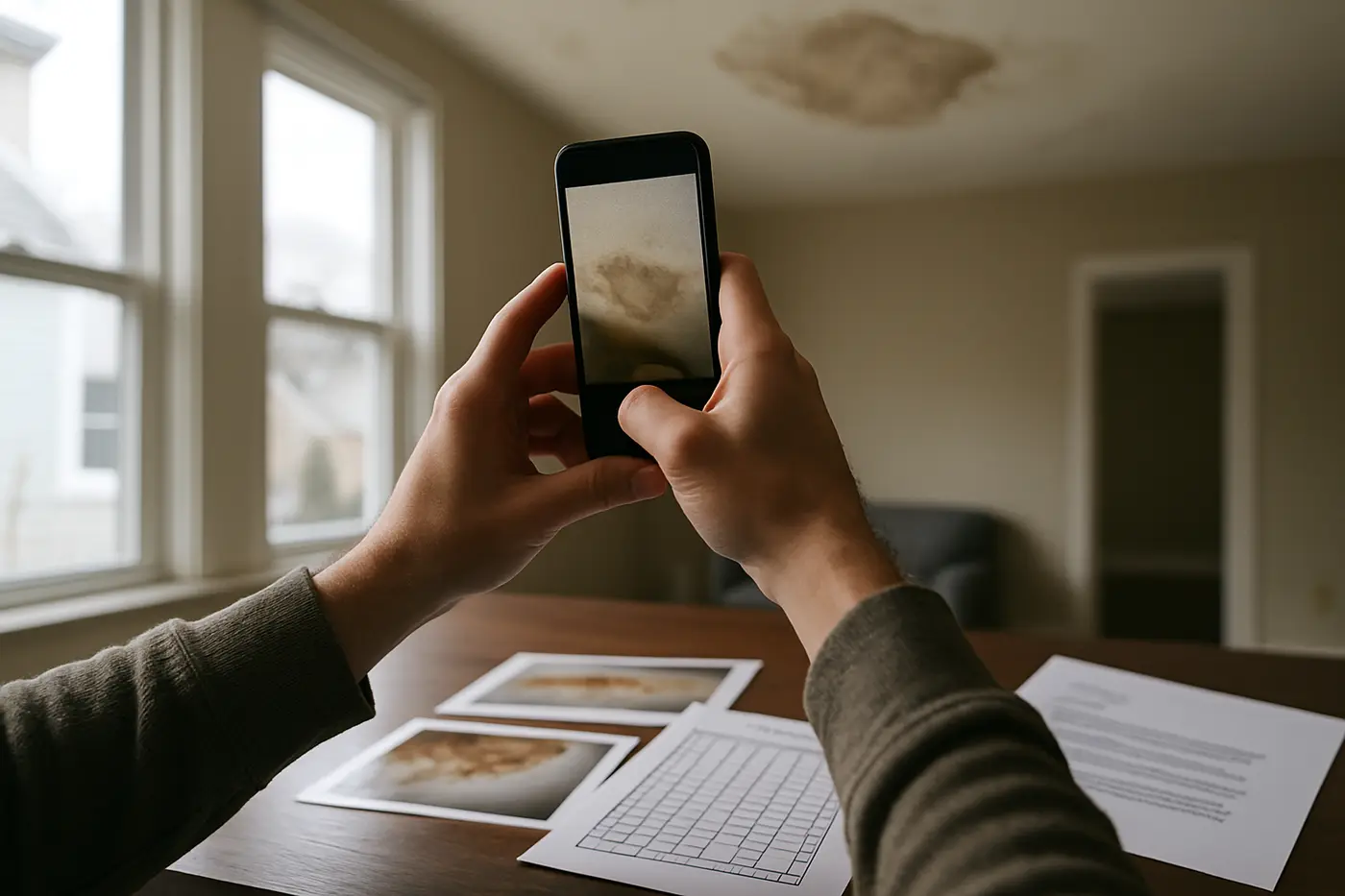
Send a few photos with the form. A coordinator will tell you whether it can wait until morning or needs a crew tonight.

When to call

Signs you needfrozen and burst pipe water damage.

Water moves sideways along bottom plates and under floor coverings, so the wet area is nearly always bigger than the stain you can see. Any of the following is worth a call the same day.

  • Water running from a ceiling, wall or light fixture as the temperature rises after a freeze
  • A faucet that stopped during the cold snap and a wet floor once it thawed
  • A vacant unit, garden apartment or listed house found with water on the floor
  • Wet drywall or bubbling paint on an exterior wall, especially behind a kitchen sink
  • Water on the basement floor near the water heater, boiler or meter
  • The unit below yours in a two-flat, three-flat or condo tower reporting a leak
  • Ice dam meltwater staining a top-floor ceiling on a flat or low-slope roof

Our process

How frozen and burst pipe water damageruns, step by step.

From the first call to the final moisture reading, you will know what is happening, why, and what your insurer will need at each stage.

  1. Step 1: Shut off, relieve pressure, call

    Close the main valve, open the faucets to relieve pressure, and cut power to the wet area if the panel is dry. We dispatch and tell you what to photograph and what to leave alone before we arrive.

  2. Step 2: Locate the break and map the water

    Burst pipes rarely leak where they froze. We trace the water with a thermal camera and moisture meters, open only what needs opening, and photograph the failed section before the plumber replaces it.

  3. Step 3: Extract, remove and dry

    Standing water comes out, wet insulation and sagging drywall are removed, and air movers, LGR dehumidifiers and heat are set to dry the framing, subfloor and basement. Readings are logged daily.

  4. Step 4: Verify dry and document

    When every material meets its dry standard we pull the equipment, treat framing where needed, and hand over the moisture logs, photo record and scope your adjuster expects for a frozen-pipe claim.

Price guide · USD, 2026

What frozen and burst pipe water damagecosts in Chicago.

Ranges from typical Chicago and the surrounding suburbs jobs. The final quote is given on site after moisture mapping, in writing, before any work starts. Insurance direct billing where the insurer approves.

ItemTypical range
Emergency call-out and inspection Locate the wet area, moisture mapping and a written report; credited against restoration work$250-$500
Frozen or burst pipe water damage Locate, extract, dry and minor drywall repair for a typical residential break$1,500-$8,000
Structural drying equipment Air movers, LGR dehumidifiers and heaters, typically 3-5 days$50-$125 per unit per day
Hardwood, laminate or tile floor drying Controlled drying to limit cupping; severely buckled boards are replaced$400-$1,800 per area
Carpet drying and restoration Includes pad assessment; saturated pad is usually replaced$200-$600 per room

Ranges cover labor, equipment and disposal for 2026. The number you approve on the written quote is the number you pay; if the scope changes once walls are opened, we stop and re-quote in writing.

Full price guide

In depth

Frozen and Burst Pipe Water Damage in Chicago: how the job actually runs.

Frozen and burst pipes are the number one winter insurance claim in Chicago, and they have a cruel timing. The pipe freezes on the coldest night of the year, splits quietly while the ice plug holds, and then lets go three days later when the temperature climbs back above freezing. Burst pipe water damage restoration is mostly about that third day: finding where the water went, getting it out of the walls and the basement, and drying the house before mold gets a foothold.

Why pipes burst in Chicago winters

Water expands as it freezes. In a closed pipe, the ice plug itself rarely does the damage; the pressure trapped between the plug and the closed faucet does. It splits copper, galvanized steel or PEX at the weakest point, which is often several feet from where the ice formed. Nothing comes out while the plug holds. When it thaws, the full supply pressure hits the split and water runs until someone closes the main.

Chicago gives pipes plenty of chances. The polar vortex of January 30-31, 2019 took O’Hare to about -23 degrees Fahrenheit. Extreme cold and wind chill warnings are issued by the National Weather Service. The Christmas cold snap of December 22-24, 2022 arrived with a long weekend of empty homes and unattended units. The January 2014 polar vortex did the same across the region. After each one, the thaw week that followed was the busiest week of the year for burst-pipe calls.

Thaw week

Day one of the thaw, the calls come from occupied homes where someone heard water running. Days two and three, they come from vacant units, garden apartments between tenants, houses listed for sale and second floors of two-flats where the upstairs tenant was away. By then the water has been running for days. In a two-flat or three-flat it has come down through the unit below and into the shared basement. In a high-rise it has followed the risers down through several floors.

Where pipes freeze first

  • Exterior walls. A kitchen sink on an outside wall of a brick bungalow in Beverly or a bathroom on the north wall of a frame cottage in Wicker Park has a supply line separated from the weather by a few inches of masonry or siding and, often, no insulation.
  • Uninsulated crawl spaces under additions and in some suburban ranches and split-levels in Park Ridge and Skokie.
  • Garages with a laundry, a utility sink or the supply to a hose bib.
  • Attics and attic conversions in bungalows where plumbing was run above the insulation.
  • Vacant units. A garden unit between tenants with the thermostat turned down, a second-floor flat where the heat is off, a house on the market in January.
  • Water heaters and boilers. Both run flat out in a cold snap and both fail in one. A failed tank keeps flowing until the cold feed is shut; a failed boiler leaves the building without heat, and the frozen pipe follows.
  • Ice dams on flat and low-slope roofs push meltwater under the roofing and into top-floor ceilings. Not a burst pipe, but it arrives the same week.

The first hour: what to do

  1. Close the main valve. In most Chicago houses it is in the basement where the water service enters the front wall, near the meter.
  2. Open the faucets on the affected line to relieve pressure and let the remaining water drain.
  3. Cut power to the wet area at the panel, but only if the panel is dry and you are not standing in water.
  4. Turn the heat up and open cabinet doors on exterior walls so warm air reaches the other pipes. Other lines in the house may still be frozen.
  5. Move what you can off wet floors: rugs, boxes, furniture legs onto blocks.
  6. Photograph everything before it is moved, including the split section of pipe once the plumber has it out. Keep the pipe.
  7. Call us. Then call the plumber.

The step-by-step version is in frozen pipes burst? what to do in a Chicago winter, and the general first-hour checklist is in what to do in the first hour after water damage.

What burst pipe water damage restoration involves

Locating the water. Burst pipes rarely leak where they froze, and the water travels: along the top of a ceiling, down a wall cavity, under a floor. We trace it with a thermal camera and pin and non-invasive moisture meters.

Extraction. Standing water comes out of floors and the basement with truck-mount or portable units. See water extraction for what that involves.

Removal. Wet fiberglass insulation in exterior walls holds water against the framing and hides the wet area from surface meters, so it comes out along the affected run. Sagging ceiling drywall that held water is replaced. Saturated carpet pad is replaced; Category 1 carpet is usually saved.

Drying. Air movers lift moisture off surfaces and low-grain refrigerant (LGR) dehumidifiers pull it from the air. Winter changes the plan: LGR units lose efficiency in a cold room, and a basement in February is a cold room, so we add heat to keep evaporation going. Three to five days is typical; basements and slab floors take five to ten. Hardwood floors are dried slowly under controlled conditions to limit cupping, as explained in drying hardwood floors in Chicago bungalows.

Verification. We log temperature, humidity and material moisture daily and pull the equipment when every reading meets dry standard. Framing is treated with an antimicrobial where the water sat. EPA mold guidance notes that drying wet materials within 24 to 48 hours prevents most growth. If mold has already started, the job moves under the S520 standard and our mold remediation page applies.

Insurance: the maintaining-heat rule

Standard Illinois homeowners policies (HO-3) cover sudden and accidental discharge from a burst pipe, and they cover a frozen pipe on one condition: that you maintained reasonable heat in the building, or shut off the water and drained the system. That clause decides most disputed winter claims.

What helps: thermostat settings and smart thermostat history, heating bills showing the furnace ran, a record of who checked the property and when. What hurts: a gas bill of zero, or a unit empty for a month with nobody looking in.

The mitigation and drying are covered when they are documented, and adjusters expect dated photos, moisture logs, a drying log and an itemized scope in the Xactimate format. Where the carrier approves, we bill them directly. The plumbing repair itself is often not covered even when the resulting damage is. In a two-flat, three-flat or condo tower, more than one policy is involved and the association’s master policy may cover the shared structure, so get every claim number early. Our guide to documenting a water damage claim in Illinois walks through the file.

Repair or replace after a burst pipe?

MaterialUsually dried and keptUsually removed
Drywall (Category 1, under 48 hours)Yes, with baseboard off to ventWet more than 48 hours, sagging, or gray water
Fiberglass insulation in exterior wallsNoAlways when wet
Ceiling drywall that held waterNoAlways
Hardwood floorsYes, with controlled dryingSevere cupping, buckling or delamination
CarpetYes, if Category 1 and dried within 48 hoursDelaminating or contaminated
Carpet padRarelyMost jobs
Plaster and lath (older walls)Often, if the keys are soundCrumbling or detached from lath
Concrete basement slabAlways dried in placeNever

What it costs

Frozen or burst pipe water damage restoration in Chicago typically runs $1,500 to $8,000 to locate the break, extract, dry and make minor drywall repairs. The drivers are how long the water ran, how many floors it passed through, whether it reached the basement, what it soaked, and whether insulation and drywall have to come out.

Emergency call-out and inspection is $250 to $500, credited against the work. Drying equipment runs $50 to $125 per unit per day. Hardwood, laminate or tile floor drying is $400 to $1,800 per area, and carpet drying is $200 to $600 per room. A break that ran for a week in a vacant building is no longer a burst-pipe job; it is a full water damage restoration at $6,500 to $18,000 or more, plus mold. The 2026 cost guide has the full table.

If a pipe has let go in your home or building anywhere in Chicago or the suburbs, close the main, open a faucet, and call us or send the form. We will find the water and start drying today.

Last updated September 11, 2026
Common questions

Frozen and Burst Pipe Water Damage, explained.

Straight answers about response times, water categories, drying timelines and what your adjuster will expect for frozen and burst pipe water damage in Chicago.

All questions
How do I know if a pipe has frozen before it bursts?

A faucet that slows to a trickle or stops on a cold morning, frost on an exposed pipe, or a toilet that will not refill are the classic signs. Pipes in exterior walls, crawl spaces, garages and attics go first. Open the faucet so pressure can escape, warm the wall cavity gently with a space heater or hair dryer, and never use an open flame. If the pipe has already split you will not know until it thaws, so keep the main shutoff within reach and check the basement ceiling as the temperature climbs.

Why did the pipe burst after the cold snap instead of during it?

Because ice blocks the pipe and pressure builds between the plug and the closed faucet, which splits the copper or PEX at its weakest point, often several feet from the ice. As long as the plug holds, nothing comes out. When temperatures rise, the plug melts and full supply pressure hits the split. That is why thaw week after a deep freeze is the busiest week of the year for burst-pipe calls in Chicago, and why a vacant unit can run water for days before anyone notices.

Does homeowners insurance cover frozen pipe water damage in Illinois?

Standard homeowners policies in Illinois cover sudden and accidental discharge from a burst pipe, including a frozen one, as long as you maintained reasonable heat in the building or shut off and drained the water supply. That condition is the whole argument in a vacant unit or a house listed for sale. Keep thermostat settings, heating bills and any smart thermostat history. The resulting water damage, mitigation and drying are covered when documented; the plumbing repair itself often is not. Gradual seepage from a pinhole leak is excluded.

How much water damage can one burst pipe cause?

A half-inch supply line at household pressure can release several gallons a minute. Left running for a workday in a two-flat, that is well over a thousand gallons moving through the floor, the ceiling below and into the basement. Most burst-pipe losses we see in Chicago are $1,500 to $8,000 to locate, extract, dry and patch, but a break that ran unnoticed in a vacant building for a week is a full restoration at $6,500 to $18,000 or more, with mold remediation on top if it sat.

Can the wet drywall and insulation be dried in place?

Drywall wet with clean supply water for less than 48 hours usually dries in place, with the baseboard removed to vent the cavity. Fiberglass insulation in an exterior wall is a different problem: it holds water against the framing, dries very slowly and hides the wet area from surface meters. We normally open the wall along the affected run, remove the wet insulation, dry the framing and sheathing, and re-insulate before closing up. Sagging ceiling drywall that held water is replaced rather than dried.

What about my water heater or boiler?

Both work hardest during a cold snap and both fail in one. A water heater tank that rusts through releases its 40 to 50 gallons and then keeps flowing until the cold feed is shut. A boiler failure can leave a two-flat without heat, which is how the frozen pipe happens next. Shut the cold water feed and the gas or power to the unit, then call us for the water and a plumber for the appliance. The water damage is normally a covered sudden discharge; the appliance repair usually is not.

How long does drying take after a burst pipe?

Three to five days for the typical loss, with daily moisture readings. Basements and slab floors run five to ten days because the concrete holds water and the space is cold and damp. Winter adds a complication: low-grain refrigerant dehumidifiers work poorly in a cold room, so we heat the affected area as part of the drying plan. Hardwood floors are dried slowly under controlled conditions to avoid cupping, which can take longer still. We remove the equipment the day the materials hit dry standard, not before.

Related services

Water rarely stays in one lane. These are the services most often scoped on the same job.

All services
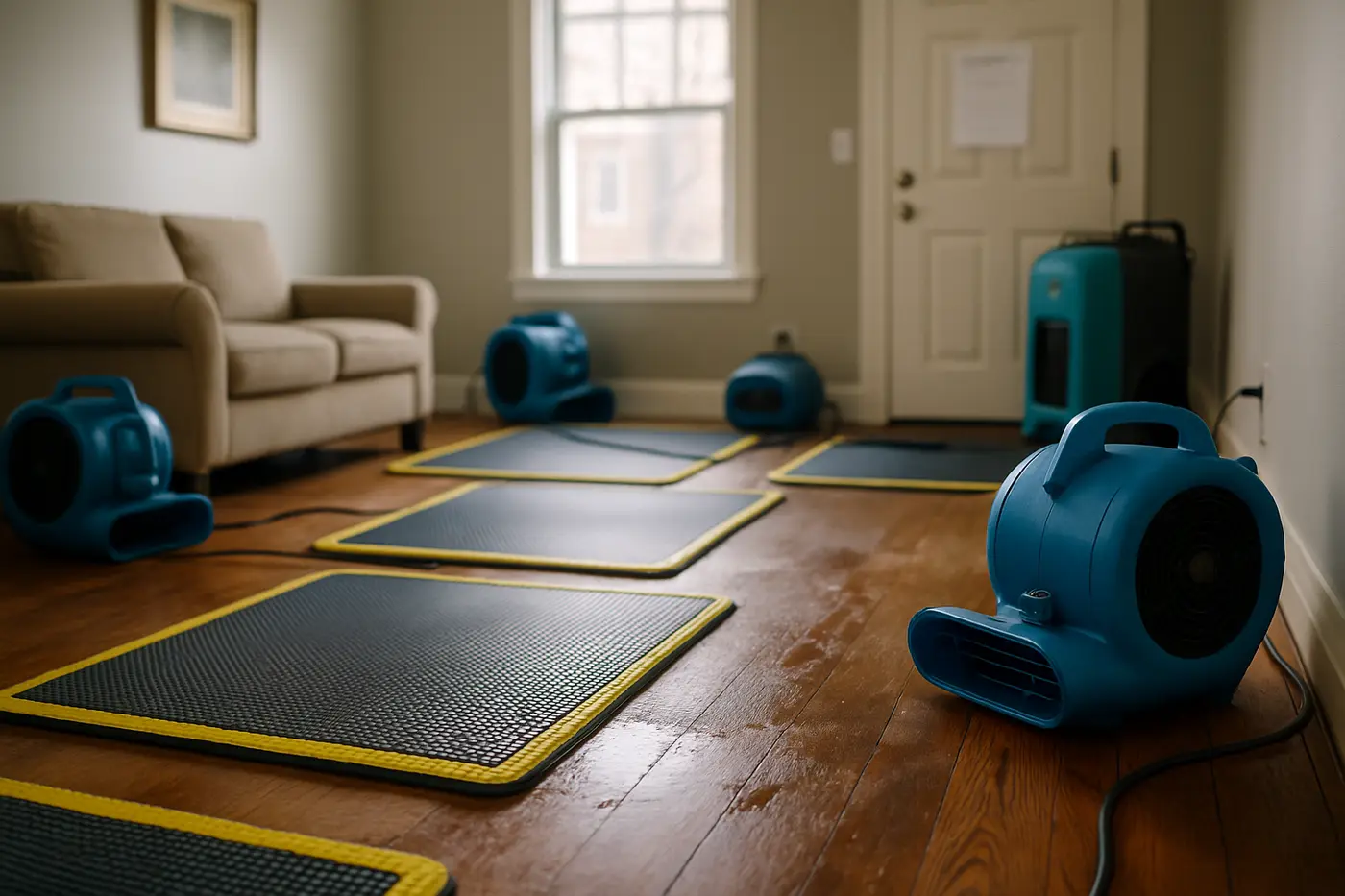
  • Air movers and a dehumidifier drying a water-damaged Chicago living room
    01

    Water Damage Restoration

    Water damage restoration across Chicago and the suburbs to the IICRC S500 standard: emergency extraction, moisture mapping, structural drying and claim-ready reports.

    Learn more
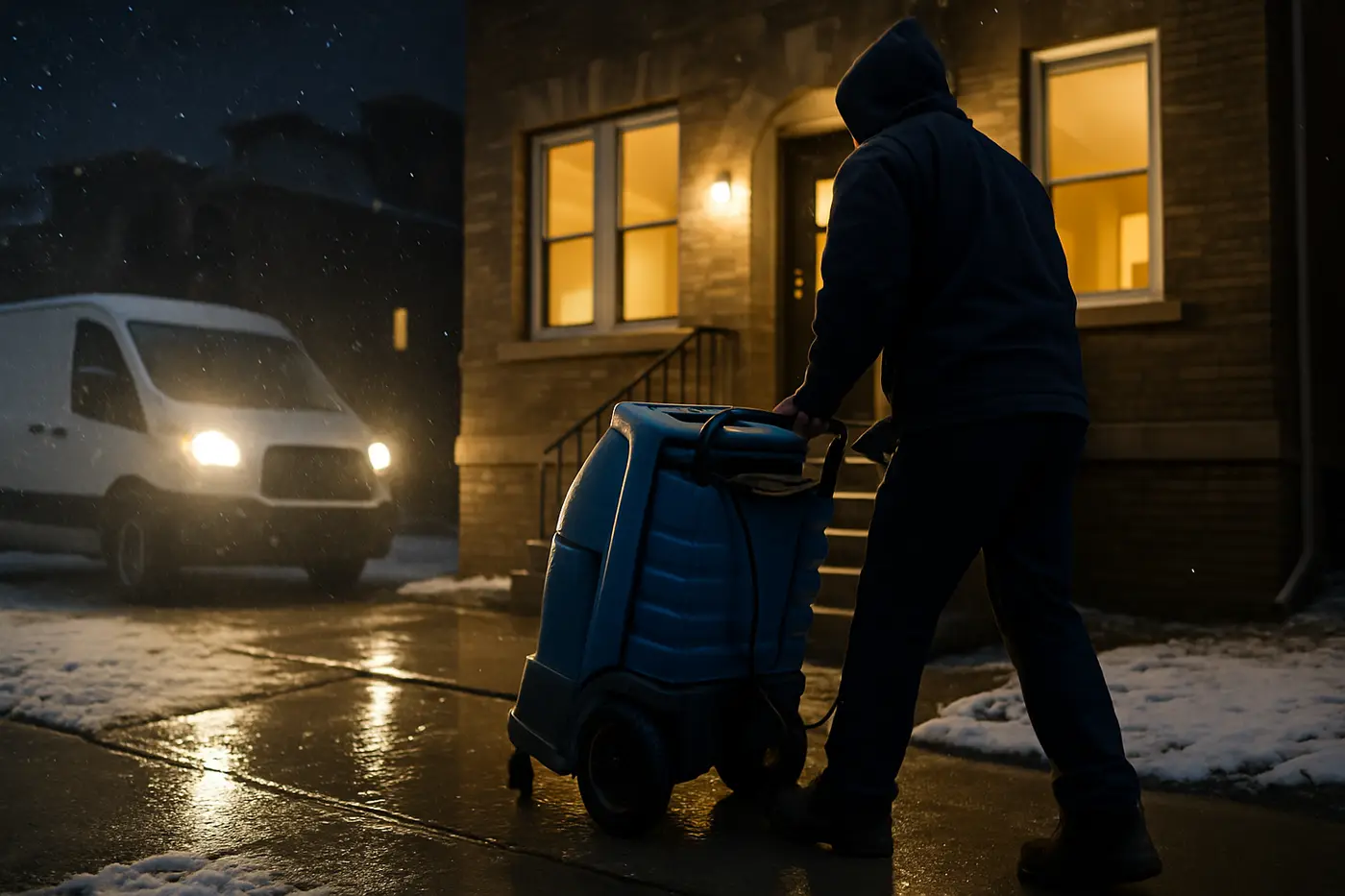
  • Night-time emergency response with an extraction unit being wheeled into a Chicago home
    02

    Emergency Water Damage

    24/7 emergency water damage response across Chicago and the suburbs. Extraction, moisture mapping, structural drying to IICRC S500 and documentation adjusters expect.

    Learn more
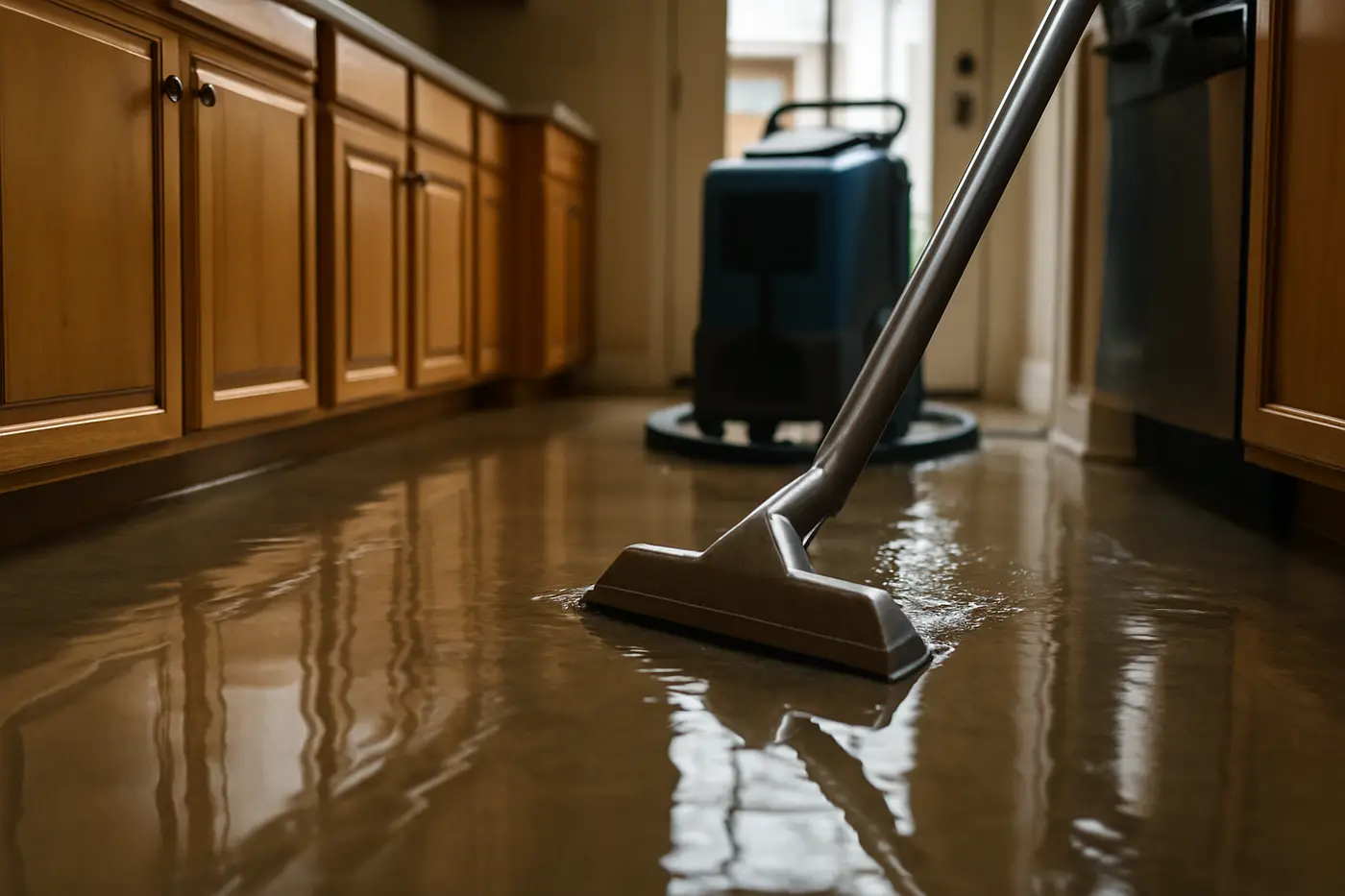
  • Standing water across a kitchen floor being extracted with a wide wand
    03

    Water Extraction and Removal

    Truck-mount and portable water removal across Chicago and the suburbs. Submersible pumps for flooded basements, weighted carpet extraction and IICRC S500 drying setup.

    Learn more

Helpful reading

Guides that go withthis service.

Practical, Chicago-specific reading for the first hour, the drying process, mold risk and insurance claims.

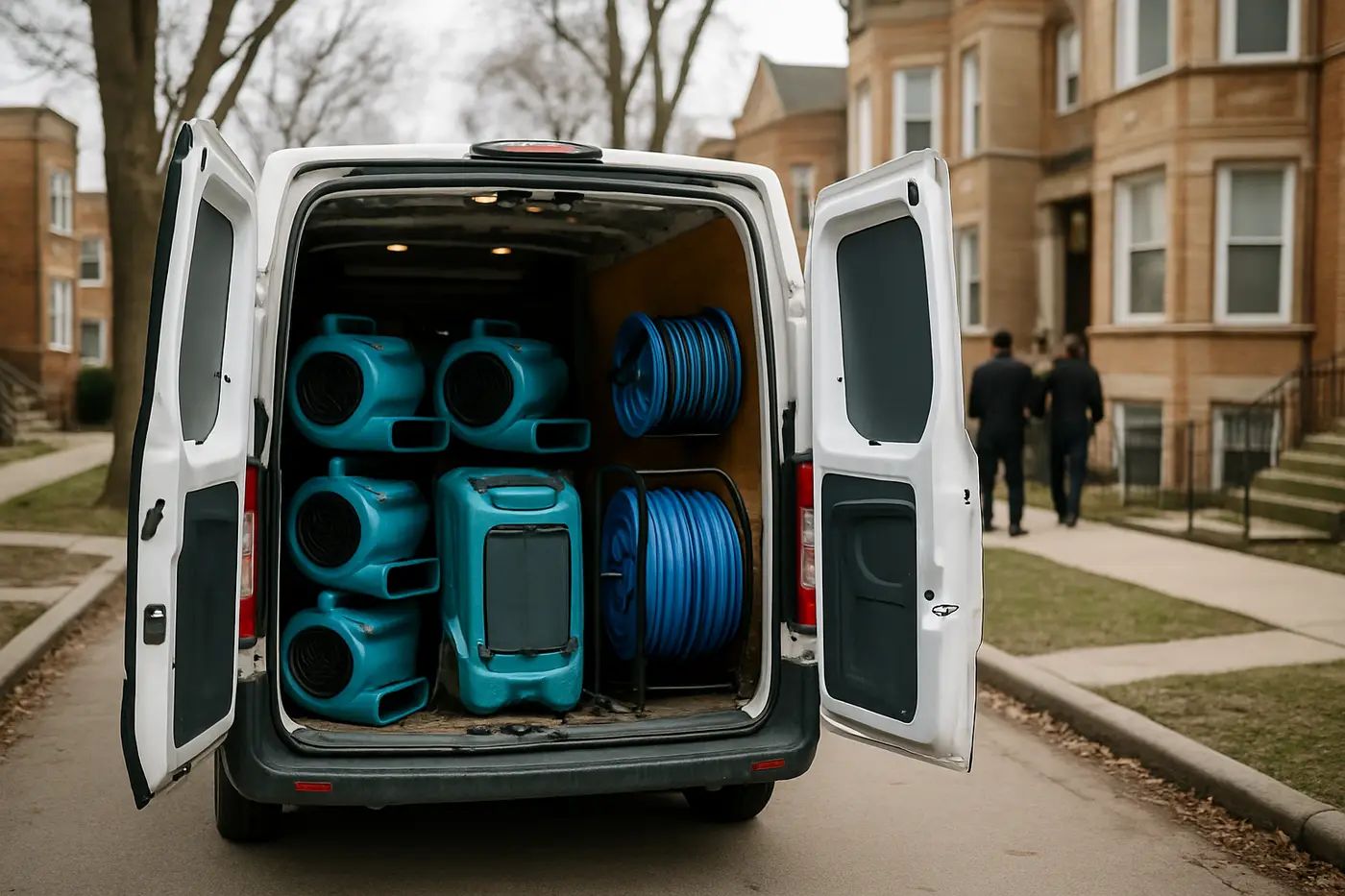
Restoration crew standing beside a van loaded with air movers and dehumidifiers

Frozen and Burst Pipe Water Damage · Chicago & the Suburbs

Let's take the next step toward drying your property.

Tell us what happened, where the water is and whether it is still active. A restoration coordinator will explain what to do next and what your adjuster will need.