Skip to content

Emergency restoration · Chicago & the Suburbs

Mold Remediation Chicago

Mold after a leak, a flooded basement or a humid summer. Moisture correction first, then containment, negative air, HEPA filtration and removal of affected materials to the IICRC S520 standard, with post-remediation verification, across Chicago and the surrounding suburbs.

  • 24/7 Response
  • Local Technicians
  • Insurance Reports
  • Direct Contact
  • Homes & Business

Request Mold Remediation Help

US format - we will call or text you back right away.
Add brief description (optional)
How urgent?

Free on-site inspection and written estimate. Insurance-ready report. No obligation. Privacy.

What's included

Everything the job needs,scoped from the first visit.

Every mold remediation job in Chicago and the surrounding suburbs includes the work below as standard. It is written into the scope before we start, so there are no surprise extras when the invoice arrives.

  • Moisture inspection to find and correct the water source before any mold work starts
  • Containment of the work area with poly sheeting and zippered access
  • Negative air pressure with HEPA-filtered air scrubbers vented outside the containment
  • Removal and bagged disposal of mold-affected drywall, paneling, carpet pad and insulation
  • HEPA vacuuming, damp wiping and antimicrobial treatment of framing, concrete and block
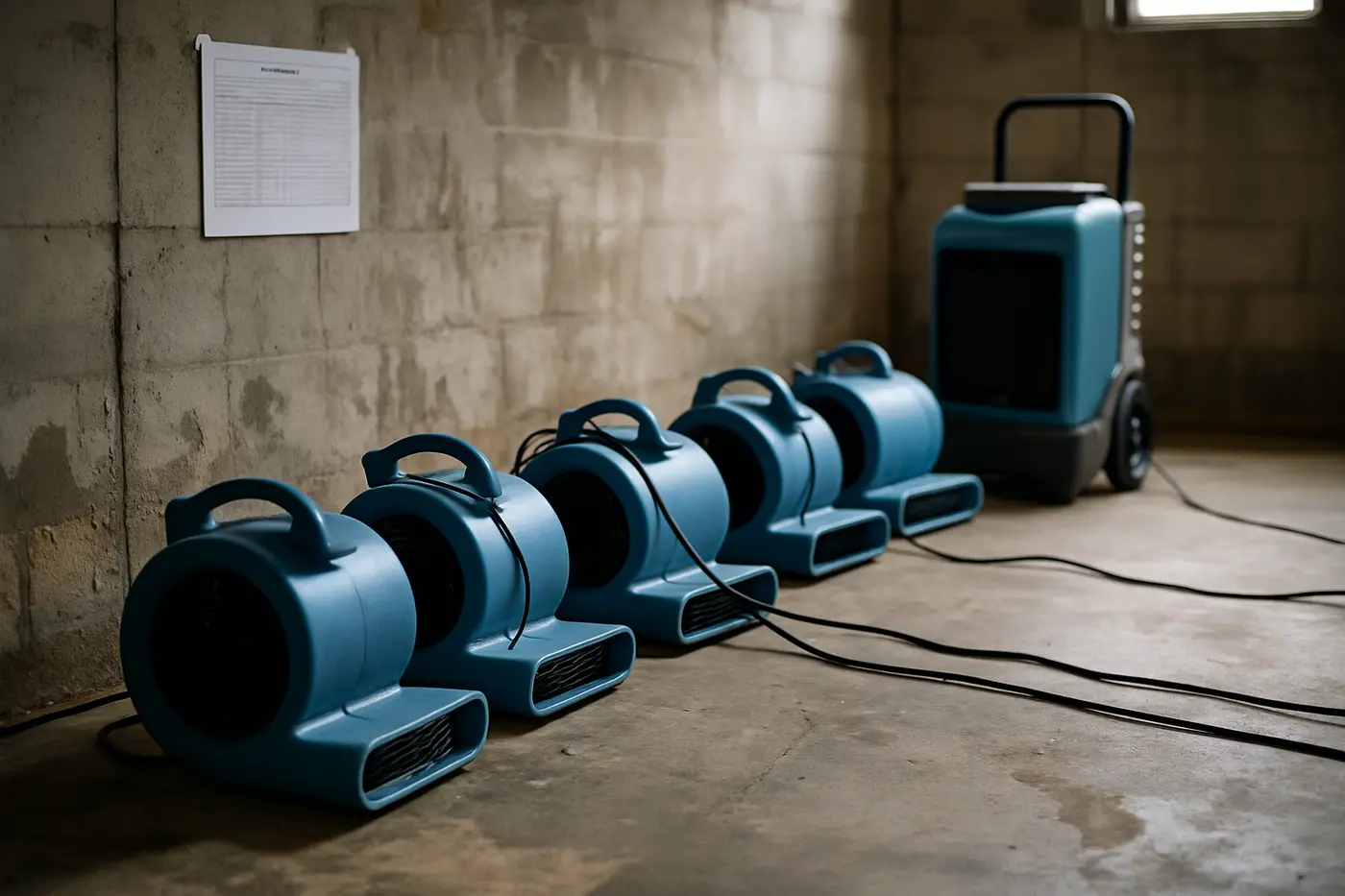
  • Structural drying with air movers and LGR dehumidifiers until materials reach dry standard
  • Post-remediation verification and a written report for your records or claim
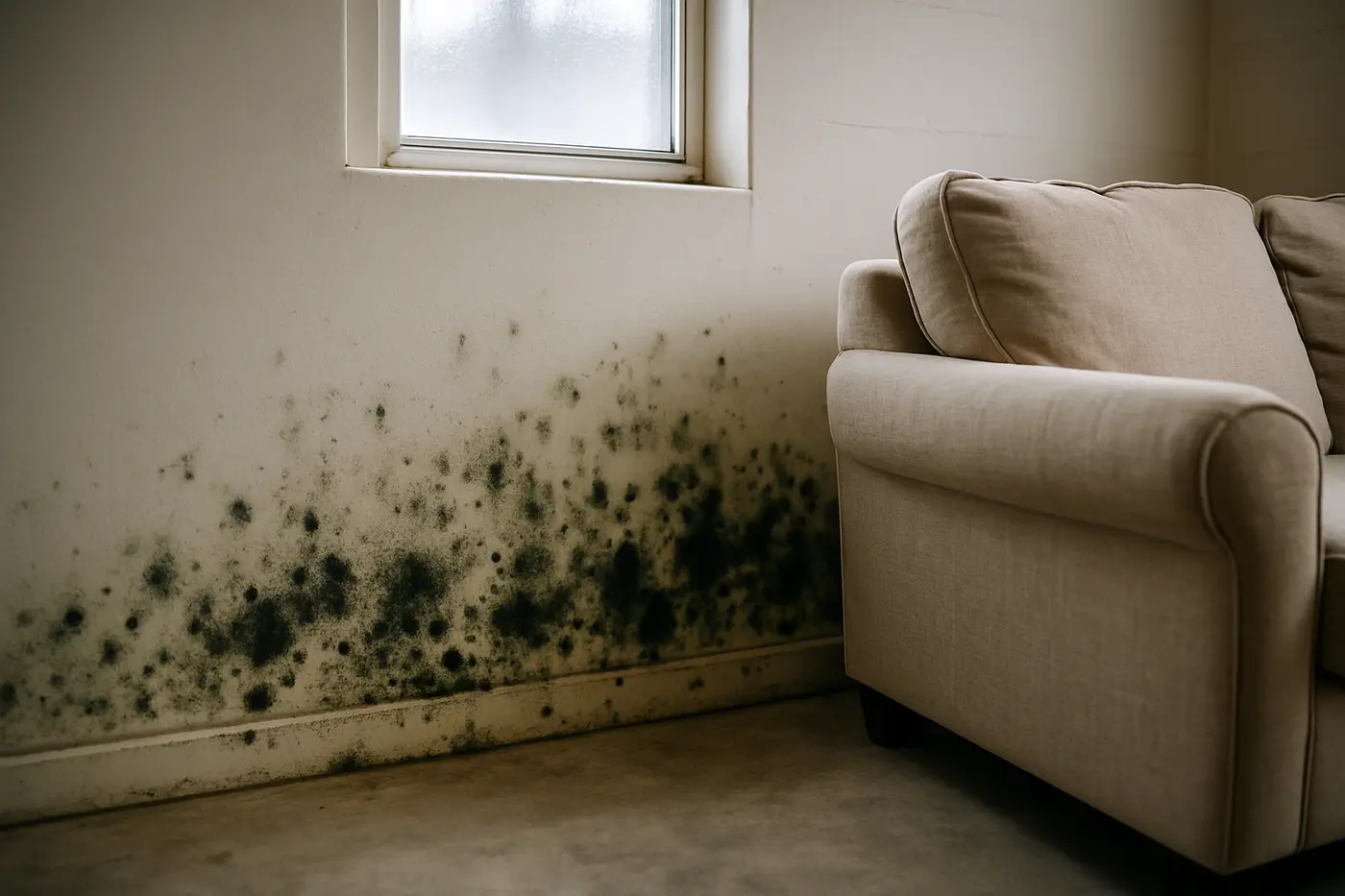
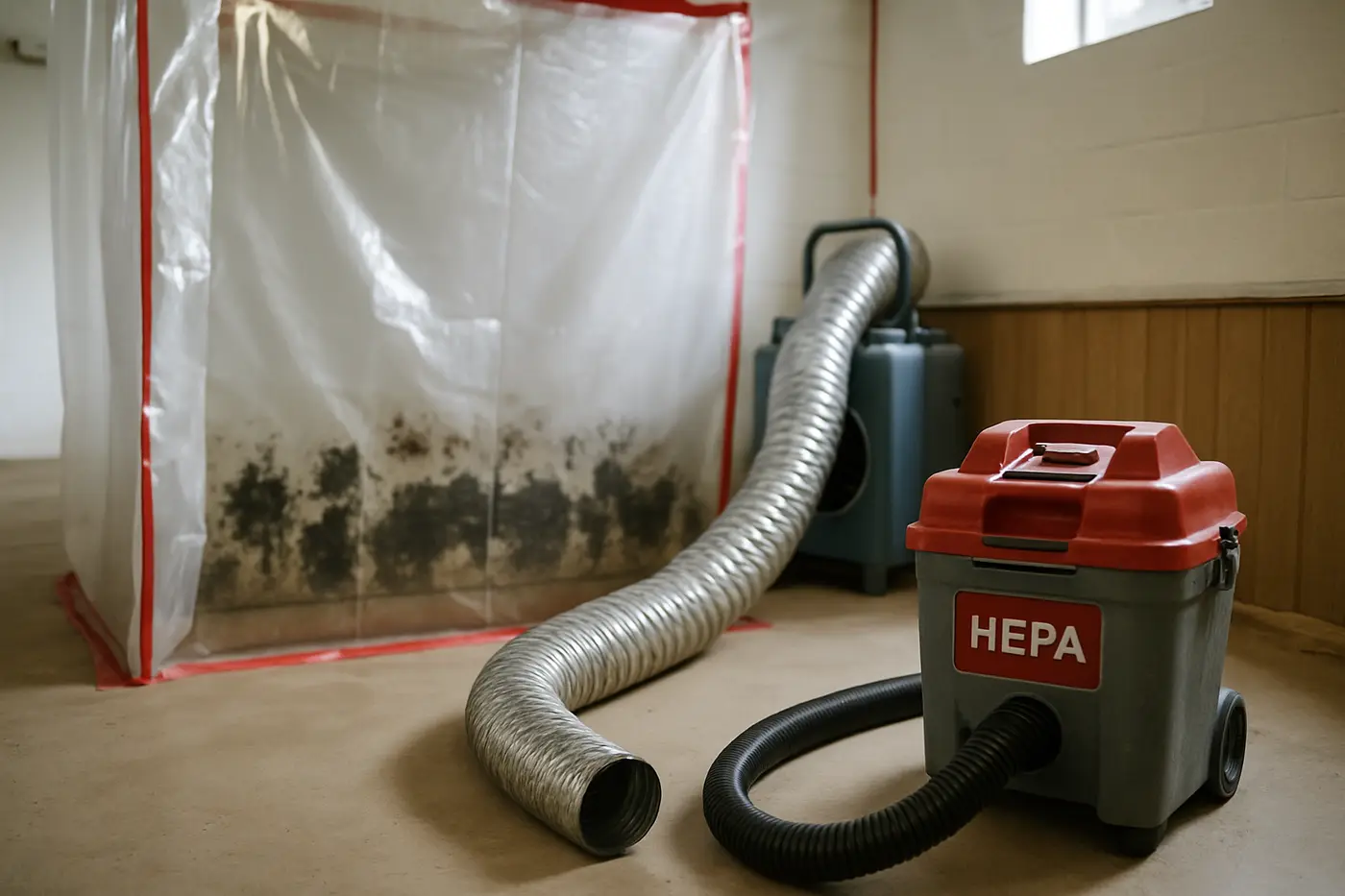
Basement room sealed with containment plastic and a negative air machine, mold on the lower wall

Not sure it is urgent?

Send a few photos with the form. A coordinator will tell you whether it can wait until morning or needs a crew tonight.

When to call

Signs you needmold remediation.

Water moves sideways along bottom plates and under floor coverings, so the wet area is nearly always bigger than the stain you can see. Any of the following is worth a call the same day.

  • Visible mold on drywall, baseboards, paneling or ceiling tiles after a leak or flood
  • A musty, earthy smell in the basement that gets stronger in humid weather
  • Black, green or white spotting on the lower two feet of basement walls
  • Mold on stored boxes, furniture or clothing in the basement or a closet
  • A water leak or flooded basement that was not dried within 48 hours
  • Bubbling paint or soft drywall around a window, tub surround or below a sink
  • Allergy symptoms that ease when you leave the house and return when you come home

Our process

How mold remediationruns, step by step.

From the first call to the final moisture reading, you will know what is happening, why, and what your insurer will need at each stage.

  1. Step 1: Inspect and find the moisture

    Mold is a symptom. We meter walls, floors and framing, check the roof, plumbing, foundation and grading, and measure relative humidity. If the water source is not identified and corrected, remediation is temporary. The inspection sets the scope and the containment plan.

  2. Step 2: Contain and set negative air

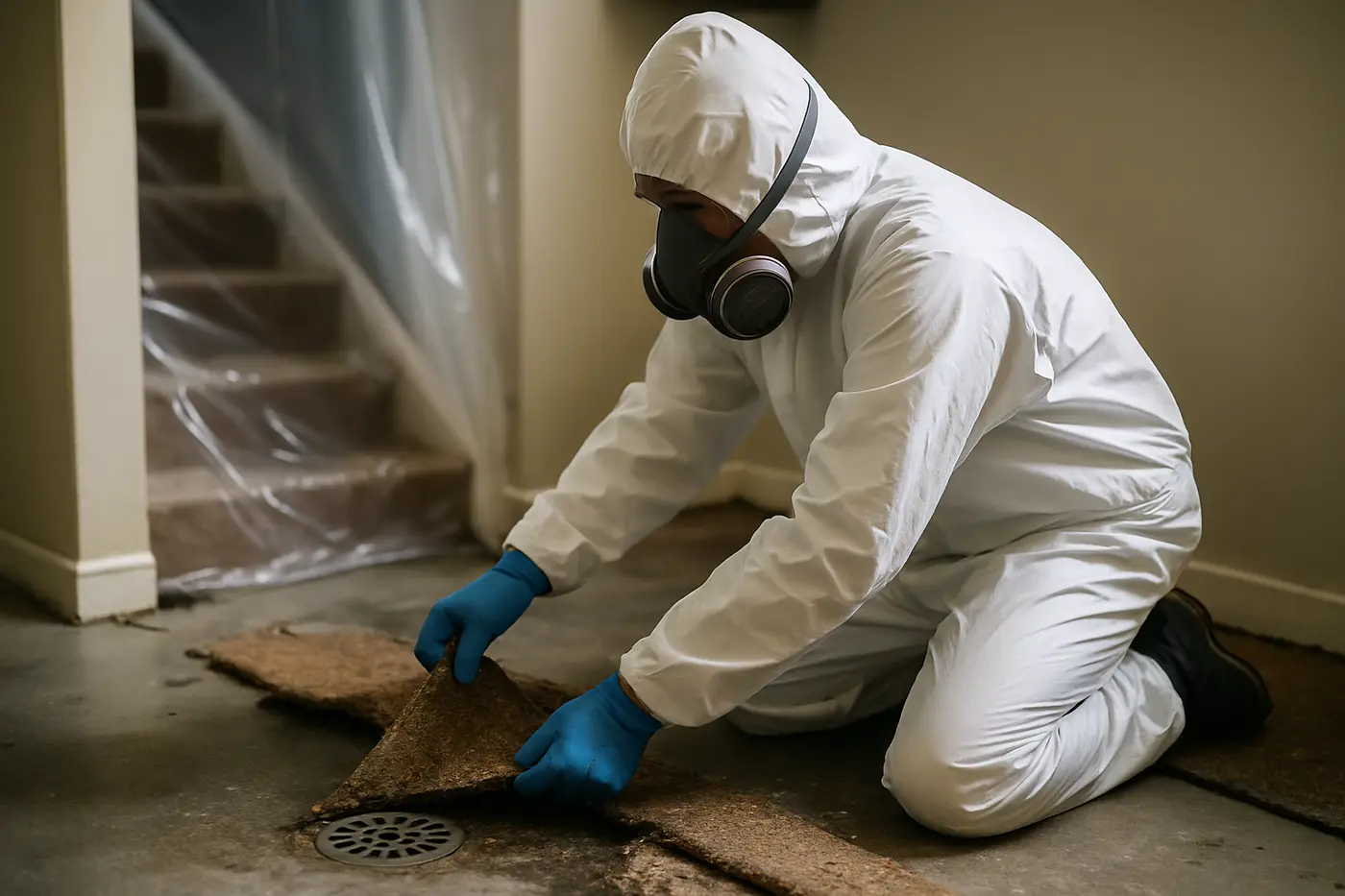
    The work area is sealed with poly sheeting and a zippered entry. HEPA-filtered air scrubbers pull air out of the containment so spores move away from the rest of the house, not into it. Crew wear respirators, gloves and disposable suits.

  3. Step 3: Remove, clean and dry

    Porous materials that grew mold come out in sealed bags. Framing, concrete and block are HEPA vacuumed, damp wiped or abraded, then treated with antimicrobial. Air movers and LGR dehumidifiers dry the structure to its dry standard with readings logged daily.

  4. Step 4: Verify and hand over

    Containment stays up until a visual inspection, moisture readings and, where you want it, independent air or surface sampling confirm the area is clean and dry. You receive photos, moisture logs and a written report.

Price guide · USD, 2026

What mold remediationcosts in Chicago.

Ranges from typical Chicago and the surrounding suburbs jobs. The final quote is given on site after moisture mapping, in writing, before any work starts. Insurance direct billing where the insurer approves.

ItemTypical range
Mold remediation (contained area) Containment, negative air, removal, cleaning and antimicrobial for a single contained area$1,500-$6,000
Inspection and moisture mapping Written report with moisture readings; credited against remediation work$250-$500
Structural drying equipment Air movers and LGR dehumidifiers; basements typically 5 to 10 days$50-$125 per unit per day
Basement flooding cleanup (when still wet) Extraction, disposal, sanitizing and drying if the basement has not been dried yet$1,500-$10,000
Contents pack-out and restoration Stored belongings moved, cleaned and held while the basement is remediated$1,000-$5,000

Ranges cover labor, equipment and disposal for 2026. The number you approve on the written quote is the number you pay; if the scope changes once walls are opened, we stop and re-quote in writing.

Full price guide

In depth

Mold Remediation in Chicago: how the job actually runs.

Mold in a Chicago house is almost always the second problem. The first was water: a burst supply line upstairs in a two-flat, a basement that flooded in a July storm, or a slow seep behind the basement paneling. Wet drywall, carpet pad and wood framing support mold within 24 to 48 hours, and a Chicago basement is cool and damp enough to keep it growing for years. Mold remediation is the work of correcting the moisture, removing the growth safely and proving the area is clean before the walls are closed up again.

What mold remediation involves under IICRC S520

The IICRC S520 standard sets out how mold remediation is done. The order matters.

Moisture correction comes first. Mold is a moisture problem with a biological symptom. We meter the walls, floors and framing, check plumbing, roofing, foundation and grading, and measure relative humidity. A leak is fixed, a wet structure is dried, and basement humidity gets dehumidification. Remediation without moisture correction is a repeat visit waiting to happen.

Containment. The work area is sealed off with poly sheeting and a zippered entry. On a basement job the containment usually runs from the stairs to the affected wall.

Negative air. HEPA-filtered air scrubbers pull air out of the containment so air moves from the clean side into the work area and not the other way. Spores disturbed during removal are captured rather than pushed upstairs.

Removal. Porous materials that grew mold come out: drywall, paneling, ceiling tile, carpet and pad, insulation, cardboard. They leave the containment bagged and sealed.

Cleaning. Framing lumber, subfloor, concrete and block are HEPA vacuumed, damp wiped and, where growth has penetrated the surface, abraded under negative air. An antimicrobial treatment follows.

Drying and verification. Air movers and low-grain refrigerant (LGR) dehumidifiers run until every material reads at its dry standard, logged daily as on a water damage restoration job. Containment comes down only after the area passes inspection.

Why the water source has to be fixed first

Killing mold on a surface does nothing about the conditions that grew it. A common Chicago example: a finished bungalow basement floods through the floor drain in a summer storm, the owner pulls the carpet and runs a box fan for a weekend, and the drywall feels dry a week later. Behind it the bottom plate and lower studs are still above 20 percent moisture content, the back of the drywall is wet against the block, and mold is growing on both. By September the basement smells musty. Painting over the stain or wiping it with bleach treats the visible half of the problem.

That is why remediation starts like a drying job. Moisture readings decide the scope: which walls open, how high the cut goes, which framing is cleaned and which is replaced.

Removal or cleaning: what stays and what goes

The rule under S520 is simple: porous materials with growth are removed; non-porous and semi-porous materials are cleaned. Here is how that plays out in a typical Chicago basement.

MaterialUsually cleaned and keptUsually removed
Drywall and panelingOnly when growth is on the paint film and the back is dryAny growth through the paper facing, or wet more than 48 hours
Carpet and padRarely; carpet only if clean water and dried within 48 hoursAny visible growth, any Category 3 water
Batt and blown insulationNoAlways when wet or moldy
Framing lumber and subfloorYes: HEPA vacuum, damp wipe, abrade, antimicrobialOnly when rotted or structurally compromised
Concrete block and poured wallsAlways cleaned in placeNever
Ceiling tile and cardboardNoAlways
Solid wood furnitureYes, cleaned outside the containmentOnly if growth is deep in the grain
Upholstered furniture and mattressesRarelyAny visible growth or musty odor

Chicago basements: why they are the usual location

Nearly every house in Chicago and the older suburbs has a basement, and finished basements with drywall, carpet and a bathroom are the most common water loss location in the region. They are also the worst place to dry. The concrete is cool, the soil outside keeps feeding moisture back, and summer air with dew points in the 65 to 75 degree range has little capacity to carry water away. Mold shows first on the lower two feet of drywall, on paneling and on stored boxes.

A few local patterns come up again and again:

  • Combined sewer backups. Most of the City of Chicago and inner suburbs like Oak Park, Cicero and Berwyn share stormwater and sewage in one pipe, a system the MWRD manages regionally. When it surcharges into the basement, the water is Category 3 black water, so the mold job is also a sewage job. Our sewage cleanup protocol applies, and porous materials that touched the water are removed whether or not they show growth.
  • Two-flats and three-flats. A leak on the top floor travels down through the units below and settles in the shared basement and garden unit. Mold in a garden apartment often started two floors up.
  • Brick bungalows in Portage Park, Beverly, Chatham and Berwyn have full basements finished decades after they were built, often with paneling over the block. Growth behind that paneling is invisible until the smell gives it away.
  • Frozen pipe losses in January leave water behind exterior walls and in ceiling cavities that nobody opens until the mold appears in spring. See our frozen and burst pipe page.

We work across the city and suburbs, including Logan Square, Bridgeport, Hyde Park and Evanston.

When to test and when to skip it

The EPA’s guidance on mold in homes is direct: if you can see mold or smell it, sampling is generally unnecessary. No federal standard defines an acceptable airborne mold level, so a lab number will not tell you what to do next. The budget is better spent on moisture correction and removal.

Testing earns its place in a few situations:

  • Mold is suspected but hidden, and sampling helps decide whether to open a wall.
  • A physician has asked for documentation of exposure.
  • A landlord, tenant, buyer, seller or condo association disputes the scope.
  • Post-remediation verification, comparing air samples inside and outside the containment.

In those cases we recommend an independent industrial hygienist rather than the remediation company, so the person reading the results has no stake in them.

Post-remediation verification

Before the containment comes down, the work area is checked against three criteria:

  1. Visual. No visible growth, dust or debris on any surface, including the tops of framing members and inside wall cavities.
  2. Moisture. Framing, subfloor and concrete read at dry standard, compared against an unaffected reference area in the same house.
  3. Odor. The musty smell is gone.

Where you want documentation, an independent hygienist takes air or surface samples at this stage. If any check fails, the area is recleaned and rechecked. Only then do the air scrubbers and containment come out.

Insurance and documentation in Illinois

Standard homeowners policies cover sudden and accidental water losses such as burst pipes, water heater failures and appliance supply lines. Mold that follows one of those losses is often handled under a separate mold sublimit, so check your declarations page. Mold from a gradual leak, long-term seepage or high humidity is generally excluded, and sewer backup or sump overflow is excluded unless you carry a water backup endorsement. The strongest position is a fast, documented dry-down: dated photos, moisture logs, a drying log and an itemized scope in Xactimate format give the adjuster what they need. Our guide to documenting a water damage claim walks through it.

What drives the cost of mold remediation

A contained area, such as one basement wall, a bathroom or a closet, runs $1,500 to $6,000. Inspection and moisture mapping with a written report is $250 to $500, credited against the remediation. Drying equipment adds $50 to $125 per unit per day, and a basement usually needs five to ten days. If the basement is still wet when we arrive, the cleanup falls under basement flooding cleanup at $1,500 to $10,000 first. Contents pack-out is $1,000 to $5,000.

The drivers are the size of the affected area, how far growth has penetrated the materials, whether the water was clean or Category 3, and how much rebuilding follows. The one you control is time. A basement dried within 48 hours is a drying job; the same basement dried in three weeks is a remediation job. If you can see or smell mold in your Chicago home, call us or send the form for a written scope before any work starts. For the science behind the window, read why Chicago basements give you 48 hours.

Last updated September 14, 2026
Common questions

Mold Remediation, explained.

Straight answers about response times, water categories, drying timelines and what your adjuster will expect for mold remediation in Chicago.

All questions
What does mold remediation involve in a Chicago home?

Mold remediation to the IICRC S520 standard has four parts. First, find and correct the moisture source, because mold on a wall that is still wet will return. Second, contain the area with poly sheeting and put it under negative pressure with HEPA-filtered air scrubbers so spores do not spread. Third, remove porous materials that grew mold and clean the structural materials behind them by HEPA vacuuming, damp wiping and antimicrobial treatment. Fourth, dry the structure and verify the result before the containment comes down.

Why do Chicago basements grow mold so quickly after water damage?

Wet drywall, carpet pad and wood framing support mold within 24 to 48 hours, and Chicago basements give mold every advantage. They are cool and damp year-round, which slows evaporation, and summer dew points often sit between 65 and 75 degrees, so the air has little room to accept more moisture. Finished basements with drywall, carpet and a bathroom are the most common loss location in the city, and the lower drywall, paneling and stored contents are where growth starts.

Do you remove the mold or just clean it?

It depends on the material. Porous materials that grew mold, such as drywall, paneling, ceiling tile, carpet pad, insulation and cardboard, are removed and bagged because the growth is inside them. Semi-porous and non-porous materials such as framing lumber, concrete, block and metal are cleaned in place by HEPA vacuuming, damp wiping and, where needed, abrading the surface, followed by antimicrobial treatment. Spraying a product over moldy drywall without removing it is not remediation.

Should I test for mold before you start?

Usually not. The EPA's guidance is that if you can see or smell mold, sampling is generally unnecessary and the money is better spent on fixing the moisture and removing the growth. Testing is useful when mold is suspected but hidden, when a doctor wants documentation, when a landlord, tenant or condo association disputes the scope, or for post-remediation verification. We recommend an independent hygienist for that clearance sampling so the person testing has no stake in the outcome.

Does homeowners insurance cover mold remediation in Illinois?

Often only partly. A standard HO-3 policy covers sudden and accidental water losses such as burst pipes and appliance failures, and mold that follows a covered loss is frequently handled under a mold sublimit rather than the full dwelling coverage. Mold from a gradual leak, long-term seepage or high humidity is generally excluded. The best protection is a fast, documented dry-down, because mitigation and emergency services are covered when documented. We provide dated photos, moisture logs and an itemized scope for the adjuster.

How long does mold remediation take?

A single contained area, such as one basement wall or a bathroom, usually takes two to four working days for removal and cleaning, plus drying time if the structure is still wet. Basements and slab floors take five to ten days to dry because the concrete is cool and the surrounding soil keeps feeding moisture back. Containment stays in place through drying and verification. Larger or multi-room jobs, or a basement that flooded with sewer water, take longer and are scoped after the inspection.

Can I stay in the house during remediation?

In most cases yes. Containment and negative air are designed to keep the rest of the house separated from the work area, and the air scrubbers exhaust filtered air. We ask that you keep children, pets and anyone with asthma or a compromised immune system away from the containment entrance. If the affected area includes the only bathroom or the furnace room, or if the growth is extensive, we will tell you during the inspection so you can plan around it.

What is post-remediation verification?

It is the check that the job is actually finished. Before the containment comes down we confirm three things: no visible mold or dust remains on any surface in the work area, the moisture readings in framing and concrete meet dry standard, and the musty odor is gone. Where you want documentation, an independent hygienist takes air or surface samples inside and outside the containment for comparison. If any check fails, the area is recleaned and rechecked before we hand over.

Related services

Water rarely stays in one lane. These are the services most often scoped on the same job.

All services
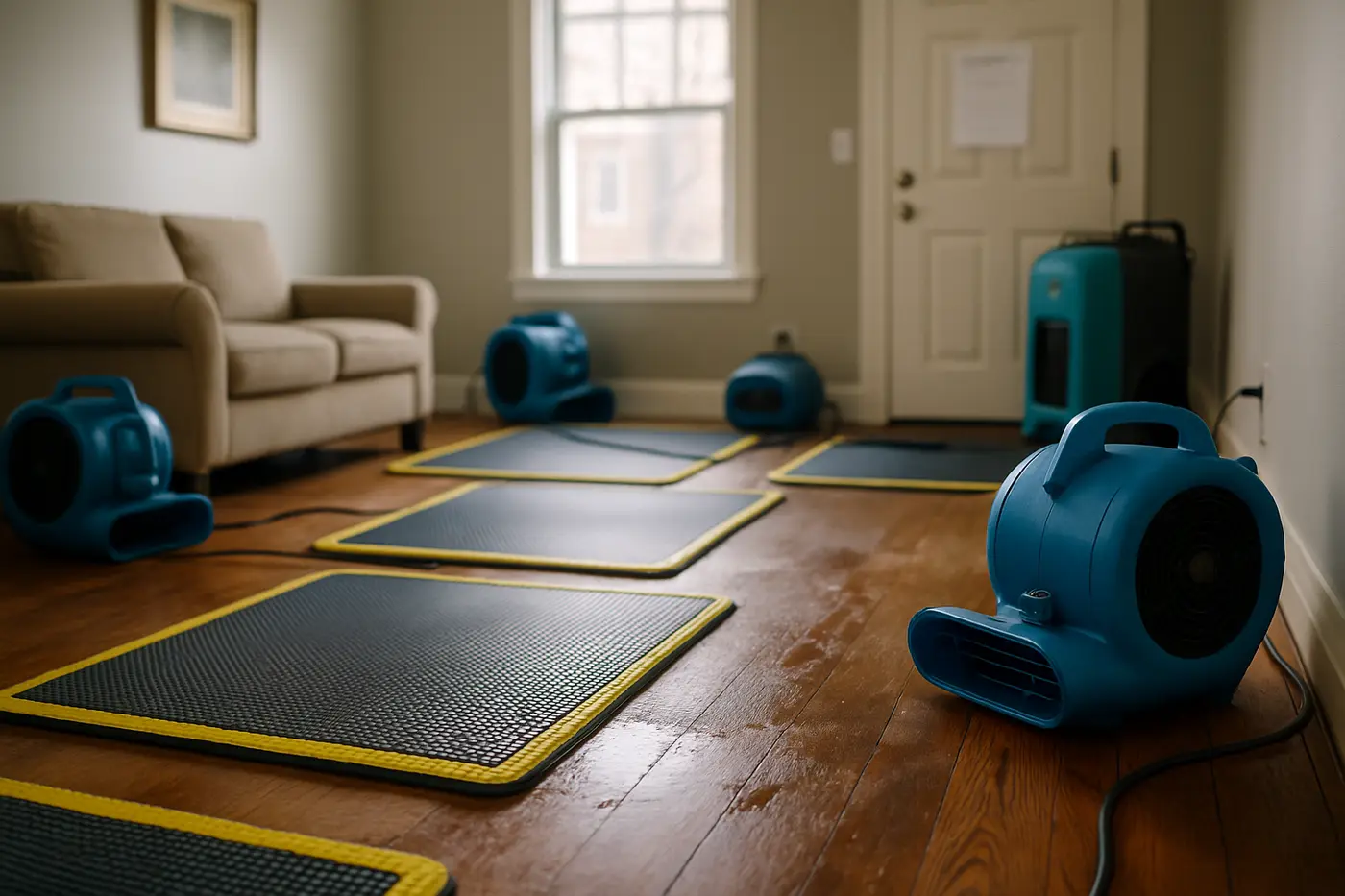
  • Air movers and a dehumidifier drying a water-damaged Chicago living room
    01

    Water Damage Restoration

    Water damage restoration across Chicago and the suburbs to the IICRC S500 standard: emergency extraction, moisture mapping, structural drying and claim-ready reports.

    Learn more
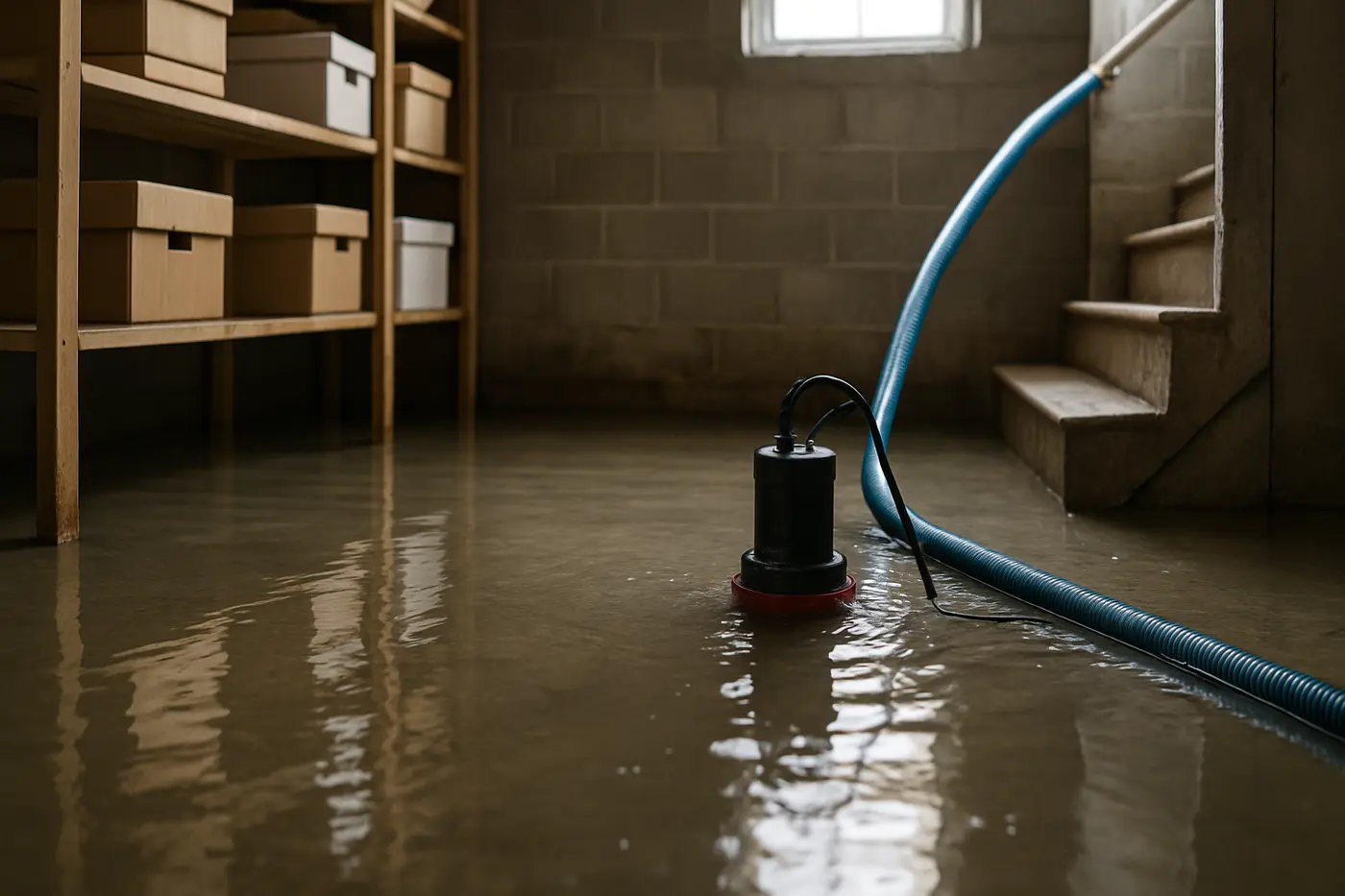
  • Flooded finished basement in Chicago with water being pumped out and carpet removed
    02

    Basement Flooding Cleanup

    Flooded basement cleanup in Chicago: pump-out, sewer backup sanitizing, drywall and carpet tear-out, and structural drying for bungalows, two-flats and garden units.

    Learn more
  • Technician in full PPE removing contaminated flooring after a sewer backup in a Chicago basement
    03

    Sewage Backup Cleanup

    Sewage backup cleanup across Chicago and the suburbs. Category 3 removal, disinfection and clearance to the IICRC S500 standard after combined sewer backups.

    Learn more

Helpful reading

Guides that go withthis service.

Practical, Chicago-specific reading for the first hour, the drying process, mold risk and insurance claims.

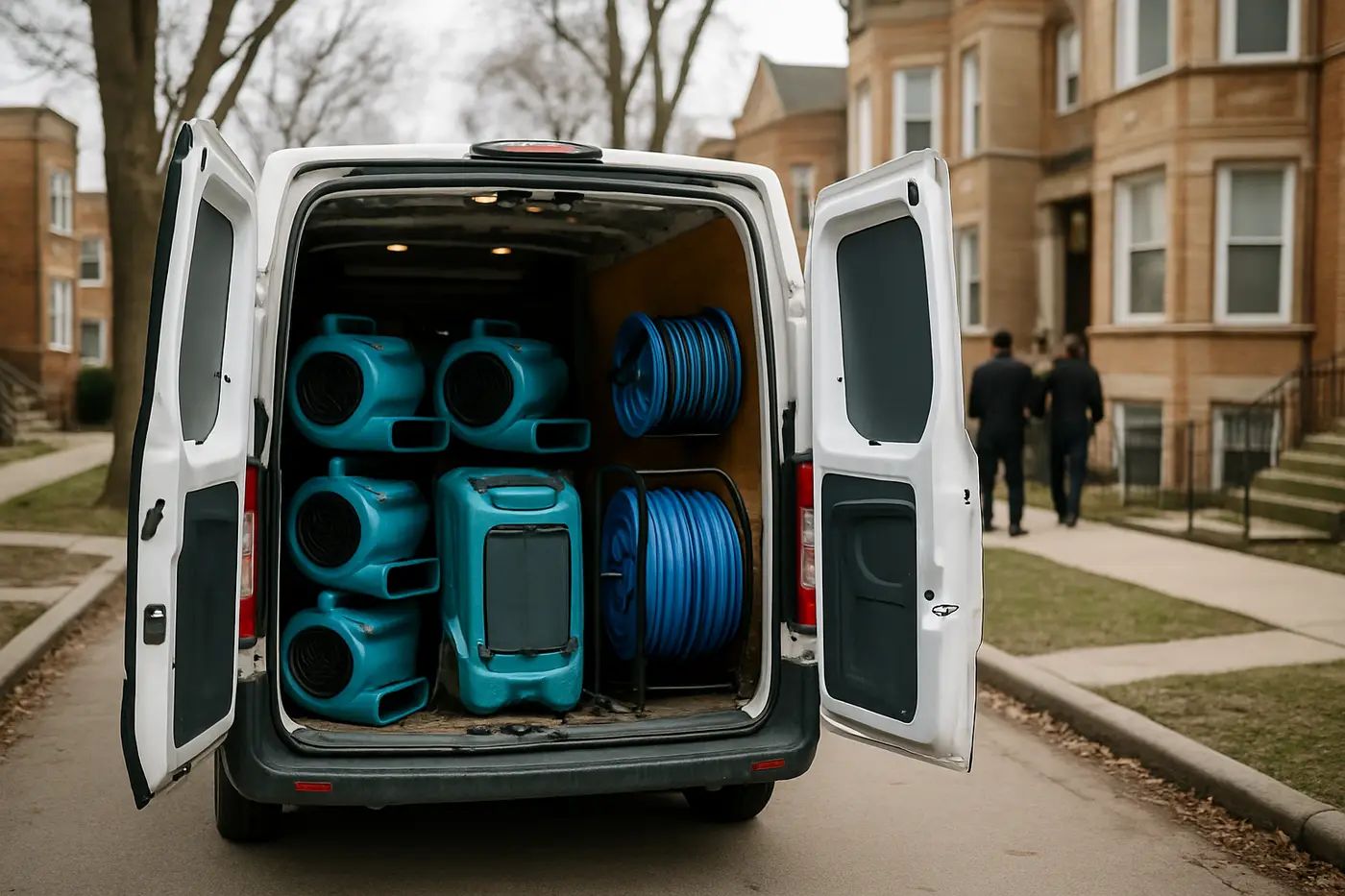
Restoration crew standing beside a van loaded with air movers and dehumidifiers

Mold Remediation · Chicago & the Suburbs

Let's take the next step toward drying your property.

Tell us what happened, where the water is and whether it is still active. A restoration coordinator will explain what to do next and what your adjuster will need.