Skip to content

Emergency restoration · Chicago & the Suburbs

Sewage Backup Cleanup Chicago

When the combined sewer surcharges in a storm and comes up through the basement floor drain, that water is Category 3. We pump it out, remove what it touched, disinfect and clear the space to the IICRC S500 standard, across Chicago and the surrounding suburbs.

  • 24/7 Response
  • Local Technicians
  • Insurance Reports
  • Direct Contact
  • Homes & Business

Request Sewage Backup Cleanup Help

US format - we will call or text you back right away.
Add brief description (optional)
How urgent?

Free on-site inspection and written estimate. Insurance-ready report. No obligation. Privacy.

What's included

Everything the job needs,scoped from the first visit.

Every sewage backup cleanup job in Chicago and the surrounding suburbs includes the work below as standard. It is written into the scope before we start, so there are no surprise extras when the invoice arrives.

  • Containment of the affected area and full PPE for every technician on site
  • Pumping and extraction of sewage-laden water from basements and garden units
  • Removal and bagged disposal of carpet, pad, drywall, insulation and porous contents
  • Cleaning and disinfection of concrete, block walls, framing and hard surfaces
  • Antimicrobial treatment and structural drying with air movers and LGR dehumidifiers
  • Clearance check on moisture, odor and surfaces before rebuild begins
  • Dated photos, moisture logs and an itemized scope for your water backup claim
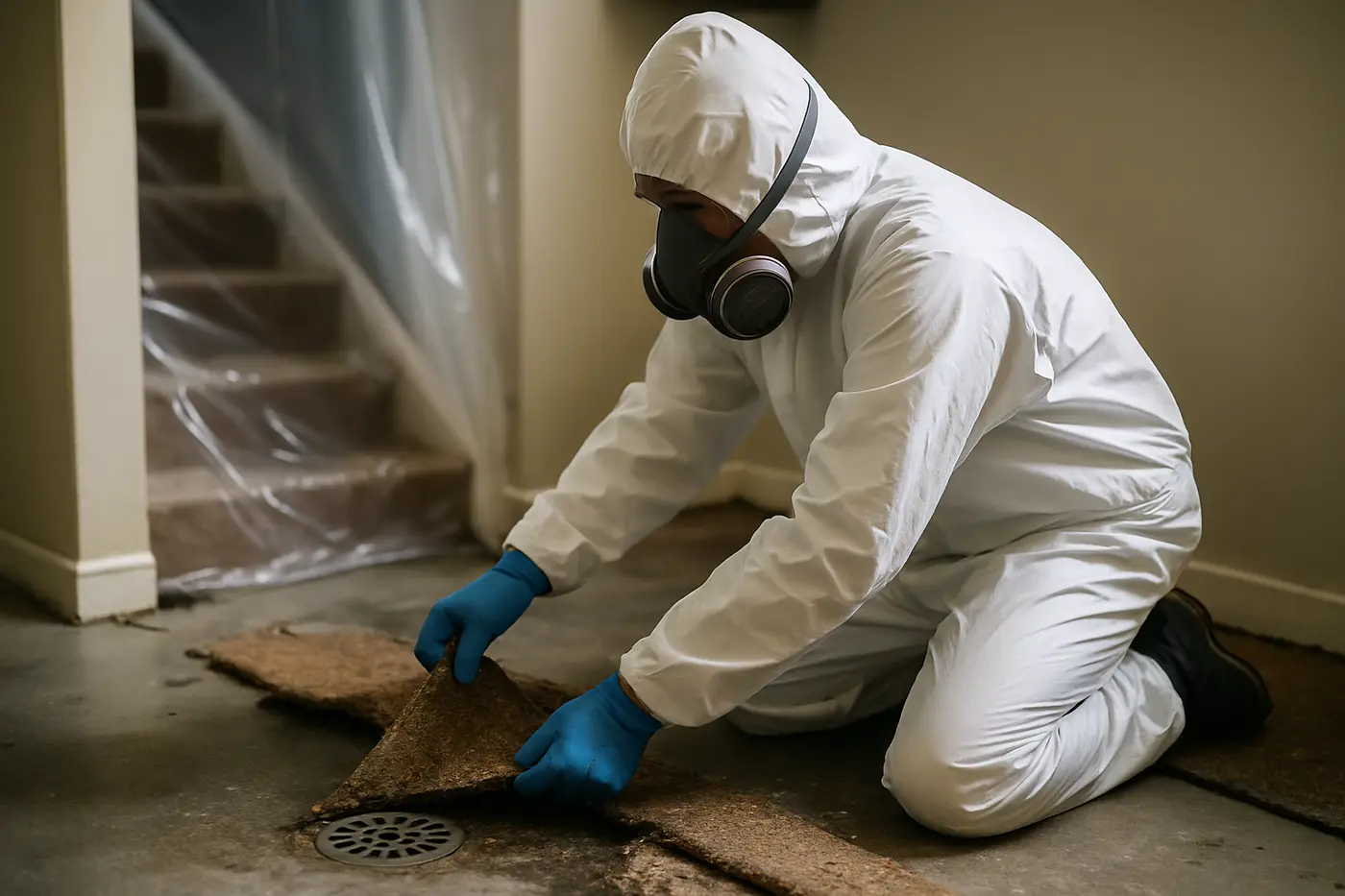
Technician in full PPE removing contaminated flooring after a sewer backup in a Chicago basement

Not sure it is urgent?

Send a few photos with the form. A coordinator will tell you whether it can wait until morning or needs a crew tonight.

When to call

Signs you needsewage backup cleanup.

Water moves sideways along bottom plates and under floor coverings, so the wet area is nearly always bigger than the stain you can see. Any of the following is worth a call the same day.

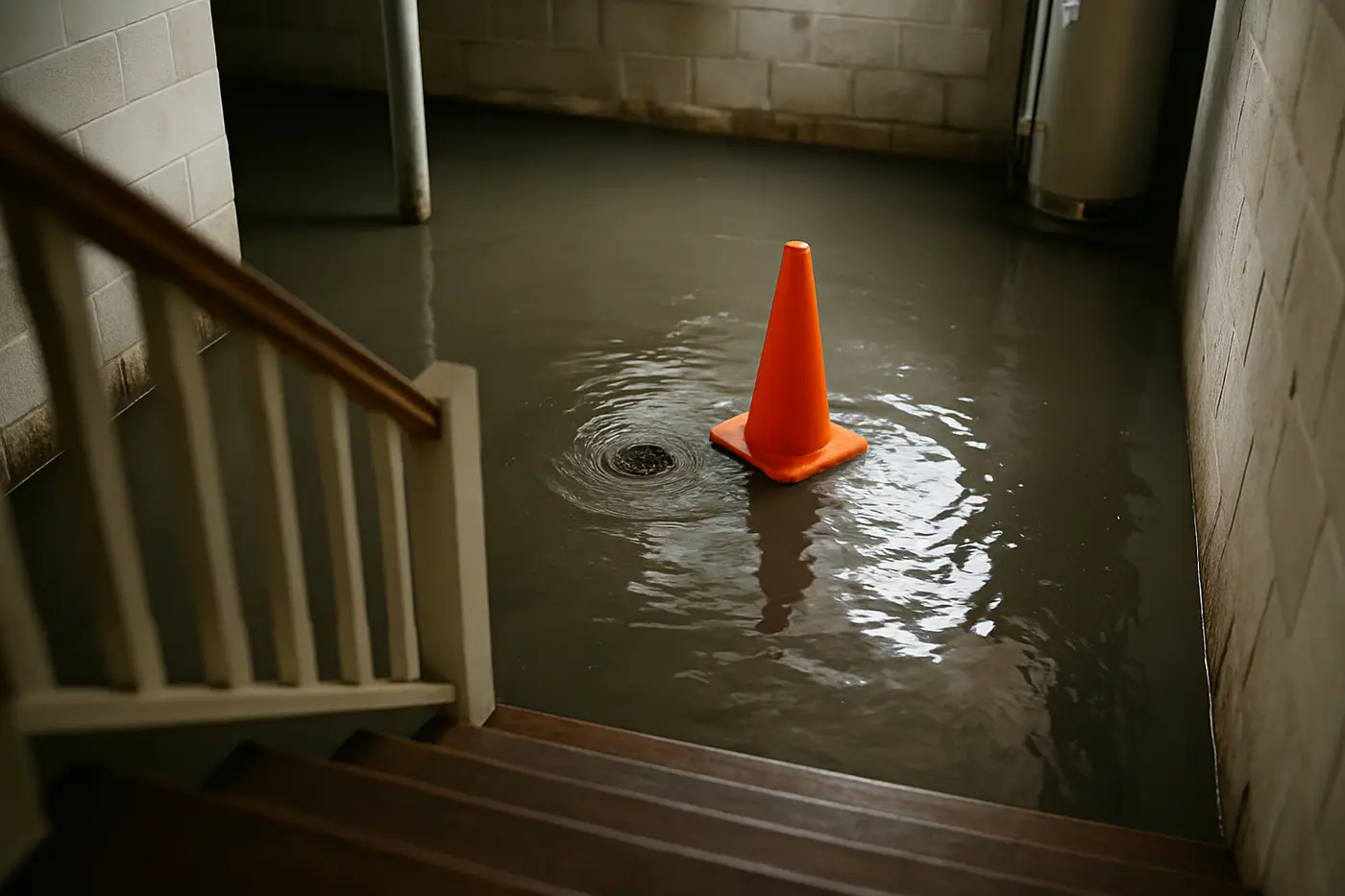
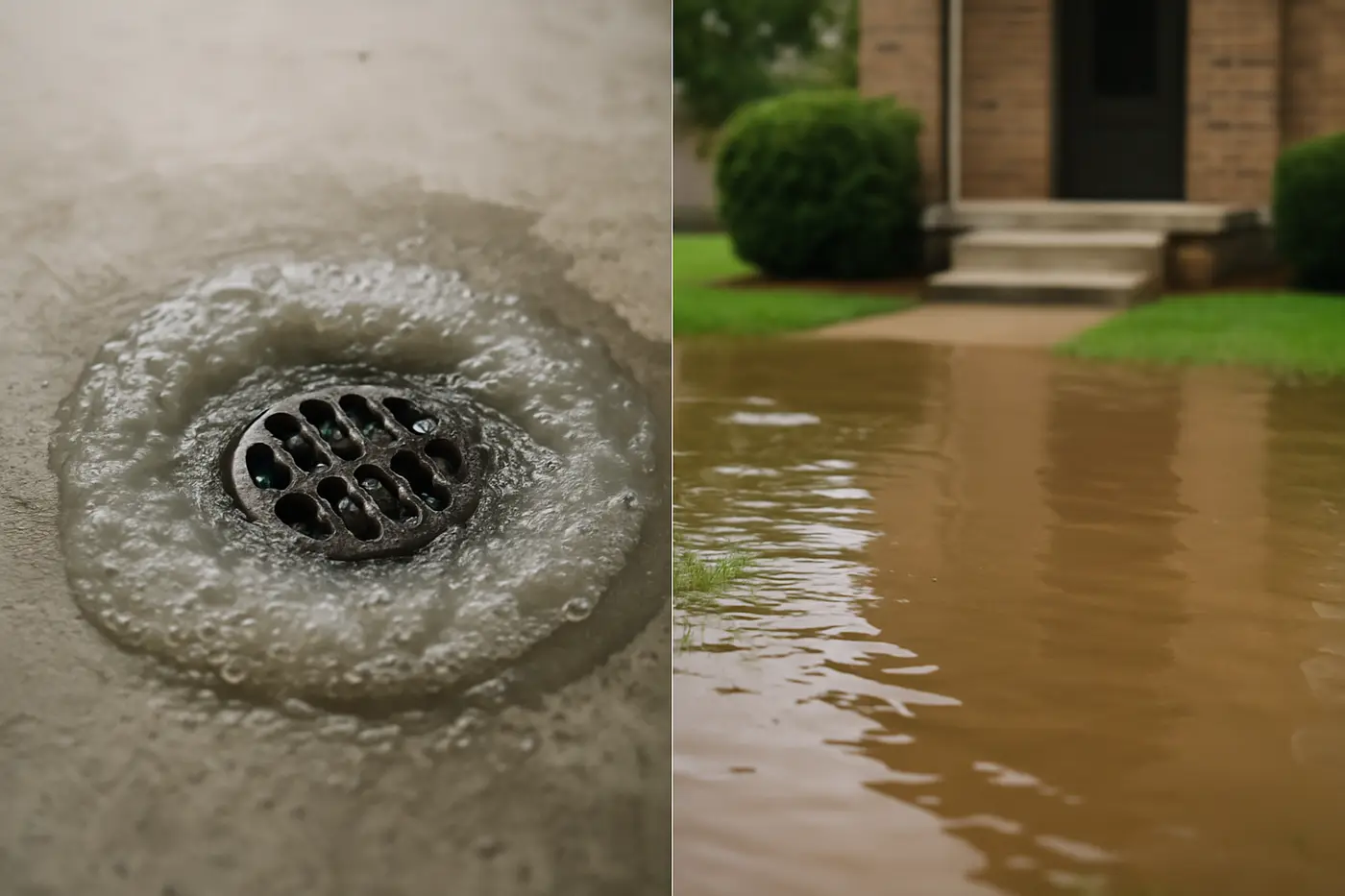
  • Water coming up through the basement floor drain during or after a heavy rain
  • A toilet, shower or laundry tub in the basement overflowing when nothing is running
  • Gray or brown water with a sewer smell on the basement floor
  • An ejector pump for a basement bathroom that has failed or is running constantly
  • Wet carpet, drywall or stored boxes in a basement after a storm
  • A sewer odor that stays after the water has gone down the drain
  • A garden unit in a two-flat or three-flat with water in the bathroom or laundry

Our process

How sewage backup cleanupruns, step by step.

From the first call to the final moisture reading, you will know what is happening, why, and what your insurer will need at each stage.

  1. Step 1: Keep everyone out and call

    Do not enter the basement while the water is standing and the power is on. Close the door, keep children and pets upstairs, and send photos from the top of the stairs. We triage by depth and how much of the basement is finished.

  2. Step 2: Contain, pump and extract

    We seal the affected area from the rest of the house, then use submersible pumps and extractors, in gloves, boots and respirators, to remove the water. The sewage is discharged to a working sewer, not the yard.

  3. Step 3: Remove, clean and disinfect

    Porous materials that touched the water are bagged and removed. Concrete, block, framing and hard surfaces are cleaned, disinfected and treated with an antimicrobial. Then drying equipment goes in.

  4. Step 4: Dry, clear and document

    Air movers and LGR dehumidifiers run until moisture readings hit dry standard, usually 5 to 10 days for a basement. We check moisture, odor and surfaces before rebuild and hand over the claim file.

Price guide · USD, 2026

What sewage backup cleanupcosts in Chicago.

Ranges from typical Chicago and the surrounding suburbs jobs. The final quote is given on site after moisture mapping, in writing, before any work starts. Insurance direct billing where the insurer approves.

ItemTypical range
Emergency call-out and inspection Moisture mapping and a written report; credited against restoration work$250-$500
Sewage backup cleanup and sanitization Extraction, removal, disposal, disinfection and drying of the affected area$3,000-$10,000
Basement flooding cleanup Where the backup is combined with sump or storm water across the whole basement$1,500-$10,000
Full restoration, gray or black water (multiple rooms) Finished basements with bathroom, bedroom and living space involved$6,500-$18,000+
Structural drying equipment Air movers and LGR dehumidifiers, monitored daily$50-$125 per unit per day
Contents pack-out and restoration Salvageable hard-surface contents cleaned and stored while the basement dries$1,000-$5,000

Ranges cover labor, equipment and disposal for 2026. The number you approve on the written quote is the number you pay; if the scope changes once walls are opened, we stop and re-quote in writing.

Full price guide

In depth

Sewage Backup Cleanup in Chicago: how the job actually runs.

A sewage backup in Chicago rarely starts with a broken pipe in your house. It starts with a summer thunderstorm. A short, intense downpour fills the combined sewer under the street faster than it can drain, and the mix of storm runoff and raw sewage looks for the lowest opening it can find. In most neighborhoods that is a basement floor drain.

We provide sewage cleanup across Chicago and the surrounding suburbs to the IICRC S500 standard for Category 3 water. This page covers why backups happen here, what the protocol requires, what has to be removed, how the space is cleared, and what your Illinois policy needs to say for the bill to be covered.

Why Chicago basements get sewage backups

Most of the City of Chicago and the older inner suburbs, including Oak Park, Cicero, Berwyn and parts of Evanston, run storm water and sanitary sewage in the same pipes. That is a combined sewer system. In a heavy rain it surcharges and backs up through floor drains, toilets, showers and laundry tubs in the basements along the line.

The Metropolitan Water Reclamation District’s Tunnel and Reservoir Plan, better known as the Deep Tunnel, with the Thornton reservoir (2015) and the first stage of McCook (2017), reduced how often this happens. It did not stop it. On July 2, 2023, up to about 9 inches of rain fell on parts of the West Side, Cicero and Berwyn, thousands of basements flooded, and Cook County received a federal disaster declaration. Neighborhoods like Austin were among the hardest hit. In two-flats and three-flats with a garden unit below grade, a backup is not a storage problem but someone’s home.

The Category 3 protocol

The IICRC S500 standard sorts water into three categories: Category 1 clean supply water, Category 2 gray water from appliances or clean water that has sat, and Category 3 grossly contaminated water from sewage, river flooding or anything that came through a sewer line. Combined sewer backup is Category 3 regardless of how clear it looks.

Personal protective equipment

Every technician in the affected area wears waterproof boots, gloves, eye protection and an N95 or better respirator, with disposable coveralls when the water is deep or there is splash risk. We contain the basement from the rest of the house with plastic sheeting and set up a clean-dirty transition at the stairs so contaminated boots and bags do not travel through the kitchen. Keep children and pets upstairs until the space has been cleared.

Pumping and extraction

Standing sewage is pumped with submersible units and discharged to a working sewer connection, never to the yard or the street. Extractors then take the remainder off the floor. Our water extraction service covers the equipment; on a sewage job everything the water touched is treated as contaminated, including the hoses.

What must be removed

Porous materials that touched Category 3 water cannot be dried and kept, and most adjusters expect them removed. Bagged for disposal:

  • Carpet and carpet pad
  • Drywall and paneling below the water line, typically cut 12 to 24 inches above it so the wet edge is gone
  • Fiberglass and cellulose insulation in the wall cavity
  • Particleboard and MDF cabinets, baseboards and trim
  • Upholstered furniture, mattresses, area rugs
  • Cardboard boxes and their contents, books and paper records
  • Any food, including sealed cans that sat in the water

What can be cleaned and kept

Non-porous materials can be cleaned, disinfected, dried and kept: concrete floors, block and poured foundation walls, framing once the drywall is off, metal shelving, sealed plastic bins, tools and sealed hard furniture. Items stored above the water line usually need only a surface clean.

Disinfection and clearance

Once the water and the porous materials are out, we clean every remaining surface of solids and residue, then apply a hospital-grade disinfectant and an antimicrobial, allowing the full label contact time.

Then the drying equipment goes in. Fast, complete drying is what limits mold growth afterward. Air movers and LGR dehumidifiers run until moisture readings on the slab, the framing and the base plates meet dry standard, which for a Chicago basement is usually 5 to 10 days. Before rebuild we do a final check for moisture, visible residue and odor. Odor that lingers after disinfection usually means something wet is still hiding behind a wall or under a built-in.

What to do before we arrive

  1. Stay out of the water. Do not enter the basement while there is standing water and the power is on.
  2. Cut the breaker for the basement if the panel is dry and reachable without stepping in water. Otherwise wait.
  3. Stop using water upstairs. Every flush and load of laundry adds to what is coming up the drain.
  4. Photograph from the stairs. Water line, the drain it came from, and anything stored on the floor. Do not move things yet.
  5. Report it to Chicago 311 or your suburb’s public works line, and do not run the furnace fan or a household vacuum.

Our guide on what to do and what not to touch after a sewage backup walks through the first hour.

Backwater valves and overhead sewers

Cleanup solves this backup. Two plumbing fixes address the next one.

A backwater valve (check valve) is installed on the sewer lateral where it leaves the house. When the street sewer surcharges, a flap closes and stops the flow back into the basement. It is the less expensive option, though it needs periodic cleaning.

An overhead sewer conversion disconnects the basement plumbing from the gravity sewer and reroutes it through an ejector pump that lifts waste to a line exiting above the likely flood level. It is the more thorough fix and the standard recommendation for finished basements and garden units.

Both require a licensed plumber and a permit. The City of Chicago and many suburbs run rebate programs for this work. Our summer storm checklist covers the prevention side in more detail.

Sewer backup and Illinois insurance

A standard Illinois homeowners policy (HO-3) covers sudden and accidental discharge from plumbing inside the house. It excludes sewer backup and sump pump overflow unless you added a water backup and sump discharge or overflow endorsement. Typical limits are $5,000 to $25,000, sometimes more, which is why a finished basement can exceed the limit.

Sewer backup is also a different peril from surface flooding. If water came over the sill from the yard or a river, that is flood, and it needs a separate NFIP or private flood policy. Our post on sewer backup versus flood claims explains how adjusters draw that line.

What the adjuster expects from us: dated photos of the water line and the drain it came from, a moisture map, a daily drying log, and an itemized scope of what was removed and why, usually in Xactimate format. We provide all of it and can bill the carrier directly where they approve.

Remove or keep after a Category 3 backup

MaterialUsually removedUsually cleaned and kept
Carpet and padAlwaysNever
Drywall below the water lineAlways, cut above the wet edgeOnly above the cut line
Wood framing and studsRarelyYes, once exposed, cleaned and dried
Concrete slab and block wallsNeverAlways, scrubbed and disinfected
Particleboard cabinets and trimAlwaysNo
Metal shelving, tools, sealed binsNoYes
Boxes, books, paper, mattressesAlwaysNo

What drives the cost of sewage cleanup in Chicago

Sewage backup cleanup and sanitization typically runs $3,000 to $10,000. Where a finished basement with a bathroom, bedroom and living area is involved, full restoration for gray or black water runs $6,500 to $18,000 or more. The emergency call-out and inspection is $250 to $500 and is credited against the restoration work.

The main cost drivers are:

  • How much of the basement is finished. Bare concrete cleans up fast; drywall, carpet and built-ins have to come out.
  • Contents. A basement used for storage means more disposal and a longer contents inventory.
  • Drying time. Basements run 5 to 10 days on equipment at $50 to $125 per unit per day.

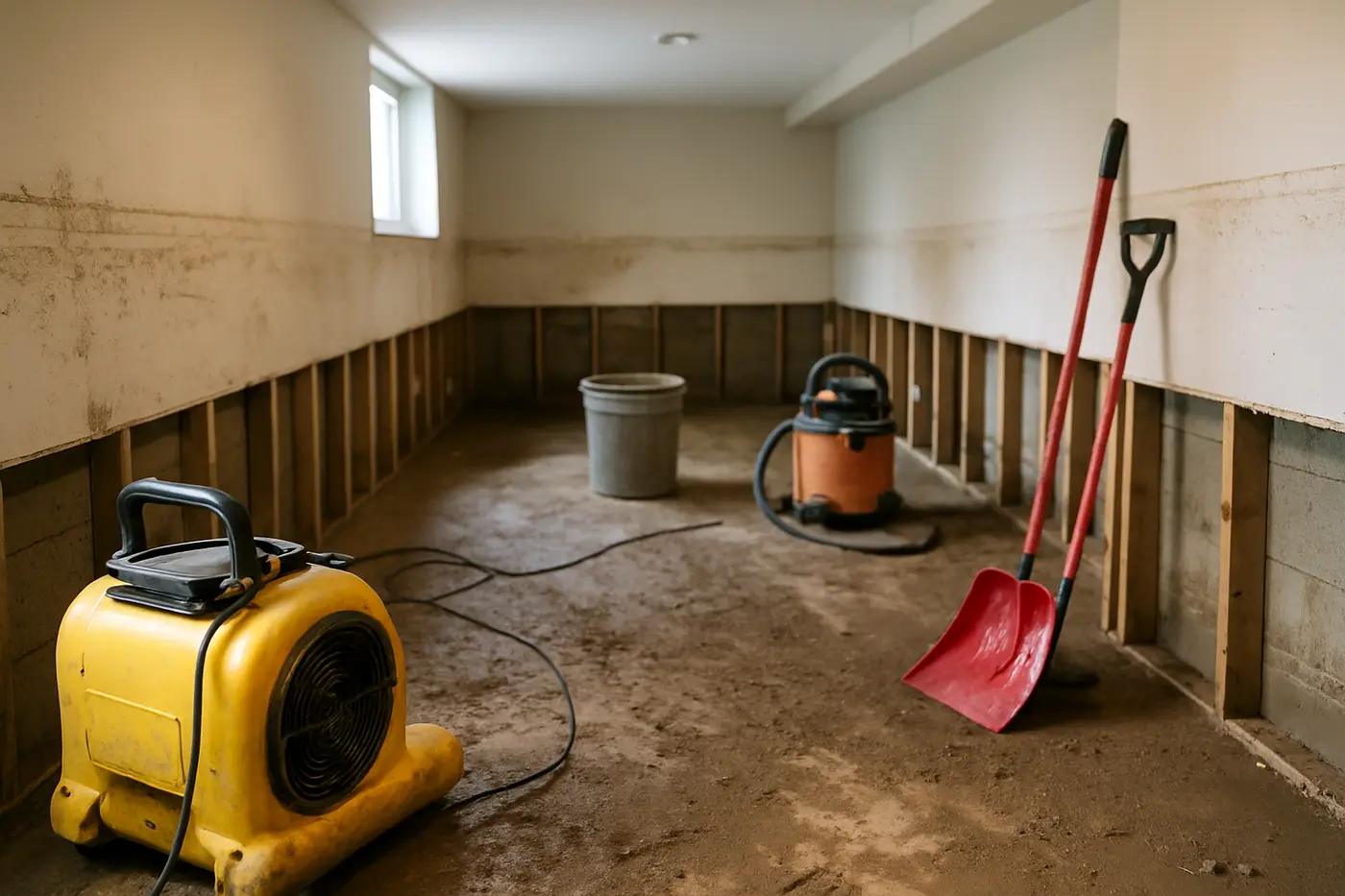
Sewage cleanup is often the first phase of a larger basement flooding cleanup, and a basement that sat wet for days may need mold remediation after it. If water is coming up through your floor drain right now, stay upstairs and call us or send the form.

Last updated September 15, 2026
Common questions

Sewage Backup Cleanup, explained.

Straight answers about response times, water categories, drying timelines and what your adjuster will expect for sewage backup cleanup in Chicago.

All questions
Why does sewage come up through my basement floor drain in a storm?

Most of the City of Chicago and the older inner suburbs such as Oak Park, Cicero and Berwyn are on a combined sewer system, where storm water and sanitary sewage share the same pipes. In a short, intense downpour the system fills faster than it can drain, pressure builds, and the mix backs up through the lowest openings in the neighborhood: basement floor drains, toilets and laundry tubs. The Deep Tunnel and the Thornton and McCook reservoirs reduced the frequency of backups but did not eliminate them.

What does Category 3 mean for my basement?

Category 3 is the IICRC S500 term for grossly contaminated water: sewage, river flood water, or anything that came through a sewer line. The practical consequence is that porous materials the water touched cannot be dried and kept. Carpet, pad, drywall below the water line, insulation, particleboard cabinets and cardboard boxes are removed and disposed of. Concrete, block, framing and sealed hard surfaces can be cleaned, disinfected and dried. The category is set by the source, not by how the water looks.

What protective equipment do you use during sewage cleanup?

Every technician in the affected area wears waterproof boots, nitrile gloves under work gloves, eye protection and an N95 or better respirator, with disposable coveralls where the water is deep or splashing is likely. We contain the area with plastic sheeting so contaminated air and foot traffic do not spread through the rest of the house, and we set up a clean-dirty transition at the basement door. The same rules apply to you: if you must go down before we arrive, wear gloves, boots and a mask, and wash thoroughly afterward.

Can any of my basement contents be saved after a sewage backup?

Hard, non-porous items can usually be cleaned and disinfected: metal shelving, plastic bins with sealed lids, tools, glass and sealed wood furniture. Porous items that were in contact with the water are generally not worth the risk: upholstered furniture, mattresses, cardboard boxes and their contents, books, paper records and area rugs. Items stored above the water line are often fine after surface cleaning. We photograph and list everything before disposal so the contents claim is supported.

How do you disinfect and clear the basement afterward?

After the water and porous materials are out, every remaining surface is cleaned of solids and residue, then treated with a hospital-grade disinfectant and an antimicrobial to the label contact time. Concrete floors and block walls are scrubbed and treated. We then dry the structure until moisture readings meet dry standard and do a final check for residual odor, visible residue and moisture before rebuild starts. Rebuilding over a basement that was disinfected but not fully dried is how mold shows up a month later.

Does my homeowners insurance cover sewer backup in Illinois?

Not by default. Standard HO-3 policies exclude sewer backup and sump pump overflow unless you added a water backup and sump discharge or overflow endorsement, which typically carries a limit of $5,000 to $25,000, sometimes more. Sewer backup is also different from surface flooding, which needs a separate NFIP or private flood policy. Check your declarations page for the endorsement now, before storm season. We document the source, the water line and the scope so the adjuster can apply the right coverage.

How do I stop it from happening again?

The two standard fixes in Chicagoland are a backwater (check) valve on the sewer lateral, which closes when the street sewer surcharges, and an overhead sewer conversion, which reroutes the basement plumbing to an ejector pump that lifts waste to a line above flood level. Both need a licensed plumber and a permit. The City of Chicago and many suburbs run rebate programs for this work, and the city's Rain Blocker program restricts flow into catch basins. Report the backup to Chicago 311 as well.

How long does sewage cleanup take?

Pumping, extraction and removal of porous materials are usually completed within the first day or two, depending on how much of the basement is finished. Structural drying is the longer phase: 5 to 10 days for a basement, because concrete releases moisture slowly and basements are cool and damp year-round. After a major storm such as July 2, 2023, demand runs high and scheduling can stretch, which is another reason to call as soon as the water appears.

Related services

Water rarely stays in one lane. These are the services most often scoped on the same job.

All services
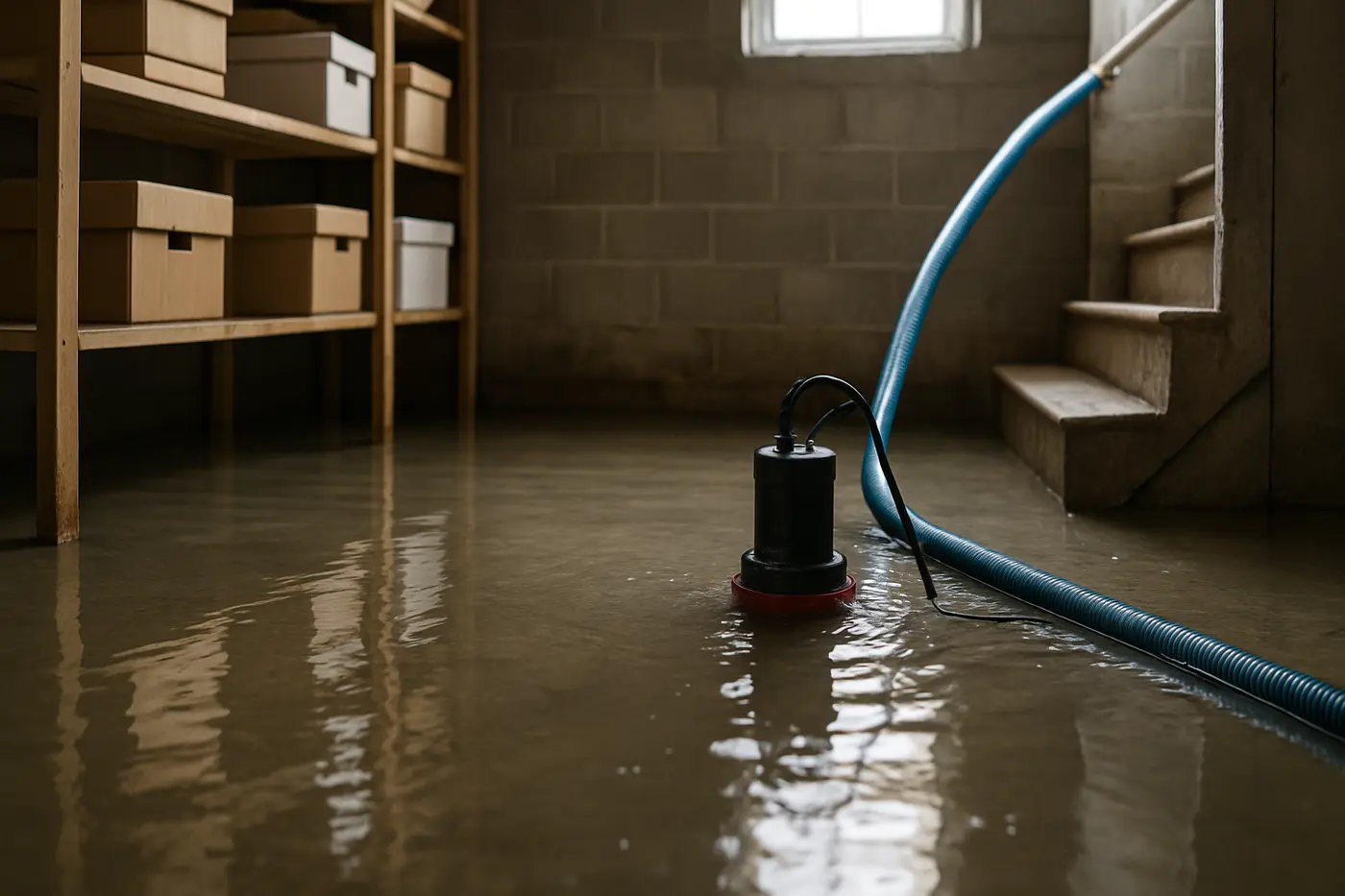
  • Flooded finished basement in Chicago with water being pumped out and carpet removed
    01

    Basement Flooding Cleanup

    Flooded basement cleanup in Chicago: pump-out, sewer backup sanitizing, drywall and carpet tear-out, and structural drying for bungalows, two-flats and garden units.

    Learn more
  • Flood line on the walls of a Chicago home after river flooding, cleanup in progress
    02

    Flood Damage Restoration

    Flood damage restoration in Chicago after sewer backups, storms and river flooding: Category 3 extraction, tear-out, sanitizing, drying and claim documentation.

    Learn more
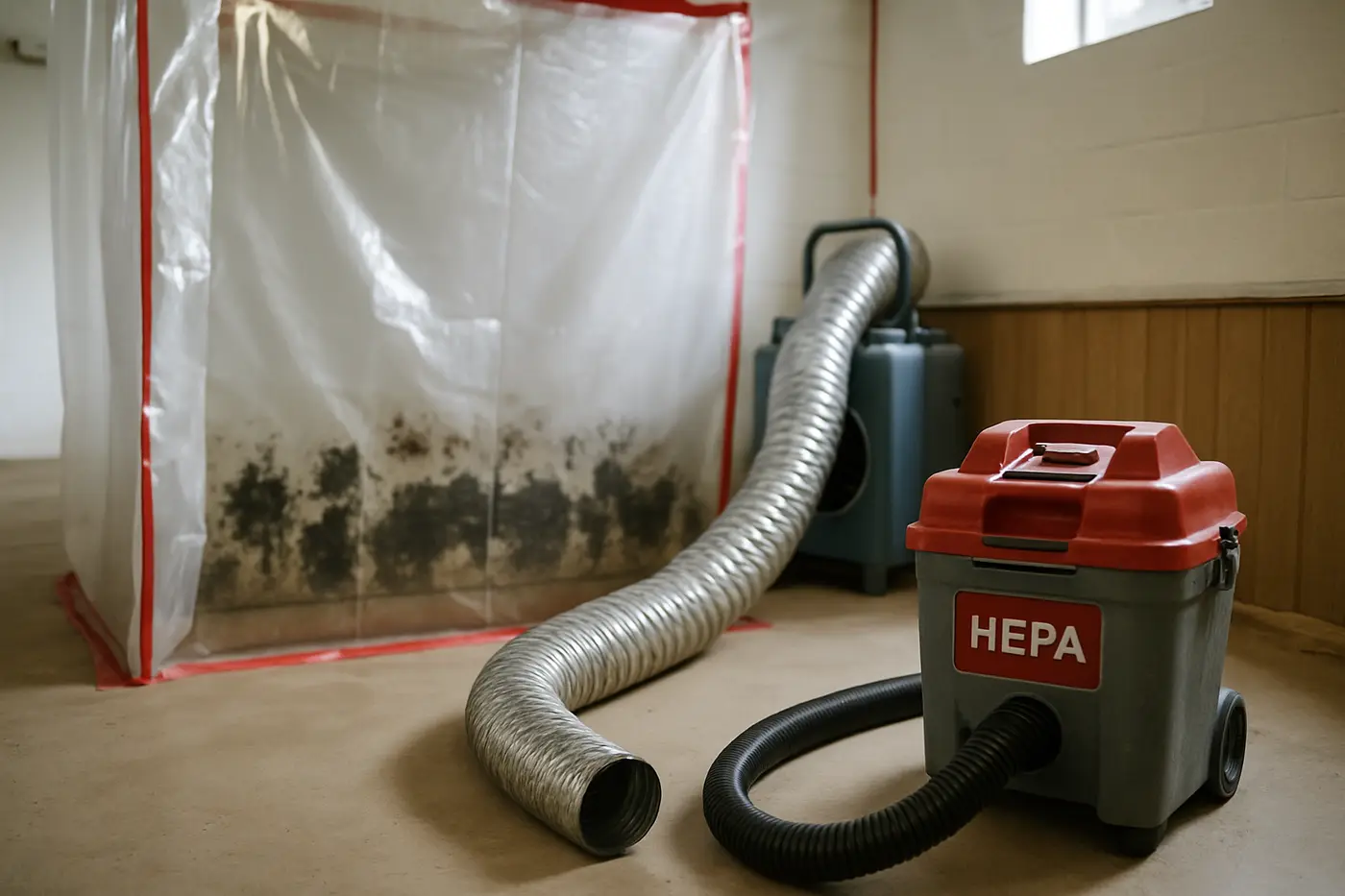
  • Basement room sealed with containment plastic and a negative air machine, mold on the lower wall
    03

    Mold Remediation

    Mold remediation in Chicago homes and basements to the IICRC S520 standard: containment, negative air, HEPA filtration, removal and moisture correction.

    Learn more

Helpful reading

Guides that go withthis service.

Practical, Chicago-specific reading for the first hour, the drying process, mold risk and insurance claims.

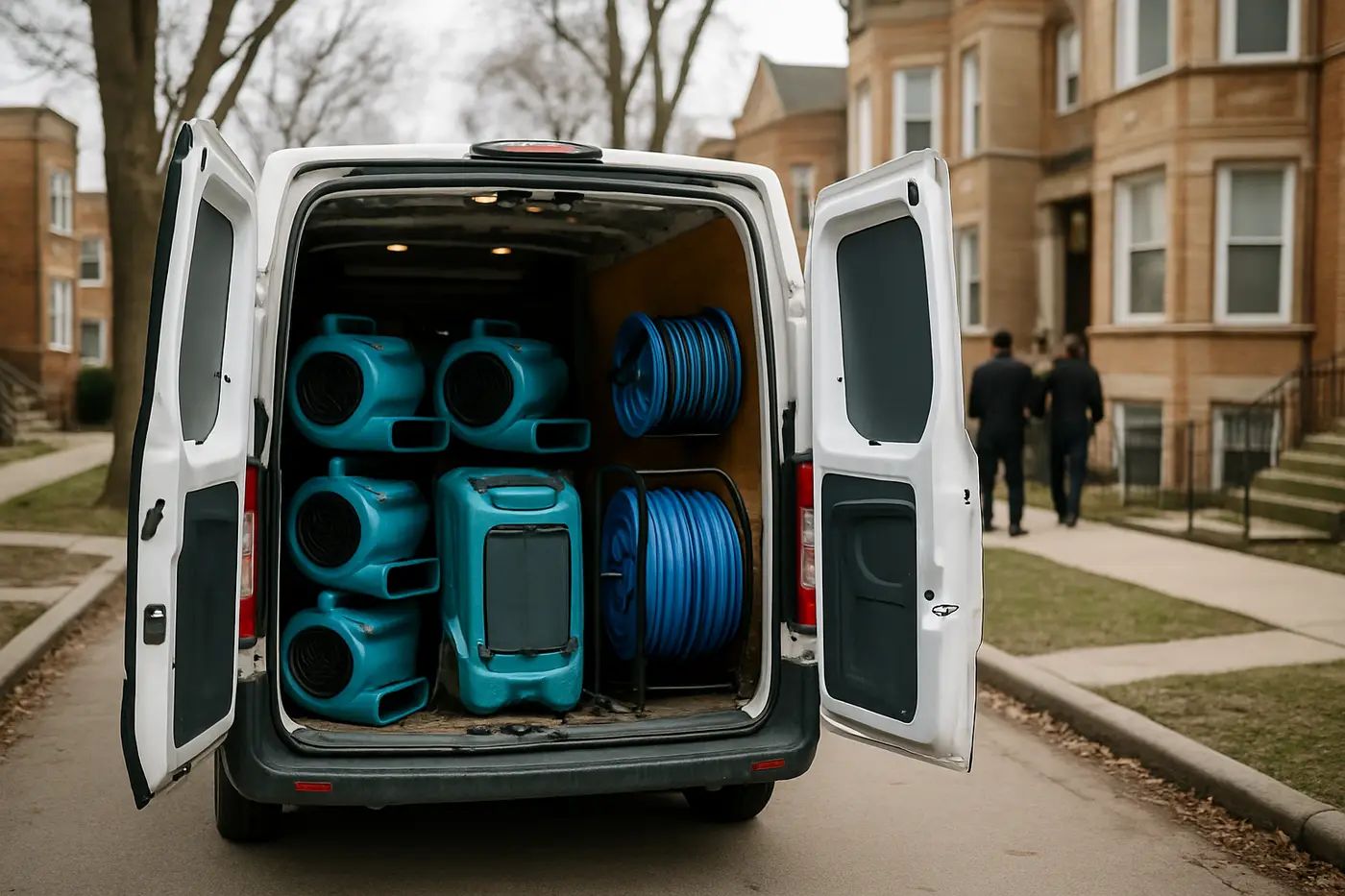
Restoration crew standing beside a van loaded with air movers and dehumidifiers

Sewage Backup Cleanup · Chicago & the Suburbs

Let's take the next step toward drying your property.

Tell us what happened, where the water is and whether it is still active. A restoration coordinator will explain what to do next and what your adjuster will need.