Skip to content

Emergency restoration · Chicago & the Suburbs

Storm Damage Restoration Chicago

Wind, hail, ice dams and the downpour that follows. Emergency tarping and board-up, water extraction, structural drying to the IICRC S500 standard and a claim file your adjuster can work from, across Chicago and the surrounding suburbs.

  • 24/7 Response
  • Local Technicians
  • Insurance Reports
  • Direct Contact
  • Homes & Business

Request Storm Damage Restoration Help

US format - we will call or text you back right away.
Add brief description (optional)
How urgent?

Free on-site inspection and written estimate. Insurance-ready report. No obligation. Privacy.

What's included

Everything the job needs,scoped from the first visit.

Every storm damage restoration job in Chicago and the surrounding suburbs includes the work below as standard. It is written into the scope before we start, so there are no surprise extras when the invoice arrives.

  • Emergency roof tarping and board-up of broken windows and doors
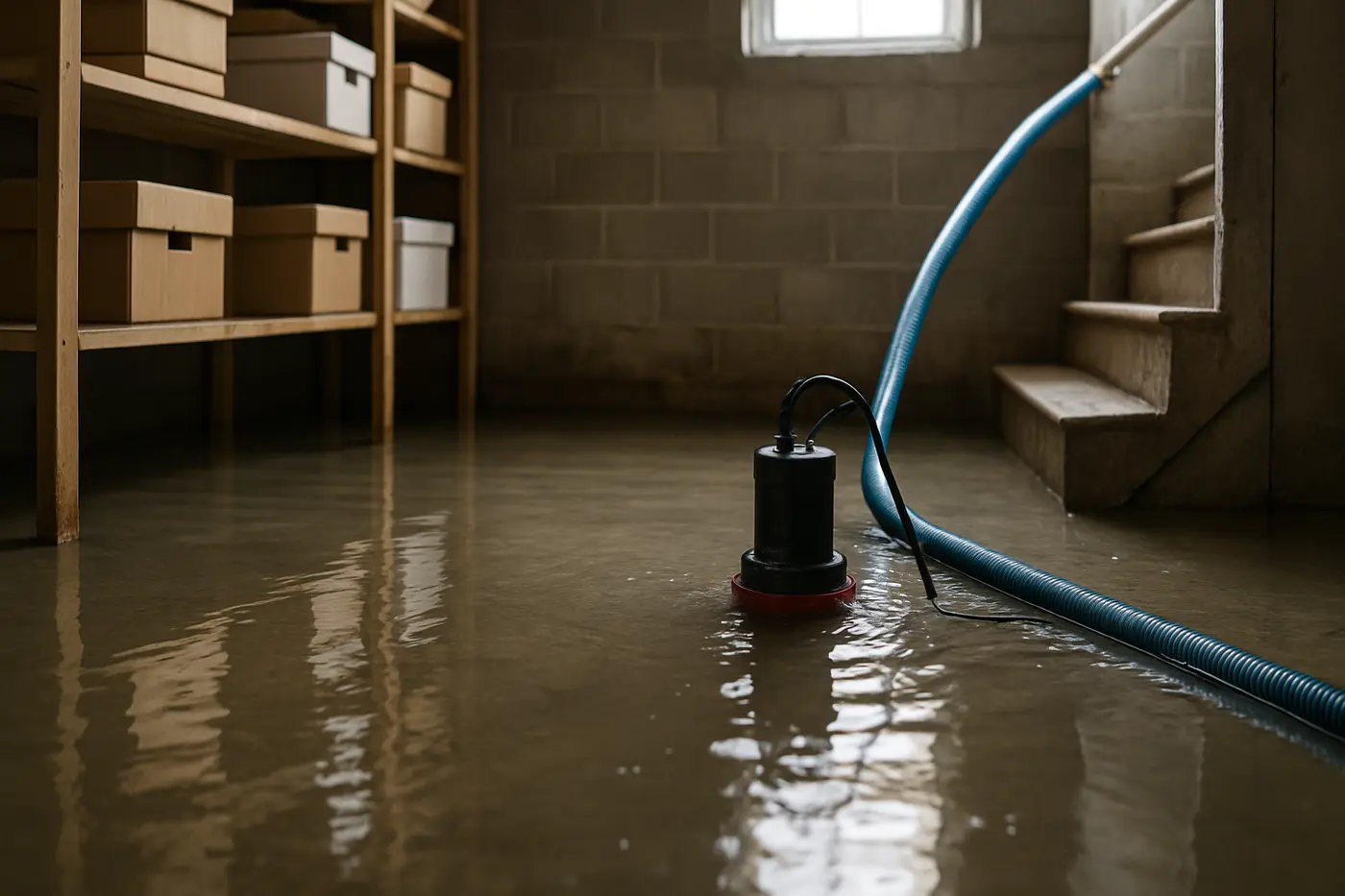
  • Water extraction from basements, floors and ceilings with truck-mount and portable units
  • Water category assessment: rain through the roof, sump overflow or combined sewer backup
  • Moisture mapping with pin and non-invasive meters and thermal imaging
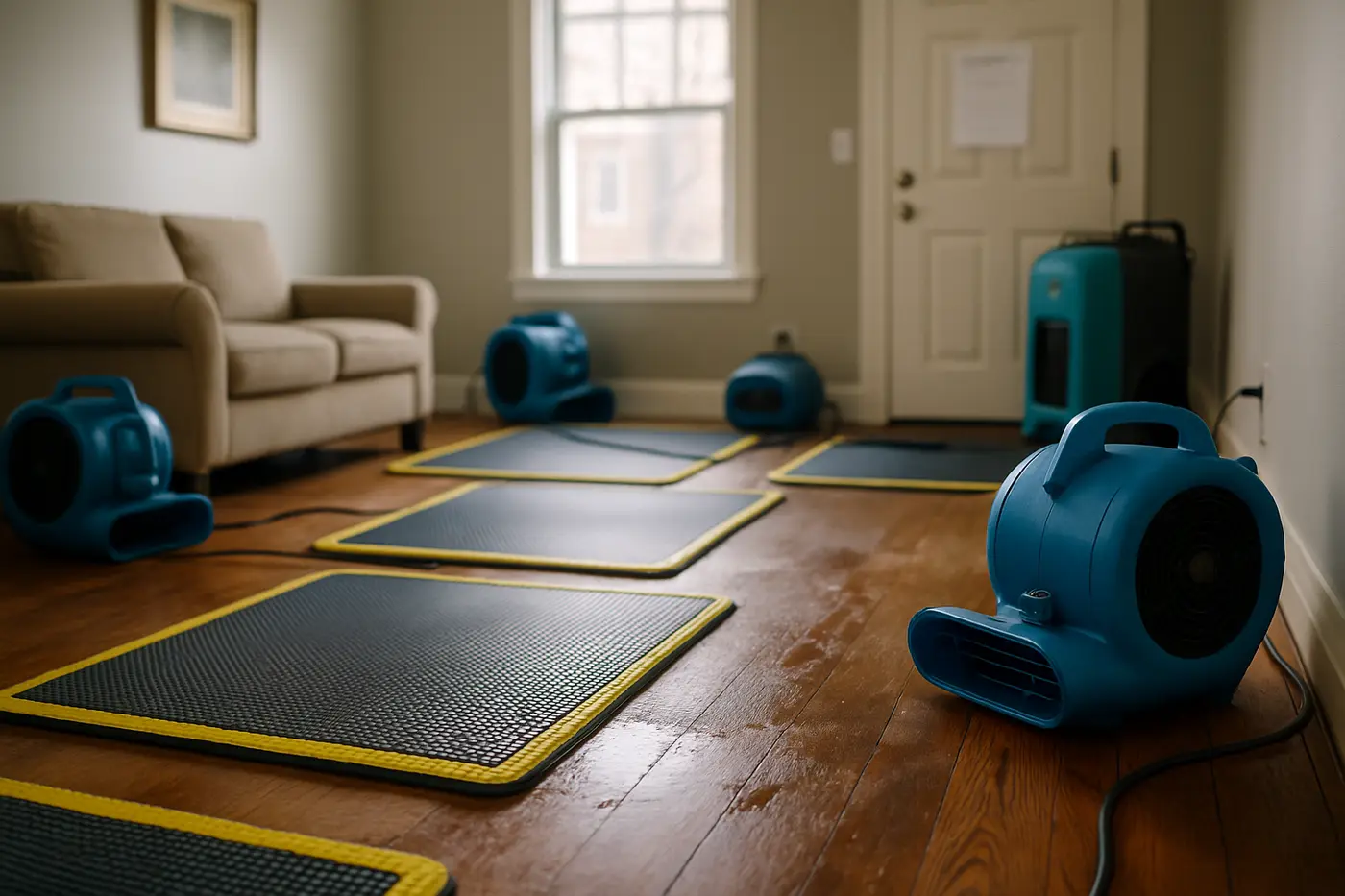
  • Structural drying with air movers and LGR dehumidifiers, logged daily
  • Removal of wet insulation, sagging ceiling drywall and delaminated carpet pad
  • Dated photos, moisture logs and an itemized scope for your insurance claim
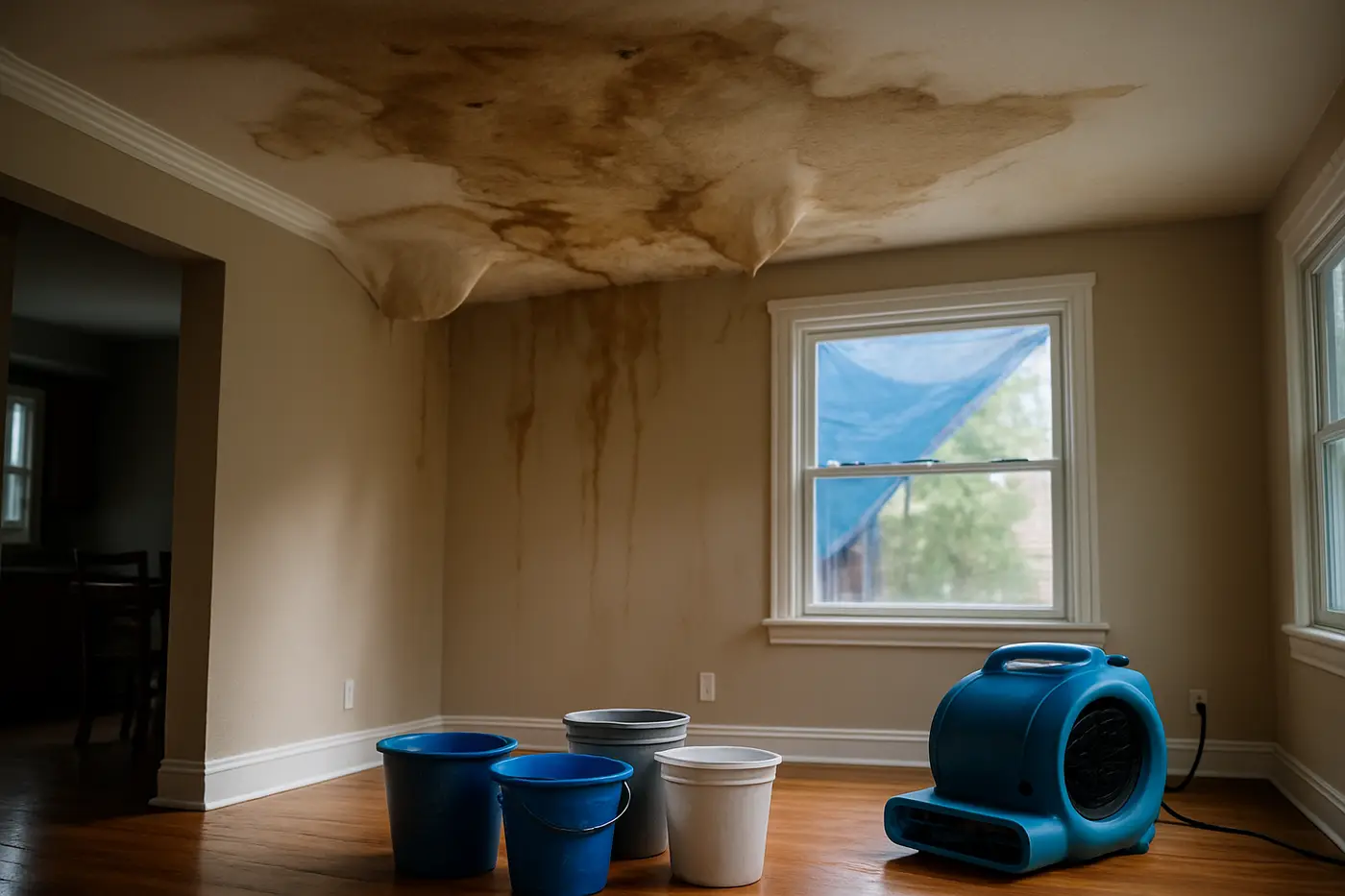
Interior of a Chicago home after a summer storm with a stained ceiling and drying equipment running

Not sure it is urgent?

Send a few photos with the form. A coordinator will tell you whether it can wait until morning or needs a crew tonight.

When to call

Signs you needstorm damage restoration.

Water moves sideways along bottom plates and under floor coverings, so the wet area is nearly always bigger than the stain you can see. Any of the following is worth a call the same day.

  • Missing shingles or a visible opening in the roof after wind or hail
  • A ceiling stain, bulge or drip that appeared during or right after a storm
  • Water in the basement after the power went out and the sump pump stopped
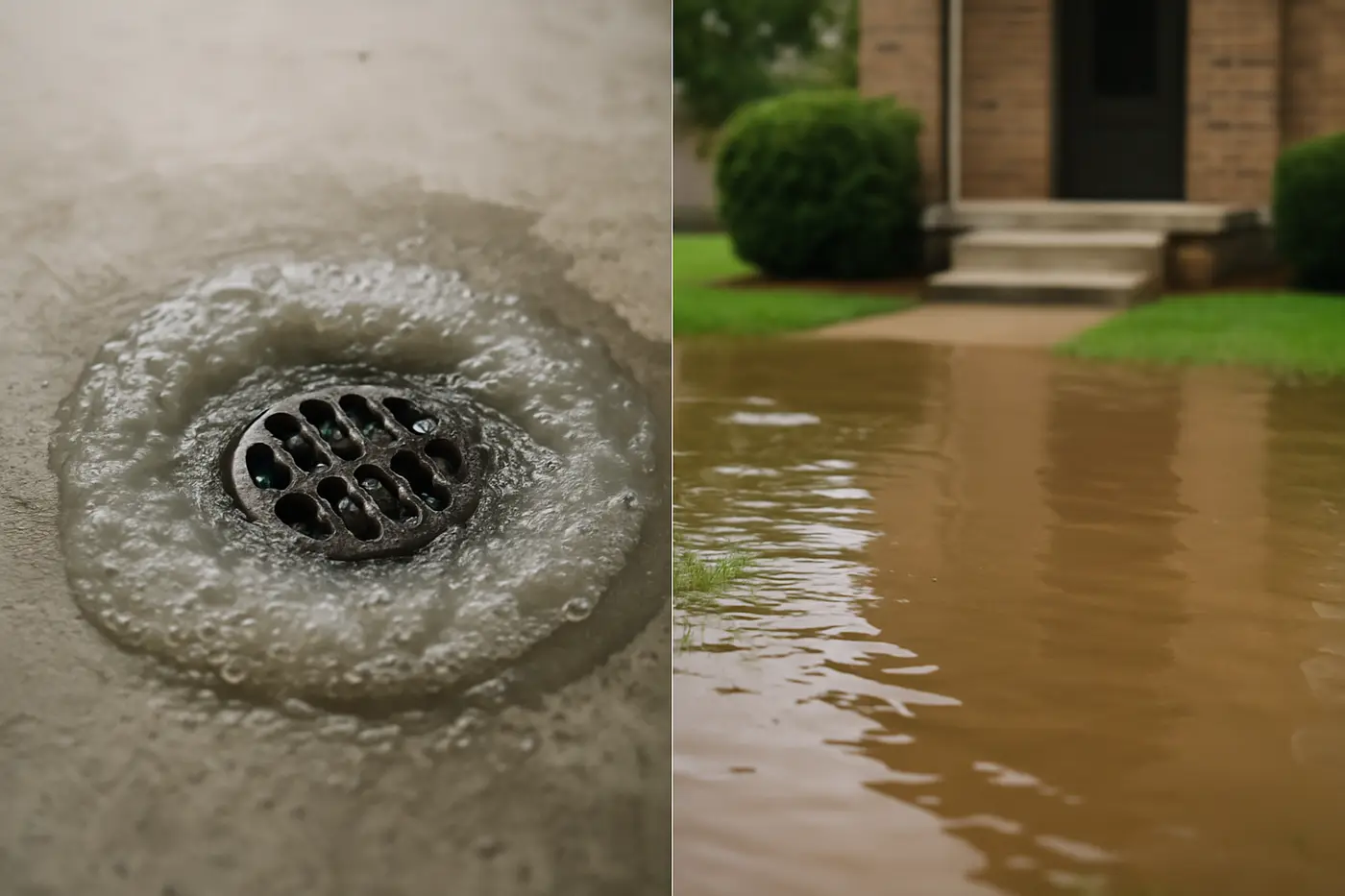
  • Water coming up through a floor drain or basement toilet during heavy rain
  • Wet attic insulation or a musty smell from the top floor after a thaw
  • Broken windows or doors letting rain into the house
  • Icicles along the eaves and water tracking down an exterior wall inside

Our process

How storm damage restorationruns, step by step.

From the first call to the final moisture reading, you will know what is happening, why, and what your insurer will need at each stage.

  1. Step 1: Call, stay safe, send photos

    Keep out of standing water while the power is on, stay away from a sagging ceiling, and send us photos of the damage. We triage by source: roof opening, sump failure or sewer backup, because each one gets a different crew and a different plan.

  2. Step 2: Make-safe and extract

    On arrival we tarp the roof, board up openings and shut off power to wet circuits. Then we pump and vacuum out standing water. Getting the building weather-tight before the next cell arrives is what keeps a storm loss small.

  3. Step 3: Map the moisture and set up drying

    Every wet ceiling, wall, floor and cavity is metered and mapped. Air movers and low-grain refrigerant dehumidifiers are sized to the evaporation load and we log readings daily until each material reaches its dry standard.

  4. Step 4: Remove, repair and document

    Materials that cannot be dried are removed and the structure is treated with antimicrobial. You receive dated photos, the drying log and an itemized scope formatted for your adjuster, and we can bill the carrier directly where approved.

Price guide · USD, 2026

What storm damage restorationcosts in Chicago.

Ranges from typical Chicago and the surrounding suburbs jobs. The final quote is given on site after moisture mapping, in writing, before any work starts. Insurance direct billing where the insurer approves.

ItemTypical range
Storm damage make-safe and drying Tarping, board-up, extraction and drying of a typical single-source storm loss$800-$4,500
Emergency call-out and inspection Moisture mapping and written report; credited against restoration work$250-$500
Water extraction (standard home or basement) Depends on volume, water category and access$500-$2,500
Structural drying equipment Air movers and LGR dehumidifiers; 3 to 5 days typical, 5 to 10 for basements$50-$125 per unit per day
Basement flooding cleanup When the storm flooded the basement through the sump pit or floor drain$1,500-$10,000
Sewage backup cleanup and sanitization When the combined sewer surcharged into the basement during the storm$3,000-$10,000

Ranges cover labor, equipment and disposal for 2026. The number you approve on the written quote is the number you pay; if the scope changes once walls are opened, we stop and re-quote in writing.

Full price guide

In depth

Storm Damage Restoration in Chicago: how the job actually runs.

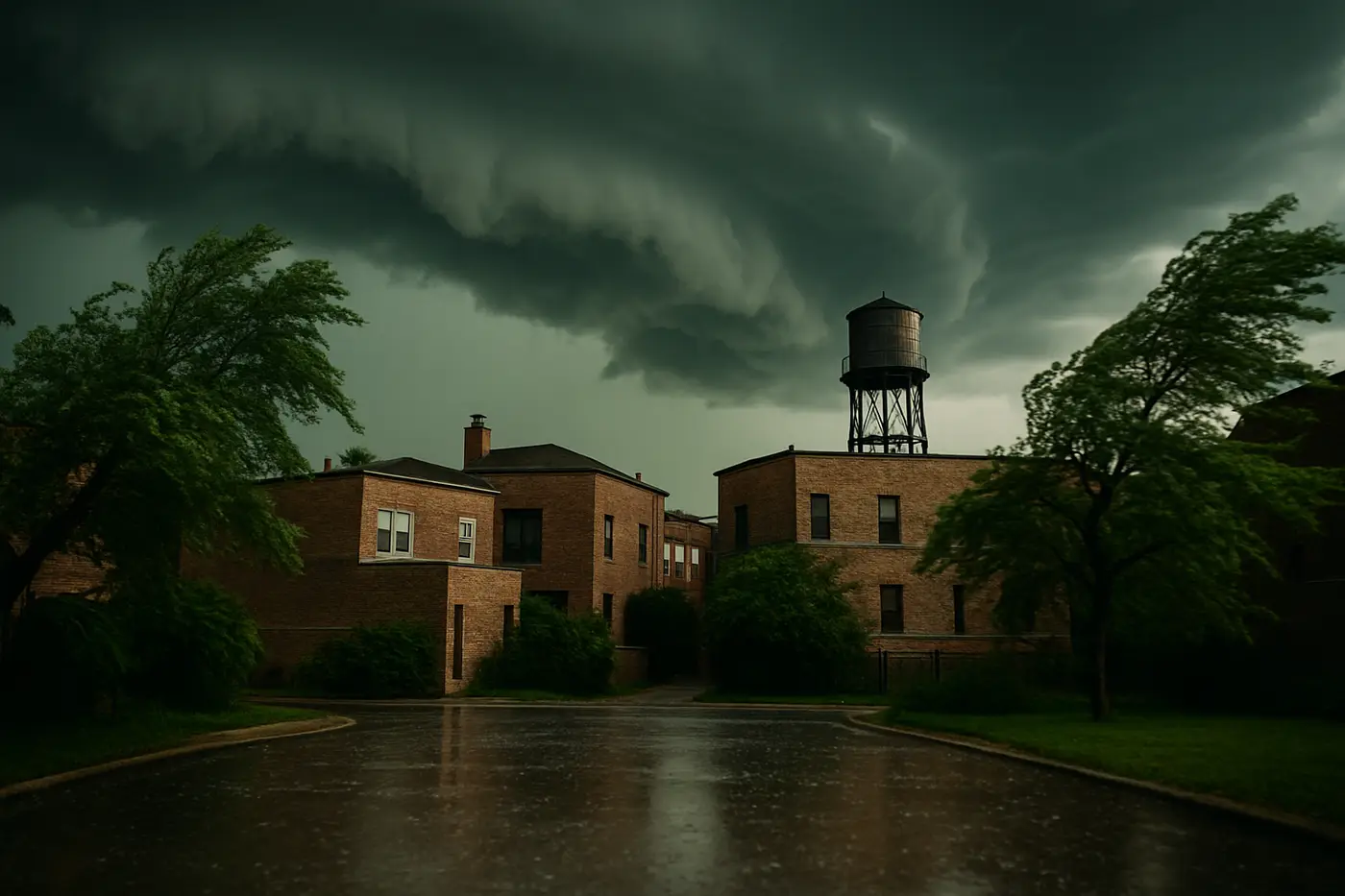
Chicago storm damage comes in two seasons. From May through September, convective storms cross Chicagoland with straight-line wind, hail and short, intense downpours that put an inch or more of rain on the ground in under an hour. Severe thunderstorm and flash flood warnings are issued by the National Weather Service. From December through February the same roofs deal with ice dams, and the meltwater ends up in top-floor ceilings. Storm damage restoration is the work of making the building weather-tight fast, getting the water out, drying the structure to the IICRC S500 standard and documenting all of it for your claim.

What storm damage restoration involves in Chicago

A storm rarely causes one kind of damage. A single July cell can strip shingles off a bungalow in Portage Park, push rain through the flashing, knock out power to the sump pump and surcharge the combined sewer under the street, all inside twenty minutes. We plan the response around where the water came from.

Make-safe first. Tarping the roof opening, boarding up broken windows and doors, and shutting off power to wet circuits. Until the building is closed up, every shower adds to the loss.

Extraction. Standing water in basements and on floors is pumped and vacuumed out with truck-mount and portable extractors. Every gallon removed is a gallon the dehumidifiers do not have to evaporate later.

Water category assessment. Rain through a roof is Category 1 clean water on day one and degrades toward Category 2 after 48 hours. Water that has come up through a floor drain from the combined sewer is Category 3 black water, and it changes how every material in its path is handled. That work runs under our sewage cleanup protocol.

Moisture mapping and structural drying. Pin and non-invasive meters and a thermal camera find where the water went, which is almost always further than the stain. Air movers and low-grain refrigerant (LGR) dehumidifiers are sized to the evaporation load and monitored daily.

Removal and repair. Wet attic insulation, sagging ceiling drywall and delaminated carpet pad come out. Framing and most walls are dried in place and treated with antimicrobial.

Summer storms: wind, hail and the combined sewer

Roof damage that becomes interior water damage

Wind lifts shingles, hail bruises them, and a branch through the deck opens a hole. Rain then tracks down rafters, soaks the attic insulation and shows up as a ceiling stain, a bulge or a steady drip. Insulation holds water against the drywall below, so a ceiling that is merely stained at 6 pm can be sagging by morning.

Sump pump failure in a power outage

The storm that damages the roof also takes down the power, and a sump pump without power is a hole in the floor that fills. Sump pump failure during an outage is a leading cause of basement flooding across Chicagoland. A battery backup pump buys hours; a backwater valve or an overhead sewer conversion stops the sewer side of the problem, and the City of Chicago and many suburbs run rebate programs. Ejector pumps serving basement bathrooms fail the same way.

Combined sewer surcharge

Most of the City of Chicago and the older inner suburbs, including Oak Park, Cicero, Berwyn and parts of Evanston, carry stormwater and sanitary sewage in the same pipes. When a downpour outruns the system, the mix backs up through basement floor drains, toilets and laundry tubs. The Metropolitan Water Reclamation District’s Deep Tunnel and the Thornton and McCook reservoirs have reduced backups but not eliminated them. On July 2, 2023, up to about 9 inches of rain fell on parts of the West Side, Cicero and Berwyn, thousands of basements flooded and Cook County received a federal disaster declaration. Our basement flooding cleanup page covers what happens next.

Winter storms: ice dams and the thaw

Ice dams form when heat escaping through the roof melts snow, the meltwater runs to the cold eave and refreezes into a ridge. Water pooling behind the ridge backs up under the roofing and drips into the top-floor ceiling, usually along an exterior wall. Flat and low-slope roofs are the most exposed. The leak often shows in the thaw week after a deep freeze, the same week frozen pipes let go across the city after events like the January 2019 polar vortex. If your ceiling stain arrived with the thaw and there is a pipe above it, see our frozen and burst pipe page instead.

The first hour after a storm

  1. Do not enter a flooded basement with the power on. Shut off the breaker only if the panel is dry and reachable without standing in water.
  2. Stay out from under a sagging ceiling. Put a bucket under a drip and move furniture out of the way.
  3. Photograph everything before it is moved, including the roof from the ground, the ceiling, the water line in the basement and any floor drain that backed up.
  4. Lift what you can. Rugs off carpet, boxes off the floor, furniture on foil or blocks.
  5. Call us. We will tell you what to do with the basement while the crew is on the way.

Storm, flood or sewer backup: which water is it and who pays

The source of the water decides both the cleanup protocol and the insurance answer. In Illinois a standard HO-3 homeowners policy treats these very differently.

Source of waterIICRC categoryStandard HO-3 coverageWhat we do
Rain through a wind or hail opening in the roofCategory 1 (Category 2 after 48 hrs)Usually covered as a storm peril, including make-safeTarp, extract, dry in place, replace wet insulation and ceiling drywall
Ice dam meltwater into a top-floor ceilingCategory 1Usually covered when sudden; gradual seepage is excludedExtract, dry the ceiling cavity and wall, address the roof
Sump pump failure or overflowCategory 2 or 3 depending on what mixed inExcluded unless you carry a water backup and sump overflow endorsement ($5,000 to $25,000 typical)Extract, sanitize, dry the basement, document for the endorsement
Combined sewer backup through a floor drain or toiletCategory 3Same endorsement as aboveFull sewage protocol: remove porous materials, sanitize, dry
Overland flooding from a river, creek or the streetCategory 3Excluded unless you carry NFIP or private flood insuranceFlood protocol, see our flood damage page

Adjusters expect dated photos, a moisture map, a daily drying log and an itemized scope in Xactimate format. We produce all of it and can bill the carrier directly where the claim is approved. Our flood damage restoration page covers the surface-water side, and the post on sewer backup versus flood claims walks through how the decision is made.

Where storm water ends up in Chicago housing

Brick bungalows in Portage Park, Beverly, Chatham and Berwyn have hip roofs and full basements. Roof leaks show at the top-floor ceilings; sump and sewer water shows in the finished basement, the most common loss location we see.

Two-flats and three-flats share a basement with laundry and often a garden unit. Storm water from a roof travels down through the units below, and a sewer backup lands on the garden-unit tenant first. Condo associations and master policies come into play when a building is owned in units.

Downtown high-rises in the Loop, River North and Streeterville flooded through their basements in May 2020 when the Chicago River overtopped its banks.

Suburban ranches and split-levels in Skokie, Des Plaines, Park Ridge and Naperville often sit near the Des Plaines River or the DuPage River, where a storm brings overland water as well as roof and sump problems.

We respond across the city and suburbs, including Austin, Cicero, Oak Park and Des Plaines.

What drives the cost of storm damage restoration

Make-safe plus drying for a typical single-source storm loss runs $800 to $4,500. The call-out and inspection, with moisture mapping and a written report, is $250 to $500 and is credited against the restoration work. Extraction is $500 to $2,500 depending on volume and access, and drying equipment runs $50 to $125 per unit per day for the three to five days a clean-water job usually takes, or five to ten days for a basement.

The number climbs when the water is contaminated. A basement that flooded through the sump pit is $1,500 to $10,000 to clean and dry; a combined sewer backup is $3,000 to $10,000 because porous materials must be removed and everything sanitized. A full clean-water restoration across two or three rooms is $2,000 to $6,500.

The cheapest storm job is the one that gets tarped before the next cell arrives. If a Chicago storm just put water in your house, call us or send the form. For prevention, the summer storm checklist covers backup pumps and backwater valves.

Last updated September 08, 2026
Common questions

Storm Damage Restoration, explained.

Straight answers about response times, water categories, drying timelines and what your adjuster will expect for storm damage restoration in Chicago.

All questions
What counts as storm damage restoration in Chicago?

Storm damage restoration covers everything between the storm and a dry, weather-tight building. That means tarping a roof that lost shingles to wind or hail, boarding up broken windows, extracting the water that came in, drying the structure to the IICRC S500 standard and removing what cannot be saved. In Chicago the storm itself is often only part of the loss. The same cell that damages the roof can knock out power to the sump pump and surcharge the combined sewer, so we assess all three paths for water before we plan the job.

How fast should the roof be tarped after wind or hail damage?

As soon as it is safe to get on the roof, ideally the same day. Chicago summer storms tend to arrive in clusters, and a second downpour through an open roof deck doubles the wet area. Attic insulation soaks up rain and holds it against the ceiling drywall below, which is why a small opening in a bungalow hip roof can show up as a sagging ceiling in the front bedroom by the next morning. Tarping and board-up are covered as make-safe work under most homeowners policies when documented.

Is storm water in my basement covered by homeowners insurance?

It depends on how the water got in. Rain that came through a wind or hail opening in the roof is usually a covered peril under a standard HO-3 policy. Water that rose up through a floor drain, toilet or sump pit is sewer backup or sump overflow, which is excluded unless you added a water backup and sump discharge or overflow endorsement, with typical limits of $5,000 to $25,000. Overland flooding from a river, creek or the street is excluded unless you carry a separate NFIP or private flood policy.

My sump pump failed when the power went out. Can you help?

Yes. Sump pump failure during an outage is one of the leading causes of basement flooding in Chicagoland, and it is the most common storm call we get from July through September. We extract the water, assess whether it is clean sump water or mixed with sewer backup, dry the basement and document the loss. After the cleanup we will point you toward a battery backup pump and a backwater valve so the next outage does not repeat the loss.

What is an ice dam and why does it leak into my top floor?

An ice dam forms when heat escaping through the roof melts snow, the meltwater runs to the cold edge and refreezes into a ridge of ice. Water pooling behind the ridge has nowhere to go but under the roofing and into the top-floor ceiling. Flat and low-slope roofs, common on Chicago two-flats, three-flats and commercial buildings, are especially prone. The leak often appears in the thaw week after a deep freeze, which is also the busiest week of the year for burst-pipe calls.

How long does drying take after a storm?

Three to five days is typical for a clean-water loss through the roof into a couple of rooms. Basements and slab floors take five to ten days because the concrete is cool and the surrounding soil keeps feeding moisture back. Chicago summer humidity, with dew points often between 65 and 75 degrees, slows evaporation further, which is why we run LGR dehumidifiers rather than relying on open windows. Equipment comes out when the meters reach dry standard, not when the surface feels dry.

Do you handle the sewage if the combined sewer backed up during the storm?

Yes. In most of the City of Chicago and the older inner suburbs, stormwater and sanitary sewage share the same pipes, and a heavy rain pushes that mix back up through basement floor drains and fixtures. That water is Category 3 black water under the IICRC S500 standard. We treat it as a sewage loss: porous materials it touched are removed, hard surfaces are cleaned and sanitized, and the crew works in full protective equipment. See our sewage cleanup service page for the full protocol.

What documentation will my adjuster want after a storm?

Dated photos of the roof opening, the interior damage and the water line before anything is moved; a moisture map showing which materials were wet; a daily drying log with temperature, humidity and material readings; and an itemized scope, usually in Xactimate format, explaining what was removed and why. We produce all of that as standard. Keep the damaged shingles or broken glass if you can. If your area receives a federal disaster declaration, FEMA Individual Assistance and SBA loans may also be available.

Related services

Water rarely stays in one lane. These are the services most often scoped on the same job.

All services
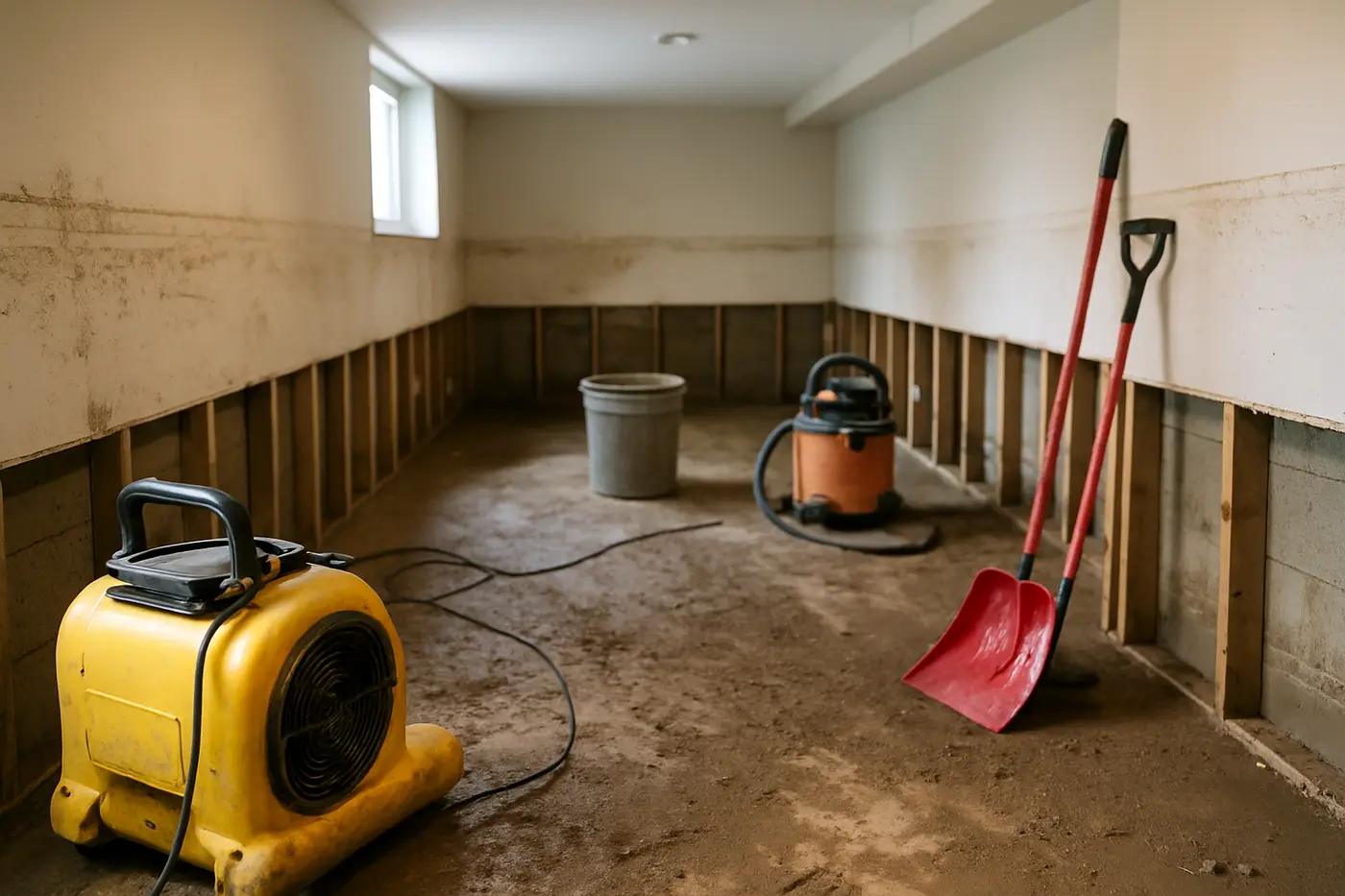
  • Flood line on the walls of a Chicago home after river flooding, cleanup in progress
    01

    Flood Damage Restoration

    Flood damage restoration in Chicago after sewer backups, storms and river flooding: Category 3 extraction, tear-out, sanitizing, drying and claim documentation.

    Learn more
  • Flooded finished basement in Chicago with water being pumped out and carpet removed
    02

    Basement Flooding Cleanup

    Flooded basement cleanup in Chicago: pump-out, sewer backup sanitizing, drywall and carpet tear-out, and structural drying for bungalows, two-flats and garden units.

    Learn more
  • Air movers and a dehumidifier drying a water-damaged Chicago living room
    03

    Water Damage Restoration

    Water damage restoration across Chicago and the suburbs to the IICRC S500 standard: emergency extraction, moisture mapping, structural drying and claim-ready reports.

    Learn more

Helpful reading

Guides that go withthis service.

Practical, Chicago-specific reading for the first hour, the drying process, mold risk and insurance claims.

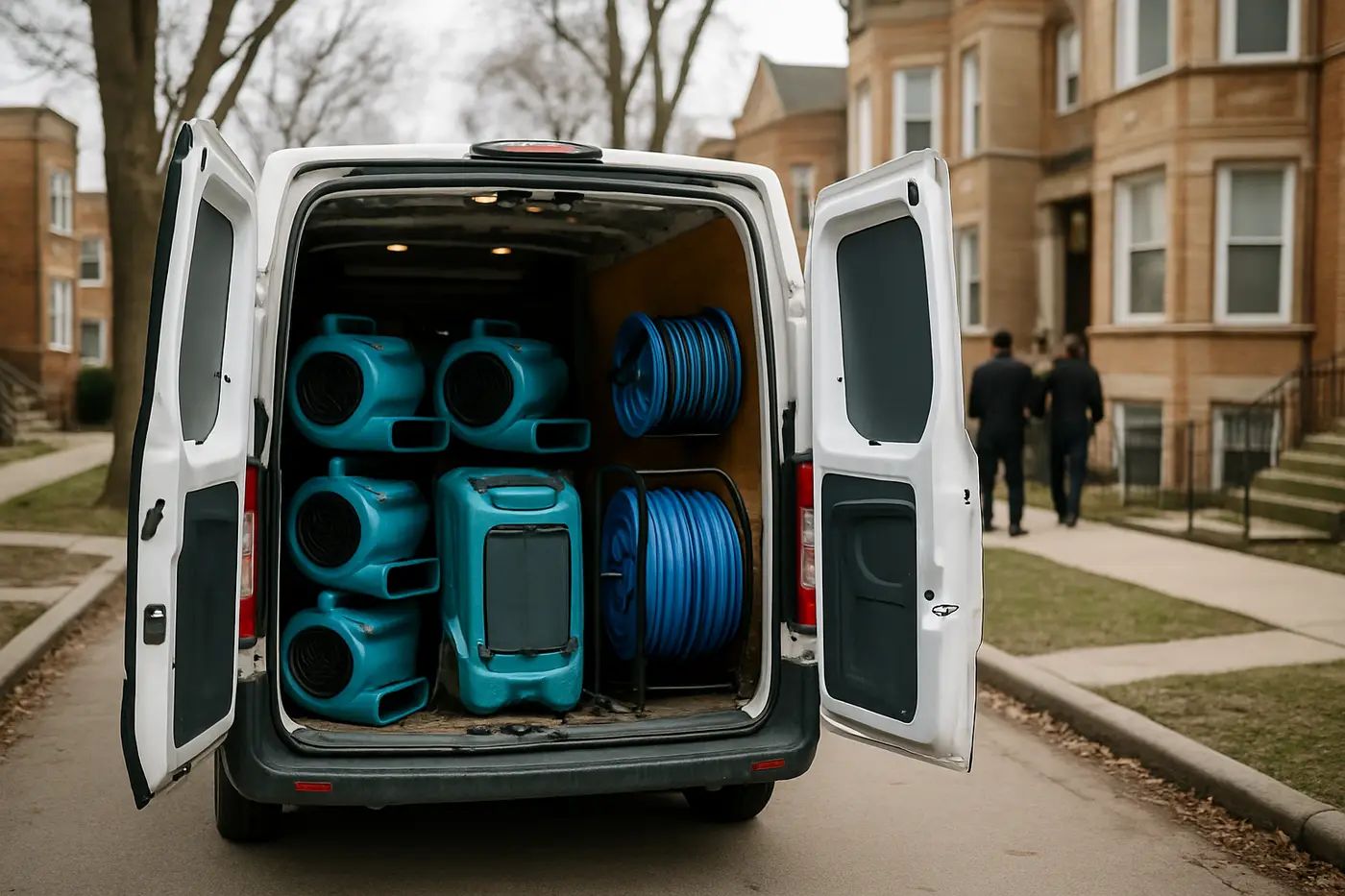
Restoration crew standing beside a van loaded with air movers and dehumidifiers

Storm Damage Restoration · Chicago & the Suburbs

Let's take the next step toward drying your property.

Tell us what happened, where the water is and whether it is still active. A restoration coordinator will explain what to do next and what your adjuster will need.