Skip to content

Emergency restoration · Chicago & the Suburbs

Water Damage Restoration Chicago

From a burst pipe in January to a sewer backup in July: emergency extraction, moisture mapping, structural drying and repairs to the IICRC S500 standard, across Chicago and the surrounding suburbs.

  • 24/7 Response
  • Local Technicians
  • Insurance Reports
  • Direct Contact
  • Homes & Business

Request Water Damage Restoration Help

US format - we will call or text you back right away.
Add brief description (optional)
How urgent?

Free on-site inspection and written estimate. Insurance-ready report. No obligation. Privacy.

What's included

Everything the job needs,scoped from the first visit.

Every water damage restoration job in Chicago and the surrounding suburbs includes the work below as standard. It is written into the scope before we start, so there are no surprise extras when the invoice arrives.

  • Emergency water extraction with truck-mounted and portable units
  • Moisture mapping of walls, floors, subfloors and framing with pin and non-invasive meters
  • Structural drying with air movers and LGR dehumidifiers, metered daily
  • Water category assessment (clean, gray or black) and matching sanitizing
  • Removal of unsalvageable drywall, carpet pad, insulation and baseboard
  • Antimicrobial treatment of affected framing and subfloor
  • Photo report, moisture logs and drying certificate for your adjuster
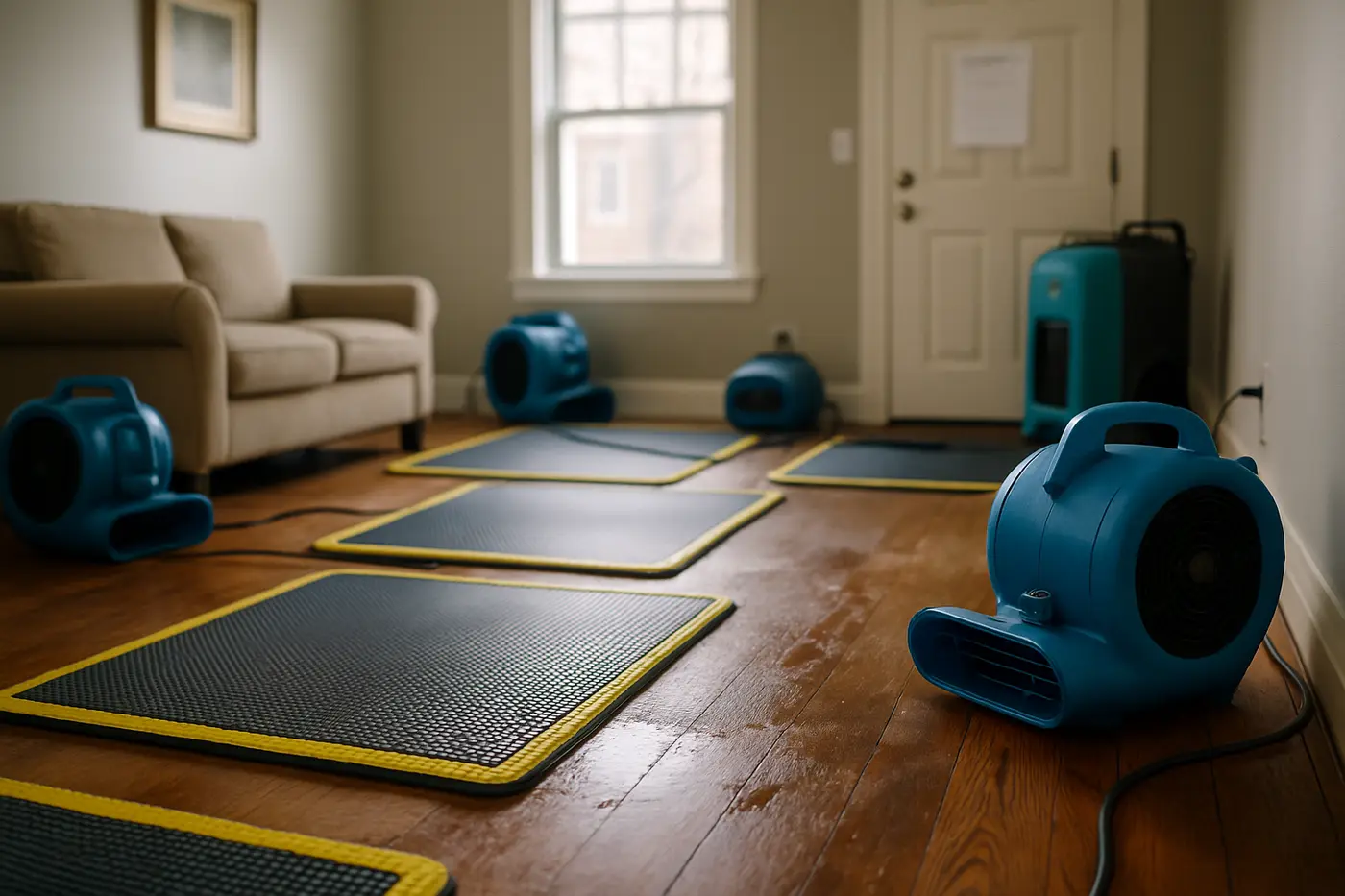
Air movers and a dehumidifier drying a water-damaged Chicago living room

Not sure it is urgent?

Send a few photos with the form. A coordinator will tell you whether it can wait until morning or needs a crew tonight.

When to call

Signs you needwater damage restoration.

Water moves sideways along bottom plates and under floor coverings, so the wet area is nearly always bigger than the stain you can see. Any of the following is worth a call the same day.

  • Standing water after a burst pipe, water heater or appliance supply line failure
  • Carpet that squishes underfoot, or a musty smell that arrived after a storm
  • Ceiling or wall drywall that is soft, stained or bubbling
  • Hardwood floorboards starting to cup or crown at the edges
  • Baseboards swelling or pulling away from the wall
  • Water in the basement after a storm, a sump failure or a floor drain backup
  • Mold spots on walls or furniture within days of a leak

Our process

How water damage restorationruns, step by step.

From the first call to the final moisture reading, you will know what is happening, why, and what your insurer will need at each stage.

  1. Step 1: Call, stop the source, send photos

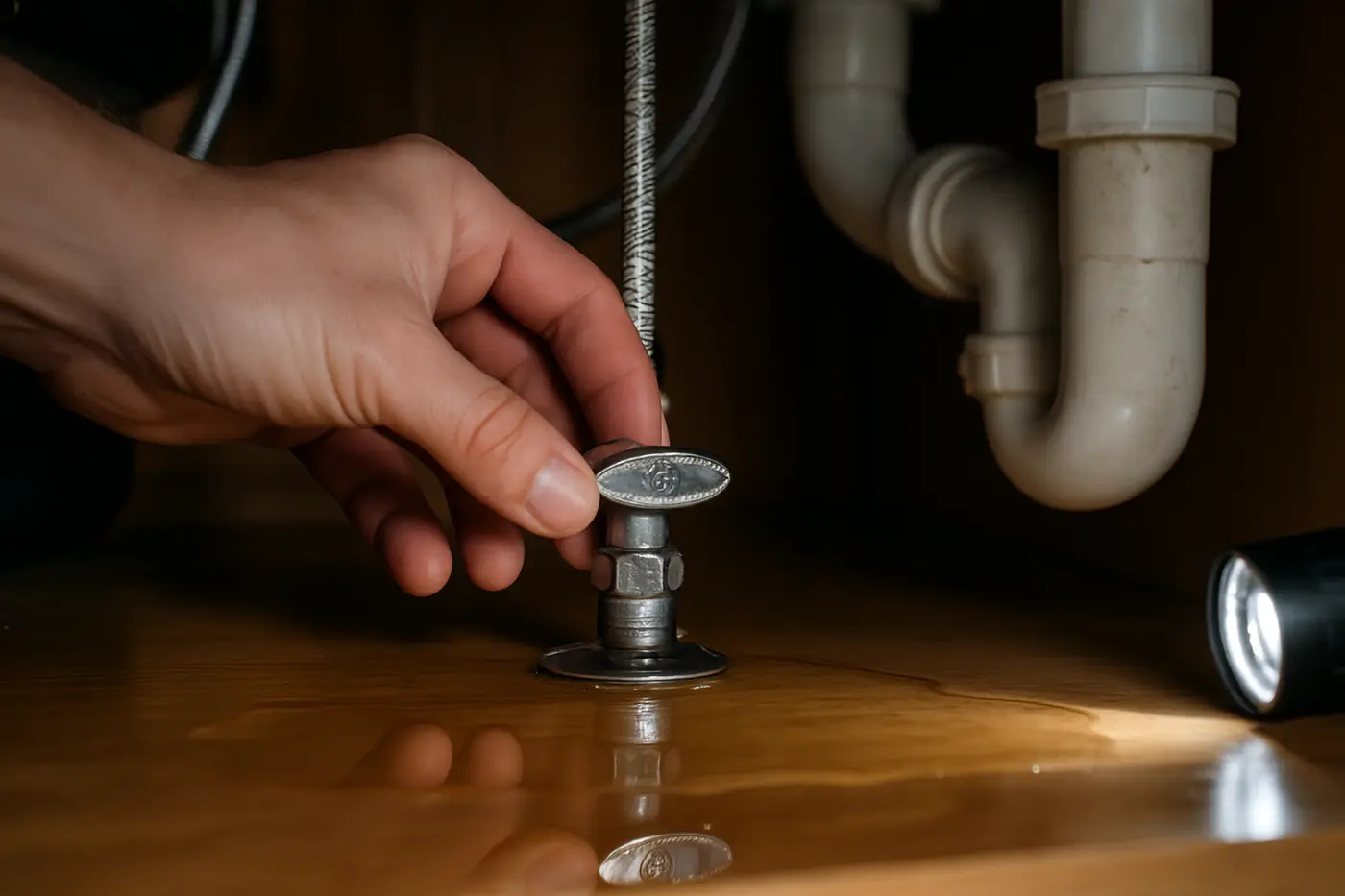
    Shut the water off at the fixture or the main, turn off the breaker for wet circuits if the panel is dry, and send us a few photos. We triage by water category and how long it has been sitting.

  2. Step 2: Extract and map the moisture

    On arrival we extract standing water, then map every wet surface with moisture meters and a thermal camera. The map sets the drying plan and becomes page one of your insurance report.

  3. Step 3: Set up and monitor structural drying

    Air movers and LGR dehumidifiers are placed to match the evaporation load. We log temperature, humidity and material moisture daily until every reading hits its dry standard.

  4. Step 4: Repair and hand over

    Once dry, we replace what could not be saved, such as drywall, carpet pad and baseboard, and hand over a drying certificate, photo record and moisture logs for your claim.

Price guide · USD, 2026

What water damage restorationcosts in Chicago.

Ranges from typical Chicago and the surrounding suburbs jobs. The final quote is given on site after moisture mapping, in writing, before any work starts. Insurance direct billing where the insurer approves.

ItemTypical range
Emergency call-out and inspection Moisture mapping and a written report; credited against restoration work$250-$500
Water extraction (standard home or basement) Depends on volume, water category, access and floor coverings$500-$2,500
Structural drying equipment Air movers and LGR dehumidifiers; typically 3-5 days, 5-10 for basements and slabs$50-$125 per unit per day
Full restoration, clean water (2-3 rooms) Extraction, drying, minor drywall and baseboard replacement$2,000-$6,500
Full restoration, gray or black water (multiple rooms) Includes removal of contaminated materials and sanitizing$6,500-$18,000+
Contents pack-out and restoration Furniture, rugs and belongings moved, cleaned and stored while the house dries$1,000-$5,000

Ranges cover labor, equipment and disposal for 2026. The number you approve on the written quote is the number you pay; if the scope changes once walls are opened, we stop and re-quote in writing.

Full price guide

In depth

Water Damage Restoration in Chicago: how the job actually runs.

Water damage in Chicago has a season for everything. January brings burst pipes in exterior walls when the temperature drops below zero. July brings short, violent downpours that surcharge the combined sewer and push water up through basement floor drains. Whatever the source, the clock is the same: wet drywall, carpet pad and wood framing start supporting mold within 24 to 48 hours. Water damage restoration is the work of beating that clock, and then proving to your insurance adjuster that you did.

What water damage restoration involves in Chicago conditions

Restoration is more than mopping up. The IICRC S500 standard breaks the job into stages, and skipping any of them is how a small loss turns into a large one.

Extraction removes bulk water as fast as possible. Every gallon we pull out with a truck-mounted or portable extractor is a gallon a dehumidifier does not have to evaporate later.

Moisture mapping comes next. We meter walls, floors, baseboards, subfloors and the bottom of the framing with pin and non-invasive moisture meters, and we check for hidden migration with a thermal camera. Water travels sideways along bottom plates, under hardwood and beneath vinyl plank, so the wet area is almost always larger than the visible stain.

Category and class are decided at this point. Category 1 (clean supply water from a burst pipe or a water heater) can usually be dried in place. Category 2 (gray water from a dishwasher, washing machine or sump pit, or clean water that has sat for more than a day or two) needs antimicrobial treatment. Category 3 (black water from a sewer backup, a river, or anything that has been through soil) means removal of porous materials. Class 1 through 4 describes how much water the materials are holding and how hard it will be to evaporate.

Structural drying uses air movers to lift moisture off surfaces and low-grain refrigerant (LGR) dehumidifiers to pull it out of the air. We size the equipment to the evaporation load and log readings every day.

Repair replaces what could not be saved and returns the property to its pre-loss condition. For sewer and river water, start with our flood damage restoration page; for a below-grade loss, see basement flooding cleanup.

The drying science: why it takes three to five days

The answer is psychrometrics. Water leaves a wet material only as fast as the surrounding air can accept it. A Chicago summer afternoon with a dew point of 70 degrees Fahrenheit has very little room left, and a basement that sits around 60 degrees year-round evaporates water slowly no matter what the weather is doing upstairs. Air movers push air across wet surfaces to keep evaporation going. LGR dehumidifiers pull that moisture back out of the air so the cycle can continue. If either half is missing, drying stalls.

Typical structural drying runs three to five days for a clean-water loss on a main or upper floor. Basements and slab floors usually take five to ten days, because concrete gives up water slowly and the air down there is cool and damp to begin with.

What the meters tell us

Every day on site we record the temperature and relative humidity of the room air, the grain depression across each dehumidifier (how much water it is actually removing) and the moisture content of the affected materials. Drywall is compared against an unaffected reference wall in the same building. The job is finished when readings meet the dry standard, not when the surface feels dry to the hand. Surface-dry drywall over a wet bottom plate is exactly how a $3,000 drying job becomes a $10,000 mold remediation job in August.

The first hour: what to do before we arrive

  1. Stop the source. The shutoff under the fixture, the valve on the water heater, or the main shutoff where the service enters the basement.
  2. Cut power to wet circuits at the breaker panel, but only if the panel itself is dry and you are not standing in water.
  3. Lift what you can. Rugs off carpet, furniture legs onto foil or blocks, cardboard boxes off the basement floor.
  4. Photograph everything before it is moved, including the failed pipe, hose or appliance. Keep the failed part for the adjuster.
  5. Do not run a household vacuum on standing water, and do not run the furnace fan or central air if the water may be contaminated.

The full checklist is in our guide to the first hour after water damage.

Insurance and documentation in Illinois

A standard Illinois homeowners policy (HO-3) covers sudden and accidental discharge: burst pipes, water heater failure, appliance supply lines, and frozen pipes as long as reasonable heat was maintained. It excludes surface flooding from rivers and overland flow unless you carry a separate flood policy through the NFIP or a private carrier, and it excludes sewer backup and sump pump overflow unless you added a water backup and sump discharge or overflow endorsement, which typically carries a limit of $5,000 to $25,000. Gradual leaks and long-term seepage are excluded on nearly every policy.

Mitigation and emergency services are covered when they are documented. Adjusters expect dated photos, a moisture map, a daily drying log and an itemized scope, usually in Xactimate format. We produce all of it as standard, and where the carrier approves direct billing we invoice them rather than you. If a claim stalls, the Illinois Department of Insurance handles complaints. Our step-by-step guide to documenting a water damage claim in Illinois covers what to send and when.

Chicago and the suburbs: how water behaves in local housing

Nearly every house in Chicagoland has a basement, which is the reason a finished basement with drywall, carpet and a bathroom is the most common loss location we see.

Brick bungalows across the Bungalow Belt, from Portage Park to Beverly and Chatham to Berwyn, have full basements and 80 to 100 years of plumbing history. Supply lines run through exterior walls and freeze first, and the basement floor drain is the first place a surcharged sewer shows up.

Two-flats and three-flats in Logan Square, Pilsen and Bridgeport share one basement and stack their bathrooms and kitchens. A burst supply line on the top floor travels down through the units below, and a garden unit takes water from both directions. The landlord, the tenants and sometimes a condo association all have a stake in the documentation.

Greystones and walk-ups in Lincoln Park, Lakeview and Wicker Park have plaster over lath and original hardwood, which reward careful drying and punish delay.

High-rises and loft conversions in the West Loop, River North and Streeterville move water fast through risers and slab penetrations. In May 2020 the Chicago River overtopped its banks and flooded downtown high-rise basements and mechanical rooms.

Victorians and Prairie-style homes in Oak Park and Evanston sit on older combined sewers and were hit hard on July 2, 2023, when parts of the West Side, Cicero and Berwyn recorded up to about 9 inches of rain.

Winter is its own hazard. The polar vortex of January 30 and 31, 2019 pushed O’Hare to about -23 degrees Fahrenheit, and the thaw week that follows a cold snap like that is the busiest week of the year for frozen and burst pipe calls.

Repair or replace?

MaterialUsually dried and keptUsually removed
Carpet (Category 1, under 48 hours)Yes, with pad assessed separatelyCategory 2 or 3, or delaminating
Carpet padRarely; cheap and slow to dryMost jobs
DrywallCategory 1, dried within 48 hoursCategory 2 or 3, sagging, or wet more than 48 hours
Solid hardwoodYes, with controlled dryingSevere cupping or Category 3
Fiberglass batt insulationNoAlways when wet
Concrete slabAlways dried in placeNever

What drives the cost

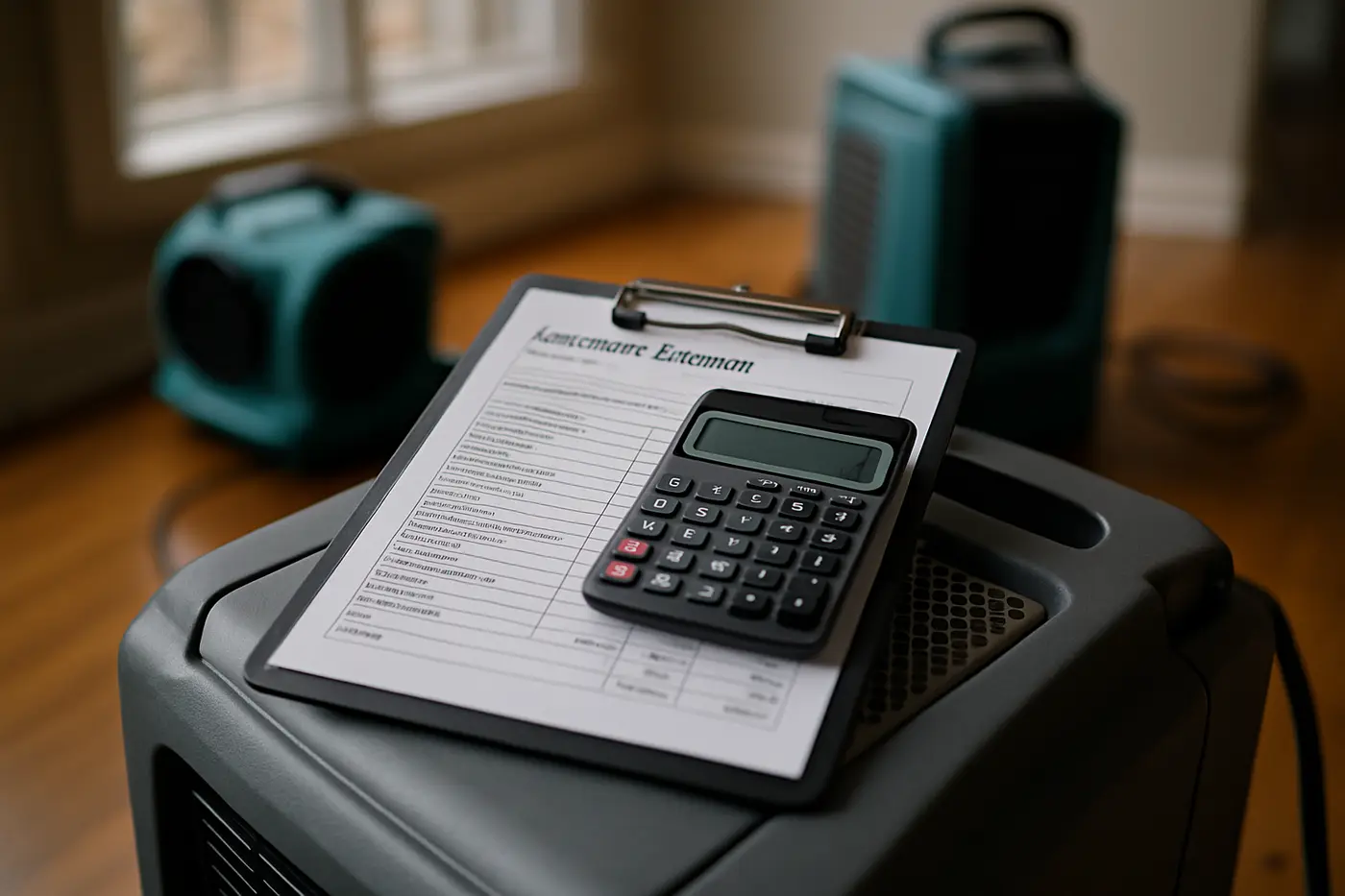
Water damage restoration in Chicago typically runs $2,000 to $6,500 for a clean-water loss across two or three rooms, and $6,500 to $18,000 or more where gray or black water has spread through multiple rooms. The emergency call-out and inspection is $250 to $500 and is credited against restoration work if you proceed. Drying equipment runs $50 to $125 per unit per day, and a typical three-room job uses six to ten units. Our 2026 cost guide breaks each line item down.

The cheapest water damage job is always the one that starts today. If you are standing in water anywhere in Chicago or the suburbs, call us or send the form and we will tell you what to do in the next ten minutes while a crew is on the way.

Last updated September 08, 2026
Common questions

Water Damage Restoration, explained.

Straight answers about response times, water categories, drying timelines and what your adjuster will expect for water damage restoration in Chicago.

All questions
How fast do you need to get to water damage in Chicago?

Within the first 24 hours is the target. In Chicago's summer humidity, drywall, carpet pad and wood framing start supporting mold within 24 to 48 hours of getting wet, and a cool basement does not save you, because it slows drying more than it slows mold. Clean water left sitting also degrades toward gray water over the same period. Fast extraction and early drying are what keep a job in the $2,000 to $6,500 bracket instead of the $6,500 and up bracket.

What are water categories and why do they matter?

The IICRC S500 standard sorts water by contamination. Category 1 is clean supply water from a burst pipe or water heater. Category 2, or gray water, carries contaminants: washing machine and dishwasher discharge, sump pit overflow, or clean water that has sat for a day or two. Category 3, or black water, is grossly contaminated: sewage, combined sewer backup, river water, or anything that has passed through soil. The category decides what can be dried and kept versus what must be removed and disposed of, which is the biggest single factor in the cost.

How long does structural drying take?

Three to five days is typical for a clean-water loss on a main or upper floor with carpet and drywall. Basements, concrete slabs, hardwood floors and plaster walls push that to five to ten days, because those materials give up water slowly and basement air is cool and damp to begin with. We meter every day and pull the equipment as soon as materials reach their dry standard, not before and not a day later than needed, since equipment is billed per unit per day.

Will my Illinois homeowners insurance cover water damage restoration?

Most Illinois HO-3 policies cover sudden and accidental discharge: burst pipes, water heater failure, appliance supply lines, and frozen pipes if reasonable heat was maintained. They exclude river and overland flooding unless you have a separate flood policy, and exclude sewer backup and sump pump overflow unless you added a water backup endorsement. Gradual leaks and long-term seepage are excluded. Mitigation and emergency drying are generally covered when documented, which is why our moisture logs and photo reports are formatted for adjusters.

Do I need to replace wet drywall?

Not always. Category 1 water and a fast response usually means drywall can be dried in place, sometimes with the baseboard removed and holes drilled low in the wall to vent the cavity. Once the paper facing has been wet for more than 48 hours, or if the water was Category 2 or 3, the lower section is cut out, typically 12 to 24 inches above the water line, and replaced after the framing is dry. Plaster and lath in older Chicago homes often dries in place if the keys are still attached.

Can you bill my insurance company directly?

Yes, where the carrier approves. We provide the scope, moisture logs, dated photos and drying certificate in the format adjusters expect, usually Xactimate, and can bill the insurer directly once the claim is accepted. Your deductible is still your responsibility. If you are not filing a claim, or the loss falls under an exclusion, you get the same documentation and an itemized invoice so you can decide how to proceed with the repairs.

What do you do that I cannot do with a rented dehumidifier?

A household dehumidifier pulls a few pints a day from the air. A commercial LGR unit removes many times that, and it only works properly when paired with air movers that lift water off surfaces and out of materials. More importantly, without moisture meters you cannot tell when a wall, subfloor or slab is actually dry. Closing up a wall that still reads wet is how mold jobs start, and a hardware-store unit does not produce the daily drying log your adjuster will ask for.

Do you cover the suburbs as well as the city?

Yes. We serve Chicago and the surrounding suburbs in Cook and DuPage counties, from Evanston and Skokie on the north side to Oak Park, Cicero and Berwyn in the near west, and out to Naperville and West Chicago on the DuPage River. Response times vary with traffic and demand. During a regional event like the July 2023 storms we prioritize active water and sewage losses over jobs where the water has already been removed.

Related services

Water rarely stays in one lane. These are the services most often scoped on the same job.

All services
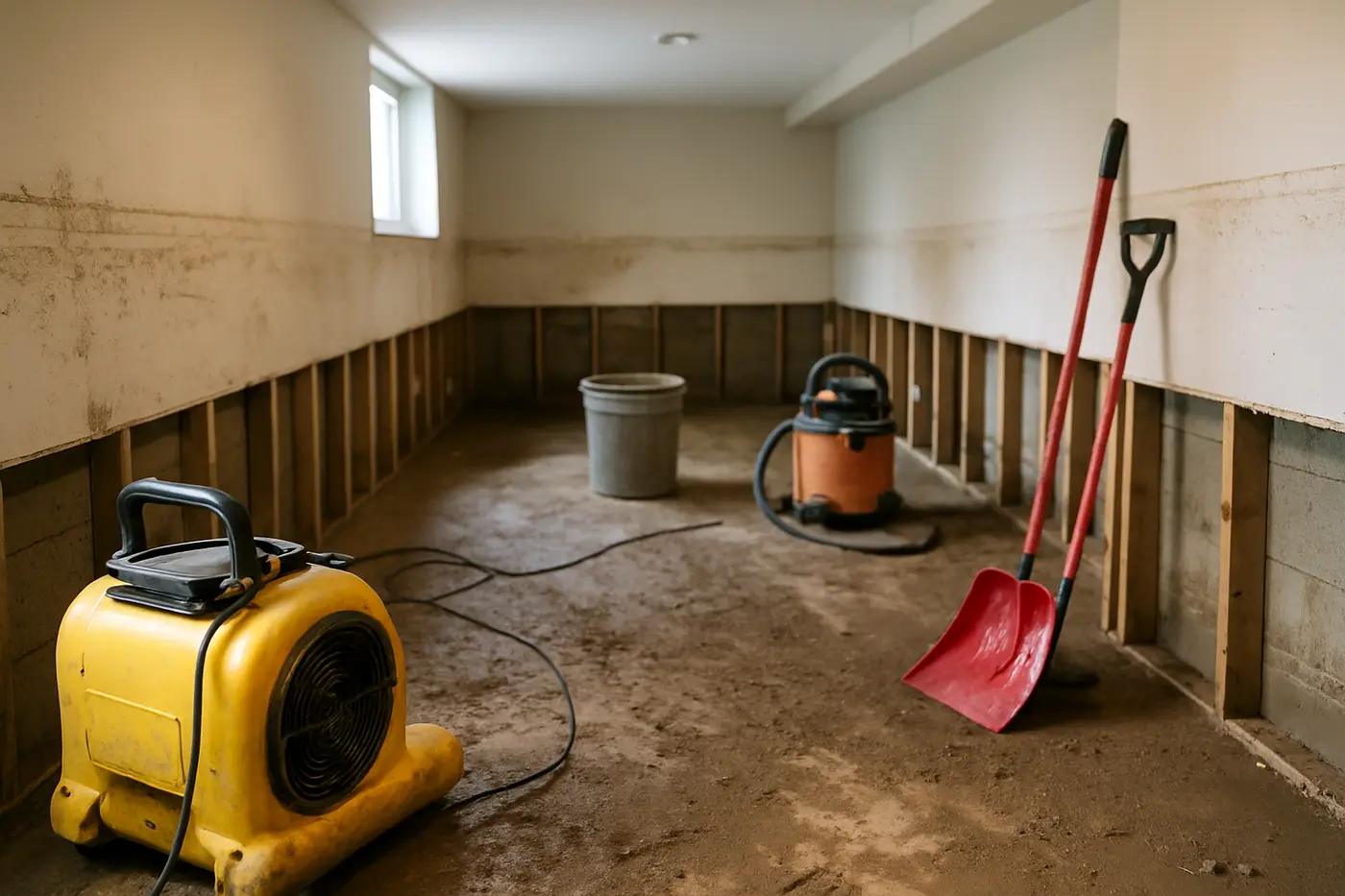
  • Flood line on the walls of a Chicago home after river flooding, cleanup in progress
    01

    Flood Damage Restoration

    Flood damage restoration in Chicago after sewer backups, storms and river flooding: Category 3 extraction, tear-out, sanitizing, drying and claim documentation.

    Learn more
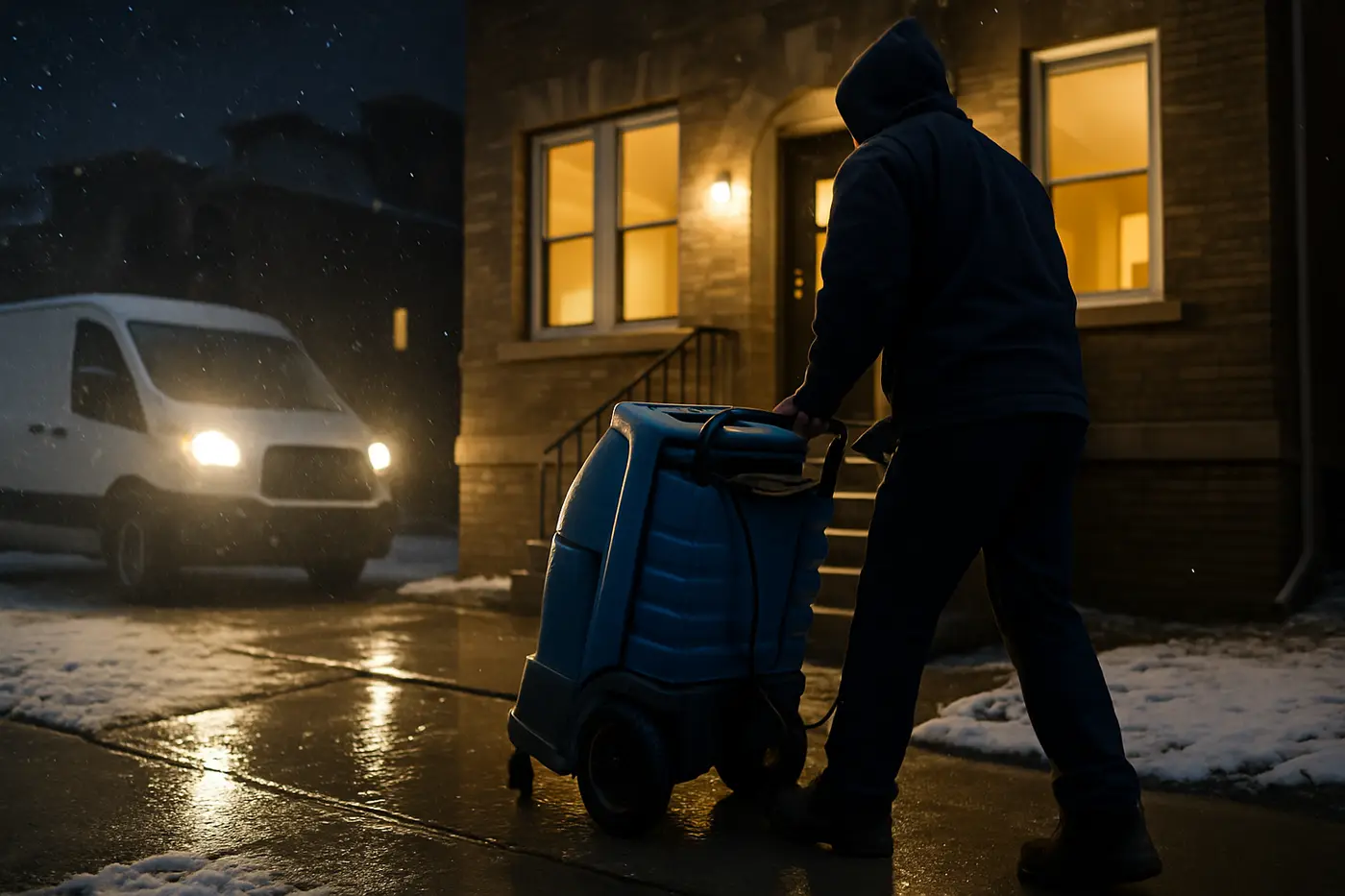
  • Night-time emergency response with an extraction unit being wheeled into a Chicago home
    02

    Emergency Water Damage

    24/7 emergency water damage response across Chicago and the suburbs. Extraction, moisture mapping, structural drying to IICRC S500 and documentation adjusters expect.

    Learn more
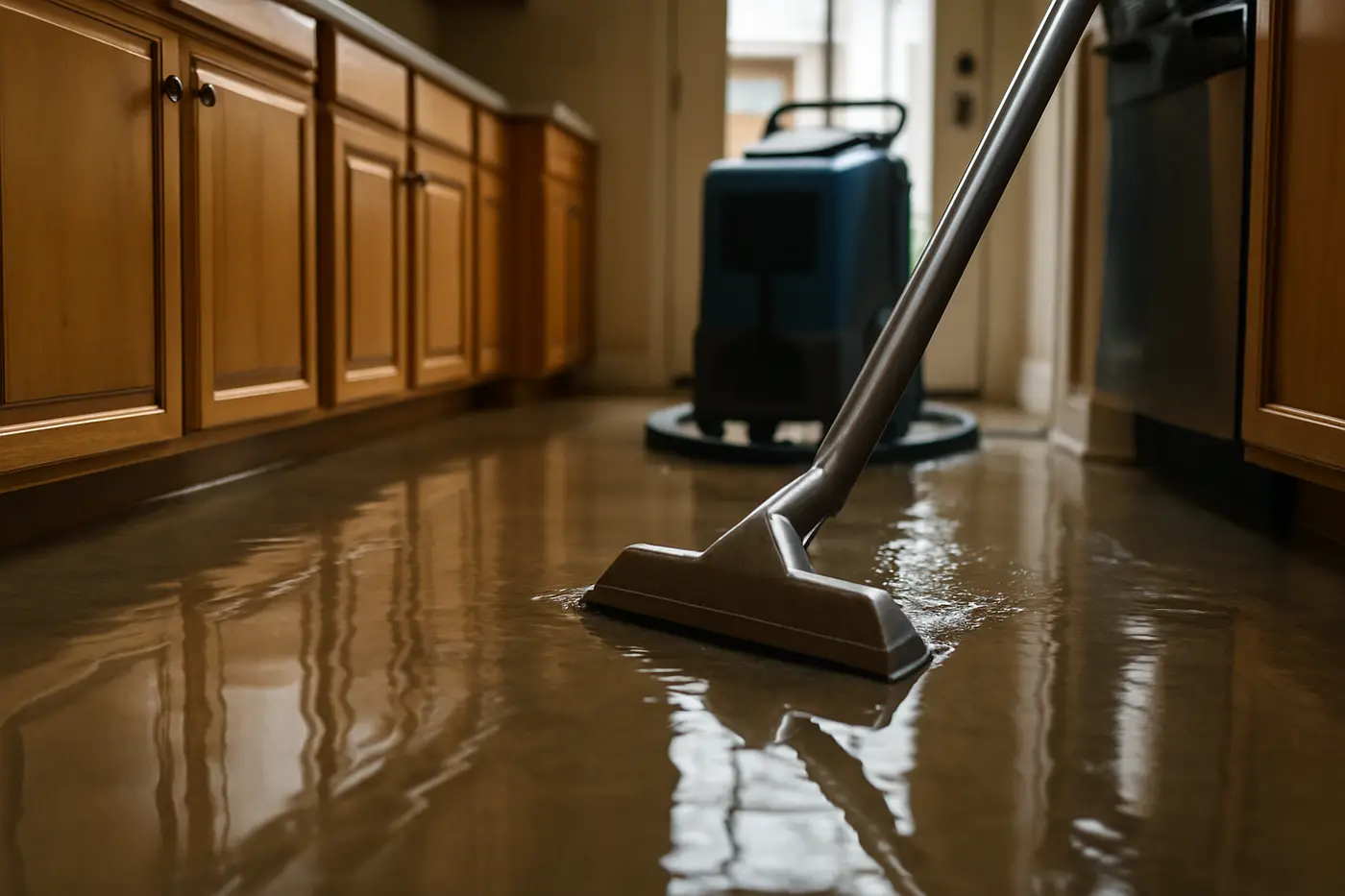
  • Standing water across a kitchen floor being extracted with a wide wand
    03

    Water Extraction and Removal

    Truck-mount and portable water removal across Chicago and the suburbs. Submersible pumps for flooded basements, weighted carpet extraction and IICRC S500 drying setup.

    Learn more

Helpful reading

Guides that go withthis service.

Practical, Chicago-specific reading for the first hour, the drying process, mold risk and insurance claims.

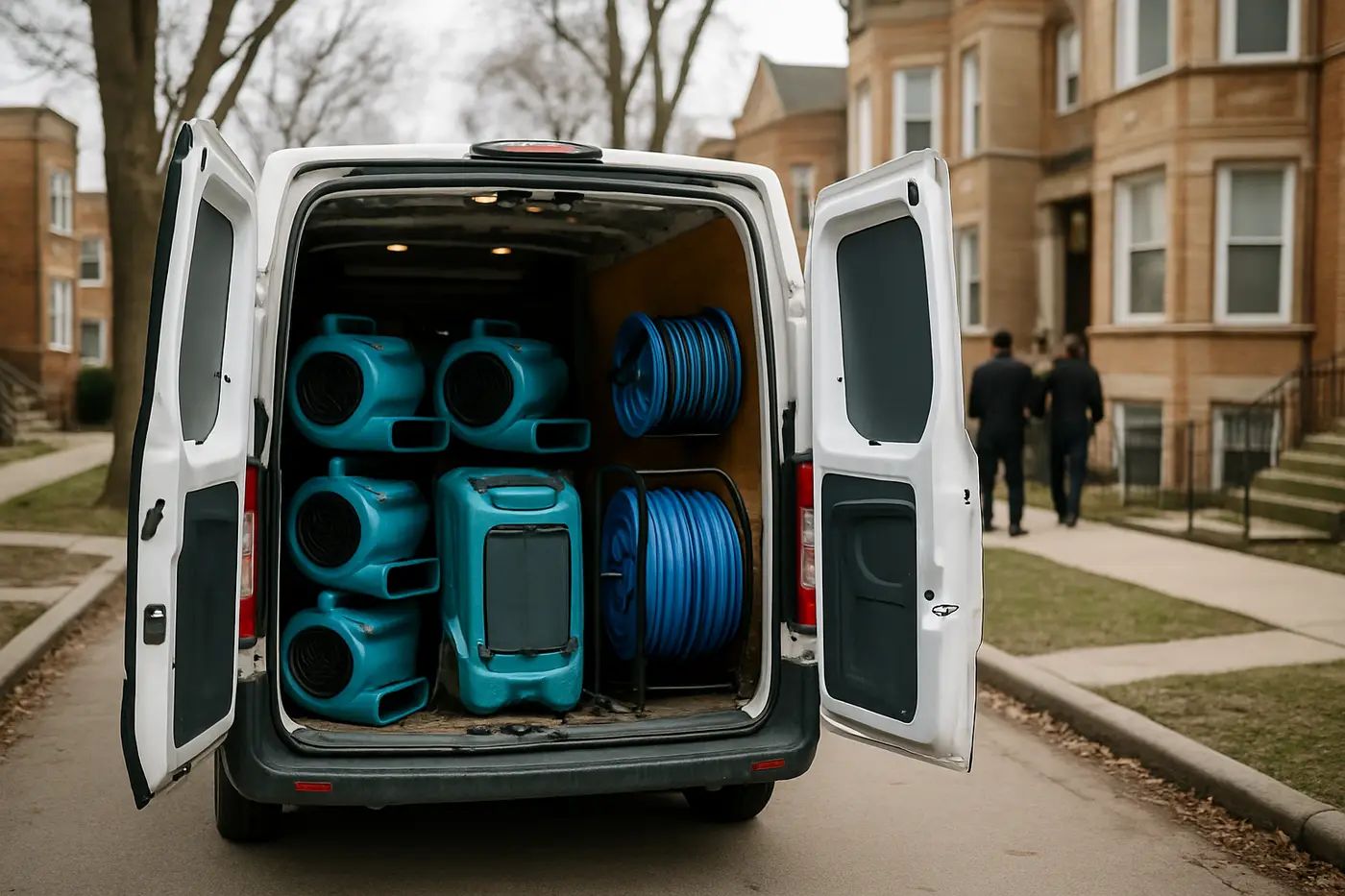
Restoration crew standing beside a van loaded with air movers and dehumidifiers

Water Damage Restoration · Chicago & the Suburbs

Let's take the next step toward drying your property.

Tell us what happened, where the water is and whether it is still active. A restoration coordinator will explain what to do next and what your adjuster will need.